Free Daily Podcast Summary
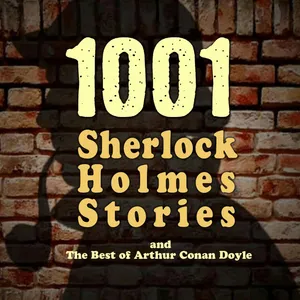
1001 Sherlock Holmes Stories & The Best of Sir Arthur Conan Doyle: Daily Summaries Delivered
by Arthur Conan Doyle
A truly enjoyable and growing collection of Sherlock Holmes Adventures and the best stories of Sir Arthur Conan Doyle, one of Britain's greatest storytellers. Narration by master storyteller Jon Hagadorn.
Latest Episodes
The most recent episodes — sign up to get AI-powered summaries of each one.
- Today42 min
A STUDY IN SCARLET (PART 1 CHAP 7, PART TWO CHAP 1)
⭐ 1001 SHERLOCK HOLMES STORIES & THE BEST OF SIR ARTHUR CONAN DOYLE SHOW NOTES — A STUDY IN SCARLET PART ONE — CHAPTER 7: "Conclusion" PART TWO — CHAPTER 1: "On the Great Alkali Plain" ⭐ PART ONE — CHAPTER 7: "Conclusion" (Summary) This chapter brings the London portion of the mystery to its dramatic close. Holmes, Watson, and the Scotland Yard inspectors gather to hear the full explanation behind the Lauriston Gardens murder — and Holmes finally reveals how each clue fits together with the precision of a master craftsman. Key elements include: Jefferson Hope's confession, which ties every thread back to the events in Utah Holmes's breakdown of the poison vs. pill dilemma The significance of the word "RACHE" on the wall How the murderer gained access to the victim Why the crime scene appeared so strangely staged And how Holmes's keen observations — the cab, the footprints, the ring — led him straight to the killer This chapter is Doyle's first great "Holmes explains it all" moment, establishing the formula that would define the detective genre for generations. It's the moment Watson realizes he is witnessing genius — and the moment listeners understand why Holmes became the most famous fictional detective in the world. ⭐ PART TWO — CHAPTER 1: "On the Great Alkali Plain" (Summary) With Part Two, Doyle boldly shifts the narrative thousands of miles away from London and deep into the American West. The tone changes completely — from fog‑shrouded streets to a vast, scorching wilderness where survival hangs by a thread. This chapter introduces: A desperate wagon party stranded on the Great Alkali Plain The near‑death plight of John Ferrier and the young girl he has adopted, Lucy The dramatic arrival of the Mormon pioneers led by Brigham Young The conditions placed upon Ferrier for their rescue The beginnings of a new life in Salt Lake Valley — one that will eventually turn dark Doyle uses this chapter to lay the emotional and historical foundation for the revenge story at the heart of A Study in Scarlet. The suffering, the rescue, the strict religious authority, and the fragile hope for a new beginning all set the stage for the tragedy that will follow. This is where the motive behind the London murders is born. ⭐ Why These Chapters Matter They reveal the full motive behind the crime They connect the London mystery to a sweeping frontier saga They introduce the villains Holmes will ultimately confront They show Doyle's willingness to experiment with structure and genre They deepen the emotional stakes of the story, transforming a murder mystery into a tale of love, oppression, and vengeance These chapters are essential to understanding the full scope of Holmes's first novel-length case. ⭐ Support the 1001 Stories Network If you enjoy our Sherlock Holmes productions, please consider supporting us at: 👉 patreon.com/1001storiesnetwork Your support keeps these classic stories alive for listeners around the world. ⭐ Please Share & Review If this episode brought you enjoyment: Share it with fellow Holmes fans Leave a review at Apple Podcasts Visit us at bestof1001stories.com ⭐ ANNOUNCEMENT PLAYING NOW AT 1001 TRUE CRIME FROM ANOTHER TIME THE MURDER OF JOAN OF ARC AND THE RESULTING TRIAL THAT SHOOK THE CHURCH'S FOUNDATIONS Prepare for one of the most powerful historical true‑crime episodes we've ever produced. This upcoming feature tells the real story behind the wrongful execution of Joan of Arc — a teenage girl whose courage, visions, and military leadership changed the course of the Hundred Years' War. But her rise terrified the political powers of her day, and her enemies engineered a trial designed to destroy her. This episode explores: The political conspiracy that led to Joan's capture The corrupt ecclesiastical trial</stron
- 3 days ago34 min
A STUDY IN SCARLET (PT 1 CHAPS 5-6) by ARTHUR CONAN DOYLE
⭐ 1001 SHERLOCK HOLMES STORIES & THE BEST OF SIR ARTHUR CONAN DOYLE SHOW NOTES — A STUDY IN SCARLET (Chapters 5 & 6) The First Sherlock Holmes Novel — The Case Widens, The Mystery Deepens ⭐ Episode Summary In Chapters 5 and 6 of A Study in Scarlet, Doyle shifts gears — moving from the foggy streets of London to the stark, sun‑blasted wilderness of the American West. These chapters form the beginning of the novel's famous "second narrative," a bold structural move that puzzled early readers but has since become one of the most memorable transitions in detective fiction. Holmes and Watson temporarily fade from view as Doyle reveals the origin story behind the murder, introducing new characters, new motives, and a new landscape that will eventually circle back to the crime at Lauriston Gardens. ⭐ Chapter 5 — "The Mormon Country" (Summary) This chapter opens with a dramatic change of scenery: A wagon train struggles across the desolate plains of Utah, its travelers starving, exhausted, and close to death. Among them are John Ferrier and a young girl, Lucy, whom he has adopted as his own. Their salvation arrives in the form of a group of Mormon pioneers led by Brigham Young. Ferrier and Lucy are rescued — but their rescue comes with conditions. Ferrier must adopt the Mormon faith and abide by its strict rules, including the requirement that Lucy eventually marry within the community. Doyle paints the Mormon settlement with tension, hierarchy, and a sense of looming danger. The seeds of future conflict — and future tragedy — are planted here. ⭐ Chapter 6 — "A Love Story" (Summary) Lucy Ferrier grows into a beautiful young woman, admired throughout the Mormon settlement. But her heart belongs to Jefferson Hope, a rugged frontiersman whose courage and independence stand in stark contrast to the authoritarian rule of the Mormon elders. Their secret courtship becomes a source of growing tension. The powerful Stangerson and Drebber families — names Holmes has already encountered in London — begin to circle Lucy like predators. The elders insist she must marry one of them, and Ferrier's refusal places both him and Lucy in mortal danger. Jefferson Hope vows to save them, setting in motion the chain of events that will ultimately lead to murder — and to Holmes's involvement years later. These chapters reveal the emotional core of the case: A father's love, a young woman's hope, and a man's desperate attempt to defy a system that will stop at nothing to enforce its will. ⭐ Why These Chapters Matter They provide the motive behind the London murders They introduce the villains Holmes will eventually confront They reveal the tragic love story at the heart of the crime They showcase Doyle's ability to shift genres — from detective fiction to frontier epic — without losing momentum These chapters are essential to understanding the full scope of A Study in Scarlet and the emotional weight behind Holmes's first great case. ⭐ Support the 1001 Stories Network If you enjoy our Sherlock Holmes productions, please consider supporting us at: 👉 patreon.com/1001storiesnetwork Your support keeps these classic stories alive for listeners around the world. ⭐ Please Share & Review If this episode brought you enjoyment: Share it with fellow Holmes fans Leave a review at Apple Podcasts Visit us at bestof1001stories.com ⭐ DON'T MISS THIS! Preview — "The Murder of Joan of Arc and the Resulting Trial That Reformed the Corrupt Church" Playing Now at 1001 True Crime From Another Time Prepare for one of the most powerful episodes we've ever produced. This upcoming feature dives into the real crime behind one of history's most iconic tragedies — the execution of Joan of Arc, a teenage girl whose visions, courage, and military leadership terrified the political powers of her day. But the story doesn't end with her death. This episode explores: The political conspiracy that led to Joan's arrest The rigged ecclesiastical tr
- 5 days ago39 min
A STUDY IN SCARLET (PART ONE, CHAPTERS 3-4)
⭐ SHOW NOTES — A Study in Scarlet, Part 1, Chapters 3–4 1001 Sherlock Holmes Stories & The Best of Sir Arthur Conan Doyle In these chapters, the mystery truly begins. Holmes and Watson are summoned to the scene of a baffling murder in an empty house off Brixton Road — a crime that will test Holmes's deductive powers and introduce listeners to the kind of forensic reasoning that made him famous. ⭐ Chapter 3 — The Lauriston Garden Mystery Holmes, Watson, and Scotland Yard arrive at a grim and puzzling crime scene. A man lies dead with no visible wounds, no weapon, and no sign of struggle. On the wall, written in blood, is a single word: RACHE. The Yard leaps to the conclusion that it must be German for "revenge," but Holmes is already several steps ahead, noticing clues no one else sees — footprints, cigar ash, carriage tracks, and the subtle traces of poison. This chapter marks the first time Watson witnesses Holmes in full investigative mode, and the contrast between Holmes's calm precision and the Yard's blundering guesses is unmistakable. ⭐ Chapter 4 — What John Rance Had to Tell Holmes interviews a night constable, John Rance, who unknowingly encountered the murderer shortly after the crime. Rance's testimony is ordinary to him — but extraordinary to Holmes. Every detail, from the man's drunken stagger to his quiet composure, becomes a vital piece of the puzzle. Holmes reconstructs the killer's appearance, behavior, and likely escape route with astonishing clarity. Watson, watching all this unfold, begins to understand that Holmes's genius lies not in magic or luck, but in the relentless logic of observation. These chapters set the stage for one of the most memorable investigations in the Holmes canon — a murder mystery that stretches far beyond London and into the past of the victim himself. ⭐ Join Us on Facebook! We've launched a brand‑new Facebook page where we're sharing videos, behind‑the‑scenes content, classic radio highlights, and updates from all 12 shows in the 1001 Stories Network. Come join the page, jump into the comments, and be part of the conversation: 👉 Facebook.bestof1001stories.com We'd love to have you with us. ⭐ Support the 1001 Stories Network If you enjoy our work and want to help keep these classic stories coming, please consider supporting us at WWW.PATREON.COM/1001STORIESNETWORK.COM Your support keeps the shows ad‑free and helps us continue restoring and presenting these timeless adventures.
- 1 weeks ago40 min
A STUDY IN SCARLET (PART ONE, CHAPTERS 1-2)
⭐ NOTES — A Study in Scarlet, Part 1, Chapters 1–2 1001 Sherlock Holmes Stories & The Best of Sir Arthur Conan Doyle In this episode, we begin the very first Sherlock Holmes novel ever written — A Study in Scarlet — the story that introduced the world to the greatest detective in literature. These opening chapters lay the foundation for one of fiction's most iconic partnerships: Dr. John H. Watson and Mr. Sherlock Holmes. ⭐ Chapter 1 — Mr. Sherlock Holmes We meet Dr. Watson fresh from military service in Afghanistan, wounded, weary, and searching for a place to live. A chance encounter leads him to a potential roommate — a brilliant, eccentric young man named Sherlock Holmes. Watson quickly discovers that Holmes is a man of unusual habits, unusual talents, and unusual knowledge… and that he may be the only person in London who can explain what Holmes actually does for a living. ⭐ Chapter 2 — The Science of Deduction Watson becomes fascinated — and occasionally frustrated — by Holmes's uncanny ability to read people and situations with astonishing accuracy. Holmes finally reveals his profession: he is a consulting detective, the first of his kind. Scotland Yard comes to him when they are baffled. And soon, Watson will witness firsthand just how extraordinary Holmes's methods truly are. These chapters mark the beginning of a friendship and partnership that would shape detective fiction for generations. The chemistry between Holmes and Watson is already unmistakable — curiosity, irritation, admiration, and the spark of something legendary. ⭐ Why This Episode Matters The very first appearance of Sherlock Holmes and Dr. Watson The origin of their partnership The introduction of Holmes's deductive method A perfect starting point for new listeners and longtime fans alike ⭐ Join Us on Facebook! We've launched a brand‑new Facebook page where we're sharing videos, behind‑the‑scenes content, classic radio highlights, and updates from all 12 shows in the 1001 Stories Network. Come join the page, jump into the comments, and be part of the conversation: 👉 Facebook.bestof1001stories.com We'd love to see you there. ⭐ Support the 1001 Stories Network If you enjoy our work and want to help keep these classic stories coming, please consider supporting us at www.patreon.com/1001storiesnetwork. Your support keeps the shows ad‑free and helps us continue restoring and presenting these timeless adventures.
- 1 weeks ago21 min
THE DUKE OF HOLYWELL W BEN WRIGHT AS SHERLOCK & ERIC SNOWDEN AS WATSON
⭐ SHOW NOTES — "The Duke of Holywell" The New Adventures of Sherlock Holmes Starring Ben Wright as Sherlock Holmes & Eric Snowden as Dr. Watson 1001 Sherlock Holmes Stories & The Best of Sir Arthur Conan Doyle Tonight's episode comes from the later era of The New Adventures of Sherlock Holmes, when the legendary roles of Holmes and Watson were carried by two seasoned radio actors: Ben Wright and Eric Snowden. Their performances brought a crisp, British theatricality to the series — a slightly different flavor from the Rathbone/Bruce years, but still rich with atmosphere, deduction, and classic Holmesian charm. In "The Duke of Holywell," Holmes and Watson find themselves entangled in a case involving aristocratic scandal, hidden motives, and a mystery that reaches into the upper tiers of British society. A nobleman's reputation hangs in the balance, and only Holmes's razor‑sharp reasoning can cut through the layers of deception surrounding the Duke's predicament. Expect intrigue, sharp dialogue, and the kind of clever unraveling that made this series a favorite among old‑time radio fans. ⭐ About the Cast Ben Wright (Sherlock Holmes) Old‑time radio enthusiasts will recognize Ben Wright from many roles — but perhaps most famously as "Hey Boy" in the radio version of Have Gun—Will Travel now heard often at 1001 Stories From The Old West/His voice work ranged from drama to westerns to mystery, and his portrayal of Holmes is crisp, intelligent, and wonderfully precise. Eric Snowden (Dr. Watson) Eric Snowden was a British‑born character actor with a long radio résumé. And to answer the question many listeners ask: No — Eric Snowden is not related to Edward Snowden. The names match, but the families do not. Eric Snowden passed away decades before the modern Snowden controversy and has no known connection. ⭐ Why This Episode Stands Out A nobleman in trouble A mystery wrapped in social scandal Holmes at his analytical best Watson offering warmth, humor, and steady companionship A polished performance from two veteran radio actors It's a great example of how The New Adventures of Sherlock Holmes evolved over the years while still delivering the clever, tightly plotted mysteries listeners loved. ⭐ Enjoying the Show? Help Us Grow! If you're enjoying these restored and curated episodes of classic Holmes radio, please: Leave a review at Apple Podcasts Tap the stars on Spotify Share the show with friends who love vintage radio Support us at Patreon to help keep these episodes coming Your support keeps the 1001 Stories Network strong and helps preserve these wonderful old broadcasts for future listeners.
- 2 weeks ago51 min
THE CADAVER IN THE ROMAN TOGA and THE CASE OF THE WELL-STAGED MURDER NEW ADVENTURES OF SHERLOCK HOLMES W JOHN STANLEY
⭐ 1001 SHERLOCK HOLMES STORIES & THE BEST OF SIR ARTHUR CONAN DOYLE SHOW NOTES — "THE CADAVER IN THE ROMAN TOGA" Starring John Stanley & Alfred Shirley Written by Edith Meiser In this unusual and fast‑moving mystery from The New Adventures of Sherlock Holmes, Holmes and Watson are drawn into a case that begins with a bizarre discovery: a corpse dressed in a Roman toga, found under circumstances so strange that even Scotland Yard is baffled. Holmes quickly realizes that the costume is no theatrical gimmick — it's a clue pointing toward a dangerous web of deception involving stolen antiquities, secret societies, and a murderer who hides behind the trappings of ancient Rome. As Holmes follows the trail from London's fog‑shrouded streets to the world of collectors and counterfeiters, the case becomes a race against time to prevent another killing. Listeners will enjoy: A wonderfully eccentric premise that becomes a tightly plotted mystery Holmes at his sharpest, cutting through layers of misdirection Edith Meiser's crisp pacing and flair for dramatic reveals Strong chemistry between Stanley and Shirley as the stakes rise A standout episode that blends historical intrigue with classic Holmes deduction, making it a perfect addition to our growing library of vintage radio adventures. ⭐ 1001 SHERLOCK HOLMES STORIES & THE BEST OF SIR ARTHUR CONAN DOYLE SHOW NOTES — "THE CASE OF THE WELL‑STAGED MURDER" Starring John Stanley & Alfred Shirley Written by Edith Meiser This clever and theatrical mystery begins behind the footlights of a London stage, where a dramatic performance takes a deadly turn. When an actor collapses during a scene that calls for a staged killing, Holmes and Watson are summoned — and quickly determine that the murder was no act. Holmes must navigate the jealousies, rivalries, and hidden relationships of the theater world to uncover who turned a scripted moment into a real crime. With suspects ranging from ambitious understudies to embittered playwrights, Holmes pieces together a puzzle where every prop, cue, and costume may hold the key to the truth. Highlights include: A richly atmospheric backstage setting full of tension and intrigue Meiser's trademark ability to blend humor, suspense, and sharp plotting Holmes unraveling a mystery built on timing, stagecraft, and motive A satisfying conclusion that showcases the detective's mastery of human nature A delightful and tightly constructed radio mystery that shows how well the Stanley/Shirley era handled stories set outside the usual Victorian haunts. ⭐ CONNECT WITH THE 1001 STORIES NETWORK If you're enjoying these classic radio adventures, please take a moment to leave a review at Apple Podcasts or wherever you listen. Reviews help new listeners discover the show and keep these timeless stories alive. Visit our website at BestOf1001Stories.com for archives, links, and all our 1001 shows. Join our Facebook community at BestOf1001Stories.com — we always enjoy hearing your comments, episode requests, and favorite moments.
- 2 weeks ago52 min
THE LAUGHING LEMUR OF HIGH TOWER HEATH and THE CASE OF THE COPPER BEECHES
⭐ 1001 SHERLOCK HOLMES STORIES & THE BEST OF SIR ARTHUR CONAN DOYLE SHOW NOTES — "THE LAUGHING LEMUR OF HIGH TOWER HEATH" Starring John Stanley & Alfred Shirley Written by Edith Meiser In this eerie and fast‑moving adventure from The New Adventures of Sherlock Holmes, Holmes and Watson are summoned to High Tower Heath, a lonely stretch of English countryside where a strange and terrifying creature has been seen lurking in the fog — a creature whose inhuman laughter echoes across the moor. When a young woman is found nearly frightened to death and a local landowner begs Holmes for help, the great detective quickly realizes that the "laughing lemur" may be far more dangerous — and far more human — than the legends suggest. This episode delivers everything fans love about the Stanley/Shirley era: A haunting mystery set against atmospheric English landscapes Clever misdirection and classic Holmes deduction A villain whose motives are as chilling as the creature he hides behind Edith Meiser's trademark pacing — crisp, tight, and full of suspense A perfect blend of Gothic tension and sharp detective work, this story stands out as one of the most memorable entries in the late‑1940s run. ⭐ 1001 SHERLOCK HOLMES STORIES & THE BEST OF SIR ARTHUR CONAN DOYLE SHOW NOTES — "THE CASE OF THE COPPER BEECHES" Starring John Stanley & Alfred Shirley Adapted from the Original Conan Doyle Story Script by Edith Meiser This episode brings one of Sir Arthur Conan Doyle's most unsettling mysteries to radio: "The Adventure of the Copper Beeches." When young governess Violet Hunter seeks Holmes's advice about a strange and increasingly disturbing job offer, Holmes senses danger — and soon finds himself drawn into a case involving locked rooms, cruel secrets, and a family hiding something behind the walls of their country estate. John Stanley gives Holmes a sharp, commanding presence, while Alfred Shirley's Watson provides warmth and steady support as the pair investigate the sinister happenings at the Copper Beeches. Listeners will enjoy: A faithful yet energetic radio adaptation of a beloved Doyle classic Strong performances that highlight the emotional stakes of Violet Hunter's plight Meiser's ability to preserve Doyle's tension while adding radio‑friendly pacing A satisfying unraveling of clues that showcases Holmes at his analytical best This is one of the finest examples of how the Stanley/Shirley series honored Conan Doyle's originals while giving them new life for radio audiences. ⭐ SUPPORT & CONNECT If you're enjoying these classic radio adventures, please take a moment to leave a review at Apple Podcasts or wherever you listen. Reviews help new listeners discover the show and keep these timeless stories alive. Visit our website at BestOf1001Stories.com for archives, links, and all our 1001 shows. Join our Facebook community at Facebook.com/Bestof1001Stories.com— we always enjoy hearing your comments, episode requests, and favorite moments.
- 2 weeks ago26 min
THE STRANGE AFFAIR OF THE POLITICIAN, THE LIGHTHOUSE, AND THE TRAINED CORMORANT THE NEW ADVENTURES OF SHERLOCK HOLMES W JOHN STANLEY (1947)
🎙️ THE NEW ADVENTURES OF SHERLOCK HOLMES ⭐ "THE AFFAIR OF THE POLITICIAN" Starring John Stanley as Sherlock Holmes and Alfred Shirley as Dr. Watson Mutual Broadcasting System (New York) 📅 Broadcast Date October 12, 1947 This was the third episode of the newly relaunched Stanley/Shirley season. ✍️ Writer As with most episodes in the 1947–49 run, the script is attributed to the writing rotation of: Dennis Green & Anthony Boucher (Occasionally) Dennis Green & Leslie Charteris No surviving documentation credits a specific writer for this episode, but based on era‑wide production records, Green & Boucher are the most likely authors. (This is an inference based on the documented writing teams for the season.) 🎭 Cast John Stanley — Sherlock Holmes Alfred Shirley — Dr. John H. Watson Harry Bartell — Announcer Dean Fosler — Music Director Supporting cast: rotating New York radio actors (uncredited) 📘 Episode Summary (Show Notes for 1001 Sherlock Holmes) A rising British statesman — respected, influential, and poised for higher office — finds himself entangled in a scandal that threatens to destroy his career. A mysterious letter, a compromising situation, and a sudden disappearance lead the politician to seek the help of Sherlock Holmes. Holmes and Watson quickly discover that: The "scandal" appears manufactured, not accidental A forged document is circulating among the politician's rivals A shadowy figure is orchestrating events from behind the scenes And the politician's closest associates may not be as loyal as they seem Holmes suspects a political frame‑up, designed to ruin the man's reputation and block a major parliamentary initiative. The clues point toward: A secret meeting in a fog‑shrouded warehouse A bribery scheme involving a foreign agent And a carefully timed plot meant to erupt just before a crucial vote The investigation culminates in a tense confrontation where Holmes exposes the mastermind — a political rival who engineered the entire affair to seize power. The truth clears the politician's name and restores his standing, while Watson provides the moral reflection that closes the episode. This story blends classic Holmesian deduction with the intrigue of post‑war British politics, making it one of the more atmospheric entries in the early Stanley/Shirley run. 📝 Production Notes & Commentary This episode continues the newly retooled New York production style, emphasizing sharper pacing and more theatrical dialogue. Stanley's Holmes is crisp and authoritative, echoing Rathbone but with a slightly more cerebral tone. Shirley's Watson is warm, articulate, and less comedic than Nigel Bruce, giving the series a more literary flavor. The plot reflects the era's fascination with political corruption and espionage, themes common in late‑1940s radio drama. Strong use of music cues and scene transitions heightens the tension, especially in the warehouse confrontation.
Get 1001 Sherlock Holmes Stories & The Best of Sir Arthur Conan Doyle summaries in your inbox
Free AI-powered daily recaps. Key takeaways, quotes, and mentions — in a 5-minute read.
Get Free Summaries →Free forever for up to 3 podcasts. No credit card required.
You Might Also Like
Listeners also like.

Sherlock Holmes Bedtime Stories
A soothing reading of Sherlock Holmes stories in chronological order, paired with relaxation music to help listeners fall asleep.

Sherlock & Co.
A modern podcast retelling of Sherlock Holmes' cases through the perspective of Dr. John Watson.

Sherlock Holmes Short Stories
Sherlock Holmes solves mysterious cases using sharp deduction and forensic observation.

The Classic Tales Podcast
A weekly narration of classic literature from renowned authors, spanning global settings and timeless themes.

Choice Classic Radio Detectives | Old Time Radio
Features classic detective radio shows from the Golden Age of Radio, highlighting the most popular mystery programs of the era.

Vintage Classic Radio
Radio dramas and audio programs from the golden age of broadcasting, revived for modern listeners.
The Great Detectives of Old Time Radio| Daily Mystery Dramas
Daily episodes feature classic radio detective dramas from the 1940s and 1950s, including Johnny Dollar, Dragnet, and Charlie Chan.
Sherlock Holmes Kurzgeschichten
Sherlock Holmes löst mysteriöse Fälle anhand scheinbarer Kleinigkeiten in klassischen Kriminalgeschichten.

Learning English Stories
Short dramas and stories designed to help listeners improve their English language skills.

HumorUs Stories — Classic and Original Funny Stories
A curated collection of classic and original humorous short stories, narrated with wit and timing.

The Bookshelf Chronicles
Explores how stories evolve when adapted from books, comics, and games into films, TV shows, and anime across global cultures.
Detectives Don't Sleep
Real detectives recount their investigations into history's most compelling criminal cases.
About 1001 Sherlock Holmes Stories & The Best of Sir Arthur Conan Doyle
A truly enjoyable and growing collection of Sherlock Holmes Adventures and the best stories of Sir Arthur Conan Doyle, one of Britain's greatest storytellers. Narration by master storyteller Jon Hagadorn.
Customized Recaps
AI-powered recaps with compact key takeaways, quotes, and insights.
Straight to Your Inbox
Get key takeaways from 1001 Sherlock Holmes Stories & The Best of Sir Arthur Conan Doyle in a 5-minute read.
Save Hours Every Week
Stay current on your favorite podcasts without falling behind.
Frequently Asked Questions
What is Podzilla's 1001 Sherlock Holmes Stories & The Best of Sir Arthur Conan Doyle daily summary?
It's a free AI-powered email that summarizes new episodes of 1001 Sherlock Holmes Stories & The Best of Sir Arthur Conan Doyle as soon as they're published. You get the key takeaways, notable quotes, and links & mentions — all in a quick read.
How does the 1001 Sherlock Holmes Stories & The Best of Sir Arthur Conan Doyle podcast summary work?
When a new episode drops, our AI transcribes and analyzes it, then generates a personalized summary tailored to your interests and profession. It's delivered to your inbox every morning.
Is this an official 1001 Sherlock Holmes Stories & The Best of Sir Arthur Conan Doyle product?
No. Podzilla is an independent service that summarizes publicly available podcast content. We're not affiliated with or endorsed by Arthur Conan Doyle.
Can I get summaries of other podcasts too?
Absolutely! The free plan covers up to 3 podcasts. Upgrade to Pro for 15, or Premium for 50. Browse our full catalog at /podcasts.
How often does 1001 Sherlock Holmes Stories & The Best of Sir Arthur Conan Doyle release new episodes?
1001 Sherlock Holmes Stories & The Best of Sir Arthur Conan Doyle publishes 2x weekly. Our AI generates a summary within hours of each new episode.
What topics does 1001 Sherlock Holmes Stories & The Best of Sir Arthur Conan Doyle cover?
1001 Sherlock Holmes Stories & The Best of Sir Arthur Conan Doyle covers topics including Fiction. Our AI identifies the specific themes in each episode and highlights what matters most to you.
Start getting 1001 Sherlock Holmes Stories & The Best of Sir Arthur Conan Doyle summaries tomorrow morning.
Free forever for up to 3 podcasts. No credit card required.
Free forever for up to 3 podcasts. No credit card required.