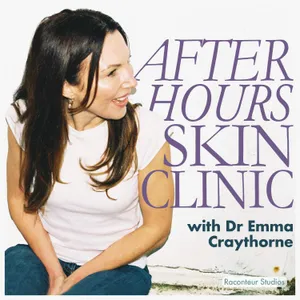
Free Daily Podcast Summary
After Hours Skin Clinic: Daily Summaries Delivered
by Raconteur Studios
After Hours Skin Clinic is the expert-led skincare podcast hosted by consultant dermatologists Dr Emma Craythorne and Dr Ellie Rashid. It’s laid-back and information-packed, covering everything you’ve ever wanted to know about your skin and how to look after it. Whether you're struggling with acne, eczema, psoriasis, rosacea, pigmentation, hair loss, sensitive skin or signs of ageing, or simply want to build a skincare routine that actually works, Emma and Ellie separate skincare facts from fiction with honest, practical advice you can trust. Along the way, they share their favourite products and unpick the evidence behind viral beauty trends all whilst answering your biggest skincare questions. Each episode explores the science behind healthy skin, covering - in detail - everything from SPF, retinoids, cleansers and moisturisers to cosmetic treatments, scalp health, skin cancer prevention and the latest dermatology research. You'll also hear conversations with leading experts from across dermatology and the wider beauty industry, helping you better understand your skin, make informed decisions and spend your money where it matters. No gimmicks. No fear mongering. No miracle cures. Just excellent company and trusted dermatology expertise, to help you care for your skin with confidence.
Latest Episodes
The most recent episodes — sign up to get AI-powered summaries of each one.
- 3 days ago22 min
DIY Peptide Injections: The Dark Side of Injectable Peptides & Copper Hype
From Jennifer Aniston’s peptide confessions to unregulated online vials sold for £5, teenagers asking for acne fixes, and DIY under-the-skin injections, peptides are e.v.e.r.y.w.h.e.r.e. This week, Dr Emma Craythorne and Dr Ellie Rashid pull back the curtain on the worrying, unregulated world of injectable "longevity" peptides and separate real pharmaceutical science from social media hype. In this episode, Emma and Ellie break down what a peptide actually is, why GLP-1 weight-loss medications (like Ozempic and Mounjaro) have created a halo effect for unsafe knock-offs, and why DIY under-the-skin injections carry massive unmonitored risks. Plus, they examine the truth behind copper peptides (GHK-Cu), why that viral blue liquid injection might be a complete waste of money, and the startling results of clinical studies that the beauty industry ignores. Episode Highlights: The Jennifer Aniston Effect: How celebrity skincare confessions can fuel an unregulated online frenzy. What Is a Peptide? Deconstructing the science of amino acid chains, from essential insulin to GLP-1s. The Unregulated Black Market: Why £5 internet vials labeled "for research purposes only" are a health disaster waiting to happen. BPC-157 & Small Animal Studies: Why rat tendon research does not translate to human safety or skin rejuvenation. The Truth About Copper Peptides (GHK-Cu): Debunking the myths around wound healing, acne, wrinkles, and reversing gray hair. The "No Side Effects Reported" Trap: Why non-drug products lack mandatory reporting systems for adverse events. Topical vs. Injectable: Why that viral blue copper peptide serum looks pretty on TikTok but lacks solid clinical backing. Key Questions Answered: Are injectable peptides bought online safe or effective for skin aging and longevity? Do topical copper peptides (GHK-Cu) actually cure acne, reduce wrinkles, or stop gray hair? What is the difference between prescription GLP-1 peptides and unregulated DIY peptide vials? Want to learn more about peptides? Listen to our episode 'Peptides: What Are They, How Do They Work, and Should You Use Them?' on Apple, Spotify or YouTube. Connect with us: After Hours Skin Clinic Instagram: @afterhoursskinclinic Dr Ellie Rashid Instagram: @drellierashid Dr Emma Craythorne Instagram: @dremmacraythorne TikTok: @afterhoursskinclinic Listen on Spotify: After Hours Skin Clinic Listen on Apple Podcasts: After Hours Skin Clinic 👇 Let us know your thoughts in the comments 💌 Send us your questions ahsc@raconteur.tv This is a Raconteur Studios Production. Learn more about your ad choices. Visit podcastchoices.com/adchoices
- 1 weeks ago12 min
Pregnancy Skincare: The Safe Ingredients & The Hard No’s According to Experts
Navigating skincare during pregnancy can feel like an overwhelming minefield of misinformation, fearmongering, and conflicting advice. This week on the After Hours Skin Clinic, Dr Emma Craythorne and Dr Ellie Rashid unpack the latest clinical evidence to bring expectant mothers complete peace of mind. In this episode, Emma and Ellie run down a definitive A-to-Z list of popular skincare ingredients: from tretinoin, retinol, and hydroquinone to azelaic acid, salicylic acid, and vitamin C. They explain the difference between localised skin application and systemic absorption, break down why you shouldn't panic if you used a retinoid before finding out you were pregnant, and share the exact ingredients dermatologists rely on to manage pregnancy acne, melasma, and rosacea safely. Episode Highlights: The Anxiety of Pregnancy Skincare: Why fear-based advice causes unnecessary stress and how science guides safe choices. Topical vs. Oral Retinoids: Why you should stop prescription tretinoin and why over-the-counter retinol are not advised, but why accidental use of topical retinoids isn't a reason to panic. The Hard No Ingredient: Why hydroquinone must be strictly avoided during pregnancy due to high systemic absorption into the bloodstream. Managing Hormonal Acne & Melasma Safely: Why azelaic acid, benzoyl peroxide, and low-dose glycolic acid are dermatologist-approved pregnancy powerhouses. Navigating Acids & Bakuchiol: Understanding the safety thresholds for salicylic acid (2% limit) and the latest 2026 data on bakuchiol. Nipple Balms & Newborn Safety: The single evidence-backed ingredient safe for breastfeeding babies (and why it makes the ultimate lip balm). Key Questions Answered: What skincare ingredients are strictly unsafe to use during pregnancy? Is it safe to use salicylic acid, glycolic acid, or azelaic acid while pregnant? What should I do if I accidentally used a retinoid before realizing I was pregnant? Products Mentioned: Klira (Custom prescription skincare formulated by Dr Emma Craythorne) Lansinoh Lanolin Nipple Cream / Lip Balm Azelaic Acid (Topical treatment evaluated for pregnancy safety) Hydroquinone (Prescription agent strictly not advised in pregnancy) Benzoyl Peroxide (Topical antibacterial ingredient cleared for pregnancy) Salicylic Acid (up to 2%) & Glycolic Acid Vitamin C (L-ascorbic acid, 10–15% at pH 2.5) Connect with us: After Hours Skin Clinic Instagram: @afterhoursskinclinic Dr Ellie Rashid: @drellierashid Dr Emma Craythorne: @dremmacraythorne TikTok: @afterhoursskinclinic YouTube: After Hours Skin Clinic Channel 👇 Let us know your thoughts in the comments 💌 Send us your questions ahsc@raconteur.tv This is a Raconteur Studios Production. Klira - Founded by Dr Emma Craythorne, Klira is a bespoke luxury skincare formula prescribed by dermatologists. You may hear it mentioned from time to time on the podcast and if you want to find out more head over to klira.skin Learn more about your ad choices. Visit podcastchoices.com/adchoices
- 2 weeks ago20 min
Bone-Smashing to Jaw Fracturing: The Dark World of ‘Looksmaxxing’
From jaw pain caused by "mewing" to extreme internet trends where young men take hammers to their face, the internet’s obsession with "looksmaxxing" is going far beyond a basic skincare routine. This week, Dr Emma Craythorne and Dr Ellie Rashid investigate the bizarre, dark, and often dangerous underworld of extreme aesthetic manipulation. In this episode, Emma and Ellie unpack the medical realities behind softmaxxing vs. hardmaxxing, the psychological impact of online body ideals, and why trying to "mew" or "bone-smash" your way to a chiselled jawline is a recipe for permanent damage. Plus, they explore how these online trends exploit vulnerability, the dangerous black-market use of prescription skin-bleaching ingredients like hydroquinone, and why true attraction is so much more than skin deep. Episode Highlights: The Medical Reality of 'Mewing': How a 15-year-old’s unexplained jaw pain led Dr Ellie down the internet rabbit hole of DIY facial re-shaping. Softmaxxing vs. Hardmaxxing: Breaking down the line between healthy self-care and extreme physical alteration. The Danger of 'Bone Smashing': Why hitting your face with a hammer triggers soft-tissue trauma and swelling rather than structural bone growth. Facial Nerve Damage & Fracture Risks: The permanent clinical consequences of unmonitored facial trauma. Black-Market Hydroquinone: The dangerous rise of unsupervised skin bleaching and the risk of irreversible ochronosis. Beyond 2D Aesthetics: Why online image trends exploit psychological vulnerabilities and distort real-world human connection. Key Questions Answered: What is looksmaxxing, and why are young men resorting to dangerous DIY face reshaping? Is "mewing" or "bone smashing" medically safe or effective for creating a stronger jawline? What are the clinical dangers of using hydroquinone without a dermatologist's supervision? 👇 Let us know your thoughts in the comments 💌 Send us your questions ahsc@raconteur.tv Connect with us: After Hours Skin Clinic Instagram: @afterhoursskinclinic Dr Ellie Rashid: @drellierashid Dr Emma Craythorne: @dremmacraythorne TikTok: @afterhoursskinclinic YouTube: After Hours Skin Clinic Channel This is a Raconteur Studios Production. Klira - Founded by Dr Emma Craythorne, Klira is a bespoke luxury skincare formula prescribed by dermatologists. You may hear it mentioned from time to time on the podcast and if you want to find out more head over to klira.skin Learn more about your ad choices. Visit podcastchoices.com/adchoices
- 3 weeks ago15 min
What Dermatologists Actually Spend Their Money On (From Luxuries to Cheap Finds)
From high-end night creams to cheap and effective cleansers, what do skin specialists actually buy with their own money? This week, Consultant Dermatologists Dr Emma Craythorne and Dr Ellie Rashid pull back the curtain on their personal shopping lists, revealing where they like to splurge and where they save the most when it comes to skin health and the right products or procedures. In this episode, Emma and Ellie unpack the truth about luxury vs. high-street skincare, why muscle-building exercise changes dermal thickness, and the surprising mental health "glow" that comes from joy, relaxation and movement. Plus, they break down why expensive collagen powders fail to deliver, which in-office laser technologies are actually worth the investment over home gadgets, and their favorite budget-friendly drugstore staples. Episode Highlights: The Science of Exercise & Dermal Thickness: How resistance training releases muscle myokines that directly boost skin structure and sleep quality. Sensory Joy vs. Active Ingredients: The real reason Dr Ellie splurges on her night cream (and how to layer it with prescription actives). In-Office Lasers vs. At-Home Gadgets: Why dermatologists skip handheld home devices in favor of Alexandrite, Nd:YAG, and CO2 in-clinic treatments. The Lymphatic Drainage Myth: How targeted massage techniques support fluid flow and overall relaxation. Dietary Collagen vs. Eating the Rainbow: Why expensive collagen supplements fall short compared to whole-food nutrition. Dermatologist-Approved Budget Staples: The exact drugstore cleansers, body creams, and anti-dandruff shampoos Emma and Ellie buy on repeat. Key Questions Answered: Do expensive night creams work better than drugstore moisturisers, or are you just paying for fragrance? Are at-home skincare devices and laser gadgets worth your money? What are the best affordable cleansers and body moisturizers recommended by dermatologists? Products Mentioned: Klira (Bespoke prescription skincare formulated by Dr Emma Craythorne) Niance Night Care Regenerate Aveeno Skin Relief Moisturizing Cream La Roche-Posay Lipikar Baume AP+M Byredo Hair Perfume Dyson Airwrap & GHD Hairdryer Ziip (Nano-current facial device) Cetaphil Gentle Skin Cleanser & Cetaphil Rich Night Cream CeraVe Hydrating Cleanser E45 Cream QV Skincare Range Head & Shoulders Shampoo (Classic Original & Citrus Fresh) Find The Times article mentioned in the episode here. 👇 Let us know your thoughts in the comments 💌 Send us your questions ahsc@raconteur.tv Connect with us: After Hours Skin Clinic Instagram: @afterhoursskinclinic Dr Ellie Rashid: @drellierashid Dr Emma Craythorne: @dremmacraythorne TikTok: @afterhoursskinclinic YouTube: After Hours Skin Clinic Channel This is a Raconteur Studios Production. Learn more about your ad choices. Visit podcastchoices.com/adchoices
- Sep 3, 202617 min
Collagen & Supplements: Everything You Need to Know
Do collagen supplements actually work? Collagen powders, drinks and supplements promise plumper skin, fewer wrinkles and more collagen, but what does the science actually show? In this episode of the After Hours Skin Clinic, Consultant Dermatologists Dr Emma Craythorne and Dr Ellie Rashid break down what collagen is, why we lose it as we age, and whether taking collagen orally can really improve your skin. They examine the evidence behind collagen supplements, discuss UV exposure and lifestyle factors that damage collagen, and explain which skincare ingredients and treatments have stronger evidence for supporting collagen. You'll learn: Whether collagen supplements are worth the money What happens to collagen as you age How UV exposure damages collagen Whether collagen can reduce wrinkles Why food and protein may matter more The evidence behind tretinoin, vitamin C and peptides How in-clinic treatments can stimulate collagen 👇 Let us know your thoughts in the comments 💌 Send us your questions ahsc@raconteur.tv 🤍 Follow us on Instagram 👀 Watch us on Youtube 🔔 Subscribe for dermatologist-led, evidence-based skincare. Producer: Ella Blaxill Series Editor: Eve StreeterMusic: Simon Elms This is a Raconteur Studios Production. Learn more about your ad choices. Visit podcastchoices.com/adchoices
- Aug 27, 202615 min
Can Exercise Actually Improve Your Skin?
We all know exercise is good for our heart, muscles and mental health, but what does it do for our skin? In this episode of the After Hours Skin Clinic, Consultant Dermatologists Dr Emma Craythorne and Dr Ellie Rashid answer the question: Can exercise actually make your skin healthier? They explore the surprising connection between exercise and skin health, including how resistance training may increase dermal thickness and collagen, why exercise is linked with less severe psoriasis, and whether sweating really “detoxes” your skin. They also discuss the potential downsides of exercise for conditions including rosacea, hives and sweat-related rashes, and what you can do if exercise triggers your skin. In this episode: Can exercise make your skin thicker? Exercise, collagen and skin ageing Why resistance training may benefit your skin The relationship between exercise and psoriasis Does sweating actually detox your skin? Exercise, blood flow and the post-workout glow Can exercise make rosacea worse? Exercise-induced hives and sweat rashes Why movement throughout the day matters How exercise can support better sleep and healthier skin 🎧 Listen on Apple Podcasts & Spotify. 🔔 Subscribe for dermatologist-led, evidence-based skincare. Producer: Ella Blaxill Series Editor: Eve Streeter Music: Simon Elms This is a Raconteur Studios Production. Learn more about your ad choices. Visit podcastchoices.com/adchoices
- Aug 20, 202627 min
The Truth About Sunburn: What Actually Helps?
Sunburn isn't just red, sore skin... Consultant Dermatologists Dr Emma Craythorne and Dr Ellie Rashid explain what happens to your skin when UV radiation causes sunburn, why repeated UV exposure increases the risk of skin damage and skin cancer, and what you can actually do if you've been caught out. You'll learn: Why some people burn faster than others What sunburn does to your DNA Whether there's such a thing as a safe tan Why sunbeds don't give you a protective "base tan" How to use the UV Index What actually helps treat sunburn Which popular sunburn remedies aren't worth it Products mentioned: Avène Thermal Spring Water Aloe vera gel Don't forget to follow and subscribe so you don't miss another episode! You can watch us on YouTube and find us on Instagram too. Producer: Ella Blaxill Series Editor: Eve Streeter Music: Simon Elms This is a Raconteur Studios Production. Learn more about your ad choices. Visit podcastchoices.com/adchoices
- Aug 13, 202629 min
Want healthier, thicker-looking hair? Start with your scalp.
In this episode of the After Hours Skin Clinic, Consultant Dermatologist Dr Ellie Rashid explains why scalp health is so important for healthy hair, from dandruff and oily scalps to hair growth, shedding and scalp inflammation. She tackles the biggest hair and scalp myths, including whether dirty hair grows better, whether you can "train" your scalp to produce less oil, and whether rosemary oil really works for hair growth. In this episode: What makes a healthy scalp Dandruff vs a dry scalp Seborrhoeic dermatitis and Malassezia How often should you wash your hair? Can you train your scalp to produce less oil? Does dirty hair grow faster? Should you exfoliate your scalp? Rosemary oil vs minoxidil Does shampoo affect hair growth? Why conditioner shouldn't go on your scalp When scalp inflammation can contribute to hair problems Products mentioned: Nizoral 2% Ketoconazole Shampoo Head & Shoulders Briogeo Hydrating Shampoo Pureology Hydrating Shampoo K18 Detox Shampoo Minoxidil 5% 🎧 Listen on Apple Podcasts & Spotify. 🔔 Subscribe for dermatologist-led, evidence-based skincare and hair advice. Producer: Ella Blaxill Series Editor: Eve Streeter Music: Simon Elms This is a Raconteur Studios Production. Learn more about your ad choices. Visit podcastchoices.com/adchoices
Get After Hours Skin Clinic summaries in your inbox
Free AI-powered daily recaps. Key takeaways, quotes, and mentions — in a 5-minute read.
Get Free Summaries →Free forever for up to 3 podcasts. No credit card required.
You Might Also Like
Listeners also like.
Skin Anarchy
Explores the science and stories behind skincare, makeup, haircare, and fragrance through interviews with beauty industry innovators.

Skincare Podcast
Explores skincare routines, acne solutions, and the emotional and holistic aspects of body care and well-being.
Skinquiries
A deep dive into skin health, exploring how lifestyle, nutrition, and mindset reflect in the body's largest organ.

Gloss Angeles
Beauty journalists discuss makeup, skincare, and wellness trends alongside industry experts and celebrities.

Well with Arielle Lorre
Explores holistic wellness through candid conversations with experts in health, beauty, fitness, and personal growth.

The Scalpel of Truth with Leisa Krauss
A no-nonsense podcast revealing unfiltered truths and growth strategies for professionals in the medical aesthetics industry.

Own Your Health
Katie Brindle discusses health, ageing, and wellness topics with expert insights and personal anecdotes to help listeners improve their well-being.
Red Pill Your Healthcast
Two healthcare providers discuss overlooked health issues and empower listeners to make informed decisions for their families.

Between Both Cheeks
Four women share candid, unfiltered conversations about beauty, business, and taboo topics with humor and honesty.

Health vs Hype with the American Medical Association
A medical expert debunks viral health trends and misinformation with science-backed insights from physicians.

The Bossticks
Unfiltered conversations with top leaders, entrepreneurs, and experts offering actionable advice for personal growth.

Afterpause
Evidence-based guidance on menopause, hormone health, sleep, and metabolism from a certified wellness coach and women's health experts.
About After Hours Skin Clinic
After Hours Skin Clinic is the expert-led skincare podcast hosted by consultant dermatologists Dr Emma Craythorne and Dr Ellie Rashid. It’s laid-back and information-packed, covering everything you’ve ever wanted to know about your skin and how to look after it. Whether you're struggling with acne, eczema, psoriasis, rosacea, pigmentation, hair loss, sensitive skin or signs of ageing, or simply want to build a skincare routine that actually works, Emma and Ellie separate skincare facts from fiction with honest, practical advice you can trust. Along the way, they share their favourite products and unpick the evidence behind viral beauty trends all whilst answering your biggest skincare questions. Each episode explores the science behind healthy skin, covering - in detail - everything from SPF, retinoids, cleansers and moisturisers to cosmetic treatments, scalp health, skin cancer prevention and the latest dermatology research. You'll also hear conversations with leading experts from across dermatology and the wider beauty industry, helping you better understand your skin, make informed decisions and spend your money where it matters. No gimmicks. No fear mongering. No miracle cures. Just excellent company and trusted dermatology expertise, to help you care for your skin with confidence.
Customized Recaps
AI-powered recaps with compact key takeaways, quotes, and insights.
Straight to Your Inbox
Get key takeaways from After Hours Skin Clinic in a 5-minute read.
Save Hours Every Week
Stay current on your favorite podcasts without falling behind.
Frequently Asked Questions
What is Podzilla's After Hours Skin Clinic daily summary?
It's a free AI-powered email that summarizes new episodes of After Hours Skin Clinic as soon as they're published. You get the key takeaways, notable quotes, and links & mentions — all in a quick read.
How does the After Hours Skin Clinic podcast summary work?
When a new episode drops, our AI transcribes and analyzes it, then generates a personalized summary tailored to your interests and profession. It's delivered to your inbox every morning.
Is this an official After Hours Skin Clinic product?
No. Podzilla is an independent service that summarizes publicly available podcast content. We're not affiliated with or endorsed by Raconteur Studios.
Can I get summaries of other podcasts too?
Absolutely! The free plan covers up to 3 podcasts. Upgrade to Pro for 15, or Premium for 50. Browse our full catalog at /podcasts.
How often does After Hours Skin Clinic release new episodes?
After Hours Skin Clinic publishes weekly. Our AI generates a summary within hours of each new episode.
What topics does After Hours Skin Clinic cover?
After Hours Skin Clinic covers topics including Arts, Fashion, Medicine, Fitness, Health & Fitness, Beauty. Our AI identifies the specific themes in each episode and highlights what matters most to you.
Start getting After Hours Skin Clinic summaries tomorrow morning.
Free forever for up to 3 podcasts. No credit card required.
Free forever for up to 3 podcasts. No credit card required.