Free Daily Podcast Summary
AfterMath: Daily Summaries Delivered
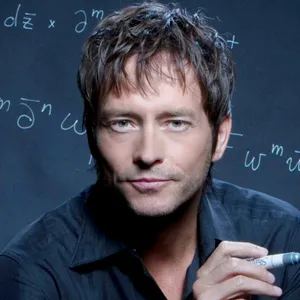
by Edward Frenkel
Welcome to AfterMath with Edward Frenkel. For all business inquiries please contact frenkelmath@gmail.com or mike@omegamedia.io
Latest Episodes
The most recent episodes — sign up to get AI-powered summaries of each one.
- Sep 11, 202523 min
Will AI Outsmart the Human Mind? | AfterMath Episode #3
In the third episode of his new series, AfterMath, Edward Frenkel dives into the question of whether computers can ever reach the cognitive capacity of the human mind -- specifically, in the realm of mathematics. While computers excel at number crunching, they struggle with general mathematical statements. Edward introduces the concept of the Turing Wall, a fundamental limit to what computers can do with numbers, named in honor of Alan Turing, the father of modern computing. Frenkel further explores insights from Alfred Tarski's Undefinability Theorem (closely connected to Kurt Gödel's Incompleteness Theorems). And he also touches upon the limitations of Large Language Models, such as ChatGPT, in handling mathematical truths. At the end of the episode, Frenkel goes back to the 3D sphere he talked about in Episode #2. He gives a 4D spacetime demonstration of it, using... a balloon. Edward Frenkel is a professor of mathematics at UC Berkeley, member of the American Academy of Arts and Sciences, winner of the Hermann Weyl Prize and the Euler Book Prize, and author of the international bestseller “Love and Math” which has been published in 20 languages. LINKS: • Edward Frenkel's Official Website: https://edwardfrenkel.com • Frenkel's X/Twitter: https://x.com/edfrenkel • Edward Frenkel's LinkedIn https://www.linkedin.com/in/edfrenkel/ • Edward Frenkel's Instagram: https://www.instagram.com/edfrenkel • Edward Frenkel's Facebook: https://www.facebook.com/edfrenkel/ • Edward Frenkel’s SoundCloud (DJ Moonstein): https://soundcloud.com/moonstein Tarski's Undefinability Theorem: https://en.wikipedia.org/wiki/Tarski%27s_undefinability_theorem Gödel's Incompleteness Theorems: https://en.wikipedia.org/wiki/G%C3%B6del%27s_incompleteness_theorems Alan Turing's quote is from his report "Proposed Electronic Calculator" submitted to the Executive Committee of the National Physical Laboratory in February 1946, published as Chapter 20 of the book "Alan Turing's Automatic Computing Engine: The Master Codebreaker's Struggle to build the Modern Computer," ed. B. Jack Copeland, Oxford University Press, 2008. Michael Atiyah's quote is from page 1 of the book "The Unravelers: Mathematical Snapshots" edited by Jean-François Dars, Annick Lesne, and Anne Papillault, translated by Vivienne Méla, A K Peters, 2008. It is included in the article "Sir Michael Atiyah, a Knight Mathematician" by Alain Connes and Joseph Kouneiher, published in the Notices of AMS, vol. 66, No. 10, pp. 1660-1671, 2019. Eric Weinstein's X/Twitter: https://x.com/EricRWeinstein We used clips from the following films: The Imitation Game, directed by Morten Tyldum, 2014: https://www.imdb.com/title/tt2084970/ A Few Good Men, directed by Rob Reiner, 1992: https://www.imdb.com/title/tt0104257/ I Heart Huckabees, directed by David O. Russell, 2004: https://www.imdb.com/title/tt0356721/ Dreamy image at the end (homage to Marc Chagall): https://www.craiyon.com/fr/image/kOKc1OCVSa6WwXVF8MJ0hQ Edward Frenkel’s book “Love and Math”: https://amzn.to/4evbBkS CREDITS: Production: Anna Fedorova Editing: Didi Kayling Animation: Ross Flat Pack FX For all business inquiries please contact frenkelmath@gmail.com © 2025 by Edward Frenkel
- Feb 11, 20251h 1m
The Source Code of Human Mind | AfterMath Episode #2
In the second episode of his new series, the AfterMath, Edward Frenkel talks about a unification of mathematics and analytic psychology. Following Carl Jung, Edward proposes that all mathematical objects and ideas come from archetypes in our Collective Unconscious (a common psychic realm to which our individual minds are connected). After a brief introduction to Jungian psychology, covering such topics as the Collective Unconscious and its building blocks called the archetypes, with special attention to the archetype of the Shadow, Frenkel talks about a specific mathematical archetype: the archetype of Flat Space. He explains what it means for humans to be "under the spell of this archetype," what it means to "project" this archetype, and what it means to "integrate" this archetype. He argues that when we integrate mathematical archetypes, new dimensions of reality open up to us. Edward Frenkel is a professor of mathematics at UC Berkeley, member of the American Academy of Arts and Sciences, winner of the Hermann Weyl Prize and the Euler Book Prize, and author of the international bestseller “Love and Math” which has been published in 19 languages. Listen and Watch the Video on Spotify! https://tinyurl.com/AfterMathSeries Episode 1 of AfterMath: https://youtu.be/7eejAeqYFCg LINKS: • Edward Frenkel's Official Website: https://edwardfrenkel.com • Edward Frenkel's X/Twitter: https://x.com/edfrenkel • Edward Frenkel's LinkedIn https://www.linkedin.com/in/edfrenkel/ • Edward Frenkel's Instagram: https://www.instagram.com/edfrenkel • Edward Frenkel's Facebook: https://www.facebook.com/edfrenkel/ • Edward Frenkel’s SoundCloud (DJ Moonstein): https://soundcloud.com/moonstein Edward Frenkel’s book “Love and Math”: https://amzn.to/4evbBkS A good introduction to Jungian psychology (with chapters by Carl Jung and Marie-Louise von Franz) is the book "Man and His Symbols": https://www.amazon.com/Man-His-Symbols-Carl-Jung/dp/0593499999/ Edward Frenkel's conversation with Curt Jaimungal on the TOE podcast about the Langlands Program: Part 1: https://youtu.be/RX1tZv_Nv4Y Part 2: https://youtu.be/0AC-Ol1z5vI CREDITS: Editing: Didi Kayling Animation: Ross Flat Pack FX, Neda Divzad For all business inquiries please contact frenkelmath@gmail.com or mike@omegamedia.io © 2025 by Edward Frenkel #science #math #mathematics #quantumphysics #philosophy #psychology #podcast #carljung
- Oct 24, 202442 min
AfterMath | Our Minds Are Connected According To Math
This is the pilot episode of Edward Frenkel’s new YouTube show/podcast “AfterMath” which will explore revolutionary ideas in mathematics, quantum physics, philosophy, and Jungian psychology, as well as interconnections between these subjects. In this episode, Edward explains in simple and accessible terms – based on mathematics! – that our minds are connected to each other at a much deeper level than is ordinarily understood. Edward Frenkel is a professor of mathematics at UC Berkeley, member of the American Academy of Arts and Sciences, winner of the Hermann Weyl Prize and the Euler Book Prize, and author of the international bestseller “Love and Math” which has been published in 19 languages. LINKS: • Edward Frenkel's Official Website: https://edwardfrenkel.com • Edward Frenkel's X/Twitter: https://x.com/edfrenkel • Edward Frenkel's LinkedIn https://www.linkedin.com/in/edfrenkel/ • Edward Frenkel's Instagram: https://www.instagram.com/edfrenkel • Edward Frenkel's Facebook: https://www.facebook.com/edfrenkel/ • Edward Frenkel’s SoundCloud (DJ Moonstein): https://soundcloud.com/moonstein Edward Frenkel’s book “Love and Math”: https://amzn.to/4evbBkS Erwin Schrödinger's book "Mind and Matter" appears as part of the collection "What is Life?": https://www.amazon.com/What-Life-Autobiographical-Sketches-Classics/dp/1107604664/ Lex Fridman's interview of Vladimir Vapnik: https://youtu.be/STFcvzoxVw4 A good introduction to Jungian psychology (with chapters by Carl Jung and Marie-Louise von Franz) is the book "Man and His Symbols": https://www.amazon.com/Man-His-Symbols-Carl-Jung/dp/0593499999/ A good introduction to Euclidean geometry is the book "The King of Infinite Space: Euclid and His Elements" by David Berlinski: https://www.amazon.com/King-Infinite-Space-Euclid-Elements/dp/0465065716 Stanley Kubrick's film "2001: A Space Odyssey": https://www.amazon.com/2001-Space-Odyssey-Douglas-Rain/dp/B000GOUXES On the observable Universe: https://www.britannica.com/topic/observable-universe © 2024 by Edward Frenkel #science #math #mathematics #quantumphysics #philosophy #psychology #podcast
About AfterMath
Welcome to AfterMath with Edward Frenkel. For all business inquiries please contact frenkelmath@gmail.com or mike@omegamedia.io
Customized Recaps
AI-powered recaps with compact key takeaways, quotes, and insights.
Straight to Your Inbox
Get key takeaways from AfterMath in a 5-minute read.
Save Hours Every Week
Stay current on your favorite podcasts without falling behind.
Frequently Asked Questions
What is Podzilla's AfterMath daily summary?
It's a free AI-powered email that summarizes new episodes of AfterMath as soon as they're published. You get the key takeaways, notable quotes, and links & mentions — all in a quick read.
How does the AfterMath podcast summary work?
When a new episode drops, our AI transcribes and analyzes it, then generates a personalized summary tailored to your interests and profession. It's delivered to your inbox every morning.
Is this an official AfterMath product?
No. Podzilla is an independent service that summarizes publicly available podcast content. We're not affiliated with or endorsed by Edward Frenkel.
Can I get summaries of other podcasts too?
Absolutely! The free plan covers up to 3 podcasts. Upgrade to Pro for 15, or Premium for 50. Browse our full catalog at /podcasts.
How often does AfterMath release new episodes?
AfterMath publishes occasional. Our AI generates a summary within hours of each new episode.
What topics does AfterMath cover?
AfterMath covers topics including Science, Mathematics, Philosophy, Culture, Society & Culture. Our AI identifies the specific themes in each episode and highlights what matters most to you.
Start getting AfterMath summaries tomorrow morning.
Free forever for up to 3 podcasts. No credit card required.
Free forever for up to 3 podcasts. No credit card required.