Free Daily Podcast Summary
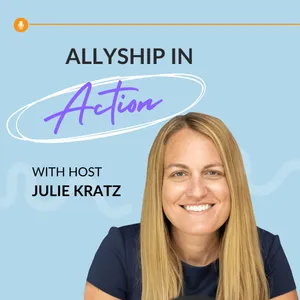
Allyship in Action: Daily Summaries Delivered
by Julie Kratz
I left Corporate America because the workplace culture sucked. That realization was my personal pivot point, and it's the entire driving force behind my podcast, Allyship in Action. Inclusive workplace culture doesn't happen by accident. It is built through intentional, consistent choices. In every episode of Allyship in Action, my goal is simple. My goal is to cut through the noise, skip the performative shiny stuff, and deliver real, practical tools that turn good intentions into sustainable workplace culture change. Here is the core summary of what Allyship in Action is all about, and how all leaders can be better allies. From Performative Statements to Everyday Practice We've all seen standard corporate declarations like posting a statement on social media or making a grand pledge. While public support isn't inherently bad, true allyship begins when the cameras are off. Allyship isn't a badge you wear or a title you give yourself. Allyship is a verb. It requires continuous learning, unlearning, and showing up even when things get messy or uncomfortable. In our conversations with workplace culture experts, we repeatedly unpack how real allies move from passive empathy to proactive intervention. That means noticing who gets interrupted in meetings, recognizing whose ideas are credited, and ensuring that opportunities are distributed equitably across the entire team. Rewiring Workplace Culture for True Inclusion A healthy workplace culture isn't created by ping-pong tables or free snacks. Inclusive workplace cultures are built on psychological safety, fairness, and trust. For genuine inclusion to take root, organizations must audit the subtle systems that drive daily behavior. How are your meetings structured? How are performance reviews conducted? Who holds the informal power, and how is feedback delivered? On the podcast, we showcase practical tactics—like rotating an Inclusion Booster role during weekly staff meetings to monitor airtime and ensure introverted or underrepresented voices are heard. When you design everyday workflows with inclusion in mind, you stop relying on heroic individual acts and start embedding equity into the DNA of your organization. Protecting the Pipeline and How Inclusion Drives Talent Retention There is both a deep human case and a rock-solid business case for DEI. In today's shifting marketplace, talent retention is one of the single biggest operational challenges leaders face. High performers, especially women, racially diverse team members, neurodivergent colleagues, and Gen Z workers, simply will not stay where they have to mask their true selves or fight uphill against systemic microaggressions. When employees feel seen, heard, and valued for their unique lived experiences, engagement skyrockets, innovation thrives, and turnover drops. Protecting your talent pipeline isn't about complex retention gimmicks; it's about fostering an environment where people know, without a shadow of a doubt, that they belong. Engaging People with Power One of our biggest research insights is that inclusion work stalls when it remains isolated in ERGs or HR departments. Without people in positions of power actively engaged as allies, systemic progress hits a ceiling. Powerful leaders often stay on the sidelines out of a fear of making a mistake or saying the wrong thing. Allyship in Action serves as a compassionate, pushback-proof invitation for leaders to step up. Allyship isn't about having all the answers or acting like a superhero. It's about having the humility to say, "I don't know, but I'm here to listen, learn, and leverage my influence to help." Allyship is a Continuous Journey Allyship is progress over perfection. It's a practice. We are all works in progress. If we want better workplaces, we have to stay curious, challenge our own blind spots, and commit to taking small, consistent micro-actions every single day. When we do allyship well, we don'
Latest Episodes
The most recent episodes — sign up to get AI-powered summaries of each one.
- Yesterday26 min
365: Challenging the Career Fantasy of Having It All with Corinne Low
Every now and then, a book comes along that completely stops me in my tracks. My conversation with Dr. Corinne Low—Wharton professor, economist, and author of Having It All—was one of those instances where data validated everything so many of us feel daily. I loved blending storytelling with hard research as we unpacked why so many high-achieving working parents feel so exhausted. As a working mom myself, hearing the data prove that working mothers today spend more time with their children than stay-at-home mothers did a generation ago was a massive aha moment. We realized the progress made for women in the workplace hasn't been matched by a revolution for men at home, leaving us playing with half a deck of cards. Together, we explored how shifting our workplace norms, setting clear boundaries, and reimagining partnership roles can build a system that actually works for everyone. Key Themes Why the Workplace Is Not Working for All Genders. The traditional workplace model was built around an outdated era where employees relied on a stay-at-home partner to manage home life. While women have made huge strides entering the corporate world, men haven't experienced a parallel revolution at home, leaving working women disproportionately burdened by domestic labor. "We had a gender revolution for women, and we did not have a gender revolution for men. We are showing up as equals in the workforce, but men are not showing up as equals at home." Ditch Flexibility for Boundaries. Flexibility often serves as a buzzword that leads to continuous work bleeding into personal life and eventual burnout. What employees, especially working mothers and Gen Z, actually need is predictability and hard boundaries that allow them to be full human beings outside of their jobs. "Many women in those more structured professions say, 'No, I don't want flexibility, I want boundaries, because what flexibility often means is that you always take your work home with you and you end up very burned out.'" What Organizations Can Do to Engage All Genders at Work. Employers must move past the misconception that inclusion conflicts with meritocracy. By actively dismantling biases and offering structured, predictable workflows that account for real-world caregiving duties, companies attract stronger talent, boost retention, and create a true meritocracy. "If you combat bias and some of these structural problems that keep women out of your firm, you could be moving closer to meritocracy, which means actually a competitive edge." Actionable Takeaway Evaluate your relationship with your career by running the unconstrained resources exercise: imagine a life with unlimited wealth and design your ideal week. Recognize that your job is a technology designed to convert time into money, and intentionally set boundaries so that work does not consume the time meant for the rest of your life. Follow Corrine at https://www.corinnelow.com/
- 1 weeks ago26 min
364: Purpose at Work with Scott Curran
Scott Curran is a social impact lawyer, advisor, and educator who spent ten years in the All-Star game of global philanthropy at the Clinton Foundation . When I sit back and look at the wacky headlines and persistent headwinds in our world right now, it can be really easy to throw up our hands . But Scott brings us right back to the science: human beings are naturally wired for good, and our brain chemistry practically throws a party of dopamine, serotonin, oxytocin, and endorphins whenever we do something kind or even just watch someone else do it ! Scott candidly shares how a middle-of-the-night couch conversation with his wife turned into a mission to give away a decade's worth of hard-earned tools to help leaders scale their impact . Purpose isn't just a fluffy concept. Purpose drives profits, sparks employee joy, and connects us to our shared humanity . Key Themes & Highlights <p id="p-rc_6f26f
- 2 weeks ago24 min
363: How to Lead with Optimism and Resilience in the Workplace with Michelle Gielan
Positive psychology researcher and author Michelle Gielan joins us to dive into two qualities I think about a lot: optimism and resilience. Early in my career, I used to think being optimistic meant slapping a smile on my face, grabbing a venti iced coffee, and pretending everything was fine, even when a project was burning down around me. (Spoiler alert: it doesn't work!) Real optimism isn't about ignoring the mess. As Michelle reminded me, it's about taking a realistic assessment of the present while holding onto the belief that our actions matter. We laughed about closet optimists, shared a few messy real-world stories, and unpacked how these mindsets work hand-in-hand to transform our workplaces. Here are the key themes from our conversation: Optimism vs. Resilience: Traditional optimism is the general expectation of good outcomes, whereas resilient optimism is grounded in deliberate behaviors that keep us hopeful when our plans face real-world testing. "Optimism is basically an expectation of good things to happen and resilient optimism is optimism that stays strong when it's tested." Why Optimism and Resilience Matter at Work: Cultivating a resilient, optimistic mindset directly boosts performance, keeps teams engaged, and significantly lowers the risk of burnout across organizations. "People who are in that top quartile are three times more likely to be highly engaged at their jobs and five times less likely to burn out." How to Instill Optimism at Work: Rather than fighting ingrained pessimism head-on, leaders can shift workplace culture by encouraging closet optimists to speak up and framing challenges around actionable solutions. "If we can even get them to speak up ever so slightly, now we're shifting the culture. We want to talk about the challenges we've been able to overcome and why that has worked." Actionable Takeaway Start your next meeting with a quick possibility prompt rather than a list of problems. Ask your team to share one thing that went well this week or one solution-oriented step they can take on a current challenge to help prime their brains for constructive action. Follow Michelle at https://michellegielan.com/resilient-optimism/
- 3 weeks ago22 min
362: Why Your Next Big Career Move Starts with Ten Minutes a Day with Jess Ekstrom
Finding balance in leadership and in life often feels like trying to do a high-wire act while juggling toddlers and a full-time career. That is why I was thrilled to catch up with Jess Ekstrom, founder of Mic Drop Workshop and author of Making It Without Losing It. Jess is a powerful storyteller who has built two million dollar businesses. She brings this incredible blend of real-world hustle and laugh-out-loud relatable humor. We got into what happens when we stop chasing everyone else's definition of success and start listening to what actually fuels us. Between tales of toddlers running yoga classes with a three-year-old and life on the road in an RV, Jess dropped some serious wisdom on how we can show up as better leaders, speakers, and advocates without burning ourselves out. Key Themes Lighthouse vs. Spotlight Speaking. True impact happens when you shift your focus away from self-perception and toward serving the audience. "Spotlight speakers go up on stage and they're concerned with perception, but a lighthouse speaker shifts the light from themselves to their audience or their listener. They're not concerned with perception, they're concerned with guidance." Driven by Intrinsic Motivation. Relying on external validation creates a fragile foundation for success, whereas focusing on internal purpose breeds resilience. "If we're always looking for external validation. We can't control that, versus intrinsically, we can only control what's happening inside of us and what motivates us." Managing Life's Four Cups. Time and energy are finite, so managing priorities requires recognizing that not every area of life can be completely full at once. "You have four cups: it's your relationships, your work, your health, your creativity. And then you have one jug of water every day. Every cup is not going to be at its brim. Some are going to have to suffer. And it's also temporary, and it's seasonal and shifts throughout life." Testing New Life Iterations. Growth doesn't require dismantling your entire life all at once. Growth can start with giving yourself permission to try new things in small doses. "Try something on. If there is a way that you can try on a new life, a new hobby, a new idea without blowing up your life in flames that can be very doable." Actionable Takeaway Test an ambition for 10 minutes a day. Instead of feeling pressured to make a dramatic, high-risk leap, give yourself a two-week trial period where you dedicate just 10 minutes daily to exploring that new goal or identity without any permanent commitments. Follow Jess at https://jessekstrom.com/
- 4 weeks ago27 min
361: Escaping the Reward Trap with Özgür Bolat
Have you ever tried dangling a carrot to get a desired behavior out of someone—whether it's offering points to your kids for clearing the dishwasher or dangling a bonus in front of your sales team—only to feel like you've created a transactional nightmare? You're definitely not alone! In this episode of Allyship in Action, I sat down with education scientist and author Dr. Özgür Bolat to unpack why our obsession with extrinsic rewards so often backfires. Drawing from his insightful book, The Reward Trap, Özgür helps us realize that while carrots might get temporary compliance, they secretly erode intrinsic motivation, trust, and genuine ownership. We had a candid, funny, and deeply relatable conversation about breaking free from the points system mindset at home and work, shifting our focus from control to true connection. Key Themes & Highlights Compliance vs. True Ownership: Extrinsic motivators like bonuses or points might get a task done, but they fail to foster genuine engagement or long-term commitment. "Rewards work if you want compliance. But if you want real ownership, real intrinsic motivation, real engagement and commitment, it may not work." The Hidden Costs on Trust and Fairness: Over-relying on rewards often triggers feelings of unfairness among peers and erodes trust between managers and employees or parents and children. "When there's a competition, when there's a winner, always there are some people who complain. As your manager, I start to think: Julie had the capacity... but she only did the bare minimum. Why? Then I will lose trust in you." How Rewards Narrow Creativity and Learning: Extrinsic incentives focus attention strictly on the immediate payout, leading people to take the easiest path rather than exploring creative solutions or deep learning. "When you offer a reward, you narrow that focus. If you offer a reward for creative work, you know what will happen? You will treat it as a mechanical work. Rewards can increase quantity, but not the quality." Shift from Control to Connection: True motivation comes from understanding underlying barriers, fostering agency, and creating shared values rather than imposing transactional rules. "In punishment and rewarding, you only care about one thing: outcome and consequences. You care about controlling. Beyond rewards, we move from control to connection." Actionable Takeaway. Instead of reaching for a reward or a penalty the next time someone struggles with engagement, pause and move from control to connection: ask open-ended questions to uncover the root cause of the hesitation, validate their experience, and collaboratively design a solution that builds internal ownership. Follow Ozgur at https://www.ozgurbolat.com.tr/
- Aug 30, 202628 min
360: Unlocking Neurodivergent Potential in the Workplace with Alex Partridge
This week, I had the absolute pleasure of sitting down with the incredible Alex Partridge—founder of UNILAD and Lad Bible, host of the ADHD Chatter podcast, and author of Why Does Everybody Hate Me?. We dove deep into a topic that so many managers want to get right, but often feel totally lost navigating: supporting neurodiversity in the workplace, specifically when it comes to ADHD. The first time I managed someone with ADHD, I felt lost. I wanted to be an ally and build an inclusive space, but I didn't know what real, everyday support looked like. As Alex and I chatted, it hit me again how much untapped creativity, innovation, and resilience lies within our neurodivergent team members—if we actually build environments where they can thrive. When we take a step back, set aside our assumptions, and approach people with genuine curiosity, we don't just become better leaders, we create workplaces where everyone feels safe enough to drop the mask and bring their whole self to work. Key Takeaways & Themes Understanding Rejection Sensitivity Dysphoria (RSD). "Children with ADHD are exposed to 20,000 extra micro-rejections in their formative years. Over a child's life, they add up, they compound, and they create an adult who suffers from extreme emotional pain when someone criticizes you or rejects you as an adult." Recognizing the Worksite Manifestations of RSD. "If you are living your life constantly expecting criticism or rejection around every single corner, you put up a guard to protect yourself. It means you can't do anything unless it's perfect. You'll stay in the office four hours later than everyone else, or you'll stay up all night simply to complete that work to such a high standard because the thought of your boss even making a tiny correction to it is so painful." Building Psychological Safety from the Top Down."When people in the office observe vulnerability coming from the top, that trickles down to them, and it creates the impression that if they ask for help. It sends the message that they can make that ask without fear of it being met with any kind of eye roll." The High Cost of Failing to Accommodate Neurodiversity."80% of neurodivergent employees actually leave a company within three months post-the hiring stage because they are too anxious in that environment to do the job that they're able to do." Fostering Allyship Through Curiosity Rather Than Judgment. "Approach the whole conversation with curiosity rather than judgment. Always have an open mind and have that curiosity to ask yourself, 'Maybe that is the better way to do it?' When that mindset shifts, then suddenly there's a whole door of possibilities that open up to you." Concluding Actionable Takeaway Leading with Open-Ended Support: Instead of singling employees out by pointing to specific neurodivergent traits or diagnosing behaviors, leaders should proactively offer broad, company-wide avenues for help—and regularly ask a simple, open-ended question like, "Is there anything I can help you with?" or "Do you want five minutes to think about that assignment before taking it on?" Follow Alex at https://www.alex-partridge.com/
- Aug 23, 202628 min
359: Designing Inclusion from the Inside Out with Nani Vishwanath
Welcome back to Allyship in Action! If you've been working in the diversity and inclusion space over the past few years, you know the corporate pendulum hasn't just swung—it's done full-on gymnastics. We've gone from the hyper-reactive commitments of 2020 to the nervous retreats of recent years, leaving many leaders wondering where to anchor themselves. I had the absolute joy of catching up with the brilliant Nani Vishwanath—a strategic leader at The Current Collective—who reminded me that when the external noise gets deafening, the answer isn't to duck and cover; it's to look inward. Nani brings a grounded, refreshingly practical perspective to systemic change (plus, anyone who can turn a conversation about helmet design for big hair into a masterclass on business strategy is my kind of human!). We dove deep into why true inclusion isn't an HR add-on, but a fundamental driver of business resilience. Key Themes 7 Whys Organizations often react to external pressures—whether chasing trends or dodging backlash—leading to fragile, unsustainable DEI strategies. Building an enduring foundation requires pushing past surface-level motives by continuously asking "why" until inclusion aligns directly with the core purpose and long-term success of the business. "If all of your leaders can do that [the 7 whys], the work is going to be so much more successful. And it should really be because of where we're trying to go strategically as a company..." — Nani Vishwanath Inclusive Design — With, Not For Designing workplace systems or products for marginalized communities without active collaboration misses the mark. True inclusive design builds with those who experience the most friction, uncovering systemic improvements that ultimately elevate the experience for everyone. "Build with and for those that are most marginalized or who face the biggest barriers... learn from their experiences with them, and then build something better. And it just leads to better design." — Nani Vishwanath Money is the Outcome — Relevance Diversity and inclusion are not merely cost centers or reactive PR measures; financial returns, innovation rates, and retention are downstream outcomes of staying relevant to an evolving workforce and customer base. "I think the money is truly an outcome of better design... the word I come back to a lot is relevance... you need to remain relevant to both your employees and to your consumers." — Nani Vishwanath Actionable Takeaway for Listeners Before rolling out your next inclusion initiative or revising a workplace policy, gather the team closest to the friction and run the 7 Whys exercise together. Keep asking "why" until you uncover a core reason that directly serves both your internal culture and your external business purpose.
- Aug 16, 202624 min
358: The Surprising Key to Longevity with Ezekiel Emanuel
Today we have Dr. Zeke Emanuel, whose new book Eat Your Ice Cream takes a refreshingly sensible look at longevity and what it actually takes to build a happy, healthy life. As an oncologist and world-renowned expert in bioethics and health policy, Dr. Emanuel has spent decades navigating complex medical landscapes—so when he talks about living better, I listen! What I love most about his approach is that he bypasses the extreme health trends and cuts straight to sustainable, real-world habits. We had such a fun conversation, diving into everything from the real math behind everyday risks to why building genuine human connection might just be your most powerful health routine. Key Takeaways Prioritize Life-Long Habits Over Extreme Trends. True longevity is built on sustainable, everyday choices rather than short-term self-deprivation or trendy fads. "You're going to have to do this for decades. And if you do it for decades it's got to be a habit that isn't about self-deprivation, because you will not stick to a habit that's self-depriving." Ground Risk in Perspective and Practical Action. People often fixate on sensationalized health risks or obsess over performance metrics, whereas practical risk assessment leads to far better peace of mind and realistic decisions. "Let's put things in perspective—and not enough people put things in perspective of how 'schmucky' are you. If you're doing [a metric or wearable] for compliance and it's not a motivator, it's anxiety-provoking—stop doing it." Nurture Social Connections as a Core Biological Health Routine. Building and maintaining strong relationships isn't just psychologically pleasant. Relationships (like allyship) directly impact stress hormones, inflammation, and overall physiological well-being. "It's not just in your head, as it were, but it is in your biology. The importance of relationships for health, wellness, and longevity is the most important thing you can do." Keep Learning and Stay Open to Nuanced Science. Cognitive health thrives on challenging the brain with new experiences, alongside maintaining an openness to evolving medical insights rather than rigid dogmatism. "It's good to use your brain in different ways. I'm always open. We've got to be open to new ideas and new research." Actionable Takeaway for Listeners Turn your wellness routines into social events. Whether it's inviting a friend along for your daily walk, joining a local club, or sharing a whole-food meal with family, combining social connection with healthy habits amplifies the physical and emotional benefits of both. Follow Dr. Emanuel at https://www.ezekielemanuel.com/
About Allyship in Action
I left Corporate America because the workplace culture sucked. That realization was my personal pivot point, and it's the entire driving force behind my podcast, Allyship in Action. Inclusive workplace culture doesn't happen by accident. It is built through intentional, consistent choices. In every episode of Allyship in Action, my goal is simple. My goal is to cut through the noise, skip the performative shiny stuff, and deliver real, practical tools that turn good intentions into sustainable workplace culture change. Here is the core summary of what Allyship in Action is all about, and how all leaders can be better allies. From Performative Statements to Everyday Practice We've all seen standard corporate declarations like posting a statement on social media or making a grand pledge. While public support isn't inherently bad, true allyship begins when the cameras are off. Allyship isn't a badge you wear or a title you give yourself. Allyship is a verb. It requires continuous learning, unlearning, and showing up even when things get messy or uncomfortable. In our conversations with workplace culture experts, we repeatedly unpack how real allies move from passive empathy to proactive intervention. That means noticing who gets interrupted in meetings, recognizing whose ideas are credited, and ensuring that opportunities are distributed equitably across the entire team. Rewiring Workplace Culture for True Inclusion A healthy workplace culture isn't created by ping-pong tables or free snacks. Inclusive workplace cultures are built on psychological safety, fairness, and trust. For genuine inclusion to take root, organizations must audit the subtle systems that drive daily behavior. How are your meetings structured? How are performance reviews conducted? Who holds the informal power, and how is feedback delivered? On the podcast, we showcase practical tactics—like rotating an Inclusion Booster role during weekly staff meetings to monitor airtime and ensure introverted or underrepresented voices are heard. When you design everyday workflows with inclusion in mind, you stop relying on heroic individual acts and start embedding equity into the DNA of your organization. Protecting the Pipeline and How Inclusion Drives Talent Retention There is both a deep human case and a rock-solid business case for DEI. In today's shifting marketplace, talent retention is one of the single biggest operational challenges leaders face. High performers, especially women, racially diverse team members, neurodivergent colleagues, and Gen Z workers, simply will not stay where they have to mask their true selves or fight uphill against systemic microaggressions. When employees feel seen, heard, and valued for their unique lived experiences, engagement skyrockets, innovation thrives, and turnover drops. Protecting your talent pipeline isn't about complex retention gimmicks; it's about fostering an environment where people know, without a shadow of a doubt, that they belong. Engaging People with Power One of our biggest research insights is that inclusion work stalls when it remains isolated in ERGs or HR departments. Without people in positions of power actively engaged as allies, systemic progress hits a ceiling. Powerful leaders often stay on the sidelines out of a fear of making a mistake or saying the wrong thing. Allyship in Action serves as a compassionate, pushback-proof invitation for leaders to step up. Allyship isn't about having all the answers or acting like a superhero. It's about having the humility to say, "I don't know, but I'm here to listen, learn, and leverage my influence to help." Allyship is a Continuous Journey Allyship is progress over perfection. It's a practice. We are all works in progress. If we want better workplaces, we have to stay curious, challenge our own blind spots, and commit to taking small, consistent micro-actions every single day. When we do allyship well, we don'
Customized Recaps
AI-powered recaps with compact key takeaways, quotes, and insights.
Straight to Your Inbox
Get key takeaways from Allyship in Action in a 5-minute read.
Save Hours Every Week
Stay current on your favorite podcasts without falling behind.
Frequently Asked Questions
What is Podzilla's Allyship in Action daily summary?
It's a free AI-powered email that summarizes new episodes of Allyship in Action as soon as they're published. You get the key takeaways, notable quotes, and links & mentions — all in a quick read.
How does the Allyship in Action podcast summary work?
When a new episode drops, our AI transcribes and analyzes it, then generates a personalized summary tailored to your interests and profession. It's delivered to your inbox every morning.
Is this an official Allyship in Action product?
No. Podzilla is an independent service that summarizes publicly available podcast content. We're not affiliated with or endorsed by Julie Kratz.
Can I get summaries of other podcasts too?
Absolutely! The free plan covers up to 3 podcasts. Upgrade to Pro for 15, or Premium for 50. Browse our full catalog at /podcasts.
How often does Allyship in Action release new episodes?
Allyship in Action publishes weekly. Our AI generates a summary within hours of each new episode.
What topics does Allyship in Action cover?
Allyship in Action covers topics including Business, Management, Careers. Our AI identifies the specific themes in each episode and highlights what matters most to you.
Start getting Allyship in Action summaries tomorrow morning.
Free forever for up to 3 podcasts. No credit card required.
Free forever for up to 3 podcasts. No credit card required.