Free Daily Podcast Summary
American History Tellers: Daily Summaries Delivered
by Audible
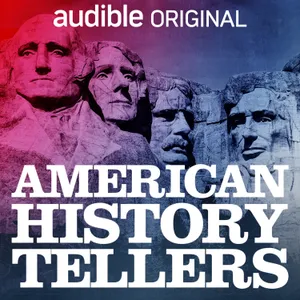
The Cold War, Prohibition, the Gold Rush, the Space Race. Every part of your life - the words you speak, the ideas you share - can be traced to our history, but how well do you really know the stories that made America? We'll take you to the events, the times and the people that shaped our nation. And we'll show you how our history affected them, their families and affects you today. Hosted by Lindsay Graham (not the Senator).
Latest Episodes
The most recent episodes — sign up to get AI-powered summaries of each one.
- 3 days ago39 min
Ellis Island | Yearning to Breathe Free | 1
In the 19th century, economic turmoil, political unrest, and religious persecution drove record numbers of Europeans to American shores — making New York City the busiest port of entry. But new immigrants faced a dizzying array of conmen and thieves eager to prey on their confusion. In 1892, the U.S. government reined in the chaos by establishing a federal immigration depot on Ellis Island in New York Harbor. Over the next three decades, a small group of government inspectors would confront one of the largest mass migrations in the history of the world. See Privacy Policy at https://art19.com/privacy and California Privacy Notice at https://art19.com/privacy#do-not-sell-my-info.
- 5 days ago5 min
Listen Now: My Mom’s Murder
Lauren Malloy was a baby when her mother, Lori, was murdered in East Providence, Rhode Island. For thirty years, no one told her. Everyone said Lori died of natural causes. Then a stranger sent Lauren a message — and the lie collapsed. Now Lauren is investigating her own mother’s murder. She’s recorded hundreds of hours of interviews with law enforcement, family, childhood friends, and people who won’t stop contradicting each other. Every answer opens a darker question. Every person she trusts seems to be hiding something. And the closer she gets to the truth, the more she realizes the people she trusts may be the ones with the most to hide. A 10-part true crime investigation hosted by the victim’s daughter. Lauren’s mission: to finally uncover the identity of Lori’s killer. Audible subscribers can binge all 10 episodes early and ad-free right now. Join Audible in the Audible App or by subscribing on Apple Podcasts. Listen now: HERE See Privacy Policy at https://art19.com/privacy and California Privacy Notice at https://art19.com/privacy#do-not-sell-my-info.
- 1 weeks ago47 min
FAN FAVORITE: Stonewall | Pride | 4
After a late-night police raid on the Stonewall Inn in June 1969, the LGBTQ community fought back in the streets of Greenwich Village. Suddenly, the LGBTQ rights movement found itself catapulted onto the national stage. But questions of how radical an approach to take would pit young activists against the pioneers of the 1950s and 1960s. Even with the formation of new organizations like the Gay Liberation Front and the Gay Activists Alliance, questions emerged. Would it be better to take part in the political process? Or to stage confrontational “zaps?”These new groups would soon be engulfed by in-fighting over goals, strategy, membership, and how the LGTBQ rights movement fit into the larger landscape of radical activism. Meanwhile, Sylvia Rivera and Marsha P. Johnson would form their own group – one that would speak directly to issues facing unhoused people, and the trans community in New York city.See Privacy Policy at https://art19.com/privacy and California Privacy Notice at https://art19.com/privacy#do-not-sell-my-info.
- 2 weeks ago39 min
FAN FAVORITE: Stonewall | Why Don't You Do Something? | 3
Resistance at restaurants in San Francisco and Philadelphia showcased the building tension as trans activists challenged long-standing policies of discrimination. But leading gay rights groups continued to stress a calm, non-confrontational approach to reform.That all changed in the early morning hours of June 28, 1969, when police raided the Stonewall Inn. For police, it was just another raid, but this time would be different: the Stonewall’s patrons would fight back. The clashes on Christopher Street would become an uprising against police oppression with long-lasting reverberations for the LGBTQ rights movement.See Privacy Policy at https://art19.com/privacy and California Privacy Notice at https://art19.com/privacy#do-not-sell-my-info.
- 3 weeks ago44 min
FAN FAVORITE: Stonewall | Turbulence | 2
As the 1960s dawned, LGBTQ activists began to voice frustration with the gradual approach to civil rights advocated by groups like the Mattachine Society. If LGBTQ people wanted to make real progress, they concluded, they would need to take direct action — starting with tactics shared with the Black civil rights movement. Through protests and sit-ins in places like New York, Washington DC, and San Francisco, LGBTQ activists started agitating for greater rights. They would tackle employment discrimination along with the widespread issues of police harassment, abuse, and entrapment, which targeted LGBTQ people nationwide. But as white gay activists pushed for acceptance by a white, middle-class American majority, transgender activists and people of color faced even greater challenges related to their race and gender identity. They would respond by forging their own communities and strategies to protect themselves from harassment and violence. See Privacy Policy at https://art19.com/privacy and California Privacy Notice at https://art19.com/privacy#do-not-sell-my-info.
- Sep 2, 202639 min
FAN FAVORITE: Stonewall | Evolutionary, Not Revolutionary | 1
In the summer of 1969, a police raid on the Stonewall Inn sparked a riot on the streets of Greenwich Village. The protest marked a turning point in the gay rights movement. But the famed resistance in New York capped a movement that had been building for nearly two decades in America, as LGBTQ people mobilized to fight widespread and pervasive discrimination.In the years following World War II, members of the LGBTQ community faced broad discrimination — from strict laws that oppressed them, churches that declared their very existence sinful, and a government that demonized them. They would push back against the American Psychological Association, the FBI and finally, the courts. Slowly, LGBTQ activism would emerge from out of the closet and onto the American scene.This series follows strands of the gay rights movement in America from 1950 until 1970. But it’s just the beginning of a story about a fight for social and political equality — a battle that’s still being fought today.See Privacy Policy at https://art19.com/privacy and California Privacy Notice at https://art19.com/privacy#do-not-sell-my-info.
- Aug 26, 202639 min
Frontier Legends | Buffalo Bill Cody | 6
Few people are more closely associated with the Western Frontier than William F. “Buffalo Bill” Cody. Born in 1846, Cody came of age during the era of Westward expansion. As a young man, he began scouting for the 5th Cavalry and eventually built a reputation as a skilled frontiersman. He later took his exploits to the stage and then created Buffalo Bill’s Wild West arena show, which carried the image of the American West around the globe. In this episode, Lindsay is joined by Dr. Paul Andrew Hutton, author of the New York Times bestseller The Undiscovered Country: Triumph, Tragedy and the Shaping of the American West, and Tate Chair of Western History in the Buffalo Bill Center of the West in Cody, Wyoming, to discuss Buffalo Bill’s central role in shaping the mythology of the Wild West. See Privacy Policy at https://art19.com/privacy and California Privacy Notice at https://art19.com/privacy#do-not-sell-my-info.
- Aug 24, 20266 min
Listen Now: Audible True Crime
Introducing Audible True Crime, a dedicated podcast feed where we bring you the best podcasts in true crime, with episodes dropping every single week. Find your next bingeable series about unsolved murders, cold cases, scams and mysteries. This is the cream of the crop of Audible podcasts, featuring award-winning series and soon-to-be favorites. Stop pestering your friends or searching “best true crime podcast” on Google. Up first, Guru: The Dark Side of Enlightenment: A search for spiritual guidance leads a group of strangers to seek direction from a self-help guru. And not just any guru. James Arthur Ray is an Oprah endorsed motivational speaker and entrepreneur whose unorthodox methods that blend self-improvement and economic advice have won him praise and a growing following. He’s fast becoming a self-help superstar. But Ray’s increasingly extreme methods push his followers to their limits. What are they seeking? What does he offer? And what happens when it all goes too far, and people die? Listen to Audible True Crime wherever you get your podcasts. Audible subscribers can binge all episodes on Audible True Crime early and ad-free right now. Join Audible in the Audible App or by subscribing on Apple Podcasts. Listen now: link.pscrb.fm/6438e/fdaudibletruecrimeron-93b44 See Privacy Policy at https://art19.com/privacy and California Privacy Notice at https://art19.com/privacy#do-not-sell-my-info.
Get American History Tellers summaries in your inbox
Free AI-powered daily recaps. Key takeaways, quotes, and mentions — in a 5-minute read.
Get Free Summaries →Free forever for up to 3 podcasts. No credit card required.
You Might Also Like
Listeners also like.

American Scandal
A deep dive into infamous American scandals, exploring the lies, corruption, and ambition behind the fall of powerful figures.

Tides of History
Explores how historical events and forces have shaped modern societies, cultures, and global systems.

American History Hit
Examines key events in American history, from colonial conflicts to civil rights, through expert interviews and detailed storytelling.

British Scandal
Examines British political and social scandals, focusing on power, accountability, and the people behind historic events.

Business Movers
True stories of visionary business leaders and the bold risks, successes, and failures that shaped iconic companies and changed the world.

HISTORY This Week
A weekly look at pivotal historical events and the people behind them, from famous figures to lesser-known individuals who shaped the world.
Our Fake History
Explores the blurred line between historical events and the myths surrounding them.
History on Trial
Examines famous American trials to reveal how legal battles reflected and shaped cultural forces of their time.

Noiser Presents
Dramatic, immersive retellings of history’s most pivotal events through expert interviews and eyewitness accounts.

The Spy Who
Real spy stories from intelligence operatives who risked everything in high-stakes missions for national or personal interests.

Slow Burn
Examines pivotal political and cultural moments in American history through archival audio and firsthand accounts.

American Shadows
A bi-weekly podcast exploring forgotten and dark stories from American history, from stolen corpses to failed rainmaking.
About American History Tellers
The Cold War, Prohibition, the Gold Rush, the Space Race. Every part of your life - the words you speak, the ideas you share - can be traced to our history, but how well do you really know the stories that made America? We'll take you to the events, the times and the people that shaped our nation. And we'll show you how our history affected them, their families and affects you today. Hosted by Lindsay Graham (not the Senator).
Customized Recaps
AI-powered recaps with compact key takeaways, quotes, and insights.
Straight to Your Inbox
Get key takeaways from American History Tellers in a 5-minute read.
Save Hours Every Week
Stay current on your favorite podcasts without falling behind.
Frequently Asked Questions
What is Podzilla's American History Tellers daily summary?
It's a free AI-powered email that summarizes new episodes of American History Tellers as soon as they're published. You get the key takeaways, notable quotes, and links & mentions — all in a quick read.
How does the American History Tellers podcast summary work?
When a new episode drops, our AI transcribes and analyzes it, then generates a personalized summary tailored to your interests and profession. It's delivered to your inbox every morning.
Is this an official American History Tellers product?
No. Podzilla is an independent service that summarizes publicly available podcast content. We're not affiliated with or endorsed by Audible.
Can I get summaries of other podcasts too?
Absolutely! The free plan covers up to 3 podcasts. Upgrade to Pro for 15, or Premium for 50. Browse our full catalog at /podcasts.
How often does American History Tellers release new episodes?
American History Tellers publishes weekly. Our AI generates a summary within hours of each new episode.
What topics does American History Tellers cover?
American History Tellers covers topics including History, Education, Culture, Kids & Family, Society & Culture, Family. Our AI identifies the specific themes in each episode and highlights what matters most to you.
Start getting American History Tellers summaries tomorrow morning.
Free forever for up to 3 podcasts. No credit card required.
Free forever for up to 3 podcasts. No credit card required.