Free Daily Podcast Summary
Ask Us Anything by Popular Science: Daily Summaries Delivered
by Popular Science
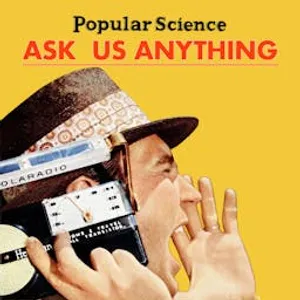
Popular Science answers your most outlandish, mind-burning questions—from the everyday things you’ve always wondered to the bizarre things you never thought to ask. Join our editors as they explain it all.
Latest Episodes
The most recent episodes — sign up to get AI-powered summaries of each one.
- 6 days ago18 min
What’s the best sleep position?
Everyone knows that getting good sleep is the best thing you can do for your body, but... does it matter how you lay your head (and body)? PopSci Editor Sarah Durn and Editor-in-Chief Annie Colbert talk through their own sleep preferences before drifting off into the research on what's really the best way to position yourself for a good night's rest (hint: PILLOWS!) Read the Popular Science stories that inspired the episode: https://www.popsci.com/health/best-sleep-position/ https://www.popsci.com/health/can-tracking-sleep-make-it-worse/ If you have a question for a future episode, go to https://popsci.com/ask Learn more about your ad choices. Visit megaphone.fm/adchoices
- 2 weeks ago18 min
What's the most eco-friendly burial option? (ENCORE)
Note: Our show has grown a LOT recently and a ton of new listeners have joined us, so we decided it’d be fun to share one of our favorite episodes since we relaunched, which ALSO happens to be among the most-popular questions we’ve ever answered - ENJOY! After a lifetime of trying to put things in the right bin, we all eventually arrive at the ultimate recycling dilemma: what to do with our bodies after we die? PopSci Editors Sarah Durn and Laura Baisas go on exploration to find out what is the most environmentally friendly option for handling human remains? Despite all the new technology, experts say there’s one clear answer, and it’s surprisingly old-school. Read the full story that inspired this episode: https://www.popsci.com/technology/cremation-burial-most-eco-friendly/ If you have a question for a future episode, go to https://popsci.com/ask Learn more about your ad choices. Visit megaphone.fm/adchoices
- Sep 2, 202618 min
Why do dogs tilt their heads?
Dog behavior exploration incoming! PopSci Editor Sarah Durn and Editor-in-Chief Annie Colbert talk through their personal dog experiences before lolling their heads through the scientific explanations for why dog's often look like they're REALLY trying to understand what we're trying to tell them Read the Popular Science stories that inspired the episode: https://www.popsci.com/environment/why-dogs-tilt-their-heads/ https://www.popsci.com/science/how-to-test-pet-intelligence/ If you have a question for a future episode, go to https://popsci.com/ask Learn more about your ad choices. Visit megaphone.fm/adchoices
- Aug 19, 202619 min
How scary is Yellowstone's supervolcano?
It's volcano time, as PopSci Editor Sarah Durn and Editor-in-Chief Annie Colbert dig deep into the structure of the Yellowstone Caldera to figure out what's brewing beneath it, and just how much devastation it could unleash if it ever woke up.. Read the Popular Science stories that inspired the episode: https://www.popsci.com/environment/what-if-yellowstone-volcano-erupted/https://www.popsci.com/environment/yellowstone-supervolcano-bulge/ If you have a question for a future episode, go to https://popsci.com/ask Learn more about your ad choices. Visit megaphone.fm/adchoices
- Aug 5, 202617 min
What are the most common sunscreen myths
It's time to separate facts from fiction about sunscreen, as PopSci Editor Sarah Durn and News Editor Laura Baisas take us through the four most common misconceptions people have about suncreen and how it should be used. Plus, did you know that e.coli bacteria has been created that can manufacture organic sunscreen???? Read the Popular Science stories that inspired the episode:https://www.popsci.com/health/do-i-need-sunscreen-every-day/https://www.popsci.com/science/sunscreen-made-from-e-coli/ If you have a question for a future episode, go to https://popsci.com/ask Learn more about your ad choices. Visit megaphone.fm/adchoices
- Jul 22, 202618 min
How did airplane seats get SO small?
Welcome back to our show! PopSci Editor Sarah Durn and Editor-in-Chief Annie Colbert had a little time off, but they return to figure out just how passengers ended up with barely enough room on airplanes for bodies to fit, and what it might mean for passenger safety. Read the Popular Science story that inspired the episode: https://www.popsci.com/science/why-are-airline-seats-so-small/ If you have a question for a future episode, go to https://popsci.com/ask Learn more about your ad choices. Visit megaphone.fm/adchoices
- Jun 25, 202616 min
Why are most people right handed?
We're talking hands, and that's no jive, as PopSci Editor Sarah Durn and Editor-in-Chief Annie Colbert gesture wildly through a conversation about why roughly 90% of humans have right-hand dominance. Also a special conversation with archaeologist Dr. Anna Goldfield about right and left-handedness in humanity's ancient ancestors. Read the Popular Science story that inspired the episode: https://www.popsci.com/science/why-are-most-people-right-handed/ If you have a question for a future episode, go to https://popsci.com/ask Learn more about your ad choices. Visit megaphone.fm/adchoices
- Jun 10, 202617 min
What makes childhood summers last forever?
It's summer and the days are just packed, as PopSci Editor Sarah Durn and Editor-in-Chief Annie Colbert dig deep through their memories to figure out why summers stretched seemingly forever as kids, but go by in a flash as adults. Read the Popular Science story that inspired the episode: https://www.popsci.com/science/why-childhood-summers-felt-longer/ Learn all about cognitive offloading, the good and the bad: https://www.popsci.com/health/how-documenting-everything-changes-your-brain-cognitive-offloading/ If you have a question for a future episode, go to https://popsci.com/ask Learn more about your ad choices. Visit megaphone.fm/adchoices
Get Ask Us Anything by Popular Science summaries in your inbox
Free AI-powered daily recaps. Key takeaways, quotes, and mentions — in a 5-minute read.
Get Free Summaries →Free forever for up to 3 podcasts. No credit card required.
You Might Also Like
Listeners also like.
The Weirdest Thing I Learned This Week
Three science journalists share bizarre and little-known facts they’ve recently discovered.
CrowdScience
Explores listener-submitted questions about life, Earth, and the universe with scientists at the forefront of research.
Science Quickly
A bite-sized science podcast exploring discoveries with journalists and experts.
Seeking A Scientist
A chemist hosts conversations with scientists to explore futuristic scientific possibilities and their real-world implications.
Science Friday
Explores diverse science and technology topics, from space to microscopic life, with engaging educational stories.
Science Vs
A show that investigates popular topics and myths by analyzing scientific evidence to determine what’s fact, fiction, or uncertain.
BrainStuff
Explores and explains the science behind everyday phenomena, from popcorn to particle physics.
Sleep Tight Science - A Bedtime Science Podcast For Kids
A bedtime science podcast for kids that answers their big questions about the natural world in a calming, family-friendly way.
Ask a Spaceman!
An astrophysicist answers listener questions about space, time, and the universe.
The Rest Is Science
Hannah Fry and Michael Stevens explore the strange and overlooked questions at the boundary of scientific understanding.
The World, the Universe and Us
Explores big scientific questions about life, consciousness, climate, and the cosmos with expert scientists and New Scientist journalists.
Unbiased Science
Dr. Jess Steier and guests analyze viral health claims using scientific evidence and explain key findings for everyday conversations.
About Ask Us Anything by Popular Science
Popular Science answers your most outlandish, mind-burning questions—from the everyday things you’ve always wondered to the bizarre things you never thought to ask. Join our editors as they explain it all.
Customized Recaps
AI-powered recaps with compact key takeaways, quotes, and insights.
Straight to Your Inbox
Get key takeaways from Ask Us Anything by Popular Science in a 5-minute read.
Save Hours Every Week
Stay current on your favorite podcasts without falling behind.
Frequently Asked Questions
What is Podzilla's Ask Us Anything by Popular Science daily summary?
It's a free AI-powered email that summarizes new episodes of Ask Us Anything by Popular Science as soon as they're published. You get the key takeaways, notable quotes, and links & mentions — all in a quick read.
How does the Ask Us Anything by Popular Science podcast summary work?
When a new episode drops, our AI transcribes and analyzes it, then generates a personalized summary tailored to your interests and profession. It's delivered to your inbox every morning.
Is this an official Ask Us Anything by Popular Science product?
No. Podzilla is an independent service that summarizes publicly available podcast content. We're not affiliated with or endorsed by Popular Science.
Can I get summaries of other podcasts too?
Absolutely! The free plan covers up to 3 podcasts. Upgrade to Pro for 15, or Premium for 50. Browse our full catalog at /podcasts.
How often does Ask Us Anything by Popular Science release new episodes?
Ask Us Anything by Popular Science publishes biweekly. Our AI generates a summary within hours of each new episode.
What topics does Ask Us Anything by Popular Science cover?
Ask Us Anything by Popular Science covers topics including Science. Our AI identifies the specific themes in each episode and highlights what matters most to you.
Start getting Ask Us Anything by Popular Science summaries tomorrow morning.
Free forever for up to 3 podcasts. No credit card required.
Free forever for up to 3 podcasts. No credit card required.