Free Daily Podcast Summary
Beautiful Business: Daily Summaries Delivered
by Steven Morris
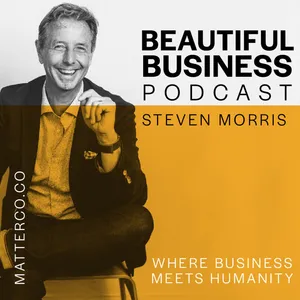
Many business owners strategize the purpose and function of their business, but few strive to make it “beautiful.” Each week, listen in as Steven Morris and his guests discuss brand, culture, and business strategies that will create new ways to shape your beautiful business. If you are ready to evolve your business from functional to beautiful, this is the podcast for you.
Latest Episodes
The most recent episodes — sign up to get AI-powered summaries of each one.
- 4 days ago3 min
Best of… Essays
In today's episode, I reflect on a question that prompted an unexpected journey backward: Have I ever gathered my best essays into a book? While the answer is not yet, the question offered an opportunity to revisit the work and examine which ideas have stayed with readers over time. Looking back across several years of writing, patterns began to emerge. Certain essays continued to attract attention not because they chased trends, but because they explored enduring leadership challenges. The essays featured in this collection touch on themes that sit at the heart of leadership: building trust, shaping culture, navigating pressure, developing character, and creating environments where people can flourish. Some explore the importance of standing apart in a world that rewards conformity. Others examine how teams build coherence, how culture evolves into community, and why seemingly small behaviours can have outsized consequences. Together, they form a snapshot of the questions leaders continue to wrestle with every day. Join me as I explore: • Why distinctiveness remains a competitive advantage • How trust creates alignment without control • The relationship between culture and community • Why pressure reveals more than it creates • The leadership value of kindness and encouragement • What remains essential about leadership today Key Takeaways: • Leadership is often shaped through small, consistent actions • Culture produces outcomes whether leaders intend it or not • Trust enables teams to move with confidence and autonomy • Pressure can reveal character and purpose • The words leaders choose can influence how people see themselves • Leadership ultimately requires making room for others to grow Subscribe & Share If this conversation resonated with you, subscribe for more reflections on leadership, culture, strategy, and the human side of organizational life. Share this episode with someone exploring what leadership still asks of us. #Leadership #LeadershipDevelopment #OrganizationalCulture #ExecutiveLeadership #Trust #Culture #HumanCenteredLeadership Steven Morris, CEO of Matter Consulting is an ever-curious life-seeker, brand and culture building expert, advisor, author, and speaker. With over 27 years of entrepreneurial experience, he has served as a trusted advisor to over 3,000 business leaders and evolved more than 250 brands and cultures, including Google, Habitat for Humanity, Samsung, and Disney. His best-selling book, "The Beautiful Business," and his widely read Insights blog are a testament to his consulting expertise in creating unignorable, magnetic, and sustainable companies.His diverse interests, including meditation, fine art painting, surfing, and beekeeping, infuse his work with creativity, soul, and a deep understanding of the human experience.You can find more podcasts and join 30,000+ other brilliant and soulful readers of his weekly INSIGHTS blog at MatterCo.
- 1 weeks ago5 min
Beyond the Title
In today’s episode, I reflect on a lesson that began long before I became a leadership advisor—sitting at a table as a child, sketching my own hands. What drawing taught me was not simply how to create an image, but how to see. When we look closely enough without rushing to label what is in front of us, familiar things begin to reveal themselves differently. Leadership often moves in the opposite direction. Over time, many of us become increasingly attached to the identities we have built around our work. Founder. Executive. Expert. High performer. These roles can provide meaning and direction, but they can also become limiting when we begin confusing the role with the person beneath it. Instead of responding to reality, we find ourselves protecting an image of who we believe we must be. In this episode, I explore why identity can become both a source of strength and a hidden constraint. I share the story of a leader who spent decades pursuing a senior executive position, only to discover that the title could not answer the deeper questions they hoped it would resolve. Together, we examine what happens when achievement arrives but fulfillment remains elusive. The conversation also explores how leadership changes when our sense of self is no longer tied to always being right, always appearing confident, or always having the answers. The leaders we trust most are often those who can acknowledge uncertainty, adapt when circumstances change, and remain open to feedback without feeling threatened by it. At its heart, this episode is an invitation to look beyond the labels we carry and reconnect with a more grounded way of leading—one rooted in awareness, presence, and the willingness to see clearly. Join me as I explore: Why learning to draw taught me an unexpected lesson about leadership How professional identities quietly shape our decisions and behavior The difference between achievement and fulfillment Why leaders struggle when identity becomes fused with performance The role uncertainty plays in effective leadership How letting go of self-protection creates greater clarity and responsiveness What it means to lead beyond titles and roles Key Takeaways: Titles and achievements are expressions of who we are, not the entirety of who we are. Leadership becomes fragile when identity is dependent on performance. The strongest leaders are often the least concerned with proving themselves. Openness to uncertainty creates space for learning, adaptation, and growth. Greater self-awareness allows leaders to respond to reality rather than defend an image. Presence and clarity often emerge when we loosen our grip on identity. If this conversation resonated with you, subscribe, leave a review, and share the episode with someone navigating the challenges of leadership, growth, and identity. #Leadership #LeadershipDevelopment #ExecutiveLeadership #OrganizationalCulture #SelfAwareness #LeadershipGrowth #AuthenticLeadership #FutureOfWork Steven Morris, CEO of Matter Consulting is an ever-curious life-seeker, brand and culture building expert, advisor, author, and speaker. With over 27 years of entrepreneurial experience, he has served as a trusted advisor to over 3,000 business leaders and evolved more than 250 brands and cultures, including Google, Habitat for Humanity, Samsung, and Disney. His best-selling book, "The Beautiful Business," and his widely read Insights blog are a testament to his consulting expertise in creating unignorable, magnetic, and sustainable companies.His diverse interests, including meditation, fine art painting, surfing, and beekeeping, infuse his work with creativity, soul, and a deep understanding of the human experience.You can find more podcasts and join 30,000+ other brilliant and soulful readers of his weekly INSIGHTS blog at MatterCo.
- 2 weeks ago7 min
Non-Business Books for Business Leaders: Vol 6
In today’s episode, I reflect on the non-business books that have shaped how I think about leadership, humanity, and the inner life. These are not books about tactics or performance. They are books that invite a different kind of attention — toward meaning, reciprocity, self-awareness, spiritual depth, and the long work of becoming more fully human. Join me as I explore: Why leaders need wisdom beyond business frameworks How poetry, psychology, biography, and spirituality can deepen leadership The connection between inner work and outer impact What reciprocity can teach us about organizational life Why the best leaders remain open to being changed Key Takeaways: Leadership is not only an operational challenge. It is a human one. The books that shape us most are often the ones that unsettle us. Inner development affects the way we build, decide, and relate. Reading widely helps leaders see beyond performance and productivity. A leader worth following is still becoming. Subscribe and share if this episode resonates with you. #Leadership #LeadershipDevelopment #ExecutiveLeadership #OrganizationalCulture #FutureOfWork #HumanCenteredLeadership #PersonalGrowth #LeadershipPodcast Steven Morris, CEO of Matter Consulting is an ever-curious life-seeker, brand and culture building expert, advisor, author, and speaker. With over 27 years of entrepreneurial experience, he has served as a trusted advisor to over 3,000 business leaders and evolved more than 250 brands and cultures, including Google, Habitat for Humanity, Samsung, and Disney. His best-selling book, "The Beautiful Business," and his widely read Insights blog are a testament to his consulting expertise in creating unignorable, magnetic, and sustainable companies.His diverse interests, including meditation, fine art painting, surfing, and beekeeping, infuse his work with creativity, soul, and a deep understanding of the human experience.You can find more podcasts and join 30,000+ other brilliant and soulful readers of his weekly INSIGHTS blog at MatterCo.
- 3 weeks ago6 min
Achievement Is Not the Same as Fulfillment
In today’s episode, I reflect on the gap between achievement and fulfillment, and why success alone often fails to resolve the deeper questions many leaders carry quietly beneath the surface. A promotion. A milestone. A long-awaited accomplishment. Sometimes we arrive at the thing we worked so hard for only to discover that the feeling we expected never fully arrives with it. Through the story of a senior executive navigating this exact tension, I explore the difference between outward achievement and a more examined interior life. I discuss self-awareness, emotional honesty, leadership presence, and the hidden organizational costs that emerge when leaders operate from assumption, habit, or unresolved internal pressures rather than clarity. Join me as I explore: • Why achievement and fulfillment are not the same thing • The growing leadership challenge of “feeling stuck in success” • How self-awareness shapes trust, decision-making, and team culture • Why presence changes the emotional conditions of a team • The difference between performing leadership and inhabiting it Key Takeaways: • Titles and milestones cannot resolve deeper questions of meaning • Leadership presence often matters more than outward accomplishment • Self-aware leaders create stronger cultures of trust and contribution • Teams respond differently when leaders become more emotionally present • The inner life of a leader shapes the experience of everyone around them Subscribe & Share If this episode resonates with you, subscribe, leave a review, and share it with someone navigating leadership, ambition, or the search for more meaningful work. #Leadership #LeadershipDevelopment #OrganizationalCulture #ExecutiveLeadership #HumanCenteredLeadership Steven Morris, CEO of Matter Consulting is an ever-curious life-seeker, brand and culture building expert, advisor, author, and speaker. With over 27 years of entrepreneurial experience, he has served as a trusted advisor to over 3,000 business leaders and evolved more than 250 brands and cultures, including Google, Habitat for Humanity, Samsung, and Disney. His best-selling book, "The Beautiful Business," and his widely read Insights blog are a testament to his consulting expertise in creating unignorable, magnetic, and sustainable companies.His diverse interests, including meditation, fine art painting, surfing, and beekeeping, infuse his work with creativity, soul, and a deep understanding of the human experience.You can find more podcasts and join 30,000+ other brilliant and soulful readers of his weekly INSIGHTS blog at MatterCo.
- May 5, 20266 min
What Polite Costs
In today’s episode, I reflect on the subtle cost of politeness at work—and what it often hides beneath the surface. From the outside, many teams appear aligned. Conversations are civil. People are respectful. The work moves forward. But when uncertainty enters the room—when something isn’t working, when a decision feels off, when a concern begins to surface—something shifts. The conversation tightens. People become careful. And what could have been explored more openly is quietly set aside. Over time, that pattern becomes culture. In this episode, I explore how politeness, while well-intentioned, can act as a form of self-protection. It smooths tension, but it can also keep teams from engaging with what matters most. And in uncertain environments, that instinct to protect often replaces the willingness to be honest. Candor, on the other hand, asks something different of us. It asks for clarity, for presence, and for a kind of safety that makes honesty possible—not risky. Join me as I explore: Why politeness can create the appearance of safety without the substance of it How teams learn to manage uncertainty by avoiding difficult conversations The difference between niceness and true candor Why clarity is one of the most reliable forms of kindness What it takes to build trust where honesty doesn’t carry a cost Key Takeaways: Politeness often protects relationships, but can obscure reality Candor requires trust, not just permission to speak Teams manage uncertainty by becoming more careful, not more honest Clarity creates stability in uncertain environments Real safety allows people to say what needs to be said If this reflection resonates, consider sharing it with someone you work with—or someone building a team of their own. Subscribe for more reflections on leadership, culture, and the practice of thoughtful work. #Leadership #LeadershipDevelopment #OrganizationalCulture #Culture Steven Morris, CEO of Matter Consulting is an ever-curious life-seeker, brand and culture building expert, advisor, author, and speaker. With over 27 years of entrepreneurial experience, he has served as a trusted advisor to over 3,000 business leaders and evolved more than 250 brands and cultures, including Google, Habitat for Humanity, Samsung, and Disney. His best-selling book, "The Beautiful Business," and his widely read Insights blog are a testament to his consulting expertise in creating unignorable, magnetic, and sustainable companies.His diverse interests, including meditation, fine art painting, surfing, and beekeeping, infuse his work with creativity, soul, and a deep understanding of the human experience.You can find more podcasts and join 30,000+ other brilliant and soulful readers of his weekly INSIGHTS blog at MatterCo.
- Apr 27, 20266 min
Leadership Requires Different Kinds of Knowing
In this episode, I explore what it means to lead in a time of overwhelming information and increasing uncertainty. As AI becomes more embedded in core business functions, many leaders find themselves with more data than ever—but less clarity about what truly matters. The challenge is no longer access to information, but the ability to interpret it wisely and act with judgment. I introduce a distinction between two forms of knowing: saber, rooted in facts and analysis, and conocer, shaped through relationship, experience, and lived understanding. While modern systems are highly effective at generating insight at scale, leadership still depends on something more human—proximity to people, problems, and context over time. I reflect on how these different ways of knowing show up in leadership behavior, organizational culture, and decision-making under pressure. And I explore why wisdom is less about accumulating answers and more about staying in relationship with the work long enough to see it clearly. Join me as I explore: ☑️ Why more data can lead to less clarity ☑️ The difference between information and lived understanding ☑️ How AI strengthens analysis but not judgment ☑️ Why leadership is ultimately relational, not transactional ☑️ What it means to stay close to the work you’re responsible for Key takeaways: 🔴 Data abundance does not guarantee better decisions 🔴 Leadership judgment is shaped through experience, not just information 🔴 Wisdom emerges through relationship, not distance 🔴 AI accelerates saber, but cannot replace conocer 🔴 Clarity comes from sustained engagement with people and context Subscribe & Share if this resonates with your own experience of leadership in complex systems. #Leadership #AI #DecisionMaking #ExecutiveLeadership #OrganizationalLeadership #Wisdom #Strategy #FutureOfWork Steven Morris, CEO of Matter Consulting is an ever-curious life-seeker, brand and culture building expert, advisor, author, and speaker. With over 27 years of entrepreneurial experience, he has served as a trusted advisor to over 3,000 business leaders and evolved more than 250 brands and cultures, including Google, Habitat for Humanity, Samsung, and Disney. His best-selling book, "The Beautiful Business," and his widely read Insights blog are a testament to his consulting expertise in creating unignorable, magnetic, and sustainable companies.His diverse interests, including meditation, fine art painting, surfing, and beekeeping, infuse his work with creativity, soul, and a deep understanding of the human experience.You can find more podcasts and join 30,000+ other brilliant and soulful readers of his weekly INSIGHTS blog at MatterCo.
- Apr 20, 20266 min
Your AI Strategy is a People Strategy
In today’s episode, I reflect on a quiet tension unfolding inside many organizations: people are becoming more productive with AI, yet organizational performance often remains unchanged. Billions of dollars have been invested in new tools and capabilities, and the technical progress is real. But the results are uneven. The gap, I suggest, is not technical. It is human. The data tells a story worth paying attention to. Workers report that AI helps them move faster, complete tasks more efficiently, and produce more output. Yet many organizations struggle to translate that individual productivity into shared results. Something is being lost in translation between effort and impact. The missing link is not the software. It is the clarity of direction that helps people know what their increased capacity is meant to serve. This pattern shows up most clearly during transformation efforts. Leaders focus on installing systems, training teams, and improving workflows. All of that work matters. But transformation does not begin with tools. It begins with the conditions that allow people to contribute meaningfully. When teams understand what is being built, why it matters, and how their work connects to the larger purpose, new capability becomes progress. Without that alignment, efficiency simply accelerates activity without changing outcomes. I also explore the role managers play in shaping whether change takes hold. Research consistently shows that employees are far more likely to experience genuine transformation when their leaders actively champion the change and create space for conversation. The presence of a thoughtful manager often matters more than the sophistication of the technology itself. Leadership, in this sense, becomes the bridge between possibility and performance. Ultimately, this episode invites leaders to reconsider the order of operations in transformation. Before accelerating capability, build alignment. Before deploying tools, run the conversations that help people make sense of change. Because in the end, strategy succeeds not when technology is installed, but when people can locate themselves inside the story of what the organization is trying to become. Join me as I explore: ✅ Why increased productivity does not automatically lead to better organizational results ✅ How culture and leadership determine whether AI investments translate into real value ✅ What “co-creation” reveals about the role people play in successful transformation ✅ Why managers—not technology—often become the deciding factor in change ✅ How clarity of direction turns new capability into meaningful progress 🔑 Key Takeaways: ✔️ Technology creates capacity, but leadership determines where that capacity goes ✔️ Alignment must come before acceleration in any transformation effort ✔️ Managers play a critical role in helping teams engage with change ✔️ Productivity without shared direction often produces activity without results ✔️ The success of an AI strategy ultimately depends on the people using it 📩 Subscribe & Share: If this episode resonates with you, share it with a colleague or leader navigating change, technology adoption, or organizational transformation. And subscribe for more reflections on leadership, culture, and the human conditions that make progress possible. #Leadership #AILeadership #OrganizationalCulture #ChangeManagement #FutureOfWork #LeadershipDevelopment #HumanCenteredLeadership Steven Morris, CEO of Matter Consulting is an ever-curious life-seeker, brand and culture building expert, advisor, author, and speaker. With over 27 years of entrepreneurial experience, he has served as a trusted advisor to over 3,000 business leaders and evolved more than 250 brands and cultures, including Google, Habitat for Humanity, Samsung, and Disney. His best-selling book, "The Beautiful Business," and his widely read Insights blog are a testament to his consulting expertise in creating unignorable, magnetic, and sustainable companies.His diverse interests, including meditation, fine art painting, surfing, and beekeeping, infuse his work with creativity, soul, and a deep understanding of the human experience.You can find more podcasts and join 30,000+ other brilliant and soulful readers of his weekly INSIGHTS b
- Apr 13, 20264 min
The Garden We Were Given
In today’s episode, I reflect on the quiet reckoning many leaders eventually face: the moment when achievement no longer answers the deeper question of identity. It begins with a haunting image from Antonio Machado’s poem, where the wind asks the poet’s soul what it has done with its jasmine. The flowers are gone. The petals have withered. The poet weeps. Beneath the sadness is a deeper human question, one that finds many of us in leadership after years of building, striving, and becoming known for what we do. What have I actually done with the time I’ve been given? That question came alive for me in a hallway just outside a boardroom. A brilliant CEO had just received a standing ovation from her board. By every external measure, the moment was a triumph. And yet when she sat down, she looked at her hands and said, “I have no idea if any of that is actually me.” That moment opened a deeper reflection on the fragile relationship between achievement and identity. Titles, milestones, and recognition can organize a life. They can even tell a compelling story. But they cannot fully tell us who we are. From there, I explore William Stafford’s image of the thread, the essential thing underneath the changing circumstances of a life. The thread is not a résumé, a title, or a personal brand. It is the part of us that remains when success shifts, when seasons change, and when the structures we built no longer carry the same meaning. Leadership, at its deepest level, asks whether we have stayed connected to that thread or whether we have drifted too far into performance, accumulation, and borrowed expectations. I also reflect on the difference between accumulating and becoming. Much of the first half of life is spent gathering credentials, wins, and signs of progress. That work matters. But it is not the same as allowing your years to form you into someone more honest, more grounded, and more fully your own. The leaders who do the most durable work are often the ones willing to ask difficult inward questions: What has this decade built in me? What promises have I broken to myself? Whose expectations am I still carrying that were never mine to begin with? Join me as I explore: ✅ Why achievement eventually gives way to the deeper question of identity ✅ How titles, recognition, and milestones can organize a life without defining it ✅ What William Stafford’s “thread” reveals about the enduring self beneath performance ✅ Why accumulation and becoming are not the same thing ✅ How inward reflection helps leaders tend the life no one else can see 🔑 Key Takeaways: ✔️ Success can measure achievement, but it cannot fully answer the question of who you are ✔️ Leadership maturity requires reflection, not just accomplishment ✔️ The most durable leaders stay connected to the deeper thread of identity beneath changing roles ✔️ Neglect is not always failure; often it looks like years spent looking everywhere but inward ✔️ The inner life needs tending just as much as the outward work of leadership 📩 Subscribe & Share: If this episode resonates with you, share it with someone navigating success, transition, or the deeper work of becoming. And subscribe for more reflections on leadership, culture, and the human experience. #Leadership #Identity #LeadershipDevelopment #OrganizationalCulture #SelfReflection #ExecutiveCoaching #HumanCenteredLeadership Steven Morris, CEO of Matter Consulting is an ever-curious life-seeker, brand and culture building expert, advisor, author, and speaker. With over 27 years of entrepreneurial experience, he has served as a trusted advisor to over 3,000 business leaders and evolved more than 250 brands and cultures, including Google, Habitat for Humanity, Samsung, and Disney. His best-selling book, "The Beautiful Business," and his widely read Insights blog are a testament to his consulting expertise in creating unignorable, magnetic, and sustainable companies.His diverse interests, including meditation, fine art painting, surfing, and beekeeping, infuse his work with creativity, soul, and a deep understanding of the human experience.You can find more podcasts and join 30,000+ other brilliant and soulful readers of his weekly INSIGHTS blog at MatterCo.
Get Beautiful Business summaries in your inbox
Free AI-powered daily recaps. Key takeaways, quotes, and mentions — in a 5-minute read.
Get Free Summaries →Free forever for up to 3 podcasts. No credit card required.
You Might Also Like
Listeners also like.

Mind The Business: Small Business Success Stories
Small business owners share real stories about starting, growing, and navigating the challenges of entrepreneurship.

BiggerPockets Business Podcast
Real entrepreneurs share practical advice on starting, growing, and selling businesses, covering hiring, marketing, and raising capital.
Butternomics the Business of Culture
Explores how culture shapes business through interviews with entrepreneurs and tastemakers redefining brand strategy.

Right About Now - Legendary Business Advice
Real talk from business founders and entrepreneurs about building companies, lessons learned, and what actually works in real-world ventures.

The Code To Winning
Interviews with business leaders, entrepreneurs, and CEOs reveal strategies and insights for success in the modern business world.

The Entrepreneur DNA
Entrepreneurs share lessons on building businesses and personal growth through real experiences and mistakes.

The Brainy Business | Understanding the Psychology of Why People Buy | Behavioral Economics
Applies behavioral economics to explain consumer decision-making and improve business strategies.

Entrepreneur Parents - Pretty & Punk Podcast | Family Success, Business Tactics, Relationship Goals
Entrepreneur Parents explores how ambitious founders balance thriving businesses with family life, marriage, and personal growth.
The Balanced, Beautiful and Abundant Show- Rebecca Whitman
A coach helps midlife women achieve balance and abundance through a seven-pillar framework addressing spirituality, emotions, fitness, and finances.

BigDeal
Conversations with driven entrepreneurs and investors reveal raw, practical lessons on building wealth and living intentionally.
A Bit of Optimism
Conversations with thinkers and doers exploring what drives purpose, growth, and meaning in life.

Proven Podcast
Charles Schwartz
About Beautiful Business
Many business owners strategize the purpose and function of their business, but few strive to make it “beautiful.” Each week, listen in as Steven Morris and his guests discuss brand, culture, and business strategies that will create new ways to shape your beautiful business. If you are ready to evolve your business from functional to beautiful, this is the podcast for you.
Customized Recaps
AI-powered recaps with compact key takeaways, quotes, and insights.
Straight to Your Inbox
Get key takeaways from Beautiful Business in a 5-minute read.
Save Hours Every Week
Stay current on your favorite podcasts without falling behind.
Frequently Asked Questions
What is Podzilla's Beautiful Business daily summary?
It's a free AI-powered email that summarizes new episodes of Beautiful Business as soon as they're published. You get the key takeaways, notable quotes, and links & mentions — all in a quick read.
How does the Beautiful Business podcast summary work?
When a new episode drops, our AI transcribes and analyzes it, then generates a personalized summary tailored to your interests and profession. It's delivered to your inbox every morning.
Is this an official Beautiful Business product?
No. Podzilla is an independent service that summarizes publicly available podcast content. We're not affiliated with or endorsed by Steven Morris.
Can I get summaries of other podcasts too?
Absolutely! The free plan covers up to 3 podcasts. Upgrade to Pro for 15, or Premium for 50. Browse our full catalog at /podcasts.
How often does Beautiful Business release new episodes?
Beautiful Business publishes weekly. Our AI generates a summary within hours of each new episode.
What topics does Beautiful Business cover?
Beautiful Business covers topics including Business, Arts, Design, Management, Entrepreneurship. Our AI identifies the specific themes in each episode and highlights what matters most to you.
Start getting Beautiful Business summaries tomorrow morning.
Free forever for up to 3 podcasts. No credit card required.
Free forever for up to 3 podcasts. No credit card required.