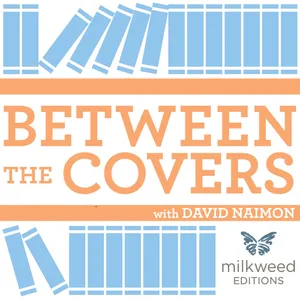
Free Daily Podcast Summary
Between The Covers : Conversations with Writers in Fiction, Nonfiction & Poetry: Daily Summaries Delivered
by David Naimon, Milkweed Editions
BOOKS ∙ WORKSHOPS ∙ PODCAST
Latest Episodes
The most recent episodes — sign up to get AI-powered summaries of each one.
- 4 days ago1h 45m
From the Archives : Elvia Wilk : Oval
Today’s unforgettable archival conversation with Elvia Wilk was recorded in-person in 2019 on the occasion of the release of her debut novel Oval. Wilk takes questions of self and other, nature and culture, human and non-human into the dystopic near-future and into the realm of both philosophy and narrative. We discuss her writings outside of the novel about weird fiction, the literary movement called The New Weird, and how she herself often writes about weird (but real) endeavors that blur the natural and the artificial or that flip our preconceptions on our head. From exploitation and exclusion in the art world to global climate apocalypse, Wilk’s weird fiction makes us see the world frightfully anew. As McKenzie Wark says, “J. G. Ballard meets William Gibson meets Jeff VanderMeer. Oval is an up-to-the-minute story about the twilight zones of corporate design, aesthetics, pharmacy, and bioengineering, where there’s nothing consultants won’t break in the quest for ‘innovation.’ What could possibly go wrong? Find out in Elvia Wilk’s crisp and stylish debut book.” For the bonus audio, Elvia contributed a reading of the first half of a speech she delivered at an ecology symposium, her talk called “Death by Landscape.” This joins an ever-growing archive of contributions from past guests—of readings, translator conversations, craft talks, music, soundscapes and more. To find out how to subscribe to the bonus material and about the other potential benefits and rewards of joining the Between the Covers community as a listener-supporter, head over to the show’s Patreon page. Finally, for your book shopping needs don’t miss Milkweed Editions Bookshop bookstore.
- 2 weeks ago1h 23m
From the Archives : Marlon James : Black Leopard, Red Wolf
Today’s archival episode with Marlon James was recorded in 2019 at the studios of KBOO community radio. Marlon’s latest book The Disappearers has garnered the most talked about book review of this year, from the New York Times book critic Dwight Garner (who isn’t known to gush). Not only did he say it should be talked about alongside Faulkner’s Absalom, Absalom, Morrison’s Song of Solomon, and Rushdie’s Midnight’s Children, Garner also called it one of the signal reading experiences of his adult life, a masterpiece, the novel of the decade and possibly of the century so far. The book we discussed seven years ago now, was James’ move into fantasy and myth, a novel that won the 2020 Locus Award for Best Horror, Black Leopard, Red Wolf. The science fiction and fantasy author and critic Amal El-Mohtar, perplexed by all the comparisons of it to George R.R. Martin and J.R.R. Tolkien suggested at the time that it was more as if Toni Morrison had written Ovid’s Metamorphoses: “Painful and strange, full of bodies shifting from personhood into meat, and somehow, always, still, upsettingly beautiful. This isn’t Tolkien’s grief-stricken melancholy, or Martin’s calculating, character-forward plot mechanics; it’s horror and tragedy by way of fantasy, nothing discrete, everything penetrating everything else. Reading Black Leopard, Red Wolf was like being slowly eaten by a bear, one inviting me to feel every pressure of tooth and claw tearing into me, asking me to contemplate the intimacy of violation and occasionally cracking a joke.” For the bonus audio archive Marlon reads his essay “Why I’m Done Talking About Diversity (or, Why We Should Try an All-White Diversity Panel).” We also added his 2015 Tin House Summer Writing Workshop craft lecture “The 9 and 1/2 Rules of Seduction” to the archive. These join many contributions from past guests including Ted Chiang, China Miéville, N.K. Jemisin, Joe Sacco, Naomi Klein, Carl Phillips, Dionne Brand and many others. To learn about how to subscribe to the bonus audio, as well as about all the other potential benefits and rewards of joining the Between the Covers community as a listener-supporter, head over to the show’s Patreon page. Finally, for your book shopping needs, don’t miss Milkweed Editions bookstore on BookShop.
- 3 weeks ago2h 41m
China Miéville : The Rouse
China Miéville’s much-anticipated new book The Rouse is twenty-one years in the making. He was writing it when he wrote The City & The City and Embassytown. He was writing it when he wrote October: The Story of the Russian Revolution and A Spectre Haunting: On the Communist Manifesto. He was writing it when he wrote children’s books, comics and his latest collaborative novel with Keanu Reeves. In other words, this novel is not only itself about epochs, and the end of them, but also itself spans many eras and iterations of China’s own life and writing life. Together we look at his many interests over the past two decades—Marxism and monsters, apophatic theology and the nature of consciousness, the failure of language, the power of it, the eerie and spooky, the terror and the horror of all that goes bump in the night—in relation to The Rouse itself. As part of writing his 1200-page-plus new novel, China read many other big books for inspiration—from Gravity’s Rainbow to Mosquito. For the bonus audio archive China discusses one of his favorite’s: Miss MacIntosh, My Darling by Marguerite Young and reads an excerpt for us. This joins bonus material from many past guests including Ted Chiang, N.K. Jemisin, Carmen Maria Machado, Vajra Chandrasekera, and adrienne maree brown, to name a few. You can find out more about subscribing to the bonus material and about all the other potential benefits and rewards of joining the Between the Covers community as a listener-supporter, at the show’s Patreon page. Finally, don’t miss the BTC BookShop corresponding to today’s conversation, brimming over with all the books China references and discusses today. And while you are at it, for your general book needs, be sure to browse the Milkweed Bookstore BookShop as well.
- Sep 1, 20261h 47m
Milkweed Live : Creature Needs with Thalia Field, David Naimon & Anne de Marcken
Today’s conversation between Thalia Field and David Naimon, moderated by Anne de Marcken, was recorded in February as part of the Pacific Northwest College of Art’s Visual Arts low residency MFA program. Thalia and David discuss and explore their pieces within the anthology Creature Needs: Writers Respond to the Science of Animal Conservation, where each writer was given a scientific study to engage with and create art in relation to. As a result, side-blotched lizards, boreal toads and the green cutthroat trout all help make up the cross-species chorus of today’s conversation, one that isn’t just about making art in relation to science, but also about interrogating, through art-making, the assumptions baked into the scientific frame, and using art to reveal the unexamined stories hidden within that frame. Looking at other non-normative modes of scientific inquiry, ones where the line isn’t so bright between art and science, nor the subjective and the so-called objective, Thalia, David and Anne explore the various possibilities and pitfalls for art-makers and writers when engaging with the more-than-human world. If you enjoyed today’s conversation, consider joining the Between the Covers community as a listener-supporter. Find out about all the potential rewards and benefits of doing so at the show’s Patreon page. Finally, here is the BTC BookShop specific to today’s episode. And don’t miss Milkweed Editions own BookShop bookstore as well.
- Aug 24, 20262h 20m
Hajjar Baban : Low Flying Planes
Today’s guest, poet Hajjar Baban, discusses her truly remarkable debut collection of poetry Low Flying Planes. Together we explore Kurdish poetics, the role of silence, refusal and isolation in her work, the Kurdish Poets Collective, writing lineages, and much more. Selected for the 2025 National Poetry Series by past guest of the show, poet Jake Skeets, Jake says of Low Flying Planes: “…if tradition is to be made whole, if memory, if truth, it begins with a book like this. I’m eager for the world to enter this one and emerge on the other side transformed, into a place where words are both nourished and at stake. I’m eager for this poet, for a new voice that asks us to change. It is my honor to introduce this marvelous work.” For the bonus audio archive, Hajjar contributes an extended reading of short poems by Eugène Guillevic and a discussion of his influence on her work. This joins readings from everyone from Jorie Graham to Omar El Akkad, Dionne Brand to Isabella Hammad and more. You can learn how to subscribe to the bonus audio and about the other potential benefits and rewards of joining the Between the Covers community as a listener-supporter at the show’s Patreon page. Finally, here is the BTC BookShop specific for today’s episode. And don’t miss Milkweed Editions BookShop as well.
- Aug 13, 20262h 0m
From the Archives : Morgan Parker : Magical Negro
Today’s conversation with poet Morgan Parker was recorded in-person in 2019 and was Morgan’s second appearance on the show. Both conversations with Morgan are unforgettable, so don’t miss her first appearance in 2017 after you enjoy today’s episode about Magical Negro. Later that same year Magical Negro won the National Book Critics Circle Award in Poetry. Danez Smith, another past guest of this show, said this about it: “2019 justly belongs to Morgan Parker. Her poems shred me with their intelligence, dark humor and black-hearted vision. Parker is one of this generation’s best minds, able to hold herself and her world, which includes all of us, up to impossible lights, revealing every last bit of our hopes, failings, possibilities and raptures.” For the bonus audio archive Morgan contributed a reading from her YA novel Who Put this Song on? which joins contributions from Kaveh Akbar, Tommy Pico, Dionne Brand, Nikky Finney, Natalie Diaz and more. To find out about how to subscribe to the bonus audio archive and all the other potential benefits and rewards of joining the Between the Covers community as a listener supporter, head over to the show’s Patreon page. And don’t miss Milkweed Editions bookstore BookShop for even more books to explore.
- Aug 3, 20262h 14m
Claudia Rankine : Triage
Claudia Rankine first appeared on Between the Covers in 2014 to discuss Citizen: An American Lyric. Our first encounter back then was before January 6th or October 7th, before Trump 1.0 or Trump 2.0, before the public murder of George Floyd or the live-streamed genocide, before the fall of Roe v Wade or the massive worldwide fires felling our forests each summer. Not only do we account for the time since we last talked, Claudia’s powerful new book Triage does this very thing as well. Triage follows the lifelong contentious friendship between The Narrator and The Theorist, a Black woman and nonbinary Palestinian, who have invented a ritual of collapse, falling to the ground each time they see each other. “Collapse was an antidote to an unbearable but borne disturbance we glimpsed in the face of each other,” the narrator says. And “maybe collapsing simply was the easiest way to keep from breaking apart.” Join us as we explore Triage together, and the possibilities of becoming someone else in the face of catastrophic change. If you enjoyed today’s program consider joining the Between the Covers community as a listener-supporter. Find out about all the potential benefits and rewards of doing so—from the Milkweed Early Reader Subscription to access to bonus contributions from everyone from Dionne Brand to Nikky Finney, Isabella Hammad to Omar El Akkad— at the show’s Patreon page. Finally, to explore the books discussed and referenced in today’s conversation check out the Between the Covers BookShop specific for today’s episode. And don’t miss Milkweed BookShop bookstore as well.
- Jul 27, 20262h 44m
Valeria Luiselli : Beginning Middle End
We welcome back Valeria Luiselli—who first appeared on the show eleven years ago—to discuss her new and truly marvelous novel Beginning Middle End. Much like the shapeshifting god Proteus, who figures prominently in this story, Beginning Middle End is many things at once: a road novel, a family drama, a work of climate fiction, a feminist retelling of classical mythology, a novel about writing, about borders and migration, and perhaps even a field guide for the apocalypse, enacting a way to live and love in a time of rupture and unimaginable change. Join Valeria, Proteus, and a host of pre-Socratic philosophers as we follow the novel’s make-shift family, broken apart and now coming back together anew, in a Sicily beset by metamorphic forces, mythic, geologic, and more. If you enjoy today’s conversation, consider shapeshifting from a listener to a listener-supporter by joining the Between the Covers community. You can find out about all the benefits and rewards of doing so at the show’s Patreon page. Finally, to explore the many books discussed and referenced in today’s conversation check out the Between the Covers BookShop specific for today’s episode. In addition, don’t miss Milkweed Editions BookShop bookstore as well.
Get Between The Covers : Conversations with Writers in Fiction, Nonfiction & Poetry summaries in your inbox
Free AI-powered daily recaps. Key takeaways, quotes, and mentions — in a 5-minute read.
Get Free Summaries →Free forever for up to 3 podcasts. No credit card required.
You Might Also Like
Listeners also like.

The New Yorker: Fiction
A monthly reading and conversation with The New Yorker’s fiction editor Deborah Treisman.
Scholarly Communication
Discusses the dissemination of research with professionals in the field.
The Shit No One Tells You About Writing
A writer and two agents share practical advice on craft, publishing, and query letters for emerging authors.
Shelf Respect
Three friends analyze and critique books with humor and insight, focusing on both content and cover design.

Christopher Kimball’s Milk Street Radio
Explores global food stories, interviews with renowned chefs, and unusual culinary topics, from food science to cultural traditions.

The New Yorker Radio Hour
Profiles, storytelling, and insightful conversations are explored in episodes hosted by David Remnick.

The New Yorker: The Writer's Voice - New Fiction from The New Yorker
Fiction writers from The New Yorker read their own stories.
The Literary Life Podcast
Three readers discuss classic literature, reading practices, and the role of stories in intellectual and spiritual life.
NPR's Book of the Day
A daily podcast highlighting the most compelling new books across genres, distilled into brief, accessible episodes.

The Book Review
Top authors and critics discuss the week’s most notable books and literary news with The New York Times Book Review.
How I Write
A weekly exploration of the creative processes and habits of today’s top writers, revealing how they turn ideas into finished work.
The Splendid Table: Conversations & Recipes For Curious Cooks & Eaters
A weekly exploration of food through recipes, cooking techniques, and cultural conversations with chefs, writers, and experts.
Customized Recaps
AI-powered recaps with compact key takeaways, quotes, and insights.
Straight to Your Inbox
Get key takeaways from Between The Covers : Conversations with Writers in Fiction, Nonfiction & Poetry in a 5-minute read.
Save Hours Every Week
Stay current on your favorite podcasts without falling behind.
Frequently Asked Questions
What is Podzilla's Between The Covers : Conversations with Writers in Fiction, Nonfiction & Poetry daily summary?
It's a free AI-powered email that summarizes new episodes of Between The Covers : Conversations with Writers in Fiction, Nonfiction & Poetry as soon as they're published. You get the key takeaways, notable quotes, and links & mentions — all in a quick read.
How does the Between The Covers : Conversations with Writers in Fiction, Nonfiction & Poetry podcast summary work?
When a new episode drops, our AI transcribes and analyzes it, then generates a personalized summary tailored to your interests and profession. It's delivered to your inbox every morning.
Is this an official Between The Covers : Conversations with Writers in Fiction, Nonfiction & Poetry product?
No. Podzilla is an independent service that summarizes publicly available podcast content. We're not affiliated with or endorsed by David Naimon, Milkweed Editions.
Can I get summaries of other podcasts too?
Absolutely! The free plan covers up to 3 podcasts. Upgrade to Pro for 15, or Premium for 50. Browse our full catalog at /podcasts.
How often does Between The Covers : Conversations with Writers in Fiction, Nonfiction & Poetry release new episodes?
Between The Covers : Conversations with Writers in Fiction, Nonfiction & Poetry publishes biweekly. Our AI generates a summary within hours of each new episode.
What topics does Between The Covers : Conversations with Writers in Fiction, Nonfiction & Poetry cover?
Between The Covers : Conversations with Writers in Fiction, Nonfiction & Poetry covers topics including Fiction, Arts, Books. Our AI identifies the specific themes in each episode and highlights what matters most to you.
Start getting Between The Covers : Conversations with Writers in Fiction, Nonfiction & Poetry summaries tomorrow morning.
Free forever for up to 3 podcasts. No credit card required.
Free forever for up to 3 podcasts. No credit card required.