Free Daily Podcast Summary
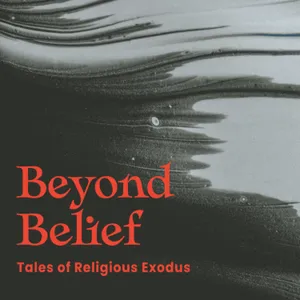
Beyond Belief: Tales of Religious Exodus: Daily Summaries Delivered
by Freidom Fighter
Beyond Belief: Tales of Religious Exodus is a podcast by Freidom Fighter that explore the personal journeys and experiences of people who have left fundamentalist religions. Hear from people who have deconstructed their region, high-control upbringing, and dogmatic beliefs, hailing from Jewish, Christian, Muslim, or Buddhist denominations.Raw and unedited, the podcast is an invitation for you to share your story as you are, with a focus on your journey around healing, making sense of your past, and finding meaning outside of religion.Learn more at freidomfighter.com/podcast
Latest Episodes
The most recent episodes — sign up to get AI-powered summaries of each one.
- 2 days ago1h 18m
Shayna: Former Modern Orthodox
Shayna Sragovicz grew up in a family that became Orthodox when they were seven, moving from a largely secular Jewish childhood into Chabad schooling and eventually Modern Orthodoxy. In this episode, Shayna traces the contradictions they began noticing in seminary and college, how COVID disrupted the religious structures that had sustained their life, and how small acts of questioning eventually became a much broader process of deconstruction.That process expanded beyond religion into gender, sexuality, career, family, spirituality, and community. Now a life coach working with people rebuilding their lives after religion, Shayna discusses self-trust, the difference between deconstruction and reconstruction, therapy versus coaching, and the challenge of figuring out what you actually want once the old rules are gone.ResourcesShayna's coaching website: https://kacoachingmethod.comInstagram: https://www.instagram.com/shayna.kacoaching/Email: shayna@kacoachingmethod.comBooks:Childfree by Choice - Dr. Amy BlackstoneThe Origins of You - Vienna Pharaon, LMFTThe Power of Ritual - Casper ter KuileTimestamps00:00 — Growing up as the child of baalei teshuva05:40 — Entering public school and experiencing life outside the Orthodox bubble11:18 — Why Shayna calls “Modern Orthodoxy” an oxymoron16:01 — Seminary, women learning Gemara, and the beginnings of doubt21:48 — COVID breaks apart the structures sustaining religious life30:13 — Why leaving religion requires self-forgiveness and patience32:37 — Queerness, gender, and deconstructing expectations beyond religion45:03 — Rethinking career, children, and the life Shayna was “supposed” to build48:56 — Becoming a coach: inner critics, intuition, therapy, and reconstruction1:00:23 — Absolute truths, spirituality, community, belonging, and what comes next
- 3 weeks ago1h 36m
Daniel: Former Religious Zionist
Daniel grew up deeply embedded in the religious Zionist world, raised in Efrat and moving through religious schools, yeshiva, a pre-military academy, and service as a tank commander. Yet from childhood, he remembers noticing cracks in the systems around him - from his early fear of breaking Shabbat to questions about theology, authority, conformity, and the pressure to maintain an acceptable external identity. What followed was not one dramatic break, but a decades-long process of questioning Judaism, Zionism, family expectations, relationships, and ultimately the identity he had constructed to survive within them.In this conversation, Daniel and Shalom explore the psychological and spiritual dimensions of deconstruction: fear and control, violated boundaries, institutional power, military disillusionment, marriage and radical honesty, and Daniel’s unexpected relationship with Christ outside conventional Christianity. Daniel also reflects on Zionism as part of a wider system of separation and conflict, his relationship with his children and family, and the practices that helped him rebuild his life. The episode ultimately circles back to a central theme: moving from externally imposed identity toward an unmediated relationship with truth, spirituality, and the self.Timestamps:00:00 — Introduction and Daniel’s story01:01 — Growing up in Efrat and religious Zionism07:52 — Breaking Shabbat and the first cracks in belief11:47 — Teenage years, yeshiva, and questioning religious authority18:10 — Sexual abuse, institutional silence, and trauma23:20 — Deconstructing systems of fear and control25:23 — Boundaries and creating “infinite layers of masks”30:13 — Mechinah, family expectations, and checking the boxes39:49 — Military service and walking away from officer training44:50 — Marriage, education, and continuing to live behind a religious identity48:23 — Taking off the masks and beginning to tell the truth50:33 — Leaving religion, Zionism, and confronting the “sacred cows”53:51 — COVID and the internal collapse of Daniel’s Zionism1:10:12 — Christ, dogma, and personal spiritual liberation1:16:32 — Family, his daughters, and “relationship Tai Chi”1:20:26 — Zionism, imperialism, religion, and the larger system1:26:29 — Psychedelics, the Tao, and the Gospel1:27:18 — Radical honesty as a practice1:35:40 — Gatekeepers, sacred texts, and institutional control
- 4 weeks ago1h 9m
Sara: Former Orthodox Jewish
What does it mean to build a spiritual life grounded in the body rather than in fear? Sara joins Shalom to explore her journey through an Orthodox upbringing, marriage and divorce, trauma recovery, and an evolving relationship with Jewish practice. Together, they examine how communities shaped by anxiety can disconnect people from their own needs, instincts, and inner knowing.Sara shares how therapy, IFS, movement, art, nature, and emotionally safe relationships helped her reconnect with herself. The conversation explores communal silence around addiction and struggling marriages, the difficulty of being seen outside familiar religious categories, sexuality as life force, and the possibility of creating rituals that make room for movement, connection, honesty, and joy.Rather than exchanging belief for disbelief, Sara describes an ongoing process of listening to her body, trusting her experience, and developing a spirituality capable of holding complexity.About SaraSara Katzoff is a Somatic IFS and Craniosacral Therapist and Breathwork Facilitator based in Jerusalem. If something from this conversation touched you, she would love to hear from you.Instagram: @simplehealingsWebsite: simple-healings.comTimestamps00:00 — Embodied spirituality and using the body as a compass06:13 — Distinguishing religious devotion from anxiety and fear16:49 — Seeking guidance during a struggling marriage21:59 — Isolation, addiction, and unmet emotional needs26:39 — The vulnerability of speaking honestly and being misseen32:02 — Releasing rules through small acts of self-trust36:09 — Sexuality, intimacy, and reconnecting with one’s life force40:16 — Reclaiming spiritual teachings from systems shaped by trauma54:14 — Reimagining ritual through nature, movement, fire, and song1:02:18 — Safe witnesses, creativity, and learning to trust yourself
- Aug 16, 20261h 22m
Bonus Episode: Zionism, Tribalism, and the Stories We Tell Ourselves
In this bonus episode, Shalom sits down again with his brother Mike for a wide-ranging conversation about Zionism, Hasbara, and the psychological mechanisms that can make political narratives difficult to question. Rather than systematically fact-checking every talking point, they focus on the patterns underneath them: tribal essentialism, denial, exceptionalism, whataboutism, double standards, and the tendency to assume good intentions from one’s own group while interpreting an opposing group very differently.Shalom and Mike explore arguments around antisemitism, Jewish safety, Palestinian identity, expansionism, the idea of “a land without a people,” and the claim that the IDF is “the most moral army in the world.” Drawing on their own experience of having been raised within a strongly Zionist worldview, they examine how ideology can be maintained through motivated reasoning, selective evidence, and assumptions about who is capable of doing harm.Graphics from the showLogical fallacy flowchart: https://freidomfighter.com/wp-content/uploads/2026/08/logic.jpegSettlers of Canaan board game: https://freidomfighter.com/wp-content/uploads/2026/08/settlers.jpegTimestamps00:00 — Why another conversation about Zionism?07:55 — “Jews need a homeland”: antisemitism and Jewish exceptionalism11:31 — What happens when ethics make exceptions?14:47 — “What about the Jews displaced from Arab countries?”15:19 — “There are 34 Arab countries and only one Jewish state”17:35 — Could Jewish self-determination have taken a different form?19:01 — Expansionism, security, and the appeal of the ethnostate22:02 — If Israel is expansionist, why did it make peace with Egypt and Jordan?25:23 — Has Israel actually made Jews safer?32:04 — The antisemitism feedback loop35:55 — Conflating Israel, Zionism, and Judaism39:43 — Tribal essentialism: judging “us” and “them” by different standards43:40 — Denial, bad apples, and protecting the larger narrative46:19 — “What about Yemen?” Whataboutism and disproportionate attention to Israel53:51 — “A land without a people” and the erasure of Palestinian identity1:00:10 — Is the problem Netanyahu, individual bad actors, or something more systemic?1:05:45 — The relationship between Israeli military leadership and political leadership1:09:45 — Group identity, collective power, and the psychology of victimhood1:16:43 — “The most moral army in the world”1:21:34 — Closing thoughtsIn this episode
- Aug 9, 20261h 29m
Suri: Former Orthodox Jewish
Suri Robinson grew up in an Orthodox Jewish community in Baltimore, where she learned to suppress her needs, protect her family’s image, and strive for religious perfection. After seminary, she married at 20, moved to Lakewood, raised five children, became a therapist, and helped build a Bais Yaakov school focused on children’s emotional wellbeing. From inside the community’s institutions, however, she witnessed rigid expectations, concealed abuse, political pressure, discrimination, and what she describes as “toxic selflessness”—a culture in which saying no was treated as selfish or religiously unacceptable.Following her mother’s death and years of relentless responsibility, Suri experienced severe burnout, depression, complex PTSD, and suicidal despair. Residential treatment gave her the distance to recognize patterns of religious abuse, coercion, shame, and control. She gradually left her marriage, institutional role, and religious observance, while facing claims that she had “snapped” or become mentally unstable. Today, through After the Burn, she speaks about religious trauma, nervous-system healing, mental health stigma, authentic connection, and rebuilding a meaningful life after losing the world she once knew.Follow Suri: https://www.instagram.com/aftertheburnco/Chapters00:00 – Meet Suri00:38 – Growing Up Orthodox in Baltimore02:42 – The Burden of Being the “Perfect” Child04:08 – Secret Dreams of a Different Life05:48 – Fasting, Prayer, and Religious Performance06:58 – Escaping into Books and Imaginary Worlds08:38 – The Shame of a Small Rebellion10:36 – Seminary, Spiritual Certainty, and Body Shame13:28 – How Seminary Creates Belonging and Commitment16:56 – Entering the Orthodox Marriage System19:45 – Marriage, Lakewood, and Patriarchal Expectations25:28 – Kollel Life, Motherhood, and Relentless Productivity29:10 – Toxic Selflessness and the Inability to Say No32:33 – Becoming a Therapist Inside the Religious System34:59 – Building an Emotionally Supportive Bais Yaakov School39:27 – Harassment, School Politics, and the Collapse of Boundaries44:56 – Challenging Stereotypes About People Who Leave46:39 – Grief, Burnout, and the Beginning of Collapse48:47 – Depression, Suicidal Dread, and Nervous-System Breakdown51:24 – Entering Residential Mental Health Treatment54:20 – What Religious Abuse Looks Like57:37 – Being Labelled Crazy After Stepping Away01:04:04 – Rabbinical Bullying, Threats, and Control01:07:10 – Rebuilding Belief, Identity, and Daily Life01:13:46 – How Group Therapy Broke the Cycle of Shame01:18:28 – After the Burn: Suri’s Work and Message01:23:13 – Systemic Harm, Moral Injury, and Final Reflections
- Aug 2, 202647 min
Chantal: Exposing Abuse in the Episcopal Church
In this episode of Beyond Belief: Tales of Religious Exodus, host Shalom interviews Chantal, an Episcopal priest from North Carolina who grew up with both traditional church life and expansive spirituality, felt a clear call to priesthood, and was ordained at 24.While serving in an affluent parish, she experienced sexual harassment by a senior rector and, after reporting it with email evidence, faced a traumatizing canonical process that shamed her, led to PTSD, and involved repeated psychological evaluations she felt were aimed at institutional self-protection.She later planted a multicultural, bilingual church in a lower-income neighborhood and became a coaching consultant, then publicly shared her story at a women’s clergy conference, prompting many others to disclose harm. Chantal discusses her book, Following Jesus Beyond Church Walls, her expanded spirituality, calls for “future church” without harm or hierarchy, and her Water and Light network supporting healing cohorts and advocacy.Website: https://www.chantalmckinney.comChapters00:00 Welcome to Beyond Belief01:23 Chantal’s Spiritual Upbringing02:03 Called to the Priesthood03:35 Harassment and Threats05:30 Seeking Justice and Betrayal06:04 Systemic Cover-Up and PTSD10:11 Building a Scrappy Church Plant11:52 Speaking Out and Others Come Forward15:16 What Episcopalians Believe16:52 Faith Beyond the Denomination20:08 Church Leadership Response and Silence24:28 Life After Payroll and New Communities26:47 Patriarchy and Empire29:03 Church Noise and Silence30:41 Women Leaders and Power33:02 Book and Healing Trauma38:04 Divine Feminine and Scripture41:04 God and Suffering42:30 Vision for Future Church45:11 Episcopal Values and Inclusion46:00 Water and Light Network47:05 Closing Thanks and Outro
- Jul 22, 20261h 39m
Gabi: Former Yeshivish Jewish
Gabi shares his experience growing up in New York’s Bukharian Jewish community, becoming deeply committed to Orthodox Judaism, and eventually building a life outside religious observance. He discusses racism within Jewish institutions, the intellectual rewards of yeshiva study, purity culture, the Orthodox dating system, mental health, psychedelics, spirituality, and his evolving relationship with God.Rather than presenting religion as wholly harmful or wholly beneficial, Gabi reflects on the teachers, practices, and communities that gave him purpose while examining the pressures and unmet needs that eventually made religious life unsustainable.Connect with GabiYouTube - https://youtube.com/@gabikoyenovSpotify - https://open.spotify.com/show/2SoydqNskaV9wOra0Yh6Z3?ssssid1891df9a822414cInstagram - https://www.instagram.com/journey_with_gabi/Therapy Site - https://themenstherapystudio.com/Chapters00:00 — Coming Out as Nonreligious08:14 — Growing Up Bukharian Jewish17:47 — Racism in the Yeshiva World25:47 — Rabbis, Meaning, and Purpose30:11 — Purity Culture and Romantic Obsession39:10 — Leaving Yeshiva and Losing a Dream48:00 — Dating and the Beginning of Deconstruction53:44 — Ayahuasca and a New Spiritual Worldview01:07:41 — Racism and Rejection in Shidduchim01:20:07 — Family Conflict, Trauma, and Life Beyond Religion
- Jul 14, 20261h 15m
Ilana: Former Zionist
On Beyond Belief, Ilana describes being raised in a strongly Zionist Jewish environment shaped by an Israeli father, a conservative rabbi stepfather, and Zionist youth programming, where she learned to equate Judaism with supporting Israel. After her stepfather’s death, college courses presenting “dueling narratives” about Israel/Palestine and events such as Gaza bombardments and the blockade began shifting her views, leading to public criticism in 2014 and social fallout. She stopped attending synagogue, built online anti-Zionist community, and began closely working with Gaza journalist Wafa Al-Udaineh editing English reports, which deepened her connection to Gaza.After October 7, she intensified activism and faced severe grief after Wafa was killed in 2024, prompting psychiatric care. Ilana rejects separating Judaism from Zionism, discusses ongoing deconstruction of religious practices, advocates centering Palestinian voices and learning Arabic, and reflects on the host’s views on religion and ritual.References"Adon Olam" TuneTime stamps00:00 Meet Ilana and the premise01:21 Family roots and Israel ties02:42 Militarism and early doubts04:32 Rabbi stepfather after 9/1107:10 Youth group Zionist indoctrination11:22 First cracks and questions12:18 Loss of faith after his death13:25 College and dueling narratives19:44 Gaza and moral awakening20:58 Kurdish Jewish heritage and Zionism28:26 2014 speaking out online31:04 Leaving synagogue for good32:14 Working with journalists in Gaza34:33 October 7 and direct action39:04 Wafa’s death and new purpose40:30 How she’s doing now42:38 Raising a child post-Zionism43:15 Religion Without Trauma44:11 Growing Up Zionist45:59 Belonging Nowhere48:29 Learning Arabic53:26 Grassroots Jewish Spaces55:08 Institutional Power56:36 End of Judaism58:51 Family Supremacism01:03:41 Stop Debating Zionists01:05:46 Palestine Centered Practice01:09:52 Life After Religion01:15:07 Closing Thanks
Get Beyond Belief: Tales of Religious Exodus summaries in your inbox
Free AI-powered daily recaps. Key takeaways, quotes, and mentions — in a 5-minute read.
Get Free Summaries →Free forever for up to 3 podcasts. No credit card required.
You Might Also Like
Listeners also like.
The Frieda Vizel Podcast
Conversations exploring Hasidism, Judaism, New York City, and cultural topics through interviews and personal insights.
Trust Me: Cults, Extreme Belief, and Manipulation
Survivors and experts explore how people join cults, endure manipulation, and rebuild after leaving.
Come Back Podcast
Personal stories of returning to The Church of Jesus Christ of Latter-Day Saints.

Get Obsessed : With Living Your Best Life
Two hosts explore transformative stories and taboo topics with people challenging norms and living unfiltered lives.

The Alisa Childers Podcast
Addressing progressive Christianity and skeptical challenges to the gospel from a biblical perspective.
I Don't Have Enough FAITH to Be an ATHEIST
Examines ideas and challenges atheism from a Christian perspective.

The Confessionals
Firsthand accounts of supernatural encounters, cryptids, UFOs, and unexplained phenomena explored through in-depth interviews.
I Don't Have Enough FAITH to Be an ATHEIST
Examines ideas and Christianity in relation to truth.

Mormon Stories Podcast
Personal stories from current and former Mormons exploring faith, doubt, and cultural identity within the LDS tradition.
Complexified
Explores how religion and politics intersect with everyday life to uncover hidden histories and envision paths for social change.

Tablet Studios
Explores Jewish identity, tradition, and culture through diverse podcasts offering insight for contemporary Jewish life.
Forgive Me For I Have Followed
Former members and a producer expose the control and manipulation within 7M Films and Shekinah Church through survivor stories.
About Beyond Belief: Tales of Religious Exodus
Beyond Belief: Tales of Religious Exodus is a podcast by Freidom Fighter that explore the personal journeys and experiences of people who have left fundamentalist religions. Hear from people who have deconstructed their region, high-control upbringing, and dogmatic beliefs, hailing from Jewish, Christian, Muslim, or Buddhist denominations.Raw and unedited, the podcast is an invitation for you to share your story as you are, with a focus on your journey around healing, making sense of your past, and finding meaning outside of religion.Learn more at freidomfighter.com/podcast
Customized Recaps
AI-powered recaps with compact key takeaways, quotes, and insights.
Straight to Your Inbox
Get key takeaways from Beyond Belief: Tales of Religious Exodus in a 5-minute read.
Save Hours Every Week
Stay current on your favorite podcasts without falling behind.
Frequently Asked Questions
What is Podzilla's Beyond Belief: Tales of Religious Exodus daily summary?
It's a free AI-powered email that summarizes new episodes of Beyond Belief: Tales of Religious Exodus as soon as they're published. You get the key takeaways, notable quotes, and links & mentions — all in a quick read.
How does the Beyond Belief: Tales of Religious Exodus podcast summary work?
When a new episode drops, our AI transcribes and analyzes it, then generates a personalized summary tailored to your interests and profession. It's delivered to your inbox every morning.
Is this an official Beyond Belief: Tales of Religious Exodus product?
No. Podzilla is an independent service that summarizes publicly available podcast content. We're not affiliated with or endorsed by Freidom Fighter.
Can I get summaries of other podcasts too?
Absolutely! The free plan covers up to 3 podcasts. Upgrade to Pro for 15, or Premium for 50. Browse our full catalog at /podcasts.
How often does Beyond Belief: Tales of Religious Exodus release new episodes?
Beyond Belief: Tales of Religious Exodus publishes biweekly. Our AI generates a summary within hours of each new episode.
What topics does Beyond Belief: Tales of Religious Exodus cover?
Beyond Belief: Tales of Religious Exodus covers topics including Culture, Journals, Society & Culture, Personal Journals. Our AI identifies the specific themes in each episode and highlights what matters most to you.
Start getting Beyond Belief: Tales of Religious Exodus summaries tomorrow morning.
Free forever for up to 3 podcasts. No credit card required.
Free forever for up to 3 podcasts. No credit card required.