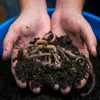
Earthworms may be small, limbless, and blind but, as Darwin observed nearly 150 years ago, they play a critical role in soil ecology. Darwin’s 19th century insights about the slimy invertebrates are far-reaching, serving as the backbone of modern ecology as a whole. In recent years, scientists are putting their ears to the ground, listening to worms to monitor soil health. Meanwhile, laboratory studies on another kind of worms—flatworms—are providing insights about how memories are stored, and how stem cells self-renew. We get our hands dirty for this episode about the biology and ecology of worms. Guests: Philip Ball – science reporter, author of “Beautiful Experiments: An Illustrated History of Experimental Science” Jacqueline Stroud – soil scientist, University of Warwick, U.K. Alejandro Sánchez Alvarado – molecular biologist at the Stowers Institute for Medical Research, whose focus is on stem cells and regeneration Big Picture Science is part of the Airwave Media podcast network. Please contact advertising@airwavemedia.com to inquire about advertising on Big Picture Science. You can get early access to ad-free versions of every episode by joining us on Patreon. Thanks for your support! Learn more about your ad choices. Visit megaphone.fm/adchoices
Podzilla Summary coming soon
Sign up to get notified when the full AI-powered summary is ready.
Free forever for up to 3 podcasts. No credit card required.
Listen to This Episode



Get summaries like this every morning.
Free AI-powered recaps of Big Picture Science and your other favorite podcasts, delivered to your inbox.
Free forever for up to 3 podcasts. No credit card required.