Free Daily Podcast Summary
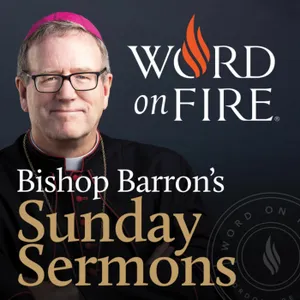
Bishop Barron’s Sunday Sermons - Catholic Preaching and Homilies: Daily Summaries Delivered
by Bishop Robert Barron
A weekly homily podcast from Bishop Robert Barron, produced by Word on Fire Catholic Ministries.
Latest Episodes
The most recent episodes — sign up to get AI-powered summaries of each one.
- 5 days ago14 min
The Peace of Christ
Friends, in our second reading this Sunday, Paul tells the church of Philippi, “Have no anxiety at all.” It’s hard to imagine that Paul—who was shipwrecked many times, beaten within an inch of his life, threatened and harassed and persecuted and opposed, and finally arrested, dragged to Rome, and decapitated—never experienced any anxiety. So what does he mean? What he says next is the clue: “But in everything, by prayer and petition, with thanksgiving, make your requests known to God.”
- 1 weeks ago15 min
The Hubris of Man, the Humility of God
Friends, our second reading, a passage from the second chapter of Paul to the Philippians, is one of the master texts in the New Testament. It’s not only ancient and poetic but also substantive; indeed, in some ways, it lays out the whole of Christianity. Adapting an early Christian hymn, Paul presents the answer to Adam’s grasp at divinity—namely, the self-emptying love of God.
- 2 weeks ago14 min
Love God—Not His Benefits
Friends for this Twenty-fifth Sunday in Ordinary Time, we hear a story from Jesus that tends to bother everybody: the parable of the laborers in the vineyard. We’re meant to hear our own voices in the complaint of these workers. Dealing with God, we often think things are unfair. Why does he do what he does? I’d like to get at this with a clarification that comes out of the heart of the spiritual tradition: You don’t fall in love with the benefits of God; you fall in love with God.
- 3 weeks ago14 min
You Belong to the Lord
Friends, our Gospel for this Twenty-fourth Sunday in Ordinary Time is the familiar story of Peter asking the Lord how many times he should forgive his brother: “As many as seven times?” Jesus responds, “Not seven times but seventy-seven times.” I want to get at this passage by looking at the second reading, taken from the Letter of Saint Paul to the Romans, which sheds distinctive light on it. When we are clear about our mission—when we know that we belong to the Lord—we can let go of resentments and harms done to us, and get on with the business of our lives!
- Sep 2, 202614 min
Will the Good of the Other
Friends, for the wokeist philosophy that dominates today, empathy—feeling the feelings of the other and not harming those feelings—is treated as a supreme value. But while empathy is perfectly good and decent, the Bible teaches that love, not empathy, is the supreme value. And love does not mean, primarily, feeling the feelings of the other or not hurting those feelings; it means willing the good of the other—and that can be, as Dostoevsky said, “a harsh and dreadful thing.”
- Aug 26, 202614 min
A Living Sacrifice
Friends, for this Twenty-second Sunday in Ordinary Time, I want to begin with our very brief second reading from Paul to the Romans. It opens, “I urge you, brothers and sisters, by the mercies of God, to offer your bodies as a living sacrifice.” Here we see Christ’s cross and resurrection—the supreme sacrifice fulfilling all the offerings of the temple—extended to all the baptized. The Church is now the place where divinity and humanity are reconciled.
- Aug 19, 202614 min
The Church Prevails
Friends, for this Twenty-first Sunday in Ordinary Time, the Church brings us once again, with Jesus and the disciples, to Caesarea Philippi, and to a famous question: “Who do you say that I am?” The main characters in this endlessly fascinating scene are Jesus and Peter, and whenever the focus is on Peter, we’re talking about ecclesiology, the study of the Church. So we learn something very important here about both Jesus and the Church, and it has to do with the Rock upon which the former builds the latter.
- Aug 11, 202615 min
How Not to Read the Story of the Syrophoenician Woman
Friends, for this Twentieth Sunday in Ordinary Time, we hear the story of the Syrophoenician woman. Jesus famously puts off this woman—first by ignoring her, then by dismissing her, and finally by insulting her—and she offers one of the most famous comebacks in literary history. A common reading of this story is that Jesus is cranky from a tough day of ministry, and a plucky woman from Syrophoenicia straightens him out. But this turns Jesus into a sinner—and the whole structure of Christianity falls apart. The Church Fathers had a much better, more convincing, and spiritually more helpful interpretation.
Get Bishop Barron’s Sunday Sermons - Catholic Preaching and Homilies summaries in your inbox
Free AI-powered daily recaps. Key takeaways, quotes, and mentions — in a 5-minute read.
Get Free Summaries →Free forever for up to 3 podcasts. No credit card required.
You Might Also Like
Listeners also like.
The Word on Fire Show - Catholic Faith and Culture
A weekly exploration of Catholic faith and its intersection with contemporary culture, hosted by Bishop Robert Barron.
Sunday Homilies with Fr. Mike Schmitz
A Catholic priest delivers weekly homilies based on Sunday Scripture readings to deepen faith and inspire spiritual growth.
The Fr. Mike Schmitz Catholic Podcast
Faith, pop culture, and current events discussed from a Catholic perspective by Fr. Mike Schmitz.

BibleProject
Explores the Bible and theological concepts through detailed discussions that complement animated video content.
Light + Truth
Sermons by John Piper exploring Christian theology and the supremacy of Christ, hosted by Dan Cruver.

Arroyo Grande with Raymond Arroyo
A cultural commentator explores manners, faith, and art through satirical commentary and interviews with public figures.
Ask Pastor John
John Piper addresses challenging theological and pastoral questions.
Timothy Keller Sermons Podcast by Gospel in Life
Biblical sermons by Timothy Keller exploring faith, culture, and Christian living through a gospel-centered lens.
Life Is Worth Living: A Fulton J. Sheen Catholic Podcast
Catholic teachings from Archbishop Fulton J. Sheen.
BYU Speeches
BYU Speeches

The Remnant Radio's Podcast
Explores Christian theology, church history, and spiritual gifts through respectful dialogue with believers across denominations.
Hearing Jesus: Daily Bible Study and Christian Affirmations
A daily Bible study podcast combining Scripture, prayer, and Christian affirmations to help listeners hear God’s voice and grow in faith.
About Bishop Barron’s Sunday Sermons - Catholic Preaching and Homilies
A weekly homily podcast from Bishop Robert Barron, produced by Word on Fire Catholic Ministries.
Customized Recaps
AI-powered recaps with compact key takeaways, quotes, and insights.
Straight to Your Inbox
Get key takeaways from Bishop Barron’s Sunday Sermons - Catholic Preaching and Homilies in a 5-minute read.
Save Hours Every Week
Stay current on your favorite podcasts without falling behind.
Frequently Asked Questions
What is Podzilla's Bishop Barron’s Sunday Sermons - Catholic Preaching and Homilies daily summary?
It's a free AI-powered email that summarizes new episodes of Bishop Barron’s Sunday Sermons - Catholic Preaching and Homilies as soon as they're published. You get the key takeaways, notable quotes, and links & mentions — all in a quick read.
How does the Bishop Barron’s Sunday Sermons - Catholic Preaching and Homilies podcast summary work?
When a new episode drops, our AI transcribes and analyzes it, then generates a personalized summary tailored to your interests and profession. It's delivered to your inbox every morning.
Is this an official Bishop Barron’s Sunday Sermons - Catholic Preaching and Homilies product?
No. Podzilla is an independent service that summarizes publicly available podcast content. We're not affiliated with or endorsed by Bishop Robert Barron.
Can I get summaries of other podcasts too?
Absolutely! The free plan covers up to 3 podcasts. Upgrade to Pro for 15, or Premium for 50. Browse our full catalog at /podcasts.
How often does Bishop Barron’s Sunday Sermons - Catholic Preaching and Homilies release new episodes?
Bishop Barron’s Sunday Sermons - Catholic Preaching and Homilies publishes weekly. Our AI generates a summary within hours of each new episode.
What topics does Bishop Barron’s Sunday Sermons - Catholic Preaching and Homilies cover?
Bishop Barron’s Sunday Sermons - Catholic Preaching and Homilies covers topics including Religion & Spirituality, Spirituality. Our AI identifies the specific themes in each episode and highlights what matters most to you.
Start getting Bishop Barron’s Sunday Sermons - Catholic Preaching and Homilies summaries tomorrow morning.
Free forever for up to 3 podcasts. No credit card required.
Free forever for up to 3 podcasts. No credit card required.