Free Daily Podcast Summary
Brain Friends: Daily Summaries Delivered
by Angie Cauthorn
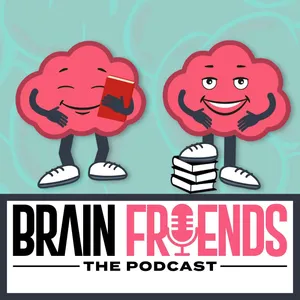
Brain Friends: The Podcast is a survivor-led show about stroke, brain health, aphasia, recovery, and health equity. Hosted by Angie Cauthorn, a two-time stroke survivor and aphasia advocate, Brain Friends takes complicated medical and research topics and turns them into everyday clarity. The show is for survivors, care partners, families, clinicians, researchers, and anyone trying to understand what life after stroke can really look like. Brain Friends began with me and my friend and co-host, Dr. D. Seles Gadson, a neuroscientist, speech-language pathologist, and champion for equity in aphasia care. Dr. Seles’s work focused on health disparities, representation, and making science useful for real communities. Her voice still opens and closes every episode, and her legacy remains part of the show’s foundation. Since launching in June 2022, Brain Friends has reached listeners in more than 100 countries, with conversations that center stroke recovery, aphasia, cognition, communication, prevention, brain health, and the real-life “now what?” after a neurological event. Regular segments include: The Breakdown: Clear explanations of stroke, aphasia, brain health, research, and recovery topics. Smart Cookie: The thoughtful question Angie asks guests about brain health, recovery, equity, or what they wish more people understood. OTC with the Commish: “On The Clock” style recovery talk, where Angie uses football draft energy to break down the moves, tools, and first-round picks that matter. The Check-In: Short, honest reflections on life after stroke, recovery, advocacy, and what comes next. Brain Friends is not here to give medical advice or empty inspiration. It is here to make the science clearer, the recovery road less lonely, and the next step easier to see.
Latest Episodes
The most recent episodes — sign up to get AI-powered summaries of each one.
- 4 days ago36 min
2026 Stroke Rehabilitation and Recovery Guideline with Chair Dr. Lorie Richards
Send us Fan Mail The 2026 Guideline for Adult Stroke Rehabilitation and Recovery from the American Heart Association and American Stroke Association is a major update to how we understand stroke rehabilitation, recovery, and long term care. This is a conversation about the evidence, the gaps, and what happens when stroke rehabilitation recommendations meet the people actually living them. In this episode of Brain Friends, Angie sits down with Dr. Lorie G. Richards, PhD, OTR/L, FAHA, occupatio...
- Aug 28, 202640 min
BE FAST Stroke Signs And The Seconds That Matter with Karrima Owens
Send us Fan Mail A stroke doesn’t always arrive like a movie scene. Sometimes it shows up as a dragging leg, blurry vision, a face that won’t smile straight, or speech or language that suddenly changes. And the scariest part is that you may still feel “fine.” That’s why Angie sits down with Nurse Karrima Owens, clinical nurse specialist and stroke program coordinator at Penn Presbyterian Medical Center, known around West Philly as the Stroke Lady. Her message is simple and urgent: you d...
- Jul 16, 202641 min
More than words, Why Storytelling Breaks Down In Aphasia Recovery
Send us Fan Mail What does it actually mean to recover language after a stroke? Not just pass a test, but tell a story, hold a conversation, explain what happened to you at the airport. In this episode, I sit down with Dr. Brielle Stark, a neuroscientist and aphasia researcher at Indiana University Bloomington, to talk about discourse: the kind of language we use every day to describe our lives, our memories, and what matters to us. We dig into why standard aphasia tests miss so much of the r...
- May 13, 202651 min
Blood Pressure Basics For Stroke Prevention And Recovery With Dr Rachel Forman
Send us Fan Mail Dr. Rachel Forman is a stroke neurologist at Yale School of Medicine. She treats stroke, researches it, and takes that knowledge into communities through Stamp Out Stroke -- sixty-plus events and counting. She recommends this podcast to her patients. In this conversation: blood pressure and why most people do not know they have a problem until something goes wrong. Why only one in five stroke survivors check their blood pressure correctly. The discharge cliff. Secondary strok...
- Mar 31, 202647 min
The Blueprint: Dr. Davetrina Seles Gadson on Black Stroke Survivors Health Equity and Aphasia
Send us Fan Mail Two world-class researchers walked into this conversation because of one woman. They did not have to. They chose to. Dr. Peter Turkeltaub is a neurologist at Georgetown University Medical Center. MD. PhD. He directs the Cognitive Recovery Lab, where his research focuses on the neural mechanisms of language recovery after stroke. He is Dr. Seles friend and co-author Dr. Charles Ellis Jr. holds a PhD and CCC-SLP certification and is a professor at the University of Florid...
- Feb 2, 202643 min
New ASA 2026 Stroke Ischemic Guidelines with Chair Dr. Shyam Prabhakaran
Send a text A stroke can feel like a lightning strike on the brain’s power grid—which is why the new 2026 AHA/ASA acute ischemic stroke guidelines focus on speed, clarity, and better systems at every step. We sit down with the chair of the writing group, Dr. Sean Pabakaron, to translate cutting-edge research into actions families, clinicians, and first responders can take right now. No jargon, no fluff—just the signals to watch, the questions to ask, and the processes that save brain. We unp...
- Jan 11, 202626 min
Memories of Seles 5/24/82 - 1/11/25 raise a glass.
Send a text A friendship became a movement when a survivor searching for culturally competent therapy met a clinician who refused to treat equity like an optional add-on. What started as a phone call turned into Brain Friends—a space where lived experience and rigorous science work side by side to make aphasia, stroke recovery, and neuroplasticity feel human, practical, and possible. We walk through the real story: how instant respect turned into a partnership, how roles formed—one voice tra...
- Jan 9, 202635 min
Understanding Aphasia: Tools, Consent, And Real-World Communication
Send a text Words don’t just disappear; sometimes the path to them does. We explore what aphasia really is—evidence of brain injury—and why that framing changes everything for survivors, caregivers, and clinicians. Instead of waiting at a broken bridge, we focus on building new routes: consent-based support, yes/no prompts, two-choice options, functional descriptions, and shared signals that turn help into partnership. The result is less pressure, more access, and conversations that actually ...
Get Brain Friends summaries in your inbox
Free AI-powered daily recaps. Key takeaways, quotes, and mentions — in a 5-minute read.
Get Free Summaries →Free forever for up to 3 podcasts. No credit card required.
You Might Also Like
Listeners also like.
The Dr. Lee Warren Podcast
A neurosurgeon explores how faith and neuroscience combine to rewire the brain for focus, resilience, and hope.
Brain Science with Ginger Campbell, MD: Neuroscience for Everyone
Explores neuroscience discoveries and how the brain shapes human identity through interviews and book discussions.
ADHD for Smart Ass Women with Tracy Otsuka
Explores the strengths and brilliance of ADHD in high-ability women, helping them embrace their unique brains and thrive.
First Bite: Fed, Fun, Functional SLP Insights
Pediatric speech therapy insights covering feeding, swallowing, AAC, and early language development for clinicians and caregivers.
Get Better Faster
Doctors and researchers discuss functional medicine and root-cause approaches to chronic illness and health optimization.
The Tamsen Show
A journalist explores health, reinvention, and relationships with experts and women reshaping their lives.
Treated with Dr. Sara Szal
Dr. Sara Szal explores holistic health solutions through conversations with experts and patients seeking mind, body, and soul healing.
Mind If We Talk?
Two people share raw, intimate conversations about emotional struggles while a therapist guides understanding and growth.
Sh!t That Goes On In Our Heads
Friends discuss mental health, relationships, parenting, and pop culture with humor and honesty to encourage open conversations.

Health Optimization Medicine Podcast
Experts discuss science-based strategies for health optimization, performance, and human potential through targeted interventions.

Tony Mantor: Why Not Me ?
Explores autism, mental health, and human stories to promote understanding, challenge stigma, and support neurodiversity.

Get Obsessed : With Living Your Best Life
Two hosts explore transformative stories and taboo topics with people challenging norms and living unfiltered lives.
About Brain Friends
Brain Friends: The Podcast is a survivor-led show about stroke, brain health, aphasia, recovery, and health equity. Hosted by Angie Cauthorn, a two-time stroke survivor and aphasia advocate, Brain Friends takes complicated medical and research topics and turns them into everyday clarity. The show is for survivors, care partners, families, clinicians, researchers, and anyone trying to understand what life after stroke can really look like. Brain Friends began with me and my friend and co-host, Dr. D. Seles Gadson, a neuroscientist, speech-language pathologist, and champion for equity in aphasia care. Dr. Seles’s work focused on health disparities, representation, and making science useful for real communities. Her voice still opens and closes every episode, and her legacy remains part of the show’s foundation. Since launching in June 2022, Brain Friends has reached listeners in more than 100 countries, with conversations that center stroke recovery, aphasia, cognition, communication, prevention, brain health, and the real-life “now what?” after a neurological event. Regular segments include: The Breakdown: Clear explanations of stroke, aphasia, brain health, research, and recovery topics. Smart Cookie: The thoughtful question Angie asks guests about brain health, recovery, equity, or what they wish more people understood. OTC with the Commish: “On The Clock” style recovery talk, where Angie uses football draft energy to break down the moves, tools, and first-round picks that matter. The Check-In: Short, honest reflections on life after stroke, recovery, advocacy, and what comes next. Brain Friends is not here to give medical advice or empty inspiration. It is here to make the science clearer, the recovery road less lonely, and the next step easier to see.
Customized Recaps
AI-powered recaps with compact key takeaways, quotes, and insights.
Straight to Your Inbox
Get key takeaways from Brain Friends in a 5-minute read.
Save Hours Every Week
Stay current on your favorite podcasts without falling behind.
Frequently Asked Questions
What is Podzilla's Brain Friends daily summary?
It's a free AI-powered email that summarizes new episodes of Brain Friends as soon as they're published. You get the key takeaways, notable quotes, and links & mentions — all in a quick read.
How does the Brain Friends podcast summary work?
When a new episode drops, our AI transcribes and analyzes it, then generates a personalized summary tailored to your interests and profession. It's delivered to your inbox every morning.
Is this an official Brain Friends product?
No. Podzilla is an independent service that summarizes publicly available podcast content. We're not affiliated with or endorsed by Angie Cauthorn.
Can I get summaries of other podcasts too?
Absolutely! The free plan covers up to 3 podcasts. Upgrade to Pro for 15, or Premium for 50. Browse our full catalog at /podcasts.
How often does Brain Friends release new episodes?
Brain Friends publishes monthly. Our AI generates a summary within hours of each new episode.
What topics does Brain Friends cover?
Brain Friends covers topics including Science, Education, Life Sciences. Our AI identifies the specific themes in each episode and highlights what matters most to you.
Start getting Brain Friends summaries tomorrow morning.
Free forever for up to 3 podcasts. No credit card required.
Free forever for up to 3 podcasts. No credit card required.