Free Daily Podcast Summary
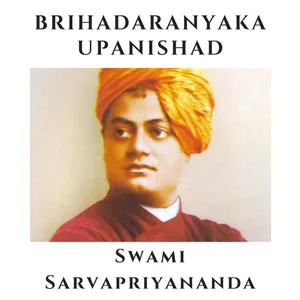
Brihadaranyaka Upanishad | Swami Sarvapriyananda: Daily Summaries Delivered
by Vedanta Society of New York
The Brihadaranyaka Upanishad (Sanskrit: बृहदारण्यकोपनिषद्, IAST: Bṛhadāraṇyakopaniṣad) is one of the Principal Upanishads and one of the first Upanishadic scriptures of Hinduism. A key scripture to various schools of Hinduism, the Brihadaranyaka Upanishad is tenth in the Muktikā or "canon of 108 Upanishads".Brihadaranyaka literally means "great wilderness or forest". The Upanishad forms the last part, that is the fourteenth kānda of Śatapatha Brāhmana of "Śhukla Yajurveda". The Brihadaranyaka Upanishad has six adhyayas (chapters) in total. It includes three sections: Madhu kānda (the 4th and 5th chapter of the fourteenth kānda of Satapatha Brahmana), Muni kānda (or Yajnavalkya Kanda, the 6th and 7th chapter of 14th kānda of Satapatha Brahmana) and Khila kānda (the 8th and 9th chapter of the fourteenth kānda of Satapatha Brahmana).The first and second chapters of the Upanishad's Madhu kānda consists of six brahmanas each, with varying number of hymns per brahmana. The first chapter of the Upanishad's Yajnavalkya kānda consists of nine brahmanams, while the second has six brahmanas. The Khila kānda of the Upanishad has fifteen brahmanas in its first chapter, and five brahmanas in the second chapter.In the fourth brahmana of the Second chapter of the Brihadaranyaka Upanishad, Yajnavalkya and his wife Maitreyi engage in a dialogue about love and spirituality. Yajnavalkya states that one doesn't connect with and love forms, nor does one connect or love mind, rather one connects with the Self, the Self of one's own and one's beloved. All love is for the sake of one's Self, and the Oneness one realizes in the Self of the beloved. He then asserts that this knowledge of the Self, the Self, and Brahman is what makes one immortal, and the connection is also immortal. All longing is the longing for the Self, as the Self represents the true, the immortal, the real, and infinite bliss.Reference material:- Book: https://a.co/d/iQqKCWM- PDF of the entire Upanishad can be found https://dn790002.ca.archive.org/0/items/BrahadaranyakaUpanishad-ShankaraBhashya-English-SwamiMadhavaananda/BrahadaranyakaUpanishad-Madhavaananda.pdf.
Latest Episodes
The most recent episodes — sign up to get AI-powered summaries of each one.
- Apr 1, 20261h 10m
9. Brihadaranyaka Upanishad - Mantra 2.4.13 | Swami Sarvapriyananda
The Brihadaranyaka Upanishad, one of the oldest and most foundational Principal Upanishads of Hinduism, is being taught in this lecture series by Swami Sarvapriyananda. Belonging to the Śukla Yajurveda and forming the concluding portion of the Śatapatha Brāhmaṇa, its name means “the great forest.” The text comprises six chapters organized into the Madhu, Yājñavalkya (Muni), and Khila kāṇḍas, and is tenth in the traditional canon of 108 Upanishads. Renowned for its profound nondual philosophy, it includes the celebrated dialogue between Yājñavalkya and his wife Maitreyi, where all love is shown to be ultimately directed toward the Self (Ātman), whose realization as identical with Brahman leads to immortality and infinite bliss. For more information, please visit:https://www.vedantany.org/brihadarany...Reference material:Book: https://a.co/d/iQqKCWMPDF of the entire Upanishad can be found https://dn790002.ca.archive.org/0/ite....
- Mar 23, 20261h 24m
8. Brihadaranyaka Upanishad - Mantra 2.4.12 | Swami Sarvapriyananda
The Brihadaranyaka Upanishad, one of the oldest and most foundational Principal Upanishads of Hinduism, is being taught in this lecture series by Swami Sarvapriyananda. Belonging to the Śukla Yajurveda and forming the concluding portion of the Śatapatha Brāhmaṇa, its name means “the great forest.” The text comprises six chapters organized into the Madhu, Yājñavalkya (Muni), and Khila kāṇḍas, and is tenth in the traditional canon of 108 Upanishads. Renowned for its profound nondual philosophy, it includes the celebrated dialogue between Yājñavalkya and his wife Maitreyi, where all love is shown to be ultimately directed toward the Self (Ātman), whose realization as identical with Brahman leads to immortality and infinite bliss. For more information, please visit:https://www.vedantany.org/brihadarany...Reference material:Book: https://a.co/d/iQqKCWMPDF of the entire Upanishad can be found https://dn790002.ca.archive.org/0/ite....
- Mar 16, 20261h 12m
7. Brihadaranyaka Upanishad - Mantra 2.4.11 | Swami Sarvapriyananda
The Brihadaranyaka Upanishad, one of the oldest and most foundational Principal Upanishads of Hinduism, is being taught in this lecture series by Swami Sarvapriyananda. Belonging to the Śukla Yajurveda and forming the concluding portion of the Śatapatha Brāhmaṇa, its name means “the great forest.” The text comprises six chapters organized into the Madhu, Yājñavalkya (Muni), and Khila kāṇḍas, and is tenth in the traditional canon of 108 Upanishads. Renowned for its profound nondual philosophy, it includes the celebrated dialogue between Yājñavalkya and his wife Maitreyi, where all love is shown to be ultimately directed toward the Self (Ātman), whose realization as identical with Brahman leads to immortality and infinite bliss. For more information, please visit:https://www.vedantany.org/brihadarany...Reference material:Book: https://a.co/d/iQqKCWMPDF of the entire Upanishad can be found https://dn790002.ca.archive.org/0/ite....🙏 Please Support the Vedanta Society of New Yorkhttp://www.vedantany.org/donate🌐 Please Visit UsWebsite: https://vedantany.orgApple & Spotify Podcasts: https://www.vedantany.org/media-channelsYouTube (Main Channel): / @vedantany YouTube (Archives): / @vedantanyarchives Facebook: / vedantany X / Twitter: <a href="https://www.youtube.com/redirect?event=video_description&q=https%3A%2F%2Ftwitter.com%2FVedantaNY&redir_token=QUFFLUhqbHcxa013MGFucDVBWmlCbWRIOERxY0tvUThPd3xBQ3Jtc0ttclFTOGtkcHpKeWo1RmZXNXRLZm8tQWFpZnhrdmhxY0UyaWI3NXM3eDJJTDVYTzVrQjJTYkU4RWtYLTk3RHpVTjRPQVdEYjVlcz
- Mar 12, 20261h 12m
6. Brihadaranyaka Upanishad - Mantras 2.4.7 - 2.4.10 | Swami Sarvapriyananda
The Brihadaranyaka Upanishad, one of the oldest and most foundational Principal Upanishads of Hinduism, is being taught in this lecture series by Swami Sarvapriyananda. Belonging to the Śukla Yajurveda and forming the concluding portion of the Śatapatha Brāhmaṇa, its name means “the great forest.” The text comprises six chapters organized into the Madhu, Yājñavalkya (Muni), and Khila kāṇḍas, and is tenth in the traditional canon of 108 Upanishads. Renowned for its profound nondual philosophy, it includes the celebrated dialogue between Yājñavalkya and his wife Maitreyi, where all love is shown to be ultimately directed toward the Self (Ātman), whose realization as identical with Brahman leads to immortality and infinite bliss. For more information, please visit:https://www.vedantany.org/brihadarany...Reference material:Book: https://a.co/d/iQqKCWMPDF of the entire Upanishad can be found https://dn790002.ca.archive.org/0/ite....
- Feb 10, 20261h 14m
5. Brihadaranyaka Upanishad - Mantra 2.4.6 | Swami Sarvapriyananda
In this discourse, Swami Sarvapriyananda covers only the part of the Upanishad called "Yajnavalkya and Maitreyi Samvada (Mantras: 2.4.1 to 2.4.14)"The Brihadaranyaka Upanishad, one of the oldest and most foundational Principal Upanishads of Hinduism, is being taught in this lecture series by Swami Sarvapriyananda. Belonging to the Śukla Yajurveda and forming the concluding portion of the Śatapatha Brāhmaṇa, its name means “the great forest.” The text comprises six chapters organized into the Madhu, Yājñavalkya (Muni), and Khila kāṇḍas, and is tenth in the traditional canon of 108 Upanishads. Renowned for its profound nondual philosophy, it includes the celebrated dialogue between Yājñavalkya and his wife Maitreyi, where all love is shown to be ultimately directed toward the Self (Ātman), whose realization as identical with Brahman leads to immortality and infinite bliss. For more information, please visit:https://www.vedantany.org/brihadarany...
- Feb 2, 20261h 8m
4. Brihadaranyaka Upanishad - Mantra 2.4.5 continued | Swami Sarvapriyananda
In this discourse, Swami Sarvapriyananda covers only the part of the Upanishad called "Yajnavalkya and Maitreyi Samvada (Mantras: 2.4.1 to 2.4.14)"The Brihadaranyaka Upanishad, one of the oldest and most foundational Principal Upanishads of Hinduism, is being taught in this lecture series by Swami Sarvapriyananda. Belonging to the Śukla Yajurveda and forming the concluding portion of the Śatapatha Brāhmaṇa, its name means “the great forest.” The text comprises six chapters organized into the Madhu, Yājñavalkya (Muni), and Khila kāṇḍas, and is tenth in the traditional canon of 108 Upanishads. Renowned for its profound nondual philosophy, it includes the celebrated dialogue between Yājñavalkya and his wife Maitreyi, where all love is shown to be ultimately directed toward the Self (Ātman), whose realization as identical with Brahman leads to immortality and infinite bliss. For more information, please visit:https://www.vedantany.org/brihadarany...
- Jan 26, 20261h 13m
3. Brihadaranyaka Upanishad - Yajnavalkya and Maitreyi Samvada: Mantras 2.4.1 to 2.4.5
The Brihadaranyaka Upanishad (Sanskrit: बृहदारण्यकोपनिषद्, IAST: Bṛhadāraṇyakopaniṣad) is one of the Principal Upanishads and one of the first Upanishadic scriptures of Hinduism. A key scripture to various schools of Hinduism, the Brihadaranyaka Upanishad is tenth in the Muktikā or "canon of 108 Upanishads".Brihadaranyaka literally means "great wilderness or forest". The Upanishad forms the last part, that is the fourteenth kānda of Śatapatha Brāhmana of "Śhukla Yajurveda". The Brihadaranyaka Upanishad has six adhyayas (chapters) in total. It includes three sections: Madhu kānda (the 4th and 5th chapter of the fourteenth kānda of Satapatha Brahmana), Muni kānda (or Yajnavalkya Kanda, the 6th and 7th chapter of 14th kānda of Satapatha Brahmana) and Khila kānda (the 8th and 9th chapter of the fourteenth kānda of Satapatha Brahmana).The first and second chapters of the Upanishad's Madhu kānda consists of six brahmanas each, with varying number of hymns per brahmana. The first chapter of the Upanishad's Yajnavalkya kānda consists of nine brahmanams, while the second has six brahmanas. The Khila kānda of the Upanishad has fifteen brahmanas in its first chapter, and five brahmanas in the second chapter.In the fourth brahmana of the Second chapter of the Brihadaranyaka Upanishad, Yajnavalkya and his wife Maitreyi engage in a dialogue about love and spirituality. Yajnavalkya states that one doesn't connect with and love forms, nor does one connect or love mind, rather one connects with the Self, the Self of one's own and one's beloved. All love is for the sake of one's Self, and the Oneness one realizes in the Self of the beloved. He then asserts that this knowledge of the Self, the Self, and Brahman is what makes one immortal, and the connection is also immortal. All longing is the longing for the Self, as the Self represents the true, the immortal, the real, and infinite bliss.Reference material:Book: https://a.co/d/iQqKCWMPDF of the entire Upanishad can be found https://dn790002.ca.archive.org/0/ite....
- Jan 25, 20261h 14m
2. Brihadaranyaka Upanishad - Yajnavalkya and Maitreyi Samvada: Introduction Continued
The Brihadaranyaka Upanishad (Sanskrit: बृहदारण्यकोपनिषद्, IAST: Bṛhadāraṇyakopaniṣad) is one of the Principal Upanishads and one of the first Upanishadic scriptures of Hinduism. A key scripture to various schools of Hinduism, the Brihadaranyaka Upanishad is tenth in the Muktikā or "canon of 108 Upanishads".Brihadaranyaka literally means "great wilderness or forest". The Upanishad forms the last part, that is the fourteenth kānda of Śatapatha Brāhmana of "Śhukla Yajurveda". The Brihadaranyaka Upanishad has six adhyayas (chapters) in total. It includes three sections: Madhu kānda (the 4th and 5th chapter of the fourteenth kānda of Satapatha Brahmana), Muni kānda (or Yajnavalkya Kanda, the 6th and 7th chapter of 14th kānda of Satapatha Brahmana) and Khila kānda (the 8th and 9th chapter of the fourteenth kānda of Satapatha Brahmana).The first and second chapters of the Upanishad's Madhu kānda consists of six brahmanas each, with varying number of hymns per brahmana. The first chapter of the Upanishad's Yajnavalkya kānda consists of nine brahmanams, while the second has six brahmanas. The Khila kānda of the Upanishad has fifteen brahmanas in its first chapter, and five brahmanas in the second chapter.In the fourth brahmana of the Second chapter of the Brihadaranyaka Upanishad, Yajnavalkya and his wife Maitreyi engage in a dialogue about love and spirituality. Yajnavalkya states that one doesn't connect with and love forms, nor does one connect or love mind, rather one connects with the Self, the Self of one's own and one's beloved. All love is for the sake of one's Self, and the Oneness one realizes in the Self of the beloved. He then asserts that this knowledge of the Self, the Self, and Brahman is what makes one immortal, and the connection is also immortal. All longing is the longing for the Self, as the Self represents the true, the immortal, the real, and infinite bliss.Reference material:- Book: https://a.co/d/iQqKCWM- PDF of the entire Upanishad can be found https://dn790002.ca.archive.org/0/items/BrahadaranyakaUpanishad-ShankaraBhashya-English-SwamiMadhavaananda/BrahadaranyakaUpanishad-Madhavaananda.pdf.
About Brihadaranyaka Upanishad | Swami Sarvapriyananda
The Brihadaranyaka Upanishad (Sanskrit: बृहदारण्यकोपनिषद्, IAST: Bṛhadāraṇyakopaniṣad) is one of the Principal Upanishads and one of the first Upanishadic scriptures of Hinduism. A key scripture to various schools of Hinduism, the Brihadaranyaka Upanishad is tenth in the Muktikā or "canon of 108 Upanishads".Brihadaranyaka literally means "great wilderness or forest". The Upanishad forms the last part, that is the fourteenth kānda of Śatapatha Brāhmana of "Śhukla Yajurveda". The Brihadaranyaka Upanishad has six adhyayas (chapters) in total. It includes three sections: Madhu kānda (the 4th and 5th chapter of the fourteenth kānda of Satapatha Brahmana), Muni kānda (or Yajnavalkya Kanda, the 6th and 7th chapter of 14th kānda of Satapatha Brahmana) and Khila kānda (the 8th and 9th chapter of the fourteenth kānda of Satapatha Brahmana).The first and second chapters of the Upanishad's Madhu kānda consists of six brahmanas each, with varying number of hymns per brahmana. The first chapter of the Upanishad's Yajnavalkya kānda consists of nine brahmanams, while the second has six brahmanas. The Khila kānda of the Upanishad has fifteen brahmanas in its first chapter, and five brahmanas in the second chapter.In the fourth brahmana of the Second chapter of the Brihadaranyaka Upanishad, Yajnavalkya and his wife Maitreyi engage in a dialogue about love and spirituality. Yajnavalkya states that one doesn't connect with and love forms, nor does one connect or love mind, rather one connects with the Self, the Self of one's own and one's beloved. All love is for the sake of one's Self, and the Oneness one realizes in the Self of the beloved. He then asserts that this knowledge of the Self, the Self, and Brahman is what makes one immortal, and the connection is also immortal. All longing is the longing for the Self, as the Self represents the true, the immortal, the real, and infinite bliss.Reference material:- Book: https://a.co/d/iQqKCWM- PDF of the entire Upanishad can be found https://dn790002.ca.archive.org/0/items/BrahadaranyakaUpanishad-ShankaraBhashya-English-SwamiMadhavaananda/BrahadaranyakaUpanishad-Madhavaananda.pdf.
Customized Recaps
AI-powered recaps with compact key takeaways, quotes, and insights.
Straight to Your Inbox
Get key takeaways from Brihadaranyaka Upanishad | Swami Sarvapriyananda in a 5-minute read.
Save Hours Every Week
Stay current on your favorite podcasts without falling behind.
Frequently Asked Questions
What is Podzilla's Brihadaranyaka Upanishad | Swami Sarvapriyananda daily summary?
It's a free AI-powered email that summarizes new episodes of Brihadaranyaka Upanishad | Swami Sarvapriyananda as soon as they're published. You get the key takeaways, notable quotes, and links & mentions — all in a quick read.
How does the Brihadaranyaka Upanishad | Swami Sarvapriyananda podcast summary work?
When a new episode drops, our AI transcribes and analyzes it, then generates a personalized summary tailored to your interests and profession. It's delivered to your inbox every morning.
Is this an official Brihadaranyaka Upanishad | Swami Sarvapriyananda product?
No. Podzilla is an independent service that summarizes publicly available podcast content. We're not affiliated with or endorsed by Vedanta Society of New York.
Can I get summaries of other podcasts too?
Absolutely! The free plan covers up to 3 podcasts. Upgrade to Pro for 15, or Premium for 50. Browse our full catalog at /podcasts.
How often does Brihadaranyaka Upanishad | Swami Sarvapriyananda release new episodes?
Brihadaranyaka Upanishad | Swami Sarvapriyananda publishes weekly. Our AI generates a summary within hours of each new episode.
What topics does Brihadaranyaka Upanishad | Swami Sarvapriyananda cover?
Brihadaranyaka Upanishad | Swami Sarvapriyananda covers topics including Religion & Spirituality, Spirituality, Hinduism. Our AI identifies the specific themes in each episode and highlights what matters most to you.
Start getting Brihadaranyaka Upanishad | Swami Sarvapriyananda summaries tomorrow morning.
Free forever for up to 3 podcasts. No credit card required.
Free forever for up to 3 podcasts. No credit card required.