Free Daily Podcast Summary
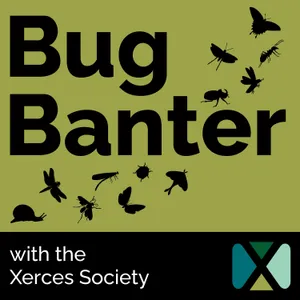
Bug Banter with the Xerces Society: Daily Summaries Delivered
by The Xerces Society
Join us as we explore the fascinating world of invertebrates and discover how to help these extraordinary animals. The Xerces Society is a nationwide non-profit organization that works to conserve invertebrates and their habitats.
Latest Episodes
The most recent episodes — sign up to get AI-powered summaries of each one.
- 2 days ago50 min
Transforming Suburbia: How One Yard Became Home to 1,800 Invertebrates
On Bug Banter we talk a lot about what people can do to help invertebrates and nothing is more inspiring than hearing one person's successful journey to creating a wildlife haven in their own backyard. Joining us to share his experience and tell us about his incredible space is Elliott Gordon. Elliott has been a Xerces Ambassador since 2022, based in New Mexico. At his home in suburban Albuquerque, he stewards a high-quality, pesticide-free landscape of diverse native and xeric plants and tri...
- 3 weeks ago53 min
The Ins and Outs of Seed Collecting
Seed collecting is a hands-on way to learn and care for native plants, plant communities, and the insects that live among them. So who can collect seeds and how do you do it? How do you store the seeds and when is the best time to plant them? To answer these questions and take a deep dive into seed collection is Eric Lee-Mäder and Stephanie Frischie. Eric has a background in conservation, commercial horticulture, and the nursery industry. Eric was previously the co-director of the Pollinator ...
- Sep 1, 202647 min
A Conservation Spotlight: The Rusty Patched Bumble Bee
The rusty patched bumble bee is a gorgeous bee, richly colored in yellow and black with a distinctive rusty brown marking on its back. It holds a special place in history: In January 2017, it became the first bee in the continental U.S. to be listed under the Endangered Species Act, and in May of this year, 1.5 million acres of land were designated as critical habitat, the largest area of critical habitat ever declared for an insect. To tell us the story of how this bumble bee went from...
- Aug 18, 202652 min
Saving Native Butterflies: One Garden at a Time
In a previous episode we highlighted the State of the Butterflies report, which found that we are losing butterflies at a rate of 1.3% per year in the contiguous US: more than one-fifth of our butterflies disappeared between 2000 and 2020. Perhaps more alarming, over 40% of assessed species fell in numbers by 50% or more—and two dozen species suffered more than 90% losses. So what can we do to help butterflies? To give us guidance are butterfly experts, Ray Moranz and Kevin Burls, both ...
- Aug 4, 202641 min
Alaska and Beyond: Native Bee Conservation and Monitoring
From chasing bumble bees in Alaska to understanding native bee populations nationwide, this scientist is on a mission to better understand these important insects. In this episode, we are joined by Dr. Hollis Woodard. Hollis is a Professor of Entomology at the University of California, Riverside and PI — the Principal Investigator, i.e., the person leading the project — of the US National Native Bee Monitoring Research Coordination Network. She received a PhD in Biology in 2012 from th...
- Jul 21, 202635 min
Discovering Monarchs in the Sunshine State
Florida may not be the first state that comes to mind when talking about monarch butterflies. Maybe that’s because much of the conversation about monarchs focuses on their migration and the condition of the overwintering sites in Mexico and California, and so it kind of bypasses the Sunshine State. However, there are reports that monarchs can be seen in Florida all year, and today, we are going to give them their time in the spotlight. We are going to take a journey with monarchs that travel ...
- Jul 7, 202639 min
Backyard Bug Safari: Tools for Exploration
Do you know what insects are in your pollinator garden or in your community? How do you find them, identify them, and continue to support them? Well, if you want the answers to these questions, you came to the right place! To help us explore this topic and give us their best tips, are Jennifer Hopwood and Aaron Anderson. Jennifer is a Senior Pollinator Conservation Specialist with Xerces, providing resources and training for pollinator and beneficial insect habitat management and restoration ...
- Jun 16, 202649 min
The Secret Life of Millipedes
Millipedes. Do they really have a thousand feet? To answer this and many other much more sensible questions, we are joined today by two people who know way more about these largely overlooked animals than I do, Drs Ben Jantzen and Jackson Means. Ben is the founder and President of the Virginia Institute for Invertebrates. With a background in biophysics, especially insect flight, he is presently Associate Professor of Philosophy at Virginia Tech. Jackson is an Assistant Curator of Recent Inve...
Get Bug Banter with the Xerces Society summaries in your inbox
Free AI-powered daily recaps. Key takeaways, quotes, and mentions — in a 5-minute read.
Get Free Summaries →Free forever for up to 3 podcasts. No credit card required.
You Might Also Like
Listeners also like.

The Zooquarium Podcast
A biologist and an artist answer listener questions about animals and ecosystems, blending science and creativity for all ages.

Terrestrials
Nature stories that reveal surprising animal and plant behaviors through immersive, family-friendly audio adventures.
Honey Bee Obscura Podcast
Explores beekeeping through practical advice and thoughtful discussions on the nuances of managing honey bees.

Just the Zoo of Us
Two hosts rate animal species on effectiveness, ingenuity, and aesthetics.

Amazing Wildlife: A San Diego Zoo Podcast
Explores wildlife conservation through behind-the-scenes stories from the San Diego Zoo and global efforts to protect endangered species.
The Wild with Chris Morgan
Explores wildlife and wild places through stories of animals adapting to survive and the people protecting them.
Nat Theo Nature Lessons Rooted in the Bible
Explores nature and science through a biblical lens, helping kids and families see how creation reflects God’s design.
In Defense of Plants Podcast
Explores the fascinating world of plants, from tiny duckweeds to towering redwoods, celebrating the science and wonder of botany.
Outside/In
Explores connections between people and the natural world through stories on science, policy, and culture.

Gastropod
Explores the science and history behind food and farming, from ancient feasts to modern aquaculture and everything in between.
The Origins Foundation Podcast
Discusses wildlife conservation, hunting ethics, and controversial issues in sustainable use through candid interviews.

Discovery
Explores various topics in the field of science.
About Bug Banter with the Xerces Society
Join us as we explore the fascinating world of invertebrates and discover how to help these extraordinary animals. The Xerces Society is a nationwide non-profit organization that works to conserve invertebrates and their habitats.
Customized Recaps
AI-powered recaps with compact key takeaways, quotes, and insights.
Straight to Your Inbox
Get key takeaways from Bug Banter with the Xerces Society in a 5-minute read.
Save Hours Every Week
Stay current on your favorite podcasts without falling behind.
Frequently Asked Questions
What is Podzilla's Bug Banter with the Xerces Society daily summary?
It's a free AI-powered email that summarizes new episodes of Bug Banter with the Xerces Society as soon as they're published. You get the key takeaways, notable quotes, and links & mentions — all in a quick read.
How does the Bug Banter with the Xerces Society podcast summary work?
When a new episode drops, our AI transcribes and analyzes it, then generates a personalized summary tailored to your interests and profession. It's delivered to your inbox every morning.
Is this an official Bug Banter with the Xerces Society product?
No. Podzilla is an independent service that summarizes publicly available podcast content. We're not affiliated with or endorsed by The Xerces Society.
Can I get summaries of other podcasts too?
Absolutely! The free plan covers up to 3 podcasts. Upgrade to Pro for 15, or Premium for 50. Browse our full catalog at /podcasts.
How often does Bug Banter with the Xerces Society release new episodes?
Bug Banter with the Xerces Society publishes biweekly. Our AI generates a summary within hours of each new episode.
What topics does Bug Banter with the Xerces Society cover?
Bug Banter with the Xerces Society covers topics including Science, Nature. Our AI identifies the specific themes in each episode and highlights what matters most to you.
Start getting Bug Banter with the Xerces Society summaries tomorrow morning.
Free forever for up to 3 podcasts. No credit card required.
Free forever for up to 3 podcasts. No credit card required.