Free Daily Podcast Summary
Business Owners Tell All: Daily Summaries Delivered
by Jamie Seeker
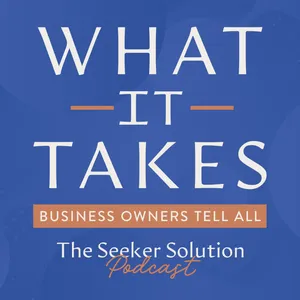
On The Seeker Solution Podcast, your host, Jamie Seeker encourages business owners to tell all! They'll share not only their expertise, but their stories and their purpose and what it takes to run a successful business. We cover a wide range of topics – the good and exciting, the challenges and sometimes the ugly. Experiences and lessons learned that our guests have faced along the way. We believe that every person has a unique message which can make a positive impact. We let our guests share on the subjects they’re well-known for. No matter the topic, you’ll be hearing real stories from real people. Business Owners Tell All: What It Takes is a project of Seeker Solution, featuring conversations with real business owners.
Latest Episodes
The most recent episodes — sign up to get AI-powered summaries of each one.
- Yesterday32 min
Learning, Unlearning, and Building Something That Matters
In this episode of Business Owners Tell All: What It Takes, Jaya Iyer shares her journey from growing up in India to building a purpose-driven fashion brand in the United States. With a Ph.D. in Fashion Merchandising and experience in both academia and the apparel industry, Jaya combined her knowledge, personal experiences, and motherhood to create Svaha USA—a brand designed to challenge gender norms and inspire learning through clothing.What began as a simple frustration—being unable to find a space-themed shirt for her daughter—turned into a powerful business idea. Through smart business planning, including launching with a Kickstarter campaign, Jaya validated her concept with minimal risk and built a brand rooted in education, empowerment, and curiosity.Throughout the conversation, Jaya emphasizes the importance of continuous learning, adaptability, and staying connected to customers. She highlights how failures, operational challenges, and unexpected events like COVID forced her to pivot, reinforcing that flexibility is one of the most critical skills a business owner can develop.Her approach to business goes beyond profit—Svaha is designed to spark curiosity, build confidence, and create meaningful conversations through everyday products. Ultimately, Jaya’s story is a testament to the power of learning, resilience, and building something that truly matters.🧠 Key Takeaways & Notes🚀 Origin Story & Business PlanningThe idea for Svaha came from a real-life problem: lack of STEM-themed clothing for girlsStarted with just 5 t-shirts and ~$500 investmentUsed Kickstarter to validate demand before scalingIdentified a clear market gap + emotional connection📌 Lesson: Start small, validate early, and let the market guide you🎓 Learning as a Competitive AdvantageAcademic background helped with:Consumer behavior understandingProduct development knowledgePricing and inventory strategyStrong emphasis on listening to customers📌 Lesson: Knowledge reduces risk and increases decision quality🔁 Learning Through Failure & AdaptabilityFaced unexpected challenges (e.g., COVID, production issues)Learned the importance of:Pivoting quicklyDouble-checking executionAccepting and correcting mistakes📌 Lesson: Experience doesn’t eliminate mistakes—adaptability does🧩 Building a Learning-Driven BrandClothing designed to:Spark curiosityEncourage conversationsReinforce identity and confidenceProducts act as “learning tools” in everyday life📌 Lesson: Businesses can educate, not just sell🧠 Mindset & Personal DevelopmentContinuous learning through:ReadingPodcastsFollowing thought leadersStrong focus on time management and boundaries📌 Lesson: If you stop learning, your business starts declining🤝 Leadership & Growth ChallengesDifficulty implementing change within teamsImportance of:Communicating vision clearlyShowing benefits of changeGrowth came from embracing new opportunities (e.g., adult clothing line)📌 Lesson: Leaders must guide change—even when it’s uncomfortable🌍 Entrepreneur RealityEntrepreneurship can be lonelyImportance of:Peer networksLearning from other foundersStaying updated with trends (e.g., tech, platforms, AI)📌 Lesson: Surround yourself with people who challenge and teach you💬 Memorable QuotesHere are standout, highly quotable moments from the episode:“I couldn’t find anything for her in the girls’ department… and that’s what sparked this idea.”“All my life experiences had prepared me to do this.”“You have to always listen to your customer… if your customer is not happy, nothing else matters.”“There is no dearth of things you can spend money on—you have to prioritize.”“You have to learn to pivot, you have to learn to be flexible.”“Clothing impacts how a child thinks.”“One of the reasons a business is successful is when you are offering something nobody else is.”“Nobody likes change—we’re all creatures of habit.”</
- 1 weeks ago23 min
The Hidden Skill Every Founder Must Learn: Decision-Making Under Uncertainty
In this episode, Santosh Kaveti, Founder & CEO of ProArch, shares his journey of building a global technology company and the evolving mindset required to lead in times of rapid disruption.From embracing uncertainty as a first-time entrepreneur to navigating today’s unprecedented AI-driven transformation, Santosh highlights that success in business isn’t just about strategy—it’s about learning how to think, decide, and adapt under pressure.The conversation dives deep into decision-making as a learned skill, the importance of building aligned teams, and how leaders must continuously unlearn, relearn, and evolve to stay relevant.Santosh also reveals how ProArch is shifting from a traditional IT services model into an AI-driven organization—demonstrating how businesses must act quickly or risk becoming obsolete.🧠 Key Takeaways1. Decision-Making Is a Learnable SkillFounders aren’t born with great decision-making abilitiesIt develops through experience, failure, and reflectionLeaders must train themselves to handle ambiguity2. Clarity Drives ResultsTeams cannot perform without clear directionA leader’s job is to synthesize complexity and articulate it simplyMisalignment often comes from lack of clarity—not lack of effort3. Your Team Is EverythingYou cannot scale aloneSuccess comes from aligning:Individual passionsCompany purposeTrue growth happens when teams are emotionally connected to the mission4. Unlearning Is Just as Important as LearningGrowth requires letting go of old ways of workingBreaking down silos is essential for innovationCollaboration across functions creates stronger outcomes5. Disruption = OpportunityAI is changing business faster than any previous technology waveCompanies must adapt quickly or risk becoming obsoleteLeaders must embrace change instead of waiting to react6. Mentorship Accelerates GrowthGreat mentors help sharpen thinking and communicationLearning from others shortens the trial-and-error cycleExposure to different perspectives strengthens decision-making7. Business Planning Must EvolveEarly-stage: vision-driven and experimentalGrowth stage: structured, strategic, and team-drivenToday: requires constant iteration due to rapid change💬 Memorable Quotes (Polished for Impact)Here are some strong pull quotes you can use for social, promos, or show notes:🔥 On Leadership & Clarity“Clarity is what drives results. If your team doesn’t have clarity, they can’t execute.”🔥 On Decision-Making“Decision-making isn’t something you’re born with—it’s something you learn through failure, reflection, and experience.”🔥 On Building Teams“You need people, purpose, and progress—and a team that’s truly connected to all three.”🔥 On Growth & Letting Go“At some point, you realize you can’t do it all—and that’s when real growth begins.”🔥 On Learning & Mentorship“The ability to synthesize and articulate is a skill—and you can train yourself to get there.”🔥 On Change & Adaptation“You either embrace and adapt, or you don’t just fall behind—you become obsolete.”🔥 On Innovation“Anytime there’s disruption, there’s also massive opportunity.”🔥 On Collaboration“We had to unlearn working in silos and start thinking as one unified team.”🔥 Signature Closing Insight“It takes clarity of purpose, incredible patience, and the ability to influence people and connect them to that purpose.”📝 Suggested Show Notes (Ready to Publish)In this episode of Business Owner Tell All: What It Takes, we sit down with Santosh Kaveti, Founder & CEO of ProArch, to explore what it really takes to lead and grow a business in today’s rapidly changing world.Santosh shares how he built a global technology company without a traditional business background, and how learning, adaptability, and decision-making became his greatest tools along the way.We dive into:The reality of scaling from startup to growth stageWhy decision-making is a skill every founder must developHow to build and align high-performing teamsThe importance of clarity in leadershipNavigating disruption in the age of AIWhy companies must evolve—or risk becoming obsoleteIf you're a busin
- 2 weeks ago22 min
Planning for Exit Before You’re Ready to Exit
This episode dives into how Jesse Jackson built a fast-growing automotive repair business from zero to eight figures in just four years — without prior industry experience.Her journey highlights a core truth: business growth is a direct reflection of personal growth.Jesse shares how she leveraged:Continuous learningStrategic mentorshipAcquisition-driven scalingLetting go of control…to evolve from operator to enterprise-level leader.She also gives a raw, unfiltered look at balancing seven kids + eight businesses, emphasizing that success isn’t about balance — it’s about embracing constant pressure and growth.🧠 Key Takeaways & Notes1. Entering an Industry Without Experience Can Be an AdvantageJesse didn’t come from automotive — and that helped her question outdated normsShe saw opportunity where insiders saw “the way things have always been done”Identified a massive market shift: 60% of shop owners retiring → wealth transfer opportunity👉 Insight:Outsiders often innovate faster because they’re not conditioned by industry habits2. Growth Forces Personal Evolution“You’re not ready for the goal — but you grow into it”Jesse describes herself evolving from “Jesse 6.0 to Jesse 8.3”Rapid scaling forces leadership development whether you’re ready or not👉 Insight:You don’t wait to become capable — you become capable by pursuing bigger goals3. Mentorship Accelerates EverythingKey turning point: learning from Roland Frasier (acquisition strategy)Mentors helped her compress years of learning into monthsEventually turned mentor into investor👉 Insight:Proximity to the right people shortcuts trial-and-error4. Letting Go of Control is Required to ScaleEarly stage: doing everything (HR, finance, marketing, payroll)Breaking point at 5 locations → forced to hireBiggest growth unlock = hiring people better than her👉 Insight:You are the bottleneck until you replace yourself5. Decision-Making: Speed vs. StrategyJesse shares a powerful metaphor:Entrepreneurs either:❌ Stand in the airport (paralyzed, miss opportunities)❌ Jump on every plane (bad decisions, misalignment)Her evolution:From fast decisions → to intentional, strategic decisions with consequences in mind👉 Insight:Scaling requires upgrading your decision-making, not just making more decisions6. Learning Comes From Pressure, Not Just BooksYes: books, mentors, programsBut most growth came from:Rapid scalingReal-world pressureBeing forced to adapt👉 Insight:Execution is the fastest teacher7. There Is No Balance — Only Capacity ExpansionJesse is brutally honest about life:“No balance”“Constant struggle”“Sometimes collapse under pressure”But she reframes it:Struggle = growthChaos = chosen lifestyle👉 Insight:High performance isn’t balanced — it’s intentional chaos8. Core Traits of a Business OwnerJesse distills it into two essentials:Be willing to “eat glass” (handle constant problems)Set big, audacious goals👉 Insight:Endurance + vision = long-term success💬 Memorable Quotes (🔥 These are GOLD for clips)On Entrepreneurship“Being a business owner is like eating glass — all the worst problems come to you.”On Growth“You’re not everything you need to be yet — but you’ll become that person on the way.”On Mentorship“I don’t know how to get from 20 million to 100 million — so I find people who do.”On Hiring“You think no one can do it better than you — and then you find them.”On Scaling“You are the limiting factor in your business.”On Decision-Making“Some people stand in the airport and never get on a plane… I was getting on every plane.”On Maturity as a Leader“Now I have to think about the consequences to 100 people — not just me.”On Life + Business“My life is held together by a hair tie and two broken bobby pins.”On Balance
- 3 weeks ago21 min
What It Takes with Jamie Seeker ft. Tom Irvin
In this milestone episode of Business Owners Tell All, Jamie Seeker officially transitions out of the host seat and hands it over to Tom Irvin—marking a powerful moment of leadership in action.The conversation begins with Tom sharing his vision for helping business owners move from growth to scale by getting out of their own way and focusing on what truly drives results. He emphasizes the importance of continuous learning, understanding the “why” behind actions, and using data to guide development and performance.Midway through the episode, the roles reverse. Tom steps in as host and interviews Jamie as a business owner, uncovering the real story behind building Seeker Solution. Jamie shares how she carved her own path, learned to let go of control, and evolved from doing everything herself to leading through others.Together, they explore what it really takes to grow a business—highlighting resilience, clarity, and the discipline to keep moving forward, even when the path isn’t clear.🧠 Key Takeaways1. Business Owners Must Get Out of Their Own WayTom highlights a common growth barrier—owners becoming the bottleneck. Scaling requires stepping back and allowing others to step up.2. Learning & Development Never StopsGrowth isn’t a one-time event. It’s continuous, incremental, and requires commitment at every level of the business.3. “Why” Drives Performance More Than “How”Training without context leads to disengagement. When teams understand why something matters, they perform with purpose.4. Data & KPIs Are Non-NegotiableYou can’t manage what you don’t measure. Effective businesses reverse-engineer goals and train based on key metrics.5. Delegation Is a Turning PointJamie shares that real growth began when she stopped doing everything herself and removed herself as the bottleneck.6. There’s No One “Right Way” to Build a BusinessJamie built her company by rejecting traditional norms and creating a model aligned with her values.7. The Journey Matters More Than the DestinationSuccess isn’t just about reaching goals—it’s about how you grow along the way.🔥 Memorable QuotesHere are standout, highly quotable lines from the episode:💬 On Growth & Business Ownership“Business owners just kind of get in their own way.”“Helping business owners move from growth to scaling… and really just watch them grow.”💬 On Learning & Development“How do you eat a piece of cake? One bite at a time.”“We are always going to be students.”💬 On Training & Leadership“They teach them how without them understanding why.”“If you don’t measure it, you can’t manage it.”💬 On Delegation & Scaling“Just because you can doesn’t mean you should.”“I’m the one that keeps it small if I don’t move out of the way.”💬 On Business Philosophy“I’m just gonna do it my way.”“There’s gotta be a different way.”💬 On Resilience & Mindset“Don’t stop reading the book.”“It’s not the end of the story.”“You continuously move forward.”💬 On Defining “What It Takes”“It’s whatever it takes.”“What it takes depends on what the goal is.”🎯 Episode ThemeClarity + Delegation + Continuous Growth = Sustainable ScaleThis episode isn’t just about business strategy—it’s a real-time example of leadership in action. Jamie doesn’t just talk about growth—she demonstrates it by stepping aside and creating space for Tom to lead.
- 4 weeks ago31 min
The Founder Shift: From Doing the Work to Leading the Work
In this episode of Business Owners Tell All: What It Takes, Jamie Seeker interviews Mike Farrell, Founder and CEO of Landscape Management Group in Columbus, Ohio. Mike shares how he started in 2008 by knocking on doors with a push mower, wheelbarrow, and handmade business cards to pay for college, then gradually turned that hustle into a multi-city landscaping business.The conversation centers heavily on business planning, but from a real-world founder perspective rather than a textbook one. Mike explains that while he did create a business plan early on and even won a college business plan competition, he quickly learned that “nothing goes to plan.” His core lesson is that planning matters, but adaptability matters just as much. He repeatedly emphasizes the need for business owners to “zig and zag,” stay resilient, and keep moving through constant change.Mike also talks about the company’s rebrand from Mike’s Landscaping to Landscape Management Group, explaining that the shift was both strategic and practical. He realized that naming the company after himself kept him trapped as the center of every function. Rebranding helped position the business for growth and became part of a larger commitment to marketing, which he now sees as a major growth lever for small businesses.A major highlight of the episode is Mike’s framework for annual planning. He breaks down how he works backward from revenue goals using average contract value, lead volume, close rates, and marketing cost per lead. His message is that business planning can often be simplified into math, as long as leaders also remain ready for disruptions like staffing changes, failed jobs, legal issues, and operational breakdowns. Planning sets the destination, but execution and adaptation determine whether you get there.The episode also dives into financial discipline, with Mike candidly sharing his mistakes. He explains that he has swung between being overly detailed and not detailed enough, eventually landing on a more balanced approach: real annual forecasting, monthly budget-versus-actual reviews, and close attention to percentage-of-income analysis during growth phases.On the people side, Mike is especially direct. He discusses how not every employee grows with the company and says that sometimes leaders must “clean the room” to move the business forward. He shares that after letting go of six managers, the company actually improved. His broader point is that growth depends on having the right people, strong leadership, and a compelling vision. He now sees recruiting and “selling the vision” as one of his most important jobs as CEO.The conversation closes with tactical advice around SOPs and KPIs, which Mike says too many owners talk about but fail to implement. He stresses the importance of clear job descriptions, documented processes, structured onboarding, and simple accountability metrics. When asked the show’s signature question — what it really takes to be a business owner — Mike answers with one word: resilience.Key Takeaways / Producer NotesThis was a strong episode for founders, especially service-based and blue-collar business owners. Mike came across as credible, practical, and self-aware. His tone was honest and non-performative, which fits the show well.The strongest themes were:1. Planning matters, but rigidity does not. Mike’s perspective was not anti-planning. It was more that planning must coexist with adaptability. He made that distinction well.2. Growth is a math problem and a leadership problem. He explained the math side clearly: leads, conversion rates, average contract value, revenue targets, and marketing costs. But he also made it clear that plans fail without execution, discipline, and people.3. Rebranding can be a real growth move. The switch from “Mike’s Landscaping” to “Landscape Management Group” was about more than a new name. It reflected a shift from owner-centered hustle to scalable business structure.4. Marketing was a major turning point. Mike admitted he resisted marketing for years because he thought he already had enough work. Once he committed to marketing, growth accelerated.5. He had one of the clearest leadership points of the episode: don’t scale problems. That line will resonate with business owners. It’s simple, memorable, and true.6. The people section was especially strong. His comments about some employees not growing with the company, and the need to “clean the room,” were blunt but insightful. Jamie handled that section well by reframing it through the idea of pruni
- Apr 30, 202622 min
Women in leadership, business strategy, and intentional planning in mission‑driven organizations
Amber Sheikh joins Jamie Seeker for a powerful conversation on what it truly takes to lead — not just a business, but a mission. As the founder and CEO of Chic Impact, Amber supports nonprofit organizations across California by strengthening their fundraising, leadership, and strategic planning. But her journey to ownership was anything but linear.In this episode, Amber shares how her early work in poverty alleviation abroad revealed a major gap in nonprofit operations, ultimately leading her into fundraising, consulting, and eventually ownership. She opens up about buying her firm during the pandemic while navigating divorce, single motherhood, and financial uncertainty — all while trusting an intuitive vision she had been building for years.Together, Jamie and Amber explore business planning as a leadership discipline, particularly in the nonprofit space: why scarcity thinking limits growth, how planning horizons should be realistic, and why founders must intentionally make time to step away in order to think clearly. The conversation closes with a deeply honest reflection on identity, leadership, and what it takes to sit in the owner’s seat.🧠 Key Notes & Takeaways🌱 Origin Story & PurposeAmber’s career began with international poverty alleviation work in Delhi, India.She realized many nonprofits were strong on mission but weak on operations, planning, and sustainability.This insight pulled her “one step away from the front line” into administration, fundraising, and eventually consulting.She spent 10+ years at a consulting firm before purchasing it and relaunching it as Chic Impact.Key insight: Mission alone doesn’t sustain organizations — strategy does.💼 Becoming a Business Owner (During Crisis)Amber bought the firm during the pandemic while finalizing a divorce and raising two young children.She had $400 in her pocket at the time of purchase.There was no backup plan — execution became a necessity, not a choice.Clients and staff followed her, reinforcing trust and shared vision.Lesson: Sometimes commitment — not certainty — is what drives success.🧭 Business Planning in the Nonprofit SectorCommon mistakes:Not planning at allPlanning too far ahead without knowing variablesAmber recommends 2–3 year strategic plans instead of rigid 5‑year plans.Nonprofits often operate in scarcity due to systemic pressures — language, funding models, and expectations.Organizations must allow themselves to think in terms of abundance and sustainability, not survival.Key belief: Nonprofits must “run in the black” to serve their mission long-term.📊 Growth, Strategy & ScalingChic Impact has grown ~20% annually in revenue, profit, and team size.Growth was initially reactive — responding to demand.Recently, Amber intentionally overstaffed to prepare for growth instead of chasing it.This allowed time for internal strategy, team-led problem solving, and long-term visioning.Shift: From reactive leadership → proactive planning.🧠 Planning Starts with SpaceAmber emphasizes the need to “break up with your own story.”The problems that once defined the bu
- Apr 23, 202626 min
Food Fire + Knives: Where Business Meets the Dinner Table
Michael shares his journey from a 14-year-old working at a produce stand to a CIA-trained chef who hit burnout and reinvented his career. That pivot led to the creation of Food, Fire, and Knives — a private chef platform that now serves clients across the country, bringing restaurant-quality dining into homes. What began as side gigs turned into a full-scale business that empowers chefs to regain control of their careers.This episode dives deep into:His unconventional founder storyBuilding a nationwide team of chefsHR systems and culture buildingLeadership lessonsAnd of course, what it really takes to run a business🧠 Key Takeaways & Notes🚀 Origin Story: From Burnout to BreakthroughMichael fell in love with food early, working at a produce stand, then in fast-casual kitchens.Dropped out of law enforcement school to pursue culinary school.Moved to Charleston to “live on vacation” before marriage — but after a personal breakup, he doubled down on building something new.Started picking up private chef gigs and built a simple website.After getting double-booked, he brought in another chef — and a business model was born.“I just thought… what if I go on the other side of this — hire chefs and help them leave the grind too?”👨🍳 The Business Model: Platform for Chef EmpowermentFood, Fire, and Knives provides autonomy, income, and exposure for chefs.It offers clients custom, in-home dining experiences with vetted chefs in 48 states.Michael intentionally built a platform that helps chefs exit the restaurant rat race, especially as many face burnout and physical wear.📋 HR Deep Dive: Hiring, Training, and TrustHiring strangers to represent your brand is scary — but essential.Trust was built slowly through personal referrals and clear expectations.Created unique interview questions like:“Tell me your favorite kitchen story” to assess both skills and personality.Focused on soft skills: can chefs cook and engage with customers?Developed automated HR systems, background checks, and orientation workflows.Relies heavily on Slack for daily communication with contractors to build a sense of team.“You’re trusting people you don’t know to handle your baby.”“If they can talk to me, they can talk to a client.”🌍 Culture & Connection — Even Without a Physical OfficeMichael hosts bi-weekly "Coffee Chats” with chefs to keep the team motivated.Maintains culture through constant communication and peer support in Slack.Intentionally keeps a flat, responsive culture where contractors feel heard and valued.“They’re not employees, but they feel like they’re part of the team.”⏳ Time Management = CEO Skill #1Learned to protect his time
- Apr 16, 202624 min
Your Team’s New Superpower? An AI That Actually Does the Work
In this episode, Jamie sits down with Seva Ustinov, a serial entrepreneur and the founder of Elly Analytics — a performance marketing company reimagined with an internal AI Operating System at its core.Seva shares his 20-year journey from founding a marketing agency in Russia to scaling a tech company in the U.S., and how the chaos of managing large teams led him to create a unified AI-powered “company brain.”But what sets this conversation apart is the focus on HR, team dynamics, and operations — not just tech. Seva breaks down how automation and intelligent agents have drastically reduced meeting bloat, onboarding time, and internal interruptions — while still empowering human teams.Jamie and Seva dive into how AI is changing the people side of business, and how any founder (technical or not) can begin building a smarter, more autonomous company.📌 KEY TAKEAWAYS“Professional services is a constant rollercoaster.” Seva scaled a 100+ person agency, then started over in tech, learning each level of leadership and operations by doing.Internal AI Operating System: Elly uses AI agents and shared company memory to automate everything from onboarding to sales support and product feedback loops.Hiring Tip: One of Seva’s first hires was a head of operations (aka “Chief of Everything Else”), relieving him from all the stress-inducing "other" problems most founders try to juggle.AI-Driven HR: Elly’s system reduces Slack clutter and meeting overload by giving team members AI access to every piece of company knowledge — from past emails to product roadmaps.True Automation Wins: A non-technical team member used their internal AI tool to build a complete customer sentiment dashboard in 6 hours — something that previously required entire teams.💬 MEMORABLE QUOTES"Everything else is always your personal problem — unless you hire someone to own it."– On the role of a head of operations"Your past experience often doesn’t help with the next level. You have to unlearn and rebuild."– On leveling up as a founder"Our company brain is always learning. It sits in on every meeting, remembers everything, and makes everyone smarter."– On the power of an internal AI system"It took me 5 minutes to generate a custom sales email from transcripts, competitor data, and context — something that would take a team hours before."– On real-world automation with AI"You can delegate tasks, but you can’t delegate responsibility."– When asked what it really takes to be a business owner🎯 WHO THIS EPISODE IS FORFounders struggling with team scale, info overload, and inefficient workflowsOperations leaders interested in AI tools beyond dashboardsHR teams exploring how AI can support onboarding, knowledge sharing, and internal communicationAnyone curious about turning AI from hype into a real operating advantage🔗 WHERE TO FIND SEVAWebsite: ellyanalytics.comLinkedIn: linkedin.com/in/sevaustinovAI Agent Setup Template (mentioned in episode): Available on his LinkedIn postsTwitter/X:<a href="https://twitter
Get Business Owners Tell All summaries in your inbox
Free AI-powered daily recaps. Key takeaways, quotes, and mentions — in a 5-minute read.
Get Free Summaries →Free forever for up to 3 podcasts. No credit card required.
You Might Also Like
Listeners also like.

Founder's Story
Real founders share raw stories of building, scaling, and leading companies, revealing the grit and purpose behind entrepreneurial success.

Right About Now - Legendary Business Advice
Real talk from business founders and entrepreneurs about building companies, lessons learned, and what actually works in real-world ventures.

The Entrepreneur DNA
Entrepreneurs share lessons on building businesses and personal growth through real experiences and mistakes.

Mind The Business: Small Business Success Stories
Small business owners share real stories about starting, growing, and navigating the challenges of entrepreneurship.

BiggerPockets Business Podcast
Real entrepreneurs share practical advice on starting, growing, and selling businesses, covering hiring, marketing, and raising capital.

Truth, Lies and Work
Explores workplace culture and human behavior using psychology and real-world insights to help leaders manage teams effectively.

Entrepreneur Parents - Pretty & Punk Podcast | Family Success, Business Tactics, Relationship Goals
Entrepreneur Parents explores how ambitious founders balance thriving businesses with family life, marriage, and personal growth.

The Vault Unlocked
Founders share hard-earned lessons on what they wish they’d known earlier to avoid costly mistakes and grow their companies faster.

Hacks and Hobbies with Junaid Ahmed
Creators and entrepreneurs discuss turning passions into income through podcasting, content, personal branding, and home studios.

Impact Podcast, Mentorship with Eddie Wilson
A seasoned entrepreneur shares insights on building businesses, leadership, and living with purpose to create meaningful impact.

Let's Talk Offline
Two career experts discuss real talk on work-life balance, pay negotiation, and office relationships for early-career professionals.

The Code To Winning
Interviews with business leaders, entrepreneurs, and CEOs reveal strategies and insights for success in the modern business world.
About Business Owners Tell All
On The Seeker Solution Podcast, your host, Jamie Seeker encourages business owners to tell all! They'll share not only their expertise, but their stories and their purpose and what it takes to run a successful business. We cover a wide range of topics – the good and exciting, the challenges and sometimes the ugly. Experiences and lessons learned that our guests have faced along the way. We believe that every person has a unique message which can make a positive impact. We let our guests share on the subjects they’re well-known for. No matter the topic, you’ll be hearing real stories from real people. Business Owners Tell All: What It Takes is a project of Seeker Solution, featuring conversations with real business owners.
Customized Recaps
AI-powered recaps with compact key takeaways, quotes, and insights.
Straight to Your Inbox
Get key takeaways from Business Owners Tell All in a 5-minute read.
Save Hours Every Week
Stay current on your favorite podcasts without falling behind.
Frequently Asked Questions
What is Podzilla's Business Owners Tell All daily summary?
It's a free AI-powered email that summarizes new episodes of Business Owners Tell All as soon as they're published. You get the key takeaways, notable quotes, and links & mentions — all in a quick read.
How does the Business Owners Tell All podcast summary work?
When a new episode drops, our AI transcribes and analyzes it, then generates a personalized summary tailored to your interests and profession. It's delivered to your inbox every morning.
Is this an official Business Owners Tell All product?
No. Podzilla is an independent service that summarizes publicly available podcast content. We're not affiliated with or endorsed by Jamie Seeker.
Can I get summaries of other podcasts too?
Absolutely! The free plan covers up to 3 podcasts. Upgrade to Pro for 15, or Premium for 50. Browse our full catalog at /podcasts.
How often does Business Owners Tell All release new episodes?
Business Owners Tell All publishes weekly. Our AI generates a summary within hours of each new episode.
What topics does Business Owners Tell All cover?
Business Owners Tell All covers topics including Business, Management, Entrepreneurship. Our AI identifies the specific themes in each episode and highlights what matters most to you.
Start getting Business Owners Tell All summaries tomorrow morning.
Free forever for up to 3 podcasts. No credit card required.
Free forever for up to 3 podcasts. No credit card required.