Free Daily Podcast Summary
Chasing Baseball Dreams: Daily Summaries Delivered
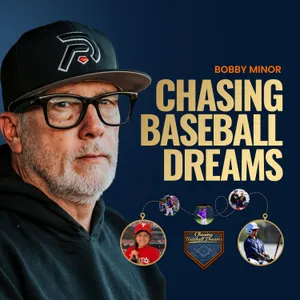
by Bobby Minor
You're spending thousands a year on travel baseball. A better team. A bigger showcase. More lessons. A higher ranking. And you still have no way to know if any of it is actually working.⠀That's not an accident. That's the machine.⠀Chasing Baseball Dreams is the only baseball parent podcast hosted by someone with no financial stake in where your money goes. I don't run a travel team. I don't sell lessons. I don't coach for an org. I have no reason to steer you in the wrong direction. I'm Bobby Minor... former Division 1 player, 35+ years coaching select baseball and high school, former travel organization director, over 1,000 college recruiting assessments, and a college baseball dad who almost lost 2 sons to this game for 2 very different reasons, with one currently playing college baseball.⠀Every episode, I sit down with former Major League players, college coaches, scouts, and baseball dads who've lived through the same grind you're in rig
Latest Episodes
The most recent episodes — sign up to get AI-powered summaries of each one.
- 5 days ago39 min
Episode #22 Jorden Hussein | Stop Chasing the “Right” Baseball Path | JUCO, Indie Ball & Banana Ball
Texas Tailgators shortstop Jorden Hussein never planned on playing Banana Ball.His path went from North Shore High School in Houston to Crowder College, Division I baseball at Little Rock, two seasons of independent ball, the Party Animals, and now the Texas Tailgators. At several points, the next opportunity looked nothing like what he originally pictured.That’s exactly why I wanted him on the Chasing Baseball Dreams Podcast.Jorden talks about why he chose JUCO when he had a Division I opportunity, why parents need to be realistic about where their son actually is as a player, and what his own parents got right throughout his baseball career. He also gives one of the better analogies I’ve heard about what a player needs from his dad after a bad game. We also get into Banana Ball. Is the baseball real? Are the games scripted? And after playing inside it, does Jorden believe Banana Ball is actually here to stay? His answer might surprise some traditional baseball people.In this episode we cover:Why Jorden chose JUCO instead of going Division I right awayWhat parents should look at beyond the school name and divisionThe reality check he thinks more baseball parents need about their sonWhat each jump in competition exposed about his own gameWhat his parents did when he struggledWhat NOT to do on the car ride home after your son goes 0-for-4How a phone call he almost turned down led him to Banana BallWhether Banana Ball is scripted and how competitive the games really areWhy he believes Banana Ball is here to stayWhat Banana Ball taught him about slowing the game down defensivelyWhy parents should stop obsessing over statisticsWhat he wishes he could tell his high school selfJorden’s path is a good reminder for baseball parents: your son’s best opportunity may not have the name, logo, division, or path you pictured.Pay attention to where he can play, where he can get better, and where people genuinely want him.🎙️ Host: Bobby Minor⚾ Guest: Jorden Hussein, Texas Tailgators shortstop🎧 Chasing Baseball Dreams PodcastSubscribe for conversations with players, coaches and baseball people who can help parents think more clearly about the decisions they’re making for their sons.#ChasingBaseballDreams #BaseballParents #BananaBall
- 1 weeks ago51 min
Episode #21 Former MLB Player Aaron Barrett | Youth Baseball Development, Arm Health & the FOMO Trap
Baseball parents spend a lot of time worrying about winning, playing time and whether their son is falling behind.Former MLB pitcher Aaron Barrett says one of the biggest things parents worry about is FOMO. Trying to keep up with what everybody else is doing instead of looking at where your own kid is right now. Aaron has seen player development from just about every angle. He pitched parts of four seasons with the Washington Nationals, made it back to the Major Leagues after more than four years away following Tommy John surgery and a fractured humerus, and was part of Washington’s 2019 World Series team. After his playing career, he moved into player development with the Philadelphia Phillies. In his first season managing the Single-A Clearwater Threshers, his team finished 74-55 and Aaron was named Baseball America’s Single-A Manager of the Year and Florida State League Manager of the Year. In this episode of the Chasing Baseball Dreams Podcast, Aaron and I get into what actually separates players as they move up, why consistency and handling failure matter so much, what development should look like at younger ages, and why playing catch still matters. We also talk about youth pitching and arm health, how parents should vet coaches and instructors, multi-sport athletes, baseball IQ, analytics, player ownership, Aaron’s four MLB Draft experiences, his incredible comeback to the big leagues, and some of his favorite Major League memories. Aaron also explains why parents need to ask more questions before handing their son’s development over to somebody else, especially when it comes to pitching and training. His closing advice is simple: use the information and experience available to you, then bring the decision back to your child and what’s best for him right now. Development isn’t linear. TIMESTAMPS 00:00 Aaron Barrett’s MLB career, comeback and move into managing 02:05 What separates players in professional baseball 05:08 Baseball IQ and how players are being developed today 08:17 Development vs. winning 11:31 What development should look like for young players 14:24 Why playing catch still matters 17:17 When parents should stop trying to fix every struggle 19:35 Helping a young player through an injury 22:25 What parents should ask about pitching and arm care 25:19 Aaron on youth arm injuries and Dr. Andrews 26:48 Aaron’s wild MLB Draft story 29:10 Growing up as a multi-sport athlete 31:02 When parents should hand ownership back to the player 35:28 Data, analytics and paralysis by analysis 39:37 In-and-Out with Aaron Barrett 40:20 What baseball parents worry about too much 41:38 What he’d tell the parents of his 12-year-old self 42:34 The toughest hitter Aaron faced in the Major Leagues 43:39 Aaron’s favorite baseball memories 50:41 Favorite baseball movie and his upcoming documentary 53:53 Aaron’s final advice for baseball parents
- 2 weeks ago53 min
Episode #20 Lou Collier | Reclassing, Playing Up & What Baseball Parents Get Wrong
Is your son dominating youth baseball because he’s developing, or because the competition isn’t challenging him anymore? Former MLB player Lou Collier joins Bobby Minor on the Chasing Baseball Dreams Podcast to talk about reclassing, playing up and the decisions behind his son Cam Collier’s path to the MLB Draft. Before the Cincinnati Reds selected Cam 18th overall, his family made the decision to have him graduate early and play junior college baseball against older competition. Lou explains what he saw in Cam, how he used feedback from experienced baseball people and why the decision involved much more than his son’s ability on the field. We also get into what would’ve told him they’d moved too soon. That leads to a conversation about reclassifying in the other direction. Lou shares his concerns about older players dominating younger competition and what happens when the game finally gets tougher. He also makes an important distinction: challenging a player doesn’t mean putting him at a level he isn’t physically ready to handle. We talk about the challenge of being both a coach and a baseball dad, including what Lou learned about backing off as Cam matured. Later, he explains why a younger player needing encouragement isn’t the same as an older teenager refusing to put in the work his goals require. For parents thinking about baseball training and player development, Lou gets specific about infield fundamentals, learning multiple positions and what working alongside Ron Washington taught him about instruction. He also discusses baseball access for young African American players, his work with MLB Develops and the training behind the Hillboys program. His explanation of practice reps versus game reps gives parents something to consider before filling another weekend with games. Cam’s path gives us a real decision to examine. The question for your family is what your son needs, how you’re evaluating that and whether his baseball environment is preparing him for tougher competition. Timestamps 00:00 Meet Lou Collier, former MLB player and Cam Collier’s dad 02:25 Being a baseball dad without always being the coach 05:02 Why Cam Collier reclassified and played junior college baseball 10:50 What would’ve told Lou they moved too soon 12:19 College baseball beyond the “D1 or bust” mentality 13:41 Infield fundamentals and learning multiple positions 17:05 What Ron Washington taught Lou about infield development 19:47 Recognizing when a player needs tougher competition 20:47 When should your son take ownership of his baseball goals? 23:09 Growing up playing baseball on Chicago’s South Side 25:31 African American players, baseball costs and access 31:30 MLB Develops, Dream Series and Breakthrough Series 36:38 Reclassing down and the temporary age advantage 41:52 What separates players who keep getting better 43:10 The toughest MLB pitchers Lou faced 44:19 Favorite ballparks and playing back home in Chicago 46:41 In-and-Out with Lou Collier 48:29 A Wrigley Field home run and a favorite baseball movie 50:44 Lou’s message to parents: Be honest about your son 52:54 The Hillboys and Lou’s approach to youth baseball training 55:22 Practice reps versus game reps 56:31 Closing thoughts Subscribe to the Chasing Baseball Dreams Podcast on YouTube, Apple Podcasts or Spotify so you don’t miss the next episode. #BaseballParents #YouthBaseball #ChasingBaseballDreams
- 2 weeks ago49 min
Episode #19 Niko Goodrum | What Baseball Parents Rush...Travel Ball, Development & MLB Lessons
Former MLB player Niko Goodrum joins Bobby Minor on the Chasing Baseball Dreams Podcast to talk youth baseball, travel baseball, player development, versatility, mindset, and what parents may be rushing too soon.Niko was a second-round pick out of high school and played seven seasons in Major League Baseball with the Minnesota Twins, Detroit Tigers, Houston Astros, Tampa Bay Rays and Los Angeles Angels. One of the most surprising parts of his journey: he didn’t grow up playing travel baseball. He played local summer ball, attended a few showcases and still developed into a Major League player.For baseball parents, some of Niko’s strongest advice comes when he talks development. He says he wouldn’t rush power, exit velocity, throwing velocity or strength with young players. Niko was 168 pounds when he was drafted and eventually played at 220. Physical development comes with time, but the skill of actually playing baseball still has to be there.Niko also talks about when a player may be ready for travel ball, why parents should watch how much their son is driving his own development, and why decisions should fit the individual kid instead of what everybody else is doing.We also get into how versatility helped Niko reach and stay in the Major Leagues, playing multiple sports, becoming a switch hitter in high school, professional baseball in Korea, the moment he knew his playing career was over, and what separates talented players who keep moving from those who stall out.Niko shares what he learned from Victor Martinez, why the mental side matters more as the level rises, and what it was like facing Jacob deGrom and Chris Sale.If you’re a baseball parent trying to make better decisions about travel baseball, training, strength, player development, versatility or your son’s long-term path, this conversation is for you.TIMESTAMPS00:50 Meet Niko Goodrum and his MLB journey01:34 Why Niko chose Kennesaw State over bigger-name programs03:11 Getting drafted in the second round vs. going to college04:30 Why development can take years, even for elite players06:17 Niko reveals he never played travel ball07:02 Why playing basketball helped his baseball development08:53 How versatility became Niko’s path to the Major Leagues11:23 Playing when your role and future aren’t guaranteed12:42 What playing professional baseball in Korea was really like17:05 The morning Niko knew it was time to retire19:11 Adjusting to life after professional baseball22:08 What separates talented players who keep advancing24:02 Becoming a switch hitter in high school26:08 What parents of talented 12 and 13-year-olds should focus on27:43 Why parents shouldn’t rush strength, exit velo or throwing velo29:10 When should a kid start playing travel baseball?31:41 Facing Jacob deGrom, Chris Sale and MLB’s toughest pitchers32:30 Niko’s favorite Major League stadiums36:00 In-and-Out: earning trust, development, technique and simplifying the game38:50 Why mindset becomes the separator at higher levels42:05 What Niko learned from Victor Martinez45:14 Niko’s favorite baseball memories47:42 His favorite baseball movie48:24 Where to follow Niko Goodrum
- 2 weeks ago1h 8m
Episode #18 Lewis Brinson | What Baseball Parents Get Wrong About Stats, Pressure & Development
Former MLB outfielder and first-round pick Lewis Brinson joins Bobby Minor on the Chasing Baseball Dreams Podcast for a conversation every youth baseball and travel baseball parent should hear.Brinson was selected 29th overall by the Texas Rangers in the 2012 MLB Draft out of Coral Springs High School. He went on to play six seasons in the Major Leagues with the Milwaukee Brewers, Miami Marlins and San Francisco Giants, and his career later took him to Japan and Mexico.In this episode, Lewis talks about the parts of the baseball journey parents rarely get to see.He explains why parents can put way too much stock in batting average, exit velocity and other metrics at 9U and 10U, what actually mattered in his development as a young player, and why youth baseball shouldn’t start feeling like a business before baseball is actually a player’s job.Lewis also gives an inside look at what being a top MLB prospect really means. More attention. More expectations. More opportunities to fail. And, sometimes, more pressure than a young player knows how to handle.He shares what he learned after being traded by the Rangers in the Jonathan Lucroy deal, becoming a centerpiece of the Christian Yelich trade to Miami, and returning home with enormous expectations placed on him.The conversation also gets into hitting development, why every kid shouldn’t be taught to swing like Aaron Judge, how parents can get more value from private lessons, what longtime big leaguers have in common beyond talent, and what a parent should say on the ride home after a bad game.If you’re raising a young baseball player and trying to make better decisions about travel baseball, player development, hitting lessons, youth baseball stats, pressure, expectations and the long-term journey, there’s a lot in this one.Chasing Baseball Dreams Podcast with Bobby MinorTimestamps00:00 Lewis Brinson joins Chasing Baseball Dreams01:13 Getting traded by the Texas Rangers05:01 When the business side creeps into youth baseball07:17 Lewis Brinson’s travel baseball experience08:23 What actually mattered in his development10:42 Why parents put too much stock in youth baseball stats13:31 The problem with radar guns and exit velocity at 9U14:37 How Lewis fell in love with baseball19:29 Florida or professional baseball? Making the draft decision24:15 How baseball recruiting has changed26:59 What being a “top prospect” really means31:27 The people who shaped Lewis Brinson34:05 The Christian Yelich trade and the pressure of coming home41:39 Why Lewis listens to players who’ve been there44:51 Hitting instruction and copying Major League swings49:42 The toughest pitcher Lewis ever faced51:20 Lewis Brinson’s favorite MLB ballparks54:16 Why baseball stays uncertain even after you “make it”59:55 In-and-Out: advice every baseball parent can use1:05:12 Lewis’s favorite baseball memories1:07:24 Favorite baseball movie1:08:16 What might have been with the Texas Rangers1:09:36 Lewis gives Bobby some hitting advice1:10:37 Where to follow Lewis Brinson
- 3 weeks ago18 min
Episode #17 College Baseball Recruiting: What Coaches See vs. What Parents Live
A coach can help a player get recruited. A parent has to live with everything attached to that decision. In this solo episode of the Chasing Baseball Dreams Podcast, Bobby Minor talks about the side of the college baseball recruiting process he didn’t fully understand until his own son went through it. He had already coached players and helped them through recruiting. Going through it as a dad gave him a completely different view of the same process. For baseball parents, recruiting goes way beyond whether a player is talented enough or whether a college coach likes him. There’s the financial side. Distance from home. Playing time. Roster competition. Coaching changes. Injuries. Knowing whether a school really wants your son or is simply keeping him on the board. And then there’s the part nobody can make easy for you: helping your son make the decision without making it for him. Bobby talks about college baseball recruiting, JUCO baseball, scholarship and financial decisions, roster math, college coach interest, travel baseball, playing time, and the pressure the recruiting process can put on the relationship between a parent and his son. He also shares why getting an offer isn’t the finish line, how difficult it can be to interpret what college coaches really mean, and the unexpected way Julian’s eventual college opportunity started with a conversation inside a Fort Worth gym. If you’re looking for college baseball recruiting tips for parents, especially as your son moves through high school baseball and starts hearing from college programs, this episode will help you think beyond simply getting the offer. TIMESTAMPS 00:01 Why recruiting feels different when you’re the parent 02:16 When the coaching staff leaves two weeks before school 04:36 The waiting, comparison, and financial pressure parents carry 07:02 Roster math and the real path to playing time 09:25 Letting your son own the decision 11:14 What college coach interest really means 13:42 What recruiting costs emotionally 16:07 How Julian actually got recruited If your son is going through the recruiting process right now, leave your biggest question in the comments. #CollegeBaseballRecruiting #BaseballParents #TravelBaseball
- 3 weeks ago59 min
Episode #16 Aiden McIntyre | The Expensive Mistake Baseball Parents Keep Making
Aiden McIntyre was benched in high school, cut in college, and still drafted by the Oakland A’s. How much are baseball parents spending because they’re afraid their son is falling behind? The former professional pitcher and baseball YouTuber joins Bobby Minor on the Chasing Baseball Dreams Podcast to talk about late-blooming players, travel baseball costs, and the pressure parents feel to keep up. Aiden was a 5-foot-2 high school freshman who struggled throughout high school. He transferred three times in college before being selected in the 2018 MLB Draft. He shares what his parents got right during those difficult years and why being one of the best players at 12 tells you so little about what happens next. We get into private pitching lessons, $500 baseball bats, youth player rankings, and baseball showcases. Aiden explains why he wouldn’t consider a showcase before 16, why players need something to show when they get there, and how the fear of falling behind pushes families into spending they don’t need. For pitchers and their parents, Aiden walks through the development that took him from the mid-80s to the mid-90s, his experience with Driveline, and how baseball analytics helped him understand his strengths. He also explains why he’d rather face a hitter swinging for the fences than a scrappy hitter who refuses to strike out. We talk about minor league baseball, the injuries that helped him decide to walk away, and how a job at vidIQ helped him build a full-time YouTube career. And stay for his story about giving up eight runs without getting out of the first inning. A Dodgers scout was watching. What that scout told him afterward is something worth remembering the next time your son has a bad game. TIMESTAMPS 00:00 Meet Aiden McIntyre 01:47 Late bloomers and judging players too early 05:04 Chasing big dreams while being honest about your ability 08:58 Supporting your son without adding performance pressure 14:31 Pitching development: how Aiden reached the mid-90s 17:35 Pitch design, baseball analytics, and the hitters he hated facing 22:31 Minor league baseball, injuries, and knowing when to stop 27:06 From professional pitcher to full-time baseball YouTuber 31:28 Youth baseball costs: $500 bats and private lessons 34:21 When should players attend baseball showcases? 36:38 FOMO, falling behind, and the pressure to “make it” 44:20 Why Aiden opposes ranking young baseball players 46:15 Your son doesn’t have to be the number-one player 49:11 Looking ahead to the Field of Dreams event 51:20 In-and-Out: pitching velocity, statistics, and handling failure 53:28 Going 0-for-5 and still being a great teammate 55:02 What a Dodgers scout saw in Aiden’s worst outing 58:18 Favorite baseball memories and a first-year Triple-A win 59:36 Wrigley, Fenway, and favorite MLB ballparks 1:01:44 Where to follow Aiden McIntyre What’s one thing you’ve felt pressured to pay for because you were told your son would fall behind? Tell us in the comments. Subscribe to the Chasing Baseball Dreams Podcast on YouTube, Spotify, or Apple Podcasts for more conversations that help baseball parents make better decisions for their sons. #BaseballParents #YouthBaseball #AidenMcIntyre
- 3 weeks ago30 min
Episode #15 Josh Reddick | What Youth Baseball Parents Get Wrong: Talent, Exposure & Development
Josh Reddick was cut from his middle-school baseball team two years in a row. He went on to play 13 seasons in Major League Baseball, win a Gold Glove, collect more than 1,100 hits, and win a World Series. So what should baseball parents take from a story like his? In this episode of the Chasing Baseball Dreams Podcast, Josh Reddick talks about youth baseball development, travel baseball, exposure, hitting, positional development, slumps, routines, and why parents shouldn't decide what a young player can become based on what he looks like at 10, 11, or 12 years old. Josh explains why reps matter more than where your son plays, when exposure actually begins to matter, and why talented players will eventually get found if they perform. We also get into one of the biggest problems in youth baseball today: trying to manufacture a mechanically perfect swing instead of teaching kids how to hit. Josh explains why there is no single perfect swing, using players like Ken Griffey Jr., Barry Bonds, Jose Altuve and others as examples. He also shares what he actually notices when evaluating talented young players, what Ron Washington taught him about keeping baseball simple, how he handled one of the worst stretches of his MLB career, and the one trait he'd choose in a 12-year-old player over everything except talent. If you're a baseball parent trying to figure out what actually matters for your son's development, this conversation is worth watching all the way through. TIMESTAMPS 00:00 Josh Reddick joins Chasing Baseball Dreams 00:36 Cut from his middle-school team twice 03:03 What matters most for young baseball players 04:20 When does baseball exposure actually matter? 06:43 Being told he wasn't good enough 08:11 Why kids shouldn't specialize at one position too early 10:58 What Ron Washington did for Marcus Semien 12:29 There is no blueprint for becoming a Major Leaguer 14:42 Ron Washington and keeping baseball simple 17:18 What parents get wrong when their son starts struggling 20:18 The problem with chasing the "perfect" baseball swing 22:42 What Josh notices when evaluating young players 24:02 The sound of the bat and raw athletic ability 25:18 Josh knew Junior Caminero was different 26:17 Why you can't evaluate a player's future at 9U 27:07 Josh's three favorite baseball memories 28:04 Making his Major League debut with the Red Sox 29:56 The one trait Josh wants in a 12-year-old player 31:05 Final thoughts Josh Reddick played more than 1,300 Major League games during a 13-year MLB career with the Boston Red Sox, Oakland Athletics, Los Angeles Dodgers, Houston Astros and Arizona Diamondbacks. He won the 2012 American League Gold Glove in right field and was a member of Houston's 2017 World Series championship team. Chasing Baseball Dreams helps baseball parents cut through the noise surrounding travel baseball, youth baseball development, recruiting, exposure, showcases and the decisions that actually matter as their sons grow through the game. #JoshReddick #YouthBaseball #BaseballParents #TravelBaseball
About Chasing Baseball Dreams
You're spending thousands a year on travel baseball. A better team. A bigger showcase. More lessons. A higher ranking. And you still have no way to know if any of it is actually working.⠀That's not an accident. That's the machine.⠀Chasing Baseball Dreams is the only baseball parent podcast hosted by someone with no financial stake in where your money goes. I don't run a travel team. I don't sell lessons. I don't coach for an org. I have no reason to steer you in the wrong direction. I'm Bobby Minor... former Division 1 player, 35+ years coaching select baseball and high school, former travel organization director, over 1,000 college recruiting assessments, and a college baseball dad who almost lost 2 sons to this game for 2 very different reasons, with one currently playing college baseball.⠀Every episode, I sit down with former Major League players, college coaches, scouts, and baseball dads who've lived through the same grind you're in rig
Customized Recaps
AI-powered recaps with compact key takeaways, quotes, and insights.
Straight to Your Inbox
Get key takeaways from Chasing Baseball Dreams in a 5-minute read.
Save Hours Every Week
Stay current on your favorite podcasts without falling behind.
Frequently Asked Questions
What is Podzilla's Chasing Baseball Dreams daily summary?
It's a free AI-powered email that summarizes new episodes of Chasing Baseball Dreams as soon as they're published. You get the key takeaways, notable quotes, and links & mentions — all in a quick read.
How does the Chasing Baseball Dreams podcast summary work?
When a new episode drops, our AI transcribes and analyzes it, then generates a personalized summary tailored to your interests and profession. It's delivered to your inbox every morning.
Is this an official Chasing Baseball Dreams product?
No. Podzilla is an independent service that summarizes publicly available podcast content. We're not affiliated with or endorsed by Bobby Minor.
Can I get summaries of other podcasts too?
Absolutely! The free plan covers up to 3 podcasts. Upgrade to Pro for 15, or Premium for 50. Browse our full catalog at /podcasts.
What topics does Chasing Baseball Dreams cover?
Chasing Baseball Dreams covers topics including Sports, Parenting, Baseball, Kids & Family. Our AI identifies the specific themes in each episode and highlights what matters most to you.
Start getting Chasing Baseball Dreams summaries tomorrow morning.
Free forever for up to 3 podcasts. No credit card required.
Free forever for up to 3 podcasts. No credit card required.