Free Daily Podcast Summary
Connected By Health: Daily Summaries Delivered
by Krishna Vedala, MD
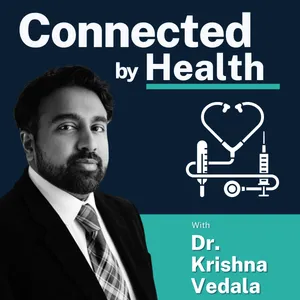
Connected by Health is a modern healthcare podcast hosted by Krishna Vedala, MD, MPH, MBA, CPE—a board-certified Internal Medicine and Obesity Medicine physician, healthcare executive, and innovation leader based in Oklahoma City. This show explores the intersection of clinical medicine, physician leadership, healthcare operations, AI in healthcare, and data-driven decision-making; all with one goal: creating more connected, effective, and human-centered care. Each episode features conversations with physicians, healthcare executives, innovators, and system leaders on: - Internal Medicine & Obesity Medicine - AI in Healthcare & Health Data Management - Physician Leadership & Practice Management - Healthcare Finance, Business Intelligence & Quality Improvement - Operational Excellence & Lean Six Sigma in healthcare Dr. Vedala brings a rare blend of frontline clinical experience, executive leadership training, and systems-level thinking, helping listeners bridge the gap between medicine, leadership, and innovation. 🎧 Connected by Health is for physicians, healthcare leaders, administrators, and anyone committed to building the future of healthcare together. Connect with Dr. Krishna Vedala 🔗 LinkedIn: https://www.linkedin.com/in/drkvedala
Latest Episodes
The most recent episodes — sign up to get AI-powered summaries of each one.
- 2 days ago39 min
#26 - Rare But Real: A Deep Drive into Bone Cancer and Sarcoma
Bone cancers and sarcomas are rare malignancies arising from bone or connective tissues (muscle, fat, cartilage, blood vessels, and fibrous tissue). Primary bone cancers—such as osteosarcoma, Ewing sarcoma, chondrosarcoma, and chordoma—originate in the skeleton and are distinct from much more common metastatic bone disease, where cancers from other organs (breast, prostate, lung, etc.) spread to bone. Sarcomas encompass more than 70 subtypes, each with different behaviors, prognoses, and treatment needs, which makes specialist care essential. Symptoms are often nonspecific and easily mistaken for sports injuries, arthritis, or overuse pain: persistent or worsening pain (often worse at night), swelling, a growing mass, and unexplained fractures should prompt evaluation. Early imaging—starting with plain X-rays and followed by MRI for local extent and CT/PET for staging and metastasis assessment—is critical. Biopsy planning and technique are important because an improperly placed biopsy can complicate definitive surgery; tissue diagnosis with pathology and molecular testing guides subtype identification and treatment choices. Treatment is multidisciplinary. Surgery remains the cornerstone for many primary bone tumors, with limb-sparing resections and reconstructions preferred when feasible; amputation is reserved for cases where critical structures are involved. Chemotherapy is central for certain sarcomas (notably osteosarcoma and Ewing sarcoma), often given before and after surgery, while radiation plays a larger role in radiosensitive tumors and for palliation. Targeted therapies and immunotherapies are active areas of research and are increasingly used for select subtypes or within clinical trials. Survivorship requires long-term follow-up for recurrence and late effects of treatment. Patients may face chronic pain, reduced function, neuropathy, fertility issues, cardiac or hearing effects from chemotherapy, and psychosocial challenges. Pediatric patients have additional concerns about growth, limb length, schooling, and lifelong monitoring for late effects, making coordinated survivorship care and rehabilitation (PT/OT, prosthetic training) vital components of recovery. Research and future directions offer optimism: precision medicine and genomic sequencing are improving diagnostic accuracy and identifying targeted treatment opportunities; immunotherapy (including CAR-T approaches), AI-assisted imaging/pathology, and surgical advances (3D-printed implants, navigation) are expanding options. Because sarcomas are rare, clinical trials and increased research funding are essential to accelerate progress and translate discoveries into better outcomes for patients. Where Health, Society, and Innovation Intersect Connected by Health is a forward-thinking podcast built on a simple but powerful truth: healthcare is not a cost to be cut — it is an investment that shapes the future of everything around us. Millions of people struggle with healthcare challenges each year — whether it's lack of insurance, unaffordable costs, limited access to care, or managing chronic disease — affecting not only their health, but their financial stability and overall quality of life. Their stories are not isolated — they are all connected. From economic growth and workforce productivity to education, technology, national security, and community stability, health is the thread weaving them together. Each episode blends real-world stories with data-driven insight to show how strategic healthcare investment drives innovation, reduces long-term costs, strengthens public health infrastructure, and fuels economic resilience. Grounded in evidence but driven by purpose, Connected by Health reframes healthcare not as a line item expense, but as foundational infrastructure — because when we invest in health, we invest in people, potential, and the strength of our entire society. ──────────────────────────────────────── 🤝 If today's conversation resonated with you, share it with someone who needs to hear it. ⭐ If you found value in this episode, please take a moment to leave a review, it truly makes a difference. 🎧 And don't forget to follow the podcast on your favorite platform so you never miss a new episode when it drops.
- 1 weeks ago42 min
#25 - Cyberbullying: The Hidden Public Health Crisis of Social Media
In this episode of Connected by Health, Dr. Krishna Vedala explores cyberbullying as more than just a social or parenting issue—it is an emerging public health crisis affecting millions of children and adolescents. While social media has revolutionized the way young people connect, learn, and communicate, it has also created new opportunities for harassment that can occur anytime and anywhere. Dr. Vedala explains how cyberbullying differs from traditional bullying because it extends beyond the school day, often leaving victims with no safe space to escape. As digital technology becomes increasingly integrated into everyday life, understanding its impact on health has become essential. Drawing on research from the Centers for Disease Control and Prevention (CDC), the Pew Research Center, and other leading organizations, Dr. Vedala discusses the alarming prevalence of cyberbullying and its association with anxiety, depression, sleep disorders, low self-esteem, self-harm, and suicidal ideation. The episode also examines why adolescents are particularly vulnerable, highlighting how the developing brain is highly sensitive to social acceptance, peer rejection, and online interactions. Special attention is given to vulnerable populations, including girls and LGBTQ+ youth, who experience disproportionately higher rates of online harassment. Dr. Vedala also explores how social media platforms are designed to maximize engagement through algorithms, notifications, and public feedback mechanisms that can unintentionally amplify harmful behaviors. Rather than placing blame on technology alone, the episode emphasizes that preventing cyberbullying requires a collaborative approach involving parents, educators, healthcare professionals, policymakers, technology companies, and communities. Creating healthier digital environments will require thoughtful policies, improved digital literacy, and shared accountability. From a public health perspective, the episode explains that cyberbullying affects far more than individual mental health. Its consequences include increased healthcare utilization, poorer academic performance, school absenteeism, reduced workplace productivity later in life, and significant economic costs to society. Dr. Vedala argues that, just as public health has successfully addressed tobacco use, motor vehicle safety, and infectious diseases through prevention and policy, cyberbullying deserves the same evidence-based, population-level approach. The episode concludes with a call to action from Dr. Krishna Vedala, encouraging listeners to recognize cyberbullying as a preventable public health issue rather than an inevitable consequence of growing up online. By fostering healthier digital environments, promoting responsible technology design, strengthening mental health support, and encouraging open conversations between families, schools, and healthcare providers, communities can better protect the well-being of the next generation. As always, the mission of Connected by Health is to connect science, policy, and everyday life to build healthier individuals, healthier communities, and a healthier future for all. Where Health, Society, and Innovation Intersect Connected by Health is a forward-thinking podcast built on a simple but powerful truth: healthcare is not a cost to be cut — it is an investment that shapes the future of everything around us. Millions of people struggle with healthcare challenges each year — whether it's lack of insurance, unaffordable costs, limited access to care, or managing chronic disease — affecting not only their health, but their financial stability and overall quality of life. Their stories are not isolated — they are all connected. From economic growth and workforce productivity to education, technology, national security, and community stability, health is the thread weaving them together. Each episode blends real-world stories with data-driven insight to show how strategic healthcare investment drives innovation, reduces long-term costs, strengthens public health infrastructure, and fuels economic resilience. Grounded in evidence but driven by purpose, Connected by Health reframes healthcare not as a line item expense, but as foundational infrastructure — because when we invest in health, we invest in people, potential, and the strength of our entire society. ──────────────────────────────────────── 🤝 If today's conversation resonated with you, share it with someone who needs to hear it. ⭐ If you found value in this episode, please take a moment to leave a review, it truly makes a difference. 🎧 And don't forget to follow the podcast on your favorite platform so you never miss a new episode when it drops.
- 1 weeks ago27 min
#24 - Revolutionizing Dental Care: Integration, Innovation, Impact
The episode opens with Dr. Krishna Vedala framing dental health as a major public‑health issue: untreated cavities and gum disease affect millions, worsen chronic conditions such as heart disease, diabetes, and respiratory illness, drive costly emergency care, and reduce quality of life and economic productivity. Expanding prevention, education, and affordable treatment can improve population health and lower long‑term medical costs. Dr. Tina Saw introduces herself and Oral Genome, describing her path from art and clinical dentistry to an interest in the mouth‑body connection. She explains Oral Genome's 15‑minute chairside saliva test that uses AI and machine learning to analyze oral biomarkers, enabling rapid point‑of‑care risk assessment so clinicians can develop immediate treatment and prevention plans rather than waiting for disease to appear on X‑rays or probes. They discuss the entrenched separation between dental and medical care—separate insurance, limited cross‑training, and fragmented referrals—which worsens outcomes. Dr. Tina Saw emphasizes that saliva contains systemic signals, including biomarkers linked to cardiovascular risk, and argues that integrated testing and closed‑loop referral systems would let dentists and physicians coordinate care and reduce downstream medical costs. Access barriers for underserved and rural communities are highlighted: low Medicaid reimbursement, provider shortages, transportation challenges, and food insecurity. Dr. Tina Saw advocates for targeted incentives such as loan forgiveness and rural‑centered training programs, portable screening and mobile care, and policy changes to improve reimbursement so providers remain in Medicaid networks and preventive services reach high‑need populations. The episode addresses water fluoridation and the spread of misinformation. Dr. Tina Saw and Dr. Krishna Vedala defend community water fluoridation as a proven, low‑dose public‑health measure that strengthens enamel and reduces caries, noting recent rollbacks and warning that removing fluoride could increase cavity rates while misinformation fuels opposition. Looking ahead, Dr. Tina Saw proposes system changes: routine dental well checks that include portable X‑rays and saliva testing, mandatory interoperability and care coordination between dental and medical systems, and strategic use of telehealth for triage—not as a substitute for in‑person procedures. She encourages future dentists to prioritize prevention and integration, arguing these steps will catch disease earlier, lower costs, and improve overall health. Where Health, Society, and Innovation Intersect Connected by Health is a forward-thinking podcast built on a simple but powerful truth: healthcare is not a cost to be cut — it is an investment that shapes the future of everything around us. Millions of people struggle with healthcare challenges each year — whether it's lack of insurance, unaffordable costs, limited access to care, or managing chronic disease — affecting not only their health, but their financial stability and overall quality of life. Their stories are not isolated — they are all connected. From economic growth and workforce productivity to education, technology, national security, and community stability, health is the thread weaving them together. Each episode blends real-world stories with data-driven insight to show how strategic healthcare investment drives innovation, reduces long-term costs, strengthens public health infrastructure, and fuels economic resilience. Grounded in evidence but driven by purpose, Connected by Health reframes healthcare not as a line item expense, but as foundational infrastructure — because when we invest in health, we invest in people, potential, and the strength of our entire society. ──────────────────────────────────────── 🤝 If today's conversation resonated with you, share it with someone who needs to hear it. ⭐ If you found value in this episode, please take a moment to leave a review, it truly makes a difference. 🎧 And don't forget to follow the podcast on your favorite platform so you never miss a new episode when it drops.
- 2 weeks ago27 min
#23 - Beyond Slogans: An Honest Look at Single Payer Healthcare System
This episode explains what single payer means: a single public entity finances medically necessary care for everyone, replacing most private insurance for core benefits, while providers (hospitals, doctors) generally remain independent. It distinguishes single payer from related ideas (public option, Medicare Advantage, universal coverage) and stresses precise language to keep debates productive. Dr Krishna Vedala reviews how the current U.S. system works—fragmented multipayer financing (employer plans, ACA exchanges, Medicare, Medicaid, VA, etc.)—and highlights that 2024 health spending was about $5.3 trillion (~$15,474 per person, ~18% of GDP). Much current spending is hidden in premiums, employer contributions, deductibles and surprise bills; single payer would change who pays rather than eliminating costs. The episode identifies main drivers of high U.S. costs: much higher prices for services and drugs, and large administrative overhead caused by fragmentation and billing complexity. Single payer could use purchasing power to set or negotiate rates and substantially reduce administrative burden, though it would not eliminate all administration. A proposed U.S. single payer architecture would include comprehensive essential benefits, automatic enrollment, fewer networks, and varied provider payment models (standardized fee-for-service rates, global hospital budgets, capitation/salaries). Key trade-offs discussed are financing (higher taxes but replaced premiums/deductibles), provider participation risks if rates are too low, potential wait-time vs. price-based rationing, and impacts on quality and innovation. Dr Krishna Vedala concludes that the hard part is transition—disrupting insurers, billing firms, and intermediaries—and recommends staged approaches (age phasing, state pilots) plus workforce and rural-hospital supports and anti-fraud guardrails. Listeners are urged to ask specific policy questions, demand transparency on true costs, and advocate pragmatic reforms (simplified billing, stronger drug negotiation, reduced churn) whether or not they support full single payer. Where Health, Society, and Innovation Intersect Connected by Health is a forward-thinking podcast built on a simple but powerful truth: healthcare is not a cost to be cut — it is an investment that shapes the future of everything around us. Millions of people struggle with healthcare challenges each year — whether it's lack of insurance, unaffordable costs, limited access to care, or managing chronic disease — affecting not only their health, but their financial stability and overall quality of life. Their stories are not isolated — they are all connected. From economic growth and workforce productivity to education, technology, national security, and community stability, health is the thread weaving them together. Each episode blends real-world stories with data-driven insight to show how strategic healthcare investment drives innovation, reduces long-term costs, strengthens public health infrastructure, and fuels economic resilience. Grounded in evidence but driven by purpose, Connected by Health reframes healthcare not as a line item expense, but as foundational infrastructure — because when we invest in health, we invest in people, potential, and the strength of our entire society. ──────────────────────────────────────── 🤝 If today's conversation resonated with you, share it with someone who needs to hear it. ⭐ If you found value in this episode, please take a moment to leave a review, it truly makes a difference. 🎧 And don't forget to follow the podcast on your favorite platform so you never miss a new episode when it drops.
- 3 weeks ago25 min
#22 - Caring for the Caregivers: Stand Up for Doctors
Kim Downey, a pediatric physical therapist, founded Stand Up for Doctors after a personal journey through multiple cancer diagnoses and the traumatic loss of a radiologist she trusted to suicide. Those experiences left her emotionally depleted and searching for ways to support the clinicians who care for others while often struggling in silence. Through coaching and connection, she shifted from local advocacy to building a broader platform focused on physician well-being. She launched the Stand Up for Doctors podcast in 2023, interviewing physicians and fostering peer-to-peer conversations to reduce isolation and normalize vulnerability. Kim and invited contributors compiled two books—White Coats Courageous Hearts and White Coats Human Hearts—featuring physicians, spouses, and patients sharing candid stories about the human side of medicine. The projects aim to spotlight physician mental health and spark systemic change. Recognizing gaps in institutional support, Kim is organizing a physician-led retreat for fall that emphasizes practical restoration over lectures: small-group discussions, creative and movement-based activities (abstract art, drumming, line dancing), mindfulness, and connection. The retreat is intentionally experiential and optional, designed to create safe spaces where clinicians can recharge, reflect, and build peer support networks. Kim describes significant barriers in building Stand Up for Doctors: limited business experience, volunteer-driven effort, and personal financial investment. She's pursuing sustainable funding through sponsors and partnerships while maintaining the initiative's values. Her own recovery combined clinical experience and coaching, which she credits with helping her regain resilience and purpose. Kim's message to aspiring advocates is pragmatic: identify your passion, take the next right step, seek mentorship or coaching, and expect obstacles as signals guiding the right path. She emphasizes that physician well-being is patient advocacy and that small acts—volunteering, donating, amplifying stories—contribute to larger cultural change in healthcare. Where Health, Society, and Innovation Intersect Connected by Health is a forward-thinking podcast built on a simple but powerful truth: healthcare is not a cost to be cut — it is an investment that shapes the future of everything around us. Millions of people struggle with healthcare challenges each year — whether it's lack of insurance, unaffordable costs, limited access to care, or managing chronic disease — affecting not only their health, but their financial stability and overall quality of life. Their stories are not isolated — they are all connected. From economic growth and workforce productivity to education, technology, national security, and community stability, health is the thread weaving them together. Each episode blends real-world stories with data-driven insight to show how strategic healthcare investment drives innovation, reduces long-term costs, strengthens public health infrastructure, and fuels economic resilience. Grounded in evidence but driven by purpose, Connected by Health reframes healthcare not as a line item expense, but as foundational infrastructure — because when we invest in health, we invest in people, potential, and the strength of our entire society. ──────────────────────────────────────── 🤝 If today's conversation resonated with you, share it with someone who needs to hear it. ⭐ If you found value in this episode, please take a moment to leave a review, it truly makes a difference. 🎧 And don't forget to follow the podcast on your favorite platform so you never miss a new episode when it drops.
- 3 weeks ago24 min
Snapshots with Dr Herschel Brown
Dr Krishna Vedala is hosting Dr. Herschel Brown, an emergency physician and candidate for Oklahoma House District 99, discusses how front-line clinical experience shapes his view that many of Oklahoma's health problems require legislative solutions. He describes seeing patients at their most dire—mental health crises, substance use, unmanaged chronic disease, and lack of prenatal care—and emphasizes that prevention and access to primary care could reduce emergency visits and downstream costs. Dr Brown identifies three urgent priorities: expanding access to healthcare providers, addressing mental health and addiction resource shortages, and stabilizing rural hospitals. He argues the legislature lacks sufficient clinical voices and calls for funding to recruit and retain physicians and mid-level providers, streamline licensing, support residency programs in underserved areas, expand telehealth, and create a rural hospital stabilization fund. He stresses that health is interlinked with education, economic opportunity, housing, and public safety, and that bipartisan collaboration is necessary to craft practical policies. He favors pragmatic, cross-aisle solutions, town halls to stay connected with constituents, and measurable progress in access and outcomes—particularly maternal health and chronic disease management. If elected, Dr Brown would measure success by visible improvements in resources and access for constituents: more local providers, stronger rural hospital capacity, better preventive care uptake, and demonstrable declines in preventable emergency cases. He pledges regular community engagement and bipartisan work to implement sustainable policies that improve Oklahoma families' health. Where Health, Society, and Innovation Intersect Connected by Health is a forward-thinking podcast built on a simple but powerful truth: healthcare is not a cost to be cut — it is an investment that shapes the future of everything around us. Millions of people struggle with healthcare challenges each year — whether it's lack of insurance, unaffordable costs, limited access to care, or managing chronic disease — affecting not only their health, but their financial stability and overall quality of life. Their stories are not isolated — they are all connected. From economic growth and workforce productivity to education, technology, national security, and community stability, health is the thread weaving them together. Each episode blends real-world stories with data-driven insight to show how strategic healthcare investment drives innovation, reduces long-term costs, strengthens public health infrastructure, and fuels economic resilience. Grounded in evidence but driven by purpose, Connected by Health reframes healthcare not as a line item expense, but as foundational infrastructure — because when we invest in health, we invest in people, potential, and the strength of our entire society. ──────────────────────────────────────── 🤝 If today's conversation resonated with you, share it with someone who needs to hear it. ⭐ If you found value in this episode, please take a moment to leave a review, it truly makes a difference. 🎧 And don't forget to follow the podcast on your favorite platform so you never miss a new episode when it drops.
- Jun 29, 202630 min
#21 - Bariatrics and Beyond - Revolutionary Modern Options
Dr Krishna Vedala introduces Dr. Megan Sheppard, a board-certified bariatric and foregut surgeon, and frames the episode around advances in bariatric and foregut surgery and practical guidance for patients considering weight-loss or foregut procedures. Dr. Sheppard's background is summarized: Kansas native, KU medical school, surgical residency in Knoxville, and fellowship in Kansas City focusing on advanced general surgery, bariatric/foregut procedures, advanced endoscopy, and complex revisions. Dr. Sheppard shares a personal motivation for entering bariatrics: her mother's lifelong weight struggle, successful sleeve gastrectomy followed by reflux and conversion to bypass, and the dramatic improvement in activity and quality of life that inspired her surgical path. She emphasizes the wide-ranging social and health benefits of bariatric surgery beyond weight loss, including improvements in diabetes, hypertension, sleep apnea, and overall function. A major focus is endoscopic sleeve gastroplasty (ESG): an incisionless, endoscopic procedure that sutures the stomach from inside to reduce volume by about 70–80% without resection. Dr. Sheppard outlines the outpatient nature of ESG, the required postoperative full-liquid diet (about four weeks) to allow sutures to heal, its hormonal effects (approx. 30% ghrelin reduction at three months), and generally lower rates of reflux and nutritional deficiencies compared with surgical sleeve gastrectomy. Hiatal hernias and foregut pathology are discussed in detail. Dr. Sheppard explains what a hiatal hernia is, how it causes reflux by pulling stomach and acid into the chest and disrupting the diaphragmatic valve, and the typical diagnostic tools (endoscopy/EGD and CT). She reviews surgical considerations and risks of hiatal hernia repair—recurrence risk due to intrinsic muscle weakness, rare pleural or lung-related complications, and avoidance of injury to esophageal nerves to prevent gastroparesis. Revisional bariatric surgery is highlighted as a rapidly growing area, driven by reflux after sleeve, disease progression, or inadequate long-term weight control. Options include endoscopic revisions (re-tightening), conversion to gastric bypass, or other tailored procedures; choice depends on goals and anatomy. Dr. Sheppard also addresses GLP-1 medications: useful adjuncts that can aid weight loss but have limitations—cost, tolerability, need for ongoing injections, potential GI side effects, and weight regain after discontinuation—so surgery remains a vital, durable tool. Finally, Dr. Sheppard offers practical advice: patients should choose surgeons/programs that invest in long-term follow-up and offer a full "toolbox" of procedures rather than a single option; the best outcomes occur with the right initial operation. For trainees, she encourages persistence through residency and fellowship, noting surgery is demanding but compatible with family life and ultimately rewarding. Where Health, Society, and Innovation Intersect Connected by Health is a forward-thinking podcast built on a simple but powerful truth: healthcare is not a cost to be cut — it is an investment that shapes the future of everything around us. Millions of people struggle with healthcare challenges each year — whether it's lack of insurance, unaffordable costs, limited access to care, or managing chronic disease — affecting not only their health, but their financial stability and overall quality of life. Their stories are not isolated — they are all connected. From economic growth and workforce productivity to education, technology, national security, and community stability, health is the thread weaving them together. Each episode blends real-world stories with data-driven insight to show how strategic healthcare investment drives innovation, reduces long-term costs, strengthens public health infrastructure, and fuels economic resilience. Grounded in evidence but driven by purpose, Connected by Health reframes healthcare not as a line item expense, but as foundational infrastructure — because when we invest in health, we invest in people, potential, and the strength of our entire society. ──────────────────────────────────────── 🤝 If today's conversation resonated with you, share it with someone who needs to hear it. ⭐ If you found value in this episode, please take a moment to leave a review, it truly makes a difference. 🎧 And don't forget to follow the podcast on your favorite platform so you never miss a new episode when it drops.
- Jun 22, 202639 min
#20 - Integrating Mental Health: Systems, Gaps, & Solutions
The episode opens with Dr Krishna Vedala introducing Dr. Crystal Hernandez, a forensic psychologist turned system architect and activator with an MBA and over 20 years in behavioral health administration. Dr. Hernandez frames her work as operational — designing and implementing real-world systems that integrate behavioral and physical health rather than only producing policy on paper. Dr. Hernandez shares deeply personal drivers for her mission: the loss of a close friend whose prescription-led addiction trajectory went unaddressed because behavioral health was absent from the care pathway, and growing up with a father in long-term recovery. These experiences motivate her insistence that systems must provide warm handoffs, screening, and continuous behavioral-health involvement to prevent avoidable harm. The conversation emphasizes why integrating mental health into primary care and community systems matters: untreated or misdiagnosed behavioral health conditions worsen physical health, impair relationships, employment, education, housing, and increase downstream costs through emergency care, incarceration, and institutionalization. Mental health exists on a continuum, and lack of coordinated care disproportionately harms those with serious mental illness. Dr. Hernandez outlines common failure points in integration efforts: good intentions and policies often fail in practice because decision-makers miss frontline perspectives. True integration requires people who understand day-to-day operations at the table, standardized parity in practice (not just law), workable billing and payer rules, and pragmatic implementation that translates policy into improved access and outcomes. Workforce shortages, especially in psychiatrists and psychologists, and gaps in data and funding accountability are recurring themes. Dr. Hernandez praises models like CCBHCs and 988 but warns that pilot/adoption without robust infrastructure, standardized data collection, and ROI measurement leads to uneven quality. She urges investments in training, specialization, standardized metrics, 1115 waivers for re-entry, and protections for promising models. The episode closes with Dr. Hernandez discussing her forthcoming book Obedience for a Paycheck (to diagnose and remediate toxic workplace cultures), encouragement for people to enter the broad behavioral-health field, and a concrete policy wish list: stabilize state mental-health agencies, standardize CCBHC data/reporting, expand specialty courts, integrate intellectual/developmental disability and behavioral-health services, reduce out‑of‑state placements for children, and create actionable pathways for re‑entry — all aimed at making integration real, person-centered, and measurably effective. Where Health, Society, and Innovation Intersect Connected by Health is a forward-thinking podcast built on a simple but powerful truth: healthcare is not a cost to be cut — it is an investment that shapes the future of everything around us. Millions of people struggle with healthcare challenges each year — whether it's lack of insurance, unaffordable costs, limited access to care, or managing chronic disease — affecting not only their health, but their financial stability and overall quality of life. Their stories are not isolated — they are all connected. From economic growth and workforce productivity to education, technology, national security, and community stability, health is the thread weaving them together. Each episode blends real-world stories with data-driven insight to show how strategic healthcare investment drives innovation, reduces long-term costs, strengthens public health infrastructure, and fuels economic resilience. Grounded in evidence but driven by purpose, Connected by Health reframes healthcare not as a line item expense, but as foundational infrastructure — because when we invest in health, we invest in people, potential, and the strength of our entire society. ──────────────────────────────────────── 🤝 If today's conversation resonated with you, share it with someone who needs to hear it. ⭐ If you found value in this episode, please take a moment to leave a review, it truly makes a difference. 🎧 And don't forget to follow the podcast on your favorite platform so you never miss a new episode when it drops.
About Connected By Health
Connected by Health is a modern healthcare podcast hosted by Krishna Vedala, MD, MPH, MBA, CPE—a board-certified Internal Medicine and Obesity Medicine physician, healthcare executive, and innovation leader based in Oklahoma City. This show explores the intersection of clinical medicine, physician leadership, healthcare operations, AI in healthcare, and data-driven decision-making; all with one goal: creating more connected, effective, and human-centered care. Each episode features conversations with physicians, healthcare executives, innovators, and system leaders on: - Internal Medicine & Obesity Medicine - AI in Healthcare & Health Data Management - Physician Leadership & Practice Management - Healthcare Finance, Business Intelligence & Quality Improvement - Operational Excellence & Lean Six Sigma in healthcare Dr. Vedala brings a rare blend of frontline clinical experience, executive leadership training, and systems-level thinking, helping listeners bridge the gap between medicine, leadership, and innovation. 🎧 Connected by Health is for physicians, healthcare leaders, administrators, and anyone committed to building the future of healthcare together. Connect with Dr. Krishna Vedala 🔗 LinkedIn: https://www.linkedin.com/in/drkvedala
Customized Recaps
AI-powered recaps with compact key takeaways, quotes, and insights.
Straight to Your Inbox
Get key takeaways from Connected By Health in a 5-minute read.
Save Hours Every Week
Stay current on your favorite podcasts without falling behind.
Frequently Asked Questions
What is Podzilla's Connected By Health daily summary?
It's a free AI-powered email that summarizes new episodes of Connected By Health as soon as they're published. You get the key takeaways, notable quotes, and links & mentions — all in a quick read.
How does the Connected By Health podcast summary work?
When a new episode drops, our AI transcribes and analyzes it, then generates a personalized summary tailored to your interests and profession. It's delivered to your inbox every morning.
Is this an official Connected By Health product?
No. Podzilla is an independent service that summarizes publicly available podcast content. We're not affiliated with or endorsed by Krishna Vedala, MD.
Can I get summaries of other podcasts too?
Absolutely! The free plan covers up to 3 podcasts. Upgrade to Pro for 15, or Premium for 50. Browse our full catalog at /podcasts.
How often does Connected By Health release new episodes?
Connected By Health publishes 2x weekly. Our AI generates a summary within hours of each new episode.
What topics does Connected By Health cover?
Our AI identifies the specific themes in each episode and highlights what matters most to you.
Start getting Connected By Health summaries tomorrow morning.
Free forever for up to 3 podcasts. No credit card required.
Free forever for up to 3 podcasts. No credit card required.