Free Daily Podcast Summary
The NOËLLE FLOYD Podcast: Daily Summaries Delivered
by NOËLLE FLOYD
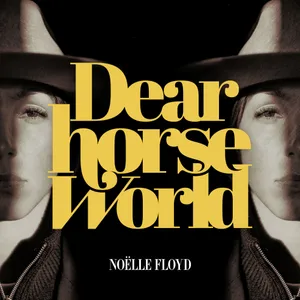
Join Noëlle each week, as she embarks on a journey to explore the vast and diverse world of horses, delving into the many sub-communities and cultures that shape our shared passion. This podcast is about more than just riding styles or training techniques; it's about celebrating the deep connection between humans and horses, and understanding the common threads that tie us together. Whether you're a seasoned rider or just starting out, you'll find inspiration, knowledge, and a sense of belonging in every episode.
Latest Episodes
The most recent episodes — sign up to get AI-powered summaries of each one.
- 1 weeks ago1h 16m
Your Saddle Fits a Horse That No Longer Exists — Letitia Glenn on Horse Care
You measure with your hand while he stands there. Then he takes a step, and the horse you measured is gone. Saddle fit is horse care. I rode my whole life before anyone said that to me plainly. I met Letitia Glenn at Road to the Horse. She had seen footage of me riding, and the first thing she thought — which she then said to my face, out loud — was that I did not know what I did not know about saddles. She was right. I brought her out to Florida on the hottest day of that summer, rode in one of her saddles, and felt my mare Lady's scapula open in a way it never had on the whole road trip. Letitia came to horses at 47, with a two-year-old Paso Fino stallion named Echo, and she has spent the quarter century since asking one question. Why does equipment made by the finest makers in the world stop a horse from moving the way he moves loose in a pasture? She found the answer backpacking. Fifty-five pounds, eight miles, the Rocky Mountains. Picture the corner of a book pressed into your spine. You will contort away from it. So will he — and his left shoulder will talk to his right hip, and his hips will rotate forward, and his head will come up, and now you have a horse who cannot get under himself no matter how beautifully you ride the reins. So we go through what she watches for. The upward head nod at the walk on a loose rein. The four Bs. The belly tickle test, eight fingernails near the sternum, and a top line that travels from curved to flat while you stand there watching it happen. The hollow behind the scapula she once said she could have put a cantaloupe into, on a very good dressage rider's horse. Beef steak, she says, not beef jerky. We also get into the part of horse care that never appears on a bill of sale. Saddle fitters are often paid by the brand they recommend. Trainers take a cut on the tack their students are told to buy. A ten-thousand-dollar saddle is evidence of a marketing budget and nothing else. Lady gave me a scar on my stomach the first year I had her, reaching back for me while I did up the cinch. I used to call that her temperament. I asked her here because I wanted the horse world to have this, and because Lady told me about it years before I was willing to hear it. You can find out more about Letitia and her saddles here: website | instagram | youtube This episode was sponsord by Natural Horseman Saddles (Contour Saddlery) At Natural Horseman Saddles, we believe every saddle should be built around the horse—not the other way around. That's why our saddles are designed to support your horse's natural movement and feature an adjustable fitting system that adapts as your horse changes over time. The result? Better comfort, better performance, and a saddle designed to fit your horse for years to come. Experience the difference a truly horse-first saddle can make. Visit Naturalhorsemansaddles.com to learn more. Interested in more from Noëlle? Noëlle's writing again — head to her Substack for essays, observations, and the kind of thinking that doesn't fit in an episode. https://noellefloyd.substack.com Every episode is also on YouTube, where the conversation continues in the comments. https://www.youtube.com/@noellefloyd_plus And if you're ready to go deeper, NF+ is where the real work happens — masterclasses, curated content, and a community that takes horses seriously. https://noellefloydplus.com You can also download the app - <a href= "https://apps.apple.com/us/app/nf/id1572366848" target="_blank" rel="noopen
- 2 weeks ago50 min
Horse Training and the Nervous System: What's Really Happening in Your Horse's Brain | Dr. Stephen Peters (Pt. 2)
We say we want a willing horse. Then we climb on, and we start cramming. And when the horse gets tight, or slow, or stuck, we do the one thing that guarantees it gets worse — we add pressure. This is Part 2 of my conversation with Dr. Stephen Peters, and this time he brought a horse's brain. Cut in half, in his hands, on the table between us. He points to the cingulate. He points to the little kidney-bean pituitary. And he shows me, physically, the difference between a horse who can talk itself back down and a horse who has no way back. That difference has a name. It's a chemical called GABA. An empowered horse can produce it — can send the "stand down" signal before the cortisol ever floods the system. A horse in learned helplessness can't reach it. Same event, two completely different animals, and most of what separates them is what we wired in, and the state we wired it in. We get into the cocktail — dopamine, norepinephrine, acetylcholine, oxytocin, serotonin — and why drilling the same exercise seven times flattens every one of them. Why release is not the same thing as relief, and only the horse gets to tell you which one it was. Why recovery, the part everyone skips, is where the learning actually locks in. And why an hour on the clock is a human invention your horse never agreed to. Then it opens out — touch, exercise, diet, the five domains, allo-grooming, the prairie voles who fall apart in isolation and settle the second the herd rushes back in. And we close on Charles Darwin. Not the line everyone quotes. The one almost nobody does — the one where he says it's the cooperative communities, the ones that bond and help each other, that represent the highest level of evolution. Horses have the chemistry for that built in. Dr. Peters' whole argument is simple: let's use it. Start with Part 1 if you haven't — this picks up right where we left off. Dr. Stephen Peters is a neuroscientist who directed a clinic for brain health and memory, and co-author of Evidence-Based Horsemanship (with Martin Black). His most recent books are Horse Brain Science and A Horse's Life (with Mark Rashid and Chrissy McDonald), which pairs 19 real case studies with the neurological detective work behind each one. You can find all the books by Dr. Stephen Peters here: https://www.horsebrainscience.info/books Horse Brain Science: The Neuroscience of Ethical Horsemanship Horse Brain Science: A Foundation for Equine Neuroscience The Book of Neuropoetry Evidence Based Horsemanship A Horse's Life: The Neuroscience of Equine Welfare You can find out more about Dr. Stephen Peters on his websit
- 3 weeks ago52 min
Your Horse Isn't Being Bad — Dr. Stephen Peters on Horse Behavior, the Nervous System & Learned Helplessness Part 1 sponsored by Total Feeds
Every rider has said it. He's being stubborn. She's testing me. He knows better. Here's the harder, truer thing underneath: the horse isn't being anything. The horse is a nervous system, doing the one job every nervous system has — trying to stay safe. Dr. Stephen Peters spends this conversation taking me under the behavior, into the brain that produced it. He's a neuropsychologist, co-author of Evidence-Based Horsemanship, and the person I call when I want to actually understand my horses instead of just managing them. This time we sat down as two diagnosed neurodivergent people talking about horse behavior from the inside — which is its own kind of honesty. He explains why the horse that shoves past you off the trailer isn't defiant. It's running a pathway you built, three good grazes at a time. He calls it myelination, and once you hear how it works, you stop blaming the horse and start watching what you're teaching when you think you're not teaching anything. We go into the thing so many of us get exactly backwards. You hit a wall, so you add pressure. More leg, more spur, more insistence. And Peters says it plainly: almost always the answer was to let the nervous system reset, not to push harder. Push harder and you don't get through the noise — you become the noise. Then we get to the part I asked him to slow down on. Learned helplessness. The old experiment neither of us can listen to without flinching, and what it tells us about the quiet, compliant, "well-behaved" horse who has simply learned that nothing he does matters. That's not a trained horse. That's a horse who stopped voting. And near the end, something bigger opens up. Peters describes the freeze — the shutdown that isn't a choice, the body flooding itself with its own opioids so it can survive what it can't escape. He says the thing I most needed someone with his credentials to say out loud: that response is the nervous system deciding, not the animal, and not the person it happens to. If you've ever been asked why you didn't fight back, this part is for you as much as your horse. What you'll hear, underneath all of it, is a kinder and more accurate way to be with a horse. Not softer for its own sake — more correct. Work with the nervous system and you get performance and behavior far past anything pressure buys you. The willing partner everyone wants isn't obedient. He's involved. Dr. Stephen Peters is a board-certified neuropsychologist and co-author of Evidence-Based Horsemanship with Martin Black. He studies the equine brain and nervous system and is launching a new podcast, The Skeptical Horseman, with Jillian Kreinbring, M.S., dedicated to separating good research from pseudoscience in the horse world. This is Part 1 of our conversation. In Part 2, Steve puts a real horse brain on the table, cut in half, and shows me exactly what agency does to it. If someone you ride with keeps calling their horse the problem — send them this one first. You can find out more about Dr. Stephen Peters here: Horse Brain Science Chapters: 0:00 — "They have good days and bad days": meeting the horse's nervous system where it is <li class= "font-claude-response-body whitespace-normal break-words pl-2" data-sourcepos="87:1-87:84;9116-9199"
- 4 weeks ago1h 5m
Joe Stockdale on Riding Confidence, Grief & the Show Jumping Career He Inherited sponsored by Connaway
Everybody wants the clear round. The win. The photo at the top of the podium. Here's the part the sport keeps offstage — the doubt, the grief, the voice at the in-gate asking if you even belong here. Joe Stockdale knows that voice well. He calls it imposter syndrome, and he feels it at the very top of show jumping, which is its own kind of honesty for a 26-year-old already riding at five-star. In 2018 he lost his dad, Tim Stockdale, to cancer. Almost overnight Joe inherited a business, a famous name, a string of owners, and a mare his father picked out before he died. A young rider usually eases into all of that across years. Joe got a phone call and a yard to run. This one goes straight at the thing under the results — what grief does to ambition, where riding confidence comes from, and why Joe would rather be home doing the work than chasing a spotlight. He takes me inside the year everything turned. Less than five years after losing his dad, he's standing at the World Championships in Herning on the mare his father found, winning team bronze for Great Britain. He says it plainly: stories like that barely happen to anyone. We talk about the people who caught him. William and Pippa Funnell, his dad's closest friends, who started watching every one of his rounds on video and calling with notes they took on their own. Joe is blunt about it — that web of mentors is the reason he's still standing here. And we get to the line I keep turning over. Joe wants the pressure: last to go in a Nations Cup, the whole thing resting on him, the chance to be the hero. Then he goes home and rides like a horseman over a competitor, because the horse gets to have an off day, and his job is to listen. When Joe was young, he told his dad he wished he could be as good as him. His dad's answer: you're going to be way better than me. Trust me. He carries that. You can hear it. If you've ever stood at the edge of something you wanted, certain everyone could see right through you — this one is for you. Riding confidence, the real kind, sounds a lot like Joe describes it here: hours of work off-camera, so you're ready the day someone finally watches. Joe Stockdale is a British show jumper based at the family yard his parents made with their own hands. He rides for Great Britain at five-star level and trains alongside his mentors William and Pippa Funnell. His late father, Tim Stockdale, was a well-regarded British show jumper who selected the mare Joe later took to the World Championships. If someone you love is carrying a name, a loss, or a doubt they keep to themselves — send them this one. You can find out more about Joe Stockdale here: website | instagram | youtube This episode is sponsored by - Connaway & Associates Equine Insurance Services, Inc. The friendly and knowledgeable team at Connaway & Associates brings together more than 30 years of experience to offer a wide range of insurance services, including horse insurance, farm insurance, and liability insurance. Visit www.connaway.net | @connawayassociates | <a hr
- Jun 23, 20261h 5m
How to Read Horse Behavior — Elsa Sinclair on the 5 Types of Leadership
There is a question almost every one of us carries to the barn and never says out loud. Not how do I get him to do this. But: does he actually trust me — or is he just complying? This is Part 2 of my conversation with Elsa Sinclair, and it's the half where I kept having to stop and close my eyes. Because Elsa reads horse behavior in a way most of us were never taught to. She breaks leadership into five kinds — dominant, persistent, assertive, passive, supportive — and then says the thing that reorganized my brain: that leadership is simply any action that results in harmony. That dominance and abuse are not the same thing. She takes us back inside the year she spent with a wild mustang named Myrnah — three to six hours a day, five days a week. The morning she got on at three months, did it badly, and wasn't allowed back on for another three. Not because anything went wrong. Because her timing was off by a hair, and the horse simply told the truth about it. Then comes the line I haven't stopped repeating: "I'm not going to try to be the best horse trainer in the room. I'm going to try to be the most accurate." This is freedom based training as a craft — not a philosophy you admire from a distance, but a practice you can take to the barn tomorrow. Elsa shows how to actually see a horse's thought before you reward it — the ear that flicks, the eye that moves, the breath — and gives a homework exercise you can start in the morning. We get into why hyperfocus on the goal keeps you tripping over the next step. Why confidence, quietly, trumps every strategy. And Atlas — the horse she bought off a slaughter truck, the one who broke everything she thought she knew. If you've ever felt like you're learning too slowly with your horse, this episode reframes that ache as the whole point. Elsa Sinclair is a lifelong horsewoman, horse behavior researcher, and filmmaker. Her year with the mustang Myrnah became a documentary, Taming Wild, and a book by the same name. She now teaches freedom based training to students across Europe, Australia, and New Zealand. If you have a horse who's been trying to tell you something — this one is for you. And if you know someone still fighting the horse they love, send it to them. IN THIS EPISODE YOU'LL LEARN Elsa's full leadership spectrum — dominant, persistent, assertive, passive, and supportive — and why she defines leadership as any action that results in harmony The difference between dominance and abuse, and how a single raised hand tells her which one a horse has lived through Why she got on Myrnah bareback and bridleless at three months — and the timing mistake that cost her the next three The distinction between feel and timing, and why she'd rather be the most accurate trainer in the room than the best one How to read a horse's thoughts through its senses instead of projecting the thought you wish were there Why confidence can trump every technique, and how to build it from the bottom up if you don't have it yet <li class= "font-claude
- Jun 16, 202657 min
What if your horse could say no — and you actually let them? Elsa Sinclair Part 1
What if your horse could say no — and you actually let them? In this episode of The Noelle Floyd Podcast, Noelle sits down with horsewoman Elsa Sinclair, creator of Freedom Based Training and the documentary Taming Wild, for a conversation that quietly takes apart almost everything you've been taught about control. Elsa spent a year with an untouched mustang named Myrnah using no halter, no rope, no treats, and no pressure — just the freedom for the horse to walk away at any moment. What she discovered became Freedom Based Training, a method built on choice and trust instead of domination. You'll hear how a single question from a student — "do you think they had a choice?" — sent Elsa looking for a way of being with horses that felt like peace and harmony rather than power. You'll follow her from a lonely childhood on a spirited Appaloosa to the offer she couldn't refuse that finally pushed her to test her wild idea on camera. Along the way, Elsa reframes the everyday tools of horsemanship in ways that land far beyond the barn. You'll learn why she refuses to promise her horse a calm, "Buddha" version of herself, and what it means to simply behave well in the moment instead. You'll sit with her definition of trust as the willingness to suspend judgment, her 80/20 rule for how often you're allowed to get it wrong, and the story of Ari — the aloof stallion who needed no one and forced her to rethink her whole method. And you'll reach the idea that reorders the rest: that in a healthy herd, awareness replaces dominance, because dominance only shows up when no one was paying attention in the first place. This is a slow, generous conversation about training horses without force — and about what changes in you when you give another being a real choice. Whether you ride, train, or simply love horses, you'll come away looking at connection, consent, and leadership differently. Elsa Sinclair is a lifelong horsewoman, behavior researcher, and filmmaker. Her year with Myrnah became the award-winning documentary Taming Wild and, more recently, a memoir of the same name, and her Freedom Based Training method is now taught to students around the world. If this conversation moved you, follow The Noelle Floyd Podcast so you don't miss Part Two — and share it with someone whose horse has been trying to tell them something. IN THIS EPISODE YOU'LL LEARN The single question from a student that made Elsa stop and ask whether horses actually choose to be ridden Why she trains with no halter, rope, or treats — and what the horse's freedom to walk away forces you to get right The reason she refuses to promise her horse a calm, composed version of herself, and what she does instead How she defines trust as "the willingness to suspend judgment," plus the 80/20 rule for how often you're allowed to get it wrong What Ari, the aloof stallion who needed no one, taught her about reaching a horse who isn't interested in you Why she calls it the slowest training method on Earth, and the honest reason it isn't for everyone The herd-dynamics reframe that replaces dominance with awareness To find out more about Elsa Sinclair: website | instagram | facebook | patreon <hr class="border-bo
- Jun 9, 202655 min
What You Need to Know About EHV-1 Neurological Horses and the 2025 Outbreak With Dr. Bruno Karam
If you watched videos last fall of horses stumbling and struggling to stand, what happened with EHV-1 neurological horses during the 2025 outbreak was more complicated than social media suggested. In this episode of the Noelle Floyd Podcast, Noëlle sits down with equine internal medicine specialist Dr. Bruno Karam for the clearest explanation of what EHV-1 is, why it sometimes turns neurological, and what every horse owner needs to know before the next outbreak. You'll learn how nearly every horse already carries EHV-1 latently, how stress and travel trigger shedding without symptoms, and why EHM — equine herpes myeloencephalopathy — begins in the respiratory tract and ends with blood clots cutting off oxygen to the spinal cord. Dr. Karam also explains why the western show circuit created a near-perfect storm in November 2025, how the EHV vaccine reduces risk even though it doesn't prevent EHM, and why taking your horse's temperature twice daily — and knowing their individual baseline — is one of the most powerful tools you have. You'll walk away knowing how to monitor your horses, why reaching for Banamine too fast can mask early warning signs, and which biosecurity habits at shows make the biggest difference. Subscribe to the Noelle Floyd Podcast — formerly Dear Horse World — wherever you listen. IN THIS EPISODE YOU WILL LEARN Why nearly every horse already carries EHV-1 latently — and what triggers shedding with no visible symptoms The exact biological pathway from respiratory infection to spinal cord damage that causes EHM Why the western show circuit's travel structure created exponential exposure chains in 2025 What the EHV vaccine actually does and doesn't do, and why it still matters for herd immunity How to take and interpret your horse's temperature using their individual baseline, not just 101.5°F Why giving Banamine at the first elevated temp can mask early outbreak warning signs The most overlooked transmission vector at shows: human hands moving between horses To find out more about Dr. Bruno Karam DVM - Pilchuck Veterinary Hospital - Equine This episode is sponsored by Pegasus Training & Rehabilitation Center Here at Pegasus, our mission is to run a first class horse training, rehabilitation, and conditioning facility; provide horses of all disciplines with full and complete care of the highest quality; partner with our clients to ensure that we not only meet, but exceed, their individual goals and needs; and maintain our facility and equipment with the highest level of care. To find out more about Pegasus - website | instagram | facebook Interested in more from Noelle? Noelle's writing again — head to her Substack for essays, observations, and the kind of thinking that doesn't fit in an episode. https://noellefloyd.substack.com Every episode is also on YouTube, where the conversation continues in the comments. https://www.youtube.com/@noellefloyd_plus And if you're ready to go deeper, NF+ is where the real work happens — masterclasses, curated content, and a community that takes horses seriously. <a title="noelle floyd plus" href= "https://noellefloydplus.com" target="_bla
- Jun 1, 202625 min
Welcome to the NOËLLE FLOYD Podcast!
Have you ever moved through a community — any community — feeling like you were watching from just outside the circle? Like everyone else had found their tribe and you were still looking? That feeling of not belonging might not be something to fix. It might be exactly what makes you exceptional. In this first solo episode of the Noelle Floyd Podcast, Noëlle Floyd makes the case that not belonging is one of the most underrated strengths a person can have — and shares the personal story, the science, and the poetry to back it up. You'll hear why Noëlle started this platform in the first place: not to broadcast to the horse world, but to be in genuine conversation with it. Fifteen years of writing, a magazine, a media platform, and now a podcast and Substack — all of it built on the belief that clarity and connection matter more than belonging to the right group. You'll learn about Noëlle's late ADHD diagnosis and how it reframed everything she'd believed about herself. For years, she told herself her questions were too many, too deep, too irritating. Neurodivergence, she now understands, was never a handicap — it's the engine behind everything she does. If you've ever been told you think too differently, ask too many questions, or just don't quite fit, this conversation is for you. You'll also hear Noëlle's introduction to the concept of outroversion — a framework proposed by psychologist Ramin Kaminski in The Gift of Not Belonging — and why she believes the horse world, and the world at large, would be better if outsiders were celebrated as much as insiders. The diversity of perspectives, backgrounds, disciplines, and ways of being that people bring is not a problem to solve. It's the whole point. Noëlle also shares why clarity is a form of care — not just for yourself, but for your horse. Because horses don't have a voice. Your unresolved questions, borrowed beliefs, and secondhand certainties become their lived experience. Seeking clarity isn't self-indulgence. It's responsibility. This episode closes with an original poem Noëlle wrote — Who Do You Think You Are? — a meditation on identity, individuality, and what it means to be exactly, irreducibly yourself. This is the Noelle Floyd Podcast — an equestrian podcast for curious minds, outsiders, and anyone who has ever felt like the horse world, or any world, was asking them to be a little less than they are. IN THIS EPISODE YOU WILL LEARN Why not belonging is a documented psychological strength — and how psychologist Ramin Kaminski's concept of outroversion reframes the outsider experience as a competitive advantage rather than a social failure How Noëlle's late ADHD diagnosis transformed the story she'd been telling herself about being too curious, too questioning, and too much — and why neurodivergence can be one of the most powerful traits a thinker and storyteller can carry Why your personal clarity directly affects your horse's welfare — because horses cannot articulate confusion, your unresolved questions and secondhand certainties become part of their daily experience What the difference is between communicating for a community versus to it, and how that single distinction shapes the kind of platform, podcast, and conversation Noëlle is building How to participate in Noëlle's upcoming Q&A series through Instagram, YouTube, Facebook, the Noelle Floyd+ platform, and Substack — where she will personally read every question submitted Why staying outside any single tribe or discipline gives you the objectivity to see patterns, ask harder questions, and contribute something no insider can What finally got Noëlle in front of the camera after months of hesitation — and the mindset shift that transformed a personal roadblock into the foundation of this episode CHAPTERS & TIMESTAMPS [00:00] Welcome to the Noelle Floyd Podcast: Why the Name Changed [00:30] Fifteen Years of Writing For the Horse World, Not To It [01:16] What These Solo Episodes Will Be: Real Conversation, Real Community [02:00] Clarity and Connection: The Two Pillars Behind Everything Noëlle Does [04:41] The Question Behind Every Question: How "Feel" Became a Central Theme [05:22] Why Information Is Power — and Withholding It Is a Welfare Issue [07:22] Noëlle's Origin Story: Barn Brat, Working Student, and a Lot of Jobs Before 21 [09:17] The Late ADHD Diagnosis That Reframed Her Entire Story<span class="Apple-
About The NOËLLE FLOYD Podcast
Join Noëlle each week, as she embarks on a journey to explore the vast and diverse world of horses, delving into the many sub-communities and cultures that shape our shared passion. This podcast is about more than just riding styles or training techniques; it's about celebrating the deep connection between humans and horses, and understanding the common threads that tie us together. Whether you're a seasoned rider or just starting out, you'll find inspiration, knowledge, and a sense of belonging in every episode.
Customized Recaps
AI-powered recaps with compact key takeaways, quotes, and insights.
Straight to Your Inbox
Get key takeaways from The NOËLLE FLOYD Podcast in a 5-minute read.
Save Hours Every Week
Stay current on your favorite podcasts without falling behind.
Frequently Asked Questions
What is Podzilla's The NOËLLE FLOYD Podcast daily summary?
It's a free AI-powered email that summarizes new episodes of The NOËLLE FLOYD Podcast as soon as they're published. You get the key takeaways, notable quotes, and links & mentions — all in a quick read.
How does the The NOËLLE FLOYD Podcast podcast summary work?
When a new episode drops, our AI transcribes and analyzes it, then generates a personalized summary tailored to your interests and profession. It's delivered to your inbox every morning.
Is this an official The NOËLLE FLOYD Podcast product?
No. Podzilla is an independent service that summarizes publicly available podcast content. We're not affiliated with or endorsed by NOËLLE FLOYD.
Can I get summaries of other podcasts too?
Absolutely! The free plan covers up to 3 podcasts. Upgrade to Pro for 15, or Premium for 50. Browse our full catalog at /podcasts.
How often does The NOËLLE FLOYD Podcast release new episodes?
The NOËLLE FLOYD Podcast publishes weekly. Our AI generates a summary within hours of each new episode.
What topics does The NOËLLE FLOYD Podcast cover?
The NOËLLE FLOYD Podcast covers topics including Leisure, Sports, Hobbies, Wilderness. Our AI identifies the specific themes in each episode and highlights what matters most to you.
Start getting The NOËLLE FLOYD Podcast summaries tomorrow morning.
Free forever for up to 3 podcasts. No credit card required.
Free forever for up to 3 podcasts. No credit card required.