Free Daily Podcast Summary
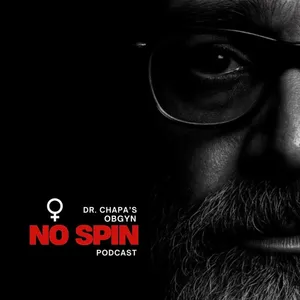
Dr. Chapa's OBGYN No Spin Podcast: Daily Summaries Delivered
by Hector Chapa
Relevant, evidence based, and practical information for medical students, residents, and practicing healthcare providers regarding all things women’s healthcare! This podcast is intended to be clinically relevant, engaging, and FUN, because medical education should NOT be boring! PLUS...we believe that medical education should be delivered without any SPIN...Welcome, to Dr. Chapa's OBGYN No Spin Podcast! (Note: our Legacy podcast, Clinical Pearls, will no longer have new episodes uploaded through that channel, as we have now rebranded with this new adventure.)
Latest Episodes
The most recent episodes — sign up to get AI-powered summaries of each one.
- 2 days ago14 min
OB, ED, and STDs: Gaps Noted!
Back in June 2024, we highlighted surprising data from JAMA Network Open regarding adolescent care in the ED. Because many adolescents use the ED as their primary care provider, it’s a good opportunity for them to have contraception addressed regardless of why they presented. But that’s not what was happening. That publication from two years ago showed significant gaps in addressing contraception in the ED to pregnancy vulnerable young women, mainly teens. We covered those results back then and said that that would be a wonderful QI project for any resident or medical students to work with their hospital ED to improve that. Well, now a similar publication, looking at a different target- STI empiric treatment among pregnant women in the ED, has been published with that same vibe. Yep, there are BIG discrepancies in what pregnant women are given- or in this case, NOT GIVEN, in the ED compared to their nonpregnant peers. This was published in mid-April 2026. Two big questions remain unanswered in this data. Listen in for details. 1. Gottlieb M, Moyer E, Slocum GW, et al. Sexually Transmitted Infection Treatment Rates Among Pregnant vs Nonpregnant Patients in Emergency Departments. JAMA Network Open. 2026. 2. Canter H, Reed J, Palmer C, et al. Contraception Use and Pregnancy Risk Among Adolescents in Pediatric Emergency Departments. JAMA Netw Open. 2024;7(6):e2418213. doi:10.1001/jamanetworkopen.2024.18213
- 3 days ago2 min
QUICKIE: When to Best Deliver with a Uterine WINDOW
It's a QUICKY: IMPROMPTU episode in clinic today..
- 5 days ago15 min
Treat Non-Severe PreE with BP Meds?
Welcome back, everyone. Today we're diving into one of the most hotly debated topics in obstetrics- should we be treating preeclampsia without severe features with antihypertensive medications during expectant management? Now, if you've been following the literature- and our show, you know that the landmark CHAP trial changed the game for chronic hypertension in pregnancy. It showed us that targeting a blood pressure below 140 over 90 reduces serious maternal complications, without harming the baby. That was a big deal. But here's the thing, CHAP studied chronic hypertension. Then there was the CHIP trial- that also found that tight control of gestational hypertension and nonproteinuric chronic hypertension was also beneficial. These did not address preeclampsia without severe features, and yet, the ripple effects of that trial have sparked a global conversation about whether we should be extending those same treatment principles to women with preeclampsia who don't yet have severe features. And this is where it gets really interesting, because the guidelines don't agree. In the United States, ACOG and the Society for Maternal-Fetal Medicine still say: hold off on antihypertensives unless blood pressures hit the severe range at 160/110. But step outside the US, and you'll find the World Health Organization, the International Society for the Study of Hypertension in Pregnancy, FIGO, NICE, and Hypertension Canada all recommending treatment at 140 over 90, regardless of whether the diagnosis is chronic hypertension, gestational hypertension, or preeclampsia. So who's right? And more importantly what does this mean for the patient sitting in front of you right now, at 34 weeks, with a blood pressure of 150 over 95, some proteinuria, but no severe features? Today, we're going to break this down. We'll review the controversy, walk through the divergent guidelines, and most importantly talk about the real, practical implications that favor treating these patients during expectant management. Because when you're watching someone with preeclampsia, waiting for the right time to deliver, there's a strong argument that controlling their blood pressure isn't just reasonable…may be protective. So grab your coffee, settle in, and let's get into it.1. Society for Maternal-Fetal Medicine Statement: Antihypertensive Therapy For mild chronic Hypertension in Pregnancy-The Chronic Hypertension And Pregnancy Trial. American Journal of Obstetrics and Gynecology. 2022. Society for Maternal-Fetal Medicine; Publications Committee. 2. Preeclampsia. The New England Journal of Medicine. 2022. Magee LA, Nicolaides KH, von Dadelszen P.3. Antihypertensive Drug Therapy for Mild to Moderate Hypertension During Pregnancy.The Cochrane Database of Systematic Reviews. 2018. Abalos E, Duley L, Steyn DW, C.4. Prevention and Treatment of Maternal Stroke in Pregnancy and Postpartum: A Scientific Statement From the American Heart Association. Stroke. 2026. Miller EC, Bello NA, Chen PR, et al.5.Hypertension in Pregnancy: Diagnosis, Blood Pressure Goals, and Pharmacotherapy: A Scientific Statement From the American Heart Association. Hypertension. 2022. Garovic VD, Dechend R, Easterling T, et al.
- 1 weeks ago17 min
The WILDCARD: LUS Window on Prenatal Sono, TOLAC?
The American College of Obstetricians and Gynecologists (ACOG) does not recommend routine ultrasound measurement of the lower uterine segment (LUS) thickness as part of the evaluation for trial of labor after cesarean delivery (TOLAC). ACOG Practice Bulletin No. 205 (2019) on Vaginal Birth After Cesarean Delivery does not include LUS measurement among its recommendations for TOLAC candidacy assessment. The guideline focuses on clinical factors such as type of prior uterine incision, number of prior cesarean deliveries, and other obstetric history to determine TOLAC candidacy, and emphasizes that most women with one previous low-transverse cesarean delivery should be counseled about and offered TOLAC. But what if you find a likely uterine window at the LUS? Does that mandate a repeat C-section? This topic comes from Serena, one of our podcast family members. Listen in for details. 1. Dr. Chapa’s Clinical Pearls, Dec 31., 2023: LUST FOR TOLAC; and follow up episode Jan 15, 20242. ACOG Practice Bulletin No. 205: Vaginal Birth After Cesarean Delivery. Committee on Practice Bulletins—Obstetrics Obstetrics and Gynecology. 2019;133(2):e110-e127. doi:10.1097/AOG.0000000000003078.3. Rozenberg P, Sénat MV, Deruelle P, et al. Evaluation of the Usefulness of Ultrasound Measurement of the Lower Uterine Segment Before Delivery of Women With a Prior Cesarean Delivery: A Randomized Trial. American Journal of Obstetrics and Gynecology. 2022. 4. Swift BE, Shah PS, Farine D. Sonographic Lower Uterine Segment Thickness After Prior Cesarean Section to Predict Uterine Rupture: A Systematic Review and Meta-Analysis. Acta Obstetricia Et Gynecologica Scandinavica. 2019. 5. McLeish SF, Murchison AB, Smith DM, et al. Predicting Uterine Rupture Risk Using Lower Uterine Segment Measurement During Pregnancy With Cesarean History: How Reliable Is It? A Review. Obstetrical & Gynecological Survey. 2023. 6. Jastrow N, Demers S, Chaillet N, et al. Lower Uterine Segment Thickness to Prevent Uterine Rupture and Adverse Perinatal Outcomes: A Multicenter Prospective study.7. American Journal of Obstetrics and Gynecology. 2016. 8. Guerby P, Bujold E, Chaillet N. Impact of Third-Trimester Measurement of Low Uterine Segment Thickness and Estimated Fetal Weight on Perinatal Morbidity in Women With Prior Cesarean Delivery. Journal of Obstetrics and Gynaecology Canada. JOGC. 2022.
- 1 weeks ago17 min
Home Self-Check Urine Protein for gHTN?
Should patients check their own urine protein at home when they have a gestational hypertension? After all, home-based BP monitoring is an established part of HDP care. Is there data on home urine protein dipstick tests in gestational hypertension? What do professional guidelines say? And what are the pros and cons of home self-monitoring of urine protein? Thank you, SJ, for the podcast topic suggestion. FListen in for details.1. ACOG PB 2222. Jayawardena L, Mcnamara E. Diagnosis and Management of Pregnancies Complicated by Haemolysis, Elevated Liver Enzymes and Low Platelets Syndrome in the Tertiary Setting.Internal Medicine Journal. 2020. 3. Tucker KL, et al. (2022). "Effect of self-monitoring of blood pressure on diagnosis of hypertension during higher-risk pregnancy: the BUMP 1 randomized clinical trial. JAMA4. Chappell LC, et al. (2022). "Effect of self-monitoring of blood pressure on blood pressure control in pregnant individuals with chronic or gestational hypertension: The BUMP 2 Randomized Clinical Trial. JAMA5. UDIP (Urinary Dipstick In Pregnancy) trial. 2022 May 12;129(13):2142–2148. doi: 10.1111/1471-0528.17180
- 1 weeks ago24 min
Is OB HPBM “Evidence-Based”? BUMP1&2 vs SMFM Special Statement
The vast majority of the time, “community standard of care” reflects evidence-based recommendations. This means that both the predominance of clinical data and what is clinically practice align one with another period but at times, clinical standard practice doesn't always align with what the data shows. How is this possible? This is exactly the case for home blood pressure monitoring in pregnancy (HBPM). This episode idea comes from an OB PGY-3, soon PGY-4, who asked his attending this brilliant question: “If the BUMP1 and BUMP2 clinical trials did not show a benefit with HBPM, why are we still doing it?” That is a complicated question that has a solid answer! Unsatisfied with his response, he asked for our opinion. Listen in for details.1. Tucker KL, et al. (2022). "Effect of self-monitoring of blood pressure on diagnosis of hypertension during higher-risk pregnancy: the BUMP 1 randomized clinical trial. JAMA2. Chappell LC, et al. (2022). "Effect of self-monitoring of blood pressure on blood pressure control in pregnant individuals with chronic or gestational hypertension: The BUMP 2 Randomized Clinical Trial. JAMA3. SMFM Special Statement (2023): Society for Maternal-Fetal Medicine Special Statement: Telemedicine in obstetrics—quality and safety considerations; AJOG
- 2 weeks ago26 min
Patient Self-Titration of Insulin for GDM?
Outside of pregnancy, guidelines emphasize diabetes self-management education and support to facilitate informed decision making, self-care behaviors, problem solving, and active collaboration with health care professionals. This includes, in those with good health literacy, the concept of patient-led self-titration of basal insulin results which has data that it improves glycemic management compared with clinician-led titration for type 2 diabetes among nonpregnant adults. But what about for GDM? Can patient’s self manage their BASAL insulin? In this episode, we will review a new RCT published in April 2026 in the Green Journal on this very subject. As novel as this is, it is not the first to report on this as it was also published (retrospective study in the UK) in 2022. This is a novel approach to insulin in GDM but there are some questions that remain. Listen in for details.1. Boonpattharatthiti K, Wechkunanukul K, Mayang N, et al . Comparison of Insulin Titration Strategies for Glycemic Control in Type 2 Diabetes: A Systematic Review and Network Meta-Analysis.Diabetes Care. 2025. 2. Valent, Amy M. DO, MCR; Barbour, Linda A. MD, MSPH. Insulin Management for Gestational and Type 2 Diabetes in Pregnancy. Obstetrics & Gynecology 144(5):p 633-647, November 2024. | DOI: 10.1097/AOG.00000000000056403. Wang, Xiao-Yu MD; Gabbe, Steven MD; Landon, Mark B. MD; Venkatesh, Kartik K. MD, PhD et al. Patient-Led Insulin Titration for Glycemic Management With Gestational Diabetes Mellitus: A Randomized Controlled Trial. Obstetrics & Gynecology 147(4):p 501-509, April 2026. 4. McGovern AP, Hirwa KD, Wong AK, et al. Patient-led rapid titration of basal insulin in gestational diabetes is associated with improved glycaemic control and lower birthweight. Diabet Med. 2022;39:e14926. doi: 10.1111/dme.14926
- 2 weeks ago22 min
VOMIT Trial: Mirtazapine vs Ondansetron for HG
Hyperemesis gravidarum (HG) represents the most severe end of the nausea and vomiting of pregnancy spectrum. It has a reported incidence of approximately 0.3–3% of pregnancies and is the most common cause of hospitalization in early pregnancy and the second most common cause of hospitalization in pregnancy overall. In June 2024, the ACOG published a Clinical Expert series summarizing the inpatient management of HG. In that guidance, it describes mirtazapine as an “alternative pharmacologic” option. How effective is this medication compared to ondansetron? A new study (published ahead of print on 12/30/25 and officially out June 2026), out of Denmark, sheds some new light on this medication. This trial is the first double-blind RCT comparing mirtazapine to ondansetron AND placebo. Although a BIG limitation of this study exists (which we will discuss), it does provide some interesting insights. Listen in for details. 1. (ACOG CES) Clark, Shannon M. MD; Zhang, Xue MD; Goncharov, Daphne Arena MD. Inpatient Management of Hyperemesis Gravidarum. Obstetrics & Gynecology 143(6):p 745-758, June 2024. | DOI: 10.1097/AOG.00000000000055182. Ostenfeld, AnneDroogh, Marjoes et al.Mirtazapine or ondansetron for hyperemesis gravidarum. A randomized placebo-controlled trial. American Journal of Obstetrics & Gynecology, June 2026
Get Dr. Chapa's OBGYN No Spin Podcast summaries in your inbox
Free AI-powered daily recaps. Key takeaways, quotes, and mentions — in a 5-minute read.
Get Free Summaries →Free forever for up to 3 podcasts. No credit card required.
You Might Also Like
Listeners also like.
Red Pill Your Healthcast
Two healthcare providers discuss overlooked health issues and empower listeners to make informed decisions for their families.

unPAUSED with Dr. Mary Claire Haver
A board-certified OB-GYN hosts candid discussions with experts and leaders on women's health, identity, and empowerment in midlife.

The Curbsiders Internal Medicine Podcast
Expert-led internal medicine discussions with clinical insights and humor for primary care and hospital medicine providers.

The House of Pod
A gastrointestinal doctor and colleagues discuss medicine with humor and insight.
Down to Birth
Examines pregnancy, birth, and postpartum experiences through evidence-based discussions, birth stories, and interviews focused on women's rights and systemic change.

BETTER! with Dr. Stephanie Estima | Strength, Body Composition & Perimenopause
Explores women’s health during perimenopause and menopause through science-backed discussions on nutrition, fitness, hormones, and mindset.

The Resetter Podcast with Dr. Mindy
Explores women's health, hormonal balance, and natural healing through expert conversations on wellness and longevity.
The Birth Hour - A Birth Story Podcast
Real birth stories shared by parents, covering pregnancy, childbirth, and postpartum experiences with honesty and emotion.

Becker’s Healthcare Podcast
Daily 15-minute episodes covering U.S. healthcare news, analysis, and insights from industry leaders.

The Checkup with Doctor Mike
A doctor discusses health, wellness, and personal stories with celebrities from entertainment, politics, sports, and media.

Unbiased Science
Two scientists analyze health topics using objective, evidence-based approaches to inform everyday decisions.

Health Optimization Medicine Podcast
Experts discuss health optimization, performance, and decision-making with insights from neuroscience, medicine, and consciousness.
About Dr. Chapa's OBGYN No Spin Podcast
Relevant, evidence based, and practical information for medical students, residents, and practicing healthcare providers regarding all things women’s healthcare! This podcast is intended to be clinically relevant, engaging, and FUN, because medical education should NOT be boring! PLUS...we believe that medical education should be delivered without any SPIN...Welcome, to Dr. Chapa's OBGYN No Spin Podcast! (Note: our Legacy podcast, Clinical Pearls, will no longer have new episodes uploaded through that channel, as we have now rebranded with this new adventure.)
Customized Recaps
AI-powered recaps with compact key takeaways, quotes, and insights.
Straight to Your Inbox
Get key takeaways from Dr. Chapa's OBGYN No Spin Podcast in a 5-minute read.
Save Hours Every Week
Stay current on your favorite podcasts without falling behind.
Frequently Asked Questions
What is Podzilla's Dr. Chapa's OBGYN No Spin Podcast daily summary?
It's a free AI-powered email that summarizes new episodes of Dr. Chapa's OBGYN No Spin Podcast as soon as they're published. You get the key takeaways, notable quotes, and links & mentions — all in a quick read.
How does the Dr. Chapa's OBGYN No Spin Podcast podcast summary work?
When a new episode drops, our AI transcribes and analyzes it, then generates a personalized summary tailored to your interests and profession. It's delivered to your inbox every morning.
Is this an official Dr. Chapa's OBGYN No Spin Podcast product?
No. Podzilla is an independent service that summarizes publicly available podcast content. We're not affiliated with or endorsed by Hector Chapa.
Can I get summaries of other podcasts too?
Absolutely! The free plan covers up to 3 podcasts. Upgrade to Pro for 15, or Premium for 50. Browse our full catalog at /podcasts.
How often does Dr. Chapa's OBGYN No Spin Podcast release new episodes?
Dr. Chapa's OBGYN No Spin Podcast publishes every few days. Our AI generates a summary within hours of each new episode.
What topics does Dr. Chapa's OBGYN No Spin Podcast cover?
Dr. Chapa's OBGYN No Spin Podcast covers topics including Education, Medicine, Fitness, Health & Fitness. Our AI identifies the specific themes in each episode and highlights what matters most to you.
Start getting Dr. Chapa's OBGYN No Spin Podcast summaries tomorrow morning.
Free forever for up to 3 podcasts. No credit card required.
Free forever for up to 3 podcasts. No credit card required.