Free Daily Podcast Summary
Every Single Sci-Fi Film Ever*: Daily Summaries Delivered
by Ayesha Khan
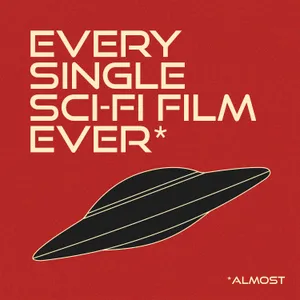
The Every Single Sci-Fi Film Ever* podcast looks back at more than a century of films, beginning in 1902 and working towards the future. Each episode focuses on a film, director or theme and brings in experts to discuss the history, politics, and influences. Join sci-fi enthusiast Ayesha Khan as she travels through time and space, encounters aliens, and battles authoritarian regimes all from the comfort of your home planet.
Latest Episodes
The most recent episodes — sign up to get AI-powered summaries of each one.
- 1 weeks ago51 min
2001: A Space Odyssey (Part 2)
As always there are spoilers ahead! This is episode one of a four-episode mini-series. To make things even more confusing Episode 1 has two parts. This is part 2. If you have arrived here before treading the ground of part 1 turn back now! The idea is to most definitely watch the film before listening to the episode. If you don't want to do that and still want an overview of the film and the plot you can check out the Wikipedia entry here: https://en.wikipedia.org/wiki/2001:_A_Space_Odyssey Please refer to these very show notes for some extra information or clarification. (Yes I'm repeating the same text from part 1. Do you even know how busy I've been and now I must copy and paste to get this out on time!) You can follow the podcast on social media on Threads, Instagram and Bluesky. If you have money to invest in further space or other scientifically romantic adventures and would like to be a patron of the podcast, pay heed! You can join Patreon and for £3 or $3 a month you can get ad free version of the show. https://www.patreon.com/everyscififilm Thankfully my two guests are heavy weight bearing beams (of light?). I am indeed getting my metaphors in a mix. That makes no sense. Apologies. Michael Benson is an artist, filmmaker and author of a range of exciting books including the magnificently comprehensive 2018 Space Odyssey: Stanley Kubrick, Arthur C. Clarke, and the Making of a Masterpiece. Scott Bukatman is a cultural theorist and Professor of Film and Media Studies at Stanford University. He has written extensively about popular culture with a focus on how it mediates between modern technologies and the human experience. He is also the author of the wonderful BFI book on Blade Runner. Clarification: The quote I use near the beginning "Politics and religion are obsolete. The time has come for science and spirituality" originates from Indian philosopher Vinoba Bhave. Arthur C Clarke used the quote in a keynote address. Kubrick underlines the second half in his copy of the speech. (Michael then goes on to open his fantastic book with this quote.) 28:25 The concept of a technological singularity is a theoretical scenario in which technology increasingly becomes so advanced that is has unpredictable and irreversible effects ono humanity. 34:13 JPL is short for Nasa's Jet Propulsion Laboratory in California. 48:23 Mad magazine's parody of 2001 is available to view here: https://www.tumblr.com/keirdullea/34795391907/201-minutes-of-space-idiocy-a-mad-magazine Lastly: I concede that my internet search for the giant baby may have led me to some very dubious sources. Chapters 00:00 Introduction 19:00 The Sublime 11:30 Kubrick's minimalism 20:32 HAL <p class=
- 1 weeks ago54 min
2001: A Space Odyssey (Part 1)
As always there are spoilers ahead! As we chronologically venture through science fiction history it is finally time to examine one of the heaviest of heavyweight sci-fi films. 2001: A Space Odyssey. The idea is to most definitely watch the film before listening to the episode. If you don't want to do that and still want an overview of the film and the plot you can check out the Wikipedia entry here: https://en.wikipedia.org/wiki/2001:_A_Space_Odyssey This is episode one of a four-episode mini-series. To make things even more confusing Episode 1 has two parts. This is part 1. Part 2 is also out. (Why two parts? Because I prefer a more digestible length of podcast.) Please refer to these very show notes for some extra information or clarification. You can follow the podcast on social media on Threads, Instagram and Bluesky. If you have money to invest in further space or other scientifically romantic adventures and would like to be a patron of the podcast, pay heed! You can join Patreon and for £3 or $3 a month you can get ad free version of the show. https://www.patreon.com/everyscififilm This is the longest episode I've ever recorded (hence the two parts) and I simply couldn't cut much of it down because of my phenomenal guests. Michael Benson is an artist, filmmaker and author of a range of exciting books including the magnificently comprehensive 2018 Space Odyssey: Stanley Kubrick, Arthur C. Clarke, and the Making of a Masterpiece. Scott Bukatman is a cultural theorist and Professor of Film and Media Studies at Stanford University. He has written extensively about popular culture with a focus on how it mediates between modern technologies and the human experience. He is also the author of the wonderful BFI book on Blade Runner (which we will get to in good time). 34:48 The literal translation of "alte kackers" which is how Stanley Kubrick's wife Christiane described the people at the premiere is "old shitters". Chapters 00:00 Introduction 02:43 Childhood cinematic experiences of the film 07:31 Not understanding the film 09:57 The impact on sci-fi cinema 10:28 The proverbial good science fiction film 14:35 The philosophical nature of science fiction 17:09 Kubrick and Clarke in the mid 60s 21:26 Initial intentions 25:46 Special effects and immersion 33:04 The reception of the film 46:32 The ape arm throws a bone 51:15 Kubrick and improvisation 53:52 Outro to part one NEXT EPISODE! The next episode is already out and it's part 2 of this discussion! After that we will be prepping to discuss the special effects of 2001: A Space Odyssey in two weeks' time.
- 3 weeks ago56 min
Planet of the Apes: Evolution, Supremacy, & the Death of Liberty
As usual there are spoilers ahead! You can follow the podcast on social media on Threads, Instagram and Bluesky. If you have an air of gravitas and money to spend and would like to be a patron of the podcast, please do! You can join Patreon and for £3 or $3 a month you can get ad free version of the show. https://www.patreon.com/everyscififilm The novel Planet of the Apes was released in 1963 in France by French author Pierre Boulle. In that same year publicist Arthur Jacobs bought the screen rights while he was looking for something "like King Kong". Five years later in 1968 the film was released with one of the most famous twist endings of cinematic history. The film is a fun "off-planet" sci-fi adventure story with heavy commentary on societal expectations and standards. I have two lovely guests to help us understand this sci-fi classic. John Wills is a Professor of American Media and Culture at the University of Kent. He has written lots about popular culture including his new book Doom Town USA Phil Nichols is Senior Consultant to the Ray Bradbury Center at Indiana University, and formerly Film & Television course leader at the University of Wolverhampton. The Scopes trial was a 1925 case in the USA in which a teacher was accused of violating the law by teaching evolution in schools. The trial was set up on purpose to challenge the Butler Act which prevented the teaching of evolution. Chapters 00:00 Introduction 01:20 Book vs film 03:53 Arthur Jacobs 06:28 From astronaut to animal 11:10 Simian society <span
- Aug 30, 202657 min
Barbarella 1968: Pop Art, Sex & Space Opera
As always, there are spoilers ahead. You can follow the podcast on social media on Threads, Instagram and Bluesky. If you have an air of gravitas and money to spend and would like to be a patron of the podcast, please do! You can join Patreon and for £3 or $3 a month you can get ad free version of the show. https://www.patreon.com/everyscififilm Graphic novels and comics were widely considered to be for children in the early 1960s. It was a relatively small number of artists and publishers who were working to have comics seen as a viable form of art as well as making comics for adults. Although the history of comics for adults is definitely older, this period marks a surge in European interest in the medium. Famous film producer Dino de Laurentiis helped this when he bought the filming rights to adult comics Diabolik (from Italy) and Barbarella (from France) turning them both in to movies in the 1960s. De Laurentiis originally wanted Bridget Bardot for the title role and after she turned it down, he looked to Sophia Loren who did the same. His third choice was Jane Fonda who initially rejected the script until her then husband Roger Vadim convinced her to take it. Vadim joined as Director and the rest is kitschy sci-fi history. I have two fantastic guests to talk through this swinging 60s sci-fi space opera oddity. Lisa Yaszek is Regents' Professor of Science Fiction Studies at Georgia Tech and has written/edited extensively on science fiction. Hugo Frey is Professor of History at the University of Chichester. He has a special interest in graphic novels and is co-author of the 2026 book The Look of the 1960s. Barbarella and the Pulp Pop Comics. CORRECTION: In the question about the legacy of Barbarella I say Star Trek when I mean Star Wars. Chapters 00:00 Introduction 02:17 Sci-fi precedence 03:45 Barbarella comic origins 06:31 1960s France and the rise of adult comics 09:37 Jane Fonda playing it straight <p cla
- Aug 16, 202658 min
Je t'aime, je t'aime (1968): Time Travel, Memory and Loss
Translation for the intro: A race against time. Office time against outside time. Who's winning? I don't know yet. Apologies as I am coming down with a heavy cough and need sleep. I am so out of it that I almost forgot that it is release day! But I jumped out of bed with quite a shock and here you have the episode. Phew! As always, there are spoilers ahead. You can follow the podcast on social media on Threads, Instagram and Bluesky. If you have an air of gravitas and money to spend and would like to be a patron of the podcast, please do! You can join Patreon and for £3 or $3 a month you can get ad free version of the show. https://www.patreon.com/everyscififilm 1968's Je t'aime, je t'aime (AKA I Love You, I Love You). A wonderfully unusual science fiction film about memory, love and loss by French New Wave director Alain Resnais. If you would like an overview of the plot you can find it on the Wikipedia page here. The time code after the beep (indicating the discussion about sexual violence is done) 50 minutes and 40 seconds. I have two magnificent guests! Mark Bould is a professor of Film and Literature at the University of West England, Bristol. He has written/edited extensively about science fiction cinema. Mani Sharpe is a lecturer in Film Studies at the University of Leeds. He is the author of the book Late-Colonial French Cinema: Filming the Algerian War of Independence. At one point Mark mentions Tlön, Uqbar, Orbis Tertius by Jorge Luis Borges and I'm mentioning it here as I had to look it up and it might be on interest. Chapters 00:00 Introduction 01:42 Alain Resnais 07:20 France in 1968 11:27 Cancelled Cannes Film Festival 13:51 Editing and Chronology 20:10 Continuity conventions 24:33 Editing words and memories 33:23 Unreliable Narrator 39:05 The film watching experience 44:21 Loss and heartbreak in sci-fi 50:55 Legacy 55:05 Recommendations Recommendations New Rose Hotel (1998) by Abel Ferrara Alain Resnais by Emma Wilson NEXT EPISODE! Wish me luck as I attempt to arrange an episode on Barbarella in two weeks. As this hasn't been finalised I would suggest that you might also like the watch Planet of the Apes just in case should the fates be tricky! Both of these films are quite easy to find to rent
- Aug 2, 202651 min
Destroy All Monsters 1968: Godzilla's Kaiju in Combat
Translation for Intro: "Fire Dragon can reduce Tokyo to ashes in just a few hours." Godzilla ROARS. "It's Godzilla!" As always there are spoilers ahead! You can follow the podcast on social media on Threads, Instagram and Bluesky. If you have like to wear a monocle and talk about fancy artisan cheeses maybe you would like to be a patron of the podcast? Luckily neither of those things are a requirement! You can join Patreon and for £3 or $3 a month you can get ad free version of the show. https://www.patreon.com/everyscififilm If you are interested in the plot of the film you can read an overview on the wikipedia page here. Correction: In the intro I say Japanese Air Base when I mean Japanese Moon Base. Welcome to the podcast! TIME FOR PANIC TO ENSUE!!! We are in 1968! It's finally here! Am I ready for the 2001: A Space Odyssey? No, I am not! But I'm getting there. Please bear with me. In the meantime, I shall distract you with a chat about one of the most visually delightful of Kaiju Films (Although one of our guests' recommendations may have it beat in visual delights). You can see an array of the stills from Destroy All Monsters on my Instagram account. This is the swinging 60s Japan style! In 1968 ToHo studios decided to wrap up the Godzilla Franchise with a big bang! A Kaiju extravaganza featuring 11 monsters. Let me list them for you. Godzilla Rodan Angurius Mothra (very tragically in larva form) Gorosaurus Minilla (Godzilla's son who gives me the creeps. Sorry!) Kumonga Baragon Manda Varan King Ghidorah Due to international success the franchise continued on. Hoorah! I have two gargantuan guests for you. (They actually are, as far as I am aware, human sized although I have no proof.) Yuki Miyamoto is Professor of Religious
- Jul 19, 202655 min
Sci-fi & Architecture: Visions of the Future
There are spoilers ahead! For many films I'm afraid. I would especially avoid the episode until you have watched Ex-Machina (which you really really should immediately it really is phenomenal) as Jes does talk directly about the ending between 53:23 till 53:46. I have made a list of the films and books mentioned below. This is another detour episode and perhaps you're thinking I'm trying to avoid the very big task of recording 2001: A Space Odyssey content. And perhaps you're right. But I hope you enjoy this discussion. If you try to think of a futuristic city your mind may be drawn towards a real place but it could just as easily be drawn towards the great science fiction films that render our future on our screens. Films like Blade Runner, Minority Report, Fifth Element and (the granddaddy) Metropolis have all shown us what human futures could look like. Sometimes these visions are intimidating, terrifying or occausionally aspirational. These images in turn can affect and inform own understanding of what an unwritten future should be like. I have two wonderful guests to talk through the somewhat symbiotic relationship of science fiction and architecture Amy Brookes is an architect and an Associate Professor at the University of Reading. She has written extensively about architecture and one of her special interests is Architecture in science fiction literature and film. Jes Deaver is an award-winning architect as well as a filmmaker and writer. She is the author of the article The Architecture of Imagination which explores the parallels between science fiction and architecture. Chapters 00:00 Introduction 01:32 The SF-Architecture connection 06:40 How the symbolism of the tower changes 14:38 Anxieties in architecture 17:00 The reciprocal relationship 27:10 Fears of suburbia 30:27 Non place and virtual space 33:43 Apocalyptic futures 40:02 Hopeful alternatives 49:04 Favourite architectural sci-fi films 53:46 Recommendations Recommendations: And He Built a Crooked House by Robert Heinlein Octavia's Brood: Science Fiction Stories from Social Justice Movements Films mentioned in the episode: Metropolis (1927) Blade Runner (1982) Minority Report (2002) Chappie (2015) District 9 (2009) Attack the Block (2011) Fifth Element (1997) Just Imagine (1930) Gagarine (2020) Atlantics (2019) Tommorowland (2015) Truman Show (1998) Stepford Wives (1975) Edward Scissorhands (1990) Soylent Green (1973) Don't Look Up (2021) Children of Men (2006) Snowpiercer (2013) Hunger Games (2012) Robocop (1987) Nation Estate (2012) Silent Running (1972) High Rise (2015) Ex Machina (2014) Books mentioned: Rem Koolhaas (Remment Lucas Koolhaas) is a Dutch Architect and author of the book Delirious New York published in 1978. Ready Player One by Ernest Kline. (Made into a film by Steven Speilberg in 2018) Every Version of You by Grace Chan. Artificial Wisdom by Thomas R Weaver. Everything for Everyone: An Oral History of the New York Commune, 2052-2072 by Eman Abdelhadi and M. E. O'Brien Mouldiness Manifesto by Friedensreich Hundretwasser TV Shows mentioned: Westworld Andor Other links of interest: A page from Mark Bould's website about the ci
- Jul 5, 202659 min
Quatermass: Nigel Kneale, Hammer and Mid-Century Britain
There is a longer version of the podcast available which includes more tangential topics on Patreon for paid subscribers or for a $3 or £3 fee! The long version is just under one hour and twenty-five minutes. If you would like to become a Patreon patron and get all the podcast episodes ad free (as well as the longer edit) you can do that on: https://www.patreon.com/everyscififilm As always there are spoilers ahead! You can follow the podcast on social media on Threads, Instagram and Bluesky. As mentioned on the podcast here is an outline of the Quatermass offerings: FILM 1955: The Quatermass Xperiment AKA The Creeping Unknown (dir, Val Guest) 1957: Quatermass 2 AKA Enemy from Space (dir. Val Guest) 1967: Quatermass & the Pit AKA Five Million Years to Earth (dir. Roy Ward Baker) 1979 The Quatermass Conclusion (recut from TV series, dir. Piers Haggard) 2005 The Quatermass Experiment (Live TV movie, dir. Sam Miller) Radio 1996: The Quatermass Memoirs TV Series 1953: The Quatermass Experiment 1955: Quatermass II 1958-59 Quatermass and the Pit 1979 Quatermass (AKA Quatermass IV or The Quatermass Conclusion) 2005 The Quatermass Experiment (Live) Professor Bernard Quatermass was created by British superstar screenwriter Nigel Kneale and aired on the BBC in 1953. The TV series went on to great popularity and Hammer Films eventually came knocking for film rights. Nigel Kneale did not have any rights over the character due to being a staff writer at the time but would eventually go on to international fame especially in sci-fi and horror circles with John Carpenter (amongst others) being a vocal fan. Despite all this many people have not heard of Quatermass. Although there have been many attempts to revive the franchise none have come to fruition. But that won't stop me seeking out two of the best academics to talk excitedly about their passion for this early TV sci-fi pioneer. Mark Bould is a professor of Film and Literature at the University of West England, Bristol. He has written/edited extensively about science fiction cinema. Matthew Rule-Jones is a senior lecturer in film studies at the University of Exeter. A doctor of science fiction who likes to write about cinema including the book Science Fiction Cinema and 1950s Britain: Recontextualising Cultural Anxiety. Chapters 00:00 Introduction 02:24 Nigel Kneale 06:28 Rudolph Cartier and changes in TV 08:22 Hammer films and Qu
Get Every Single Sci-Fi Film Ever* summaries in your inbox
Free AI-powered daily recaps. Key takeaways, quotes, and mentions — in a 5-minute read.
Get Free Summaries →Free forever for up to 3 podcasts. No credit card required.
You Might Also Like
Listeners also like.
The Lost Sci-Fi Podcast - Vintage Sci-Fi Short Stories
Vintage science fiction short stories from the 1700s to 1960s are narrated, featuring themes like time travel, AI, and dystopia.

Cosmos in a Pod
Explores space, science, philosophy, and technology to reveal the wonders of the universe and humanity's place within it.
Perfect Organism: The Alien Saga Podcast
Perfect Organism Podcast, Bleav
Planetary Radio: Space Exploration, Astronomy and Science
Explores space exploration, astronomy, and science through conversations with experts and advocates shaping humanity's journey beyond Earth.
CineJourneys (master feed)
Aaron West and Jill Blake

Everything Everywhere Daily: History, Science, Geography & More
Daily explorations of history, science, geography, and culture with concise, accessible explanations of complex topics.

Ask a Spaceman!
An astrophysicist answers listener questions about space, time, and the universe.
The 365 Days of Astronomy
A daily podcast featuring diverse voices exploring astronomy and space science topics.
The Science of Everything Podcast
Explores diverse topics in natural and social sciences through the lens of the scientific method.
Somewhere in the Skies
A weekly exploration of UFO phenomena and unexplained aerial encounters hosted by an author and investigator.
Dear People of Earth Science and Physics- The UFO Podcast - Disclosure - Aliens - UAP
Explores UFO and UAP phenomena through scientific analysis, physics, and expert discussions on credible sightings and cosmic mysteries.

Where's My Jetpack?
Explores retrofuturistic technologies to determine which once-futuristic inventions may still become reality.
About Every Single Sci-Fi Film Ever*
The Every Single Sci-Fi Film Ever* podcast looks back at more than a century of films, beginning in 1902 and working towards the future. Each episode focuses on a film, director or theme and brings in experts to discuss the history, politics, and influences. Join sci-fi enthusiast Ayesha Khan as she travels through time and space, encounters aliens, and battles authoritarian regimes all from the comfort of your home planet.
Customized Recaps
AI-powered recaps with compact key takeaways, quotes, and insights.
Straight to Your Inbox
Get key takeaways from Every Single Sci-Fi Film Ever* in a 5-minute read.
Save Hours Every Week
Stay current on your favorite podcasts without falling behind.
Frequently Asked Questions
What is Podzilla's Every Single Sci-Fi Film Ever* daily summary?
It's a free AI-powered email that summarizes new episodes of Every Single Sci-Fi Film Ever* as soon as they're published. You get the key takeaways, notable quotes, and links & mentions — all in a quick read.
How does the Every Single Sci-Fi Film Ever* podcast summary work?
When a new episode drops, our AI transcribes and analyzes it, then generates a personalized summary tailored to your interests and profession. It's delivered to your inbox every morning.
Is this an official Every Single Sci-Fi Film Ever* product?
No. Podzilla is an independent service that summarizes publicly available podcast content. We're not affiliated with or endorsed by Ayesha Khan.
Can I get summaries of other podcasts too?
Absolutely! The free plan covers up to 3 podcasts. Upgrade to Pro for 15, or Premium for 50. Browse our full catalog at /podcasts.
How often does Every Single Sci-Fi Film Ever* release new episodes?
Every Single Sci-Fi Film Ever* publishes biweekly. Our AI generates a summary within hours of each new episode.
What topics does Every Single Sci-Fi Film Ever* cover?
Every Single Sci-Fi Film Ever* covers topics including History, Film, TV & Film. Our AI identifies the specific themes in each episode and highlights what matters most to you.
Start getting Every Single Sci-Fi Film Ever* summaries tomorrow morning.
Free forever for up to 3 podcasts. No credit card required.
Free forever for up to 3 podcasts. No credit card required.