The Language of Creative Impact
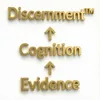
Author Greg Twemlow examines the intersection of human creativity and artificial intelligence by analysing director Martin Scorsese’s use of a generative tool called Flux. While the software helps solve the transmission problem of moving a director's internal vision onto a screen quickly, Twemlow argues that the machine only provides raw creative clay. To ensure quality and collaborative depth, he introduces the Language of Impact, a framework built on the dual pillars of context and critique. This method transforms the lead creator into a sort of archaeologist who guides a team of experts to uncover and refine a shared vision. Ultimately, the text asserts that human judgment must remain the primary force to prevent technological speed from compromising artistic excellence. Read the article.About the Author - Greg Twemlow writes and teaches at the intersection of technology, education, and human judgment. He works with educators and businesses to make AI explainable and assessable in classrooms and boardrooms — to ensure AI users show their process and own their decisions. His cognition protocol, the Context & Critique Rule™, is built on a three-step process: Evidence → Cognition → Discernment — a bridge from what’s scattered to what’s chosen. Context & Critique → Accountable AI™. © 2025 Greg Twemlow. “Context & Critique → Accountable AI” and “Context & Critique Rule” are unregistered trademarks (™).
Podzilla Summary coming soon
Sign up to get notified when the full AI-powered summary is ready.
Free forever for up to 3 podcasts. No credit card required.
Listen to This Episode
More from Evidence → Cognition → Discernment️ - Your Pathway to AI Leadership

The Freedom Not to Stop Thinking

Institutions Have Abandoned Our Young People

The Great Synchrony Deception - Why AI Pilots Fail

Are You In the Knowledge-Worker Compression Zone?
Get summaries like this every morning.
Free AI-powered recaps of Evidence → Cognition → Discernment️ - Your Pathway to AI Leadership and your other favorite podcasts, delivered to your inbox.
Free forever for up to 3 podcasts. No credit card required.