Free Daily Podcast Summary
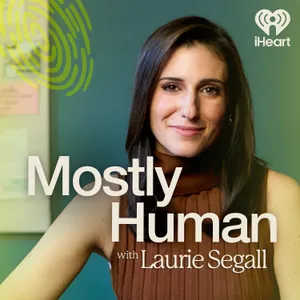
Mostly Human with Laurie Segall: Daily Summaries Delivered
by iHeartPodcasts and Dot Dot Dot
Mostly Human is a weekly podcast that explores technology through the most important lens: the human one. Hosted by award-winning tech journalist Laurie Segall, the immersive interview and investigative show tackles some of the defining questions of our time with headline-making tech titans and the people you don't know yet, but should. Mostly Human will leave you with a sense of agency over fear, and a clearer view of how tech can actually work for you.
Latest Episodes
The most recent episodes — sign up to get AI-powered summaries of each one.
- 6 days ago47 min
Can social media be fun (and sexy) again?
Ami Gan was tired of social media; tired of the doomscrolling, of not seeing her friends’ posts, of feeling less connected and more performative. So, the former OnlyFans CEO created her own social media platform, called Vylit. Inspired by the lessons learned from OnlyFans and what social media promised to be, Vylit is an 18+ social platform with creator tools that promises to redefine how people share, discover, and monetize content. In this conversation with Laurie Segall, Ami talks about her background exploring trends, from cannabis to adult content, before they go mainstream. She talks about her wild and fast-moving time as CEO of OnlyFans and what inspired her to get back into that space. Laurie and Ami dive into Vylit themselves, with Laurie building her own (a little bit spicy) AI twin. In an AI-generated world, what does consent look like online? And if you build a better and sexy social media platform, will they come? If you have thoughts or questions for Laurie about this episode or anything Mostly Human, email us at hello@mostlyhuman.comSee omnystudio.com/listener for privacy information.
- 1 weeks ago54 min
On with Kara Swisher: Deepfake abuse panel, featuring Laurie Segall
This week, we’re sharing a recent episode of On with Kara Swisher. Kara hosts a panel of experts — including Laurie Segall, victims rights attorney Carrie Goldberg, and computer scientist V.S. Subrahmanian —to discuss the growing threat and current reality of sexually explicit deepfakes. The guests talk about the current scope of the problem, the technology behind it, the communities that rally around it, and what protection from and prevention of this kind of abuse looks like. Laurie also shares what she learned from her investigation into the anonymous man behind Mr. Deepfakes. Listen to more On with Kara Swisher wherever you get your podcasts. Listen to the series, Searching for Mr. Deepfakes, right here in the Mostly Human podcast feed.See omnystudio.com/listener for privacy information.
- 2 weeks ago37 min
Searching for Mr. Deepfakes: Seeds of Change [Part 4]
A note to listeners: This is Part 4 of a 4-part series. If you have not yet listened to Searching for Mr. Deepfakes Part 1, Part 2, or Part 3 please start there. Laurie Segall and her team have a new resolve for the investigation into Mr. Deepfakes. This unchartered path takes them to surprising places, with unexpected allies. Laurie shares some big, personal news and the thing the team has been waiting for finally happens. But it’s not the end of the story. If you have been targeted by sexually explicit deepfakes, we want to hear from you. Email us at hello@mostlyhuman.com. For help and resources, visit beyondmrdeepfakes.com. If you or a loved one need support, text HOP to 64673 or call/text 988. Find Laurie’s short-form docuseries on Mr Deepfakes — in partnership with Paris Hilton — on TikTok.See omnystudio.com/listener for privacy information.
- 3 weeks ago1h 14m
Is Life Better When AI Takes the Reins?
A note to listeners: The 4th and final installment of Searching for Mr. Deepfakes will be released on July 9th. The AI revolution is here. It’s a part of every facet of our lives — or at least trying to be — from work, to dating, from parenting to how we spend our free time. But is life so much better when we let AI in? Joanna Stern, longtime tech journalist and author of I Am Not a Robot, went all in on AI for a year to see if this technology could fulfill its promise. Over twelve months, Joanna had her mammogram read by AI, took a family vacation in a Waymo, and spent a weekend away with her AI boyfriend, Evan. What did Joanna learn from this year of AI? Host Laurie Segall sits down with Joanna to talk AI lovers, atrophy of the brain, and the impact — good and bad — AI can have on our health, relationships and life. The two tech journalists talk about what is lost with technological progress and what we should work to preserve. At the heart of this question is what, ultimately, will get us closer to our humanity. The answer may surprise you. Plus: they let ChatGPT simulate the entire interview. It was, to put it kindly, a book report. Joanna Stern is the founder of of New Things, an independent media company, and author of I Am Not a Robot: My Year Using AI to do (Almost) Everything.See omnystudio.com/listener for privacy information.
- Jun 25, 202634 min
Searching for Mr. Deepfakes: The Encounter [Part 3]
A note to listeners: This is Part 3 of a 4-part series. If you have not yet listened to Searching for Mr. Deepfakes Part 1 or 2, please start there. Laurie Segall and her investigative team return from Canada and dive into the real-world and online clues they recovered from their trip. As they dive deep into who this person is they find some surprising details. They return to Canada one last time in the hopes of confronting the man behind Mr. Deepfakes. Meanwhile the scourge of deepfake abuse spreads. A woman in Tennessee discovers her image has been weaponized against her, violating the trust she built in her community, for money and sometimes more. Note: Some voices in this episode have been disguised to protect their identities. If you have been targeted by sexually explicit deepfakes, we want to hear from you. Email us at hello@mostlyhuman.com. For help and resources, visit beyondmrdeepfakes.com. If you or a loved one need support, text HOP to 64673 or call/text 988. Find Laurie’s short-form docuseries on Mr Deepfakes — in partnership with Paris Hilton — on TikTok.See omnystudio.com/listener for privacy information.
- Jun 18, 202642 min
Searching for Mr. Deepfakes: The Tip [Part 2]
A note to listeners: This is Part 2 of a 4-part series. If you have not yet listened to Searching for Mr. Deepfakes Part 1, please start there. After officially launching an investigation into the anonymous person behind Mr. Deepfakes — the largest deepfake pornography site on the internet — using good-guy hackers and a call-out on social media to see if anybody out there knows anything, Laurie Segall gets a tip. Someone in the Netherlands thinks he has identified who Mr. Deepfakes is and this tip pushes Laurie and her team out of the virtual world, and into the real one. Are the digital breadcrumbs — along with the on-the-ground clues Laurie gathers — enough to lead her to a real person? Meanwhile, the threat of deepfake pornography spreads. More famous and powerful women come out as victims of Deepfake pornography, inching this fringe topic near the center. But the abuse is hitting closer to home, too. Laurie talks to a Minnesotan woman whose sense of safety and community are shattered when it’s discovered a family friend has been making deepfake pornography of her and many of her friends. If you have been targeted by sexually explicit deepfakes, we want to hear from you. Email us at hello@mostlyhuman.com. For help and resources, visit beyondmrdeepfakes.com. If you or a loved one need support, text HOP to 64673 or call/text 988. Find Laurie’s short-form docuseries on Mr Deepfakes — in partnership with Paris Hilton — on TikTok.See omnystudio.com/listener for privacy information.
- Jun 11, 202648 min
Can AI Be Human-First? Apple Thinks So.
A note to listeners: Part 2 of Searching for Mr. Deepfakes will release Thursday June 18. In the tech world, Apple's Worldwide Developers Conference (WWDC) garners Super Bowl level attention. It's where Apple tells the world what's next. And this year, it's all about AI and protecting your kids. Mostly Human host Laurie Segall sits down with Craig Federighi, Apple's SVP of Software Engineering, and Greg Joswiak, SVP of Worldwide Marketing, fresh off the company's biggest developer conference. The conversation dives into the thing everyone’s been waiting for — what is Apple’s version of AI? The trio discuss Siri’s glow-up: Why Siri is explicitly not designed to be your romantic companion, what Apple says makes its AI fundamentally different from the rest of the industry, and whether a trillion-dollar company can actually stay focused on people over profit. The conversation also answers the question, can Big Tech actually put kids first? Apple’s sweeping new child safety and family protection features — and the design philosophy behind them — are attempting to position company as the tech brand you can trust with your kids. Laurie also asks the execs to respond to a scammer’s call, shares a mom's question about dumb phones for kids, and pushes the leaders of this tech giant to consider ... how do you ‘think different’ when you've become the establishment? If you have thoughts or questions for Laurie about this episode or anything Mostly Human, email us at hello@mostlyhuman.comSee omnystudio.com/listener for privacy information.
- Jun 4, 202637 min
Searching for Mr. Deepfakes: ‘The Most Dangerous Man on the Internet’ [Part 1]
When journalist Laurie Segall first stumbled upon Mr. Deepfakes — the largest deepfake pornography site on the internet, with an estimated 17 million monthly visitors at its peak — she couldn't shake one question: who was the anonymous man behind it? In part one of this four-part investigative series, Laurie introduces us to Joanne Chew, an LA-based artist and actor who discovered hundreds of AI-generated pornographic images and videos of herself online, made without her knowledge or consent. Joanne's story is just one example of the abuse enabled by Mr. Deepfakes — a site that functioned not only as a user-generated video platform, but also a thriving community where users learned to create deepfakes, monetized them, and pushed the technology further. With the help of some top cyber security experts, and a public call out to her online community for help, Laurie launches her investigation. Will an anonymous tip jumpstart her investigation? If you have been targeted by sexually explicit deepfakes, we want to hear from you. Email us at hello@mostlyhuman.com. For help and resources, visit beyondmrdeepfakes.com. If you or a loved one need support, text HOP to 64673 or call/text 988. Find Laurie’s short-form docuseries on Mr Deepfakes — in partnership with Paris Hilton — on TikTok. If you have thoughts or questions for Laurie about this episode or anything Mostly Human, email us at hello@mostlyhuman.comSee omnystudio.com/listener for privacy information.
About Mostly Human with Laurie Segall
Mostly Human is a weekly podcast that explores technology through the most important lens: the human one. Hosted by award-winning tech journalist Laurie Segall, the immersive interview and investigative show tackles some of the defining questions of our time with headline-making tech titans and the people you don't know yet, but should. Mostly Human will leave you with a sense of agency over fear, and a clearer view of how tech can actually work for you.
Customized Recaps
AI-powered recaps with compact key takeaways, quotes, and insights.
Straight to Your Inbox
Get key takeaways from Mostly Human with Laurie Segall in a 5-minute read.
Save Hours Every Week
Stay current on your favorite podcasts without falling behind.
Frequently Asked Questions
What is Podzilla's Mostly Human with Laurie Segall daily summary?
It's a free AI-powered email that summarizes new episodes of Mostly Human with Laurie Segall as soon as they're published. You get the key takeaways, notable quotes, and links & mentions — all in a quick read.
How does the Mostly Human with Laurie Segall podcast summary work?
When a new episode drops, our AI transcribes and analyzes it, then generates a personalized summary tailored to your interests and profession. It's delivered to your inbox every morning.
Is this an official Mostly Human with Laurie Segall product?
No. Podzilla is an independent service that summarizes publicly available podcast content. We're not affiliated with or endorsed by iHeartPodcasts and Dot Dot Dot.
Can I get summaries of other podcasts too?
Absolutely! The free plan covers up to 3 podcasts. Upgrade to Pro for 15, or Premium for 50. Browse our full catalog at /podcasts.
How often does Mostly Human with Laurie Segall release new episodes?
Mostly Human with Laurie Segall publishes weekly. Our AI generates a summary within hours of each new episode.
What topics does Mostly Human with Laurie Segall cover?
Mostly Human with Laurie Segall covers topics including News. Our AI identifies the specific themes in each episode and highlights what matters most to you.
Start getting Mostly Human with Laurie Segall summaries tomorrow morning.
Free forever for up to 3 podcasts. No credit card required.
Free forever for up to 3 podcasts. No credit card required.