Free Daily Podcast Summary
Gone South: Daily Summaries Delivered
by Audacy Podcasts
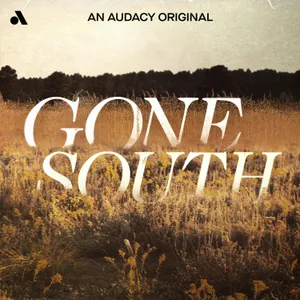
For years, Gone South has been a podcast about crime in the American South. But in Season 5, we’re widening the lens. Through deeply reported, narrative-driven stories—and conversations with journalists, historians, musicians, and people who’ve lived these stories firsthand—we’re digging into the myths, scandals, and power structures that still shape the South… and, in many ways, the country itself. From re-examining the cultural meaning of the Alamo to tracing the family history of Alex Murdaugh to investigating the federal indictment of New Orleans’s former mayor, each episode stands alone. Together, they paint a picture of what this region really is and how it came to be. Gone South is a show for people who want to understand how history lingers and why it still matters now. Written and hosted by award-winning journalist Jed Lipinski, Gone South is the recipient of the Edward R. Murrow Award for Outstanding Achievement in Journalism. Previous serialized seasons include: Season 1: Who Killed Margaret Coon? Season 2: The Dixie Mafia Season 3: The Sign Cutter
Latest Episodes
The most recent episodes — sign up to get AI-powered summaries of each one.
- May 27, 202633 min
Murder in Mississippi (Aussie story)
When Australian comedian John Safran flew to Rankin County, Mississippi to confront a white nationalist named Richard Barrett with a surprise DNA test, he had no idea the man would be killed eleven months later — by a 22-year-old Black neighbor he'd hired to do yard work. Safran returned to Mississippi to write his first true-crime book, expecting a clear-cut story about racism and a perfect victim. What he found instead was something stranger: a town built on things left unspoken, a killer who scammed him for gift cards from jail, and a relationship between victim and killer that defied the assumptions he'd brought with him. Jed talks with Safran about his book "Murder in Mississippi," the ethics of crime reporting, and what an outsider notices about the South that the rest of us miss. John Safran's book is "Murder in Mississippi" https://www.amazon.com/Murder-Mississippi-John-Safran/dp/034913426X Subscribe to our newsletter: https://jedlipinski.substack.com/ Connect with Jed Lipinski: https://www.instagram.com/gonesouthpodcast/ https://www.facebook.com/groups/gonesouthpodcast/ https://www.linkedin.com/in/jed-lipinski/ To learn more about listener data and our privacy practices visit: https://www.audacyinc.com/privacy-policy Learn more about your ad choices. Visit https://podcastchoices.com/adchoices
- May 20, 202636 min
The Georgia Church Murders Part 2: Dennis Perry's Story of Wrongful Conviction and Redemption
In 2003, Dennis Perry was convicted of the 1985 murders of Harold and Thelma Swain at Rising Daughter Baptist Church in Spring Bluff, Georgia. He was innocent. He would spend the next 20 years, six months, and ten days behind bars.This episode of Gone South tells the Georgia Church Murders story through Dennis's eyes — from his arrest and interrogation by detective Dale Bundy, to his trial, his two life sentences, and the years he spent inside Jimmy Autry State Prison waiting for someone to believe him.It's also the story of Brenda Perry, the woman who knew Dennis his whole life, married him in a prison chapel, and never stopped fighting for his freedom. After reporter Josh Sharpe of the Atlanta Journal-Constitution exposed the truth and the Georgia Innocence Project secured his release, Dennis was fully exonerated. This is what survival looks like. Subscribe to our newsletter:https://jedlipinski.substack.com/ Connect with Jed Lipinski:https://www.instagram.com/gonesouthpodcast/ https://www.facebook.com/groups/gonesouthpodcast/ https://www.linkedin.com/in/jed-lipinski/ To learn more about listener data and our privacy practices visit: https://www.audacyinc.com/privacy-policy Learn more about your ad choices. Visit https://podcastchoices.com/adchoices
- May 13, 202641 min
The Georgia Church Murders Part 1: A Wrongful Conviction, a Fake Alibi, and the Reporter Who Cracked the Case
In 1985, Harold and Thelma Swain were shot and killed during Bible study at Rising Daughter Baptist Church in Spring Bluff, Georgia. The double murder went unsolved for years — until a man named Dennis Perry was arrested, convicted, and sentenced to two life terms for a crime he almost certainly didn't commit. In 2019, Atlanta Journal-Constitution reporter Josh Sharpe began investigating the case for the Georgia Innocence Project. What he found was damning: a botched investigation, unreliable witnesses, and a key suspect — Eric Sparre — whose alibi turned out to be completely fabricated. This episode of Gone South follows Sharpe's six-month investigation into the Georgia Church Murders, the wrongful conviction of Dennis Perry, and the evidence pointing to the man many believe actually pulled the trigger. Based in part on Sharpe's book, The Man No One Believed. Subscribe to our newsletter:https://jedlipinski.substack.com/ Connect with Jed Lipinski: https://www.instagram.com/gonesouthpodcast/https://www.facebook.com/groups/gonesouthpodcast/https://www.linkedin.com/in/jed-lipinski/ To learn more about listener data and our privacy practices visit: https://www.audacyinc.com/privacy-policy Learn more about your ad choices. Visit https://podcastchoices.com/adchoices
- May 6, 202635 min
The Axeman of New Orleans
New Orleans. 1918. A killer the papers call “The Axeman” breaks into homes at night, mostly targeting Italian grocers, and attacks with an axe taken from inside the house. No robbery. No clear motive. Just terror. The case is never officially solved.In this episode of Gone South, former Times-Picayune editor James Karst walks Jed Lipinski through what the archives actually show: the earliest attacks, the infamous Axeman letter demanding jazz music, and the overlooked suspect Joseph Mumfre, a Black Hand linked extortionist whose name keeps resurfacing. Subscribe to our newsletter:https://jedlipinski.substack.com/ Connect with Jed Lipinski: https://www.instagram.com/gonesouthpodcast/https://www.facebook.com/groups/gonesouthpodcast/https://www.linkedin.com/in/jed-lipinski/ To learn more about listener data and our privacy practices visit: https://www.audacyinc.com/privacy-policy Learn more about your ad choices. Visit https://podcastchoices.com/adchoices
- Apr 29, 202637 min
The T.M. Landry Scandal: How a Louisiana School Faked Its Way Into the Ivy League
A unaccredited private school in Breaux Bridge, Louisiana became a national sensation when its students began landing acceptances at Harvard, Stanford, and other Ivy League universities. The viral videos were inspiring. The story seemed almost too good to be true. It was.New York Times reporters Katie Benner and Erica Green investigated T.M. Landry and uncovered a years-long college admissions fraud: fabricated transcripts, invented extracurriculars, and personal essays built on trauma the students never experienced. Behind it all was the school's charasmatic and manipulative founder, Mike Landry.This episode explores the rise and fall of T.M. Landry, the college admissions scandal it exposed, and who really pays the price when a system built to exclude finally gets gamed. Subscribe to our newsletter:https://jedlipinski.substack.com/ Connect with Jed Lipinski: https://www.instagram.com/gonesouthpodcast/https://www.facebook.com/groups/gonesouthpodcast/https://www.linkedin.com/in/jed-lipinski/ Katie Benner and Erica L. Green's book is "Miracle Children: Race, Education and a True Story of False Promises": https://www.amazon.com/Miracle-Children-Education-Story-Promises/dp/1250759102 To learn more about listener data and our privacy practices visit: https://www.audacyinc.com/privacy-policy Learn more about your ad choices. Visit https://podcastchoices.com/adchoices
- Apr 22, 202630 min
Patterson Hood and the Duality of the Southern Thing
Patterson Hood grew up in Florence, Alabama — a deeply conservative, Bible Belt town where his father was quietly making history. David Hood was a session bassist for the Muscle Shoals rhythm section, recording with Aretha Franklin, the Rolling Stones, and Wilson Pickett at a time when it wasn't always safe to go to dinner with the artists you were recording with. Patterson learned early not to mention his dad's job at school. When people asked what church his father attended, he changed the subject.Decades later, Patterson co-founded Drive-By Truckers — a band that has spent 25 years wrestling with Southern identity, racism, abuse of power, and what it means to be American. In this conversation, he talks about growing up progressive in the Deep South, why he thinks a Black and white soul band should replace the Confederate flag as the symbol of the South, and what he hopes listeners will make of his songs 20 years from now. Subscribe to our newsletter:https://jedlipinski.substack.com/ Connect with Jed Lipinski: https://www.instagram.com/gonesouthpodcast/https://www.facebook.com/groups/gonesouthpodcast/https://www.linkedin.com/in/jed-lipinski/ To learn more about listener data and our privacy practices visit: https://www.audacyinc.com/privacy-policy Learn more about your ad choices. Visit https://podcastchoices.com/adchoices
- Apr 15, 202632 min
Sputnik Monroe: The Wrestler Who Desegregated Memphis
Before the Civil Rights Movement's major victories of the 1960s, a pro wrestler named Sputnik Monroe was already integrating Memphis, Tennessee one arena at a time. Born Roscoe Brumbaugh in Dodge City, Kansas, Monroe became one of the most beloved figures in Memphis wrestling history, counting Elvis Presley and Johnny Cash among his friends and fans. This episode of Gone South tells the story of how Monroe — a white heel wrestler with a bleached streak in his hair and a gift for provocation — used his fame to desegregate the Ellis Auditorium, challenge Jim Crow on Beale Street, and form one of the first interracial tag teams in the South. He was arrested repeatedly for socializing in Black nightclubs. He didn't stop. Featuring interviews with music historian Robert Gordon, wrestling journalist Steve Johnson, and Jerry Phillips (son of Sun Studio founder Sam Phillips) plus archival audio of Monroe himself. A story about race, rebellion, and one of the most unlikely civil rights figures the South ever produced. Check out Robert Gordon's book It Came From Memphis https://tinyurl.com/yys8pxdhSteve Johnson has written many fine books about wrestling history, includingThe Pro Wrestling Hall of Fame: The Heelshttps://tinyurl.com/28h6nacmFollow Jerry Phillips on Facebookhttps://www.facebook.com/p/Jerry-Phillips-61559154401992/ Subscribe to our newsletter:https://jedlipinski.substack.com/ Connect with Jed Lipinski: https://www.instagram.com/gonesouthpodcast/https://www.facebook.com/groups/gonesouthpodcast/https://www.linkedin.com/in/jed-lipinski/ To learn more about listener data and our privacy practices visit: https://www.audacyinc.com/privacy-policy Learn more about your ad choices. Visit https://podcastchoices.com/adchoices
- Apr 8, 202636 min
The Lampshade: A Post-Katrina New Orleans Mystery
After Hurricane Katrina, New Orleans was a city of wreckage, rumors, and strange things washing up where they didn’t belong. When transplant Skip Henderson buys a battered table lamp at a post-storm rummage sale, along with a set of drums and an Allen Iverson jersey, the seller casually drops a chilling line: “That’s a Nazi lampshade.” At first, it feels like just another piece of post-Katrina chaos. But when Skip takes a closer look at the lampshade’s translucent, veined material, the object starts to haunt him. He ships it from friend to friend, trying to get it out of his life until it lands with veteran journalist Mark Jacobson, who can’t let the mystery go. In this episode of Gone South, host Jed Lipinski follows the lampshade’s bizarre journey from the Lower Ninth Ward to DNA labs, Holocaust institutions, and a decades-old urban legend where the truth may be even harder to pin down than the myth. Subscribe to our newsletter:https://jedlipinski.substack.com/ Connect with Jed Lipinski: https://www.instagram.com/gonesouthpodcast/https://www.facebook.com/groups/gonesouthpodcast/https://www.linkedin.com/in/jed-lipinski/ Follow Marc Jacobson on Instagramhttps://www.instagram.com/markjacobson48/Marc's book: The Lampshade: A Holocaust Detective Story from Buchenwald to New Orleanshttps://www.amazon.com/Lampshade-Holocaust-Detective-Buchenwald-Orleans/dp/1416566287/ref=cm_cr_arp_d_product_top?ie=UTF8 To learn more about listener data and our privacy practices visit: https://www.audacyinc.com/privacy-policy Learn more about your ad choices. Visit https://podcastchoices.com/adchoices
Get Gone South summaries in your inbox
Free AI-powered daily recaps. Key takeaways, quotes, and mentions — in a 5-minute read.
Get Free Summaries →Free forever for up to 3 podcasts. No credit card required.
You Might Also Like
Listeners also like.
Southern Gothic
Explores the haunted history and paranormal legends of the American South through immersive storytelling and historical research.

Murder In America
A true crime podcast exploring infamous homicides in each U.S. state, blending investigative analysis with paranormal insights.

Murder: True Crime Stories
A deep dive into notorious murders, exploring the crimes and their lasting impact on the lives involved.

American Homicide
A journalist examines unsolved and notorious murders across America, exploring how each case is shaped by its local environment and community.

Dark Downeast
Examines unsolved crimes and mysterious deaths in Maine and New England through investigative reporting and interviews with those involved.

Bone Valley
A journalist and reporter reinvestigate a teen’s decades-old disappearance linked to a violent predator in upstate New York.

Over My Dead Body
True crime stories of murder, betrayal, and obsession where loved ones and investigators uncover hidden truths behind suspicious deaths.

Murder on Songbird Road
Re-examines the unsolved 1980 stabbing of an 11-year-old Illinois girl and questions the conviction of her father's fiancée.

Hell and Gone
A journalist and private investigator examines unsolved murders, shares updates, and amplifies cases submitted by listeners.

True Crime Tonight
Five nights a week, a deep dive into true crime cases, celebrity scandals, and trials with analysis and listener discussions.
True Crime Garage
Two hosts analyze real crime cases weekly, blending detailed research with casual conversation over beer.
True Sunlight
Journalists investigate true crime and systemic corruption, focusing on victims and accountability with rigorous, empathetic reporting.
About Gone South
For years, Gone South has been a podcast about crime in the American South. But in Season 5, we’re widening the lens. Through deeply reported, narrative-driven stories—and conversations with journalists, historians, musicians, and people who’ve lived these stories firsthand—we’re digging into the myths, scandals, and power structures that still shape the South… and, in many ways, the country itself. From re-examining the cultural meaning of the Alamo to tracing the family history of Alex Murdaugh to investigating the federal indictment of New Orleans’s former mayor, each episode stands alone. Together, they paint a picture of what this region really is and how it came to be. Gone South is a show for people who want to understand how history lingers and why it still matters now. Written and hosted by award-winning journalist Jed Lipinski, Gone South is the recipient of the Edward R. Murrow Award for Outstanding Achievement in Journalism. Previous serialized seasons include: Season 1: Who Killed Margaret Coon? Season 2: The Dixie Mafia Season 3: The Sign Cutter
Customized Recaps
AI-powered recaps with compact key takeaways, quotes, and insights.
Straight to Your Inbox
Get key takeaways from Gone South in a 5-minute read.
Save Hours Every Week
Stay current on your favorite podcasts without falling behind.
Frequently Asked Questions
What is Podzilla's Gone South daily summary?
It's a free AI-powered email that summarizes new episodes of Gone South as soon as they're published. You get the key takeaways, notable quotes, and links & mentions — all in a quick read.
How does the Gone South podcast summary work?
When a new episode drops, our AI transcribes and analyzes it, then generates a personalized summary tailored to your interests and profession. It's delivered to your inbox every morning.
Is this an official Gone South product?
No. Podzilla is an independent service that summarizes publicly available podcast content. We're not affiliated with or endorsed by Audacy Podcasts.
Can I get summaries of other podcasts too?
Absolutely! The free plan covers up to 3 podcasts. Upgrade to Pro for 15, or Premium for 50. Browse our full catalog at /podcasts.
How often does Gone South release new episodes?
Gone South publishes weekly. Our AI generates a summary within hours of each new episode.
What topics does Gone South cover?
Gone South covers topics including True Crime, Culture, Society & Culture. Our AI identifies the specific themes in each episode and highlights what matters most to you.
Start getting Gone South summaries tomorrow morning.
Free forever for up to 3 podcasts. No credit card required.
Free forever for up to 3 podcasts. No credit card required.