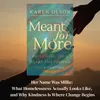
How To Navigate The Homeless Crisis With Humanity and Reason
In this episode of Good Is In The Details, Gwendolyn Dolske sits down with Karen Olson — founder and CEO emeritus of Family Promise, a national nonprofit organization dedicated to helping homeless and low-income families, whose organization has trained and mobilized over one million volunteers over the past thirty years to provide services to homeless families, and author of Meant for More: Following Your Heart and Finding Your Purpose, to have the conversation about homelessness that most people are too uncomfortable, too misinformed, or too distant to have. The myths Karen dismantles in this conversation: The homeless are lazy. The homeless are addicted and choose not to get help. Homelessness is an individual failure rather than a systemic one. The people on the street are strangers with no history and no future. Karen has spent thirty years learning the truth. Family Promise has helped more than a quarter of a million people annually, and in that work Karen has come to know her clients the way most of us know our neighbors: by name, by story, by the specific combination of circumstances and choices and bad luck and systemic failure that brought them to where they are. She calls them her friends. In a culture that speaks of homeless people as a mess to be cleaned up, as a problem to be managed, as a category rather than a collection of individuals with names and histories and futures, Karen Olson calls them her friends. And she means it. What we explore in this episode: Who is actually homeless in America, and why the answer will surprise you. Children. Veterans. Families. People who work full-time jobs that pay less than the cost of a roof over their head The drug and alcohol addiction myth, what Karen has actually observed about addiction and homelessness, why addiction makes it harder for people to accept help, and the conditions under which she has watched people move away from it when genuine opportunity is offered The policy dimension: how government decisions about mental health treatment, addiction services, affordable housing, and the minimum wage are not separate from the homelessness crisis, they are its architecture Why the cost of living has outpaced income for entire categories of employment, and what that means for who ends up on the street Why this book is not about guilt or moral obligation, it is a gentle but firm call to action, an invitation rather than an indictment, asking simply: what if the smallest acts of kindness aren't small at all? Why kindness toward yourself is where the work of kindness toward others begins, and how that insight connects to the deepest traditions of moral philosophy A deeper exploration of Kant's ethics and how they apply to homelessness, compassion, and our obligations to one another is coming to Patreon (exclusively for members of The Examined Life). This book is about human connection. It is about recognizing the invisible and understanding that sometimes the smallest acts of kindness aren't small at all. And it is about the most Socratic thing a person can do: stop, pay attention, learn someone's name, and let that moment change you. Guest: Karen Olson — founder and CEO emeritus of Family Promise, a national nonprofit organization dedicated to helping homeless and low-income families, whose organization has trained and mobilized over one million volunteers over the past thirty y
Podzilla Summary coming soon
Sign up to get notified when the full AI-powered summary is ready.
Free forever for up to 3 podcasts. No credit card required.
Listen to This Episode
More from Good Is In The Details

The Good in Getting There: Thinking Critically About Your Career/Skills and The Meaning of Your Life's Work

Encore: The Philosophy of Star Wars. Eastern Wisdom, Attachment, and the Search for Happiness
The Slow Death of Local News and Its Impact on Critical Thinking
The Sex Recession Is Real: A Sex Coach Explains How to Find Your Way Back to Intimacy
Get summaries like this every morning.
Free AI-powered recaps of Good Is In The Details and your other favorite podcasts, delivered to your inbox.
Free forever for up to 3 podcasts. No credit card required.