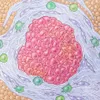
The tumor microenvironment (TME), composed of immune cells, fibroblasts, and endothelial cells, has emerged as critical to pathogenesis, prognosis and treatment for cancer (schematic Figure below). There’s no such thing as TMI (too much information) for TME! Yet there’s still no way of assessing it in the clinic by a blood test, and even by invasive biopsy the sampling bias for TME without broader geographic context can lead to important mistakes. That isn’t used for clinical decision making. The TME field is about to change.Recently, Professor Aaron Newman at Stanford and colleagues from many US leading centers published a landmark paper in Nature. It may ultimately be considered one of the most important leaps in cancer diagnostics in decades. Ground Truths is a reader-supported publication. To receive new posts and support my work, consider becoming a free or paid subscriber.This was a massive undertaking involving 10 million single-cell RNAseq in 10 types of cancer to define 9 TME types by spatial omics which they called “spatial ecotypes”. It was AI-enabled by machine learning (Spatial Ecotyper from biopsy samples) and extrapolating that to knowledge to deep learning AI (Liquid Ecotyper from blood samples). The whole project took several years.Here’s an infographic summary I made with the help of NotebookLM along with the Figures that follow.Some of the key points from our conversation:—TME is the soil in which the cancer cells live. It strongly influences whether the cancer cells will thrive or not, spread, respond to therapy, and determine the fate pf pre-cancerous lesion (as seen in recent important paper in pancreatic cancer evolution and colon cancer development).—Ecotypes, a term coined in 1922, to get at the local environment of tissue and cancer, was repurposed in this new project. Good metaphor: neighborhoods. And emphasis on location , location, location like real estate.—In the clinic today, the only window to TME is via a biopsy. But decisions for treatment are not based on TME, they are based on biomarkers like tumor mutation burden (TMB), PD-L1 levels , or volume of tumor DNA by liquid biopsy.—TME is dynamic and changes over time so a single snapshot won’t cut it. —Spatial 3D maps of TME from 10 million cells, 10 cancer types led to 9 spatial ecotypes (with the Spatial Ecotyper machine learning). Validation across 3D grids (such as Visium) and multiple cohorts. The cell location base within TME is striking. —These 9 neighborhoods are conserved and very different. SE4-immune system is asleep, hypoxic; SE 7/8 are “war zones” rich with immune cells, hot tumor; SE 5 exhibits intense immunosuppression, hostile vs immune system, portends poor survival, SE9 deep in core, driving angiogenesis (new blood vessels)—Now rich information from these 9 SEs needs to be extrapolated to a holistic blood test of TME. It turns out an extension of tapping into methylation as used by some liquid biopsy cell-free DNA tests works very well, providing cell identity from the DNA fragments leaked into the blood. To get to TME spatial biology in a tube of blood. Akin to wastewater surveillance form municipals for detection of infectious disease pathogen sequence variants and circulating levels. A triumph of AI analytics made this possible!—The Liquid Ecotyper was validated in 78 patients with malignant melanoma pre-treatment from Yale University. SE 7/8 benefited from immune checkpoint therapy; SE4 resisted treatment, shorter survival. Matched with tissue biopsy work. —Work beyond publication ongoing in many types of lung cancer, bladder cancer, mesothelioma, and response to other therapies like CAR T and bispecific antibodies. This is critical since we have slew of different cancer immunotherapies (see my pyramid Ground Truths review) and we’re not sure who, when, how to use them to drive optimal cancer outcomes in patients. May also help predict other types of therapy (not just immunotherapy) for cancer.—The blood test can performed serially which is a major advance compared with how we are currently “flying blind” and misled by imaging. —Started a company Liquid Cell Dx to make the TME blood test commercially available. May be available sooner in the academic centers in the current study.—The use of SEs may extend beyond cancer!A big thanks to Ground Truths subscri
Podzilla Summary coming soon
Sign up to get notified when the full AI-powered summary is ready.
Free forever for up to 3 podcasts. No credit card required.
Listen to This Episode
More from Ground Truths

Marios Georgakis: Why Did Two Major Clinical Trials for Heart Disease Fail?

Two Landmark Studies Challenge Dogma About our Brain Immune Cells and Aging

Deborah Cohen: The Wellness-Industrial Complex

Sarah Urbut: Predicting Your Health Arc
Get summaries like this every morning.
Free AI-powered recaps of Ground Truths and your other favorite podcasts, delivered to your inbox.
Free forever for up to 3 podcasts. No credit card required.