Free Daily Podcast Summary
Growth Mavericks: Daily Summaries Delivered
by Adam Callinan
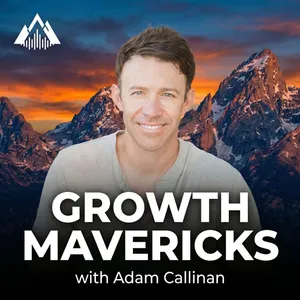
This podcast dives deep into the tactical moves that drive business success, as well as the mental and physical resilience required to sustain it. Hosted by Adam Callinan, a seasoned entrepreneur with multiple exits, an avid outdoorsman, and a family man with crystal-clear priorities, each episode unpacks real-world challenges, actionable insights, and the mental and physical disciplines that fuel long-term personal and professional growth. Whether you’re scaling a startup or refining your mindset, disrupting your default is how business and life strike a balance.
Latest Episodes
The most recent episodes — sign up to get AI-powered summaries of each one.
- 2 weeks ago1h 2m
He Was Found in a Box on a Battlefield
What does it take to go from being found as a baby on a battlefield in Iraq to performing in stadiums around the world with one of the biggest bands on the planet?In this episode of the Growth Mavericks Podcast, Adam Callinan sits down with Emmanuel Kelly—singer, entrepreneur, founder of Outlyer Entertainment, and one of the most relentlessly optimistic people you’ll ever meet.Emmanuel’s story begins in Iraq, where he was found as a baby in a box on a battlefield and raised in an orphanage surrounded by war. After being brought to Australia by humanitarian Moira Kelly, he underwent years of surgeries and learned to walk for the first time around age 11.But surviving those circumstances is only the beginning of the story.After appearing on X Factor Australia as a teenager, Emmanuel was thrown into the entertainment industry and experienced the darker side of sudden attention, fame, and what he calls “fake love.” Eventually, the momentum disappeared. He lost his money, lost his sense of direction, and found himself homeless in Los Angeles—something he managed to hide from almost everyone around him.At 5 a.m. one morning, sitting on a park bench in Santa Monica after sleeping outside, Emmanuel watched the sunrise and remembered the kid he had been in Iraq: hopeful, determined, and unwilling to quit. He decided to ask for help and start rebuilding.What happened next is almost unbelievable.Emmanuel put a goal on his wall: perform with a major artist and a legendary artist before the end of the year. Then he started making as many as 100 phone calls a day, asking everyone he knew—and plenty of people he didn’t—for a way in.Eventually, one connection led to another, a video found its way to Chris Martin, and Emmanuel got the call from Coldplay. What began with a single opportunity developed into a friendship and eventually led to Emmanuel opening 12 international stadium concerts for the band.Adam and Emmanuel dig into what that journey taught him about resilience, self-love, purpose, working hard versus working smart, surrounding yourself with the right people, and why the challenges we instinctively avoid may be exactly what unlocks what we’re capable of.They also discuss Emmanuel’s next mission: Outlyer Entertainment, the company he co-founded with Chris Martin to bring people with disabilities and other “outliers” into mainstream film, television, and live entertainment—not through charity, but through commercially successful content and zero-barrier casting and crewing.Whether you’re building a company, recovering from failure, questioning your own limits, or simply need a reset on what actually qualifies as a hard day, Emmanuel’s story is a powerful reminder of what can happen when you keep moving forward.Key TakeawaysEmmanuel’s extraordinary journey from an Iraqi battlefield to Australia.Growing up in an orphanage surrounded by war and uncertainty.How hope became a survival mechanism long before it became a philosophy.Learning to walk for the first time around age 11.Why determination and willpower are abilities Emmanuel believes everyone can develop.The unexpected downside of fame after X Factor Australia.How external validation and “fake love” can replace genuine self-worth.Losing everything and secretly becoming homeless in Los Angeles.The 5 a.m. moment on a Santa Monica park bench that triggered his rebuild.Why asking for help required Emmanuel to let go of pride and ego.Setting an audacious goal and making up to 100 calls a day to make it happen.The remarkable chain of connections that eventually reached Chris Martin.Going from homelessness to performing with Coldplay and eventually opening stadium shows around the world.Why resilience is often about staying in the game long enough for an outlier opportunity to appear.The difference between working hard and working smart.Why Emmanuel deliberately surrounds himself with people who represent qualities he wants to develop.Using challenge rather than comfort as a trigger for growth.Why rest and recovery have actually helped Emmanuel accomplish more.The mission behind Outlyer Entertainment and its zero-barrier approach to entertainment.Why Emmanuel sees commercial opportunity—not charity—as the path toward meaningful inclusion.ExploreEmmanuel KellyInstagram: https://www.instagram.com/emmanuelkellyofficial/0UTLYERhttps://0utlyer.com/Instagram: https://www.instagram.com/outlyerofficial/Pentanehttps://www.p
- 3 weeks ago53 min
Paralyzed at 15: Joshua Waldron on Resilience, Competitive Moats & Building What Others Won't
What if the harder path isn't something to avoid—but actually your greatest competitive advantage?In this episode of the Growth Mavericks Podcast, Adam Callinan sits down with entrepreneur and author Joshua Waldron to explore how deliberately choosing difficult problems can create resilience, competitive moats, and businesses that are exceptionally hard to replicate.At 15 years old, Joshua broke his spine in a severe car accident and was told he would never walk again. Four years later, after repeatedly choosing the comfort of his wheelchair over the painful process of walking, he removed the option entirely: he dismantled and destroyed his wheelchair and never sat in one again.That decision became a framework for the rest of his life.Joshua went on to co-found SilencerCo in 2008, entering a highly regulated and poorly understood market. Rather than avoiding those barriers, he leaned into them—educating consumers, helping build an industry advocacy organization, navigating regulatory complexity, and creating demand in a market where only a small percentage of potential customers even knew the product was legal. The company ultimately grew into an eight-figure business.Adam and Joshua also dive into patents, competitive moats, constraints, asymmetric upside, failure, founder identity, and why blindly following "best practices" can prevent companies from discovering the right practices for their specific business.The conversation culminates in Joshua's framework from his book Productive Difficulty: how to distinguish hard work that compounds from pointless suffering, deliberately choose problems your competitors won't solve, and build capabilities that continue paying dividends long after the initial work is complete.Whether you're building a company, navigating adversity, or trying to develop greater resilience, this episode is a masterclass in choosing the hard things that actually matter. Key Takeaways How breaking his spine at 15 completely changed Joshua's relationship with adversity. Why destroying his wheelchair became a defining moment in his life. How deliberately removing the easy option can force growth. Why perspective is one of the most powerful tools for navigating adversity. How Joshua went from photography to founding SilencerCo. Why difficult markets can create powerful barriers to competition. How consumer education helped expand an almost nonexistent market. Why growing the category and capturing market share can happen simultaneously. How constraints force founders to find better solutions. Why patents can sometimes become a crutch instead of a competitive advantage. The difference between "best practices" and the right practices for your business. Why the middle of the entrepreneurial journey is often more valuable than the outcome. How founder identity can become dangerous when it becomes inseparable from the company. Why founders should prioritize asymmetric opportunities: limited downside with compounding upside. How to separate productive difficulty from pointless suffering. Chapters00:00 From paralysis to productive difficulty01:03 Joshua's early life in Utah02:08 Breaking his spine at 1504:45 Perspective, adversity, and "it could always be worse"08:30 Learning to walk again10:00 Destroying his wheelchair and removing the easy option11:20 Perspective, constraints, and entrepreneurship13:45 Creating his own first job16:00 Building a photography business18:00 Finding a bigger entrepreneurial opportunity20:30 Building SilencerCo during the Great Recession23:00 Why difficult businesses create competitive moats25:30 Discovering the real customer problem26:30 Educating an entire market28:45 Changing regulations and expanding the industry30:50 Growing the pie and capturing market share32:00 Patents, IP, and when protection becomes a crutch34:15 Best practices vs. right practices37:15 Why asking "why?" is uncomfortable38:30 Using discomfort to reset perspective41:00 Why the journey matters more than the outcome42:10 Losing the company and rebuilding identity46:00 Productive Difficulty47:00 The seven questions for choosing wort
- Sep 3, 202643 min
20 Years of Solving the Wrong Problem to 170 Locations
What happens when you spend nearly 20 years trying to solve a problem—only to realize you've been solving the wrong one?In this episode of the Growth Mavericks Podcast, Adam Callinan sits down with Tim Vogel, founder and CEO of Scenthound, to unpack the two-decade entrepreneurial journey that eventually created an entirely new category in pet care and grew to 170 locations across the country.Tim started with mobile dog grooming, only to discover that the economics, staffing, routing, and scalability of the model were far more difficult than expected. He moved into brick-and-mortar grooming and built his own pipeline for training groomers, but the breakthrough came when he realized something much bigger: all dogs need routine hygiene and wellness care, but most dogs don't actually need traditional grooming.That insight became Scenthound, built around five core areas of routine dog care: Skin, Coat, Ears, Nails, and Teeth. Tim explains how they created demand for a category customers didn't know they needed, used education and membership to change customer behavior, and spent years proving the model before finally turning to franchising.The conversation dives into product-market fit, category creation, franchising, entrepreneurship, resilience, the value of peer communities, and why the "overnight successes" we hear about are almost always years—or decades—in the making.Whether you're trying to find product-market fit, create a new category, franchise a business, or simply stay in the game long enough for your breakthrough to arrive, Tim's story is a powerful lesson in persistence, iteration, and building around a mission bigger than money. Key Takeaways Why Scenthound was nearly 20 years in the making. How Tim's corporate career taught him systems, operations, and scalability. Why mobile dog grooming proved much harder to scale than expected. How solving the staffing problem led Tim to build his own groomer pipeline. The realization that all dogs need care, but most don't need haircuts. How Scenthound created an entirely new category around routine dog hygiene. Why category creation requires educating customers before selling them. How membership created consistency and changed customer behavior. Why Tim spent roughly 15 years validating the model before aggressively scaling it. How Scenthound grew to 170 locations through franchising. Why surrounding yourself with other entrepreneurs can dramatically increase resilience. How Tim's motivation evolved from money and freedom to contribution and purpose. Chapters00:00 The 20-year overnight success01:03 Tim's entrepreneurial journey02:20 Learning systems at Enterprise Rent-A-Car03:50 From corporate structure to startup freedom06:00 Watching Zipcar win through better positioning08:45 Designing a new life around entrepreneurship10:00 Why Tim entered the pet care industry13:40 The problem with mobile dog grooming17:45 Building a grooming school and talent pipeline20:00 The insight that changed everything22:00 Creating Scenthound and a new pet care category23:20 Teaching customers about a product they didn't know they needed25:45 Building a membership and health data feedback loop26:00 Why Tim chose franchising29:00 Opening the first franchise during COVID32:45 The challenges of building a franchise system34:50 Spending 15 years finding product-market fit35:25 How Tim built entrepreneurial resilience37:30 Moving from money to mission39:00 Why play can outperform the grind41:00 The fourth essential of dog care42:30 Scaling Scenthound across AmericaExploreScenthound https://www.scenthound.comTim Vogel https://www.linkedin.com/in/tim-vogel/Growth Mavericks Podcast https://www.growthmaverickspodcast.comPentane https://www.pentane.com
- Aug 28, 202659 min
The End of Easy E-Commerce.
Growth Mavericks Podcast — Andrew Youderian, Founder of eCommerceFuelPentane link -> pentane.com/growthWhat does it take to build a business that can run without you—and what will separate the winners from the losers as AI fundamentally changes e-commerce?In this episode of the Growth Mavericks Podcast, Adam Callinan sits down with Andrew Youderian, founder of eCommerceFuel, to discuss entrepreneurship, community, risk, AI, and the changing economics of building a durable e-commerce brand.Andrew shares his path from investment banking in Great Falls, Montana, to launching his first e-commerce businesses selling CB radios and trolling motors. Those early companies taught him how to operate online businesses from the ground up—and ultimately laid the foundation for eCommerceFuel, a community he has spent more than a decade building for seven- and eight-figure e-commerce founders.Andrew explains why he spent an entire year building an audience before launching eCommerceFuel, how Shopify helped drive much of his early readership, and why building a great community requires patience, trust, and a willingness to invest in relationships long before you ask anything from them.The conversation then turns to a different kind of entrepreneurial success: freedom.After years of planning, Andrew stepped largely away from eCommerceFuel for more than a year to travel with his wife and three children through Asia, Europe, Montana, and Arizona. At times, he worked only around 10% of his normal schedule. He shares the systems and hires required to make that possible, the critical hiring mistake he made immediately before leaving, and why trusted references and real-world character can matter more than hundreds of applications and dozens of hours of interviews.Adam and Andrew also dig into one of the biggest questions facing entrepreneurs today: what happens when AI can perform an increasing percentage of the work required to operate a company?Andrew explains why he believes AI could make great physical-product businesses more valuable, but argues that simply selling a physical product isn't enough of a moat. As execution becomes increasingly automated, product quality, storytelling, passion, trust, personal brands, and authentic human connection become even more important.The result is what Andrew calls the rise of the “small durable brand”—a company built not on cheap acquisition hacks or endless paid advertising, but on exceptional products, genuine customer relationships, founder authenticity, and years of compounding trust.Whether you're building an e-commerce brand, trying to remove yourself as the bottleneck in your company, experimenting with AI, or simply trying to create a business that gives you more freedom, this episode is a wide-ranging conversation about what entrepreneurship looks like when you optimize for durability instead of just growth.Key TakeawaysHow Andrew went from investment banking to entrepreneurship.Why having something you're desperate to escape can be a powerful entrepreneurial motivator.Starting e-commerce businesses selling CB radios and trolling motors without any previous expertise in either category.What building an e-commerce company looked like before Shopify and modern no-code tools.Why being capable of doing everything yourself can eventually become a liability.The importance of learning a function before having the discipline to hand it off.How Andrew spent a full year building an audience before launching eCommerceFuel.Why community building starts with relationships and social capital rather than scale.What Andrew would do differently if he were starting eCommerceFuel again today.How he structured eCommerceFuel so he could largely step away for more than a year.The hiring mistake Andrew made immediately before leaving on his family gap year.Why a rigorous interview process still can't tell you exactly how someone will perform once they're in the job.Using trusted networks and references to evaluate character, work ethic, and attention to detail.Why Andrew took his family around the world while his kids were still young.The value of experiential education and teaching children through travel.Why constraints can dramatically improve how entrepreneurs use their time.How Andrew thinks about maintaining physical and mental performance outside of work.Whether AI will make e-commerce businesses more or less valuable.Why physical products alone aren't necessarily protected from AI disruption.How AI is already changing creative, copywriting, marketing, and operations.Why passion may be becoming an entrepreneurial
- Aug 20, 202643 min
Building a $100M Business Means Eating Glass
Growth Mavericks Podcast — Russell Breuer, Founder of Spot & TangoWhat does it take to go from cooking dog food in a 700-square-foot apartment to building a nine-figure business—and survive the chaos that comes with growing that fast?In this re-release of the Growth Mavericks Podcast, Adam Callinan sits down with Russell Breuer, founder of Spot & Tango, to discuss the realities of building and scaling one of the fastest-growing direct-to-consumer pet health companies in the country.Russell shares how Spot & Tango began as a side hustle while he was still working full-time in private equity. He and his wife cooked and packaged the first orders themselves, found their first customer literally next door, and eventually moved production into a commercial kitchen as demand grew. Behind the early traction, however, were 4 a.m. mornings, nights and weekends, losing money, and the relentless persistence Russell describes as “eating glass every day.”The conversation then turns to the moment everything changed. After launching UnKibble in 2020, an order Russell expected to last three or four months sold out in just four days. Spot & Tango went from roughly $1 million to $40 million in a matter of months, forcing the team to solve an entirely new problem: how do you operationalize explosive growth without breaking the company?Russell explains why the company eventually made the contrarian decision to bring manufacturing in-house, investing in its own factory and roughly $30 million of capital equipment. The move was enormously difficult, but it ultimately transformed the economics of the business, expanded contribution margin by more than 30 points, and helped propel Spot & Tango into nine-figure revenue.Beyond the numbers, Russell and Adam dig into the emotional reality of entrepreneurship: operating in constant ambiguity, dealing with failure nobody sees, knowing when to take risk, protecting your physical and mental performance, and building a community of founders you can turn to when you don’t have the answer.Whether you’re trying to find product-market fit, navigating hypergrowth, improving the economics of an existing company, or simply figuring out how to keep going when entrepreneurship feels like eating glass, this episode delivers practical lessons on risk, resilience, operations, profitability, and building through uncertainty.Key TakeawaysHow Russell and his wife started Spot & Tango from a 700-square-foot NYC apartment.Why Spot & Tango’s first customer was literally the neighbor next door.What the “eating glass” phase of entrepreneurship actually looks like.Going from side hustle to a $1 million revenue run rate within a year of Russell going full-time.How customer feedback led to the creation of UnKibble.What happened when three to four months of inventory sold out in four days.How Spot & Tango went from roughly $1 million to $40 million in a matter of months.Why hypergrowth creates enormous operational problems behind the exciting headlines.The decision to stop relying on co-manufacturers and build a dedicated factory.How vertical integration helped unlock more than 30 points of contribution margin.Why contribution margin, CAC, LTV, and payback periods are critical to sustainable DTC growth.The danger of pursuing revenue without understanding whether the business actually makes money.Why founders need to become comfortable operating in ambiguity.How fitness, sleep, family, and time outside help Russell handle the pressure of entrepreneurship.Why a trusted community of founders can dramatically accelerate learning.Chapters00:00 Introduction02:01 Russell’s background: Cleveland, London, private equity, and New York04:19 Where the idea for Spot & Tango came from06:50 Building the business in a 700-square-foot apartment07:17 Finding the first customer next door08:21 Why entrepreneurship is like “eating glass”09:30 The emotional reality of operating in ambiguity12:12 Why extraordinary outcomes require risk13:11 Moving production into a commercial kitchen16:00 The “dark times” of building a side hustle16:55 Quitting private equity and going all-in18:19 Reaching a $1 million revenue run rate19:25 The problem that led to UnKibble20:47 Selling out in four days21:05 Going from $1M to $40M in months21:25 The operational chaos of hypergrowth22:09 Deciding to build a factory23:57 Manufacturing as a competitive moat25:05 Letting customer feedback drive product development27:15 Raising capital to support growth28:15 Unlocking 30+ points of contribution margin29:41 Gross margin vs. contribution margin30:45 Measuring marketing through CAC, LTV, and payback33:10 Retention an
- Jul 30, 202646 min
The Plane Crash That Changed Everything
What does it take to build a business that no longer depends on you—and overcome adversity that would stop almost anyone else?In this episode of the Growth Mavericks Podcast, Adam Callinan sits down with Cal Arnold, founder of BTI Log Home Care, to discuss building systems, developing leaders, and transforming an owner-operated company into a true business asset.Cal shares how he purchased a small soda blasting business generating just $60,000 in annual revenue and steadily grew it into one of the country's leading log home restoration companies. Along the way, he explains the costly lessons of stepping away too soon, returning to rebuild the company, and realizing that documenting processes and hiring the right people—not simply working harder—was the key to long-term success.The conversation then turns to one of the most remarkable personal stories ever shared on Growth Mavericks. After surviving a catastrophic plane crash, enduring years of surgeries, and ultimately choosing to amputate his left leg below the knee, Cal refused to let adversity define his future. Instead, he used it as fuel to become stronger physically, mentally, and professionally than ever before.Whether you're building a company, leading a team, or learning how to navigate life's biggest setbacks, this episode delivers practical lessons on leadership, resilience, discipline, and creating a business that gives you freedom instead of taking it away. Key Takeaways How Cal turned a $60,000 soda blasting business into BTI Log Home Care. Why founders often become the biggest bottleneck in their companies. Building repeatable systems that allow a business to scale. The importance of hiring the right people—not just filling positions. Why company values should guide difficult leadership decisions. The difference between being busy and being productive. How creating space to think improves decision-making. Lessons learned from surviving a devastating plane crash. Why discomfort is essential for personal and professional growth. Building resilience through discipline rather than motivation. Chapters00:00 Introduction01:50 Growing up in northern Minnesota03:20 Buying a $60,000 soda blasting business04:30 The breakthrough that launched BTI07:15 When the business started running Cal09:00 Building systems instead of dependencies12:15 Advice for founders trapped in their businesses15:10 Turning a company into an asset18:50 Busy vs. productive22:30 Why discomfort creates growth25:30 The plane crash that changed everything28:00 Choosing amputation and reclaiming life30:15 Becoming stronger than before the accident35:10 Stop putting successful people on pedestals38:00 Why founders should share failures42:00 Better decisions through better thinking43:15 Where to find CalExploreBTI Log Home Care https://btiloghomecare.comCal Arnold https://www.linkedin.com/in/calarnold/Growth Mavericks Podcast https://www.growthmaverickspodcast.comPentane https://www.pentane.com/growth
- Jul 23, 202644 min
The Community-First Growth Strategy: How Ryan Dunlop Built Love Sweat Fitness
Can you build a successful consumer brand without raising venture capital, quitting your job on day one, or chasing hypergrowth?In this episode of the Growth Mavericks Podcast, Adam Callinan sits down with Ryan Dunlop, co-founder of Love Sweat Fitness, to explore how he and his wife Katie spent years building a loyal fitness community before ever launching products.Ryan shares why keeping their full-time careers actually became a competitive advantage, how community became their greatest product-market fit, and why they intentionally avoided retail despite early opportunities from major retailers.The conversation dives into bootstrapping, profitable growth, customer obsession, paid media, ecommerce strategy, and why founders should build businesses around the life they want—not someone else's definition of success.Whether you're launching your first business, scaling an ecommerce brand, or wondering if venture capital is really the only path, this episode offers practical lessons from founders who chose patience over pressure and built a durable business that continues to grow. Key Takeaways Why you don't have to quit your job to become an entrepreneur. Building a community before building products. How Love Sweat Fitness turned trust into product-market fit. Why saying no to retail accelerated long-term growth. The power of bootstrapping versus raising venture capital. Creating profitable paid media through authentic storytelling. Why founders should focus on customer problems—not products. Lessons from building alongside a spouse. The importance of patience and long-term thinking. Designing a business around your desired lifestyle—not hype. Chapters00:00 Why entrepreneurship doesn't require quitting your job01:40 Ryan's entrepreneurial upbringing04:30 Lessons from PepsiCo and corporate America08:30 Building Love Sweat Fitness13:40 Why community creates product-market fit18:20 Finally cracking paid media21:20 Managing criticism while building a public brand28:00 Six years before going full-time32:00 Bootstrapping vs. venture capital39:00 Community-driven product development41:30 Entrepreneurship, fitness and mindset43:20 Final thoughtsExplore: Love Sweat Fitness https://lovesweatfitness.comRyan Dunlop https://www.instagram.com/ryandunlop/Growth Mavericks Podcast https://www.growthmaverickspodcast.comPentane https://www.pentane.com
- Jul 16, 202640 min
Building Through Chaos: Sabrina Gardner on Entrepreneurship, Cancer & Creating Salt by Sabrina
What happens when one of the most chaotic moments in modern history inspires a business that transforms homes across America?In this episode of the Growth Mavericks Podcast, Adam Callinan sits down with Sabrina Gardner, founder of Salt by Sabrina, to discuss how organizing her own home during the uncertainty of COVID sparked the idea for a custom home organization company that is rapidly disrupting the storage industry.Sabrina shares the journey from launching a premium custom product during global supply chain chaos to moving manufacturing from China to the United States before tariffs reshaped the industry. She explains how relentless problem solving, operational discipline, and customer obsession have helped Salt by Sabrina achieve rapid growth while remaining profitable.The conversation takes a deeply personal turn as Sabrina discusses navigating two simultaneous cancer diagnoses while running a growing company and raising a family. She explains how hardship reshaped her priorities, strengthened her leadership, and ultimately made both her business and personal life stronger.If you're building a business, leading a team, managing manufacturing, or simply trying to navigate life's unexpected challenges, this episode is filled with practical lessons on resilience, entrepreneurship, leadership, and creating opportunity through adversity. Key Takeaways How COVID inspired the creation of Salt by Sabrina. Turning a personal frustration into a scalable business. Building a premium custom manufacturing company. Why moving manufacturing from China became one of the company's biggest advantages. Growing a profitable ecommerce business without outside investment. Building strong B2B partnerships with builders and designers. Lessons from launching and failing on Amazon. Why entrepreneurs must believe every problem has a solution. Building a business while undergoing cancer treatment. How hardship creates perspective, resilience, and stronger leadership. Chapters00:00 Building a business during COVID01:45 The idea behind Salt by Sabrina06:20 Manufacturing custom products10:45 Launching the company17:00 Growing through builders and designers20:30 Scaling production23:45 Entrepreneurship and family26:10 Running a business through cancer31:00 Leadership, perspective and resilience37:00 Building a people-first company39:30 Final thoughtsExploreSalt by Sabrina https://saltbysabrina.comGrowth Mavericks Podcast https://www.growthmaverickspodcast.comPentane https://www.pentane.com
About Growth Mavericks
This podcast dives deep into the tactical moves that drive business success, as well as the mental and physical resilience required to sustain it. Hosted by Adam Callinan, a seasoned entrepreneur with multiple exits, an avid outdoorsman, and a family man with crystal-clear priorities, each episode unpacks real-world challenges, actionable insights, and the mental and physical disciplines that fuel long-term personal and professional growth. Whether you’re scaling a startup or refining your mindset, disrupting your default is how business and life strike a balance.
Customized Recaps
AI-powered recaps with compact key takeaways, quotes, and insights.
Straight to Your Inbox
Get key takeaways from Growth Mavericks in a 5-minute read.
Save Hours Every Week
Stay current on your favorite podcasts without falling behind.
Frequently Asked Questions
What is Podzilla's Growth Mavericks daily summary?
It's a free AI-powered email that summarizes new episodes of Growth Mavericks as soon as they're published. You get the key takeaways, notable quotes, and links & mentions — all in a quick read.
How does the Growth Mavericks podcast summary work?
When a new episode drops, our AI transcribes and analyzes it, then generates a personalized summary tailored to your interests and profession. It's delivered to your inbox every morning.
Is this an official Growth Mavericks product?
No. Podzilla is an independent service that summarizes publicly available podcast content. We're not affiliated with or endorsed by Adam Callinan.
Can I get summaries of other podcasts too?
Absolutely! The free plan covers up to 3 podcasts. Upgrade to Pro for 15, or Premium for 50. Browse our full catalog at /podcasts.
How often does Growth Mavericks release new episodes?
Growth Mavericks publishes weekly. Our AI generates a summary within hours of each new episode.
What topics does Growth Mavericks cover?
Growth Mavericks covers topics including Business, Entrepreneurship. Our AI identifies the specific themes in each episode and highlights what matters most to you.
Start getting Growth Mavericks summaries tomorrow morning.
Free forever for up to 3 podcasts. No credit card required.
Free forever for up to 3 podcasts. No credit card required.