Free Daily Podcast Summary
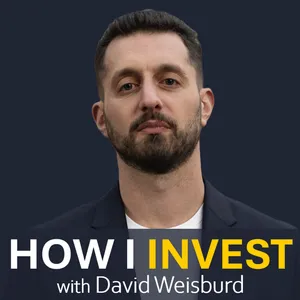
How I Invest with David Weisburd: Daily Summaries Delivered
by David Weisburd
How I Invest with David Weisburd is a podcast that interviews the world's leading institutional investors. Previous guests include The Ford Foundation, Northwestern University Endowment, CalPERS, Stepstone, and other top limited partners.
Latest Episodes
The most recent episodes — sign up to get AI-powered summaries of each one.
- Yesterday57 min
E439: Ethan Thornton: The 22-Year-Old Building a $3.7 Billion Defense Company
What if the future of warfare is determined by who can innovate faster, not who can spend more? Ethan Thornton is the Founder and CEO of Mach Industries, a defense technology company he started after dropping out of MIT. We break down how Mach went from experimenting with roughly 20 technologies to becoming a multibillion-dollar company, why Ethan believes asymmetric technology is reshaping modern warfare, and how Pentagon procurement is evolving. We also discuss China and Taiwan, lessons from Ukraine, autonomous warfare, recruiting exceptional talent, taking risk, and why Ethan believes great founders should empower their teams rather than make every decision themselves.
- 3 days ago1h 16m
E438: Will Robbins on Elon Musk, AI & the Future of Silicon Valley
What if the biggest edge in venture capital is identifying an exceptional founder before everyone else does? Will Robbins is a technology-focused venture investor and founder of Robbins Capital, where he backs companies starting at formation. Previously, Will joined Contrary as its first employee and helped grow the firm to more than $250 million in AUM. In this episode, Will explains why traditional VC brands may matter less in an AI-driven world, how he identifies exceptional founders before they have traction, why the best startups often pivot, and why reputation with founders may be the most important asset a venture investor can build.
- 6 days ago41 min
E437: Doug Beyer on Raising Capital, LP Psychology & GP Stakes
What if the biggest opportunity in private markets isn’t backing companies—but backing the next generation of investment firms? In this episode, I sit down with Douglas Beyer, managing partner and founder of Roaring Brook Holdings, to discuss why emerging managers remain one of the most undercapitalized opportunities in alternative assets. Douglas explains how anchor capital changes fundraising dynamics, why LP relationships determine whether firms survive, and how the best emerging managers build trust through transparency and execution. We also explore GP seeding, organizational durability, and why fundraising momentum matters more than most managers realize.
- 1 weeks ago1h 7m
E436: Nnamdi Okike on Billionaires, Founder Psychology & the Venture Capital Bubble
Can venture capital really be turned from instinct into science? Nnamdi Okike is Co-Founder and Managing Partner of 645 Ventures, where he leads Seed and Series A investments in software and software-enabled companies. We discuss why Nnamdi believes venture investing is driven by the totality of an investor’s experiences rather than pure instinct, how 645 quantifies founder qualities, and why missionary and “non-central casting” founders can become exceptional investments. We also explore why startups need the right market inflections, how stablecoins and agentic commerce are reshaping fintech, what Nnamdi has learned across five fund vintages, and why raising too much capital at Seed can actually hurt a company.
- 1 weeks ago43 min
E435: Why Most Companies Aren’t Ready for AI
Which competitive moats will actually survive the AI era? SC Moatti is Managing Partner at Mighty Capital and Board Chair at Products That Count. We break down what Mighty Capital learned from mapping 550 companies by defensibility, why traditional SaaS advantages like switching costs and data moats may be weakening, and why network effects and counter-positioning are emerging as powerful AI-era moats. We also discuss why SC disagrees with the conventional power-law approach to venture, how AI is transforming M&A and corporate innovation, the Product Alpha Effect behind Mighty Capital’s investment strategy, and what venture firms must change to survive the AI transition.
- 1 weeks ago1h 0m
E434: Warren Gibbon on How AI is Changing the Private Markets
Are private markets still positioned to outperform public markets? Warren Gibbon is a Multi-Family Office Chief Investment Officer with deep experience across asset allocation, equity research, and portfolio management. We discuss why investors may need to re-underwrite their assumptions about private markets, how higher rates and growing competition have changed private equity, and why public-market earnings growth may be underappreciated. Warren also explains why he is more constructive on venture, what he looks for in emerging managers, the risks created by passive investing, and how he would deploy $100 million of fresh capital today.
- 2 weeks ago36 min
E433: AlphaSense’s Chris Ackerson on AI, the Future of Finance & Finding Alpha
What happens to financial analysts when AI can do the work they used to spend all night doing? Chris Ackerson is SVP of Product at AlphaSense, where he focuses on applying information retrieval, natural language processing, deep learning, and recommendation systems to search and discovery. We discuss how AI is changing the analyst role, why vertical AI can outperform general-purpose models in financial research, and why proprietary data may become one of the most important competitive advantages in AI. Chris also explains why LLMs hallucinate, how AlphaSense is using AI to conduct expert interviews, where humans still create investment alpha, and why the future of financial research may look less like software and more like an AI teammate that never sleeps.
- 2 weeks ago47 min
E432: $24 Billion Investor on Private Credit, the Psychology of Winning & Fear of Failure
Is private credit really in a bubble, or are investors looking for risk in the wrong place? Theodore “Ted” Koenig is Chairman and CEO of Monroe Capital, a $24 billion private credit firm. We break down how private credit grew from a niche alternative to a $2 trillion asset class, why financing shifted from banks to private credit after the financial crisis, and the two ways Ted believes lenders can generate alpha. We also discuss the flood of retail capital into private credit, why Monroe focuses on the lower middle market, the dangers of prioritizing AUM growth over investor returns, and the personal drive and tradeoffs behind building Monroe.
Get How I Invest with David Weisburd summaries in your inbox
Free AI-powered daily recaps. Key takeaways, quotes, and mentions — in a 5-minute read.
Get Free Summaries →Free forever for up to 3 podcasts. No credit card required.
You Might Also Like
Listeners also like.

The Investor's Podcast (We Study Billionaires) - The Investor’s Podcast Network
Analyzes the investment strategies of billionaire investors and explores lessons from legendary financiers on wealth, wisdom, and life.
Invest Like the Best with Patrick O'Shaughnessy
Interviews with top investors and business leaders exploring their strategies, decisions, and insights on investing and leadership.
InvestTalk
Daily stock market and investment advice covering portfolios, retirement, inflation, and economic trends through listener-driven analysis.

All-In with Chamath, Jason, Sacks & Friedberg
Four tech investors discuss technology, markets, politics, and poker with candid, in-depth analysis.

We The Builders
Interviews with innovators and founders pushing boundaries in technology, business, and media.

David Senra
David Senra hosts conversations with the greatest living founders.
The David Guttman Podcast
Conversations with top leaders on building wealth, integrity, and a meaningful life through real-world lessons and authentic mentorship.

The Money Mondays
Business discussions on investments, side hustles, and entrepreneurship with experts, athletes, and influencers in personal settings.

Afford Anything | Get Smarter With Money
A weekly discussion on financial freedom covering psychology, income, investing, real estate, and entrepreneurship with experts.

BiggerPockets Business Podcast
Real entrepreneurs share practical advice on starting, growing, and selling businesses, covering hiring, marketing, and raising capital.

The Real Eisman Playbook
A legendary investor analyzes markets, economic trends, and financial crises with candid, no-nonsense commentary.

Founder's Story
Raw conversations with entrepreneurs about the struggles, doubts, and pivotal moments behind their ventures.
About How I Invest with David Weisburd
How I Invest with David Weisburd is a podcast that interviews the world's leading institutional investors. Previous guests include The Ford Foundation, Northwestern University Endowment, CalPERS, Stepstone, and other top limited partners.
Customized Recaps
AI-powered recaps with compact key takeaways, quotes, and insights.
Straight to Your Inbox
Get key takeaways from How I Invest with David Weisburd in a 5-minute read.
Save Hours Every Week
Stay current on your favorite podcasts without falling behind.
Frequently Asked Questions
What is Podzilla's How I Invest with David Weisburd daily summary?
It's a free AI-powered email that summarizes new episodes of How I Invest with David Weisburd as soon as they're published. You get the key takeaways, notable quotes, and links & mentions — all in a quick read.
How does the How I Invest with David Weisburd podcast summary work?
When a new episode drops, our AI transcribes and analyzes it, then generates a personalized summary tailored to your interests and profession. It's delivered to your inbox every morning.
Is this an official How I Invest with David Weisburd product?
No. Podzilla is an independent service that summarizes publicly available podcast content. We're not affiliated with or endorsed by David Weisburd.
Can I get summaries of other podcasts too?
Absolutely! The free plan covers up to 3 podcasts. Upgrade to Pro for 15, or Premium for 50. Browse our full catalog at /podcasts.
How often does How I Invest with David Weisburd release new episodes?
How I Invest with David Weisburd publishes every few days. Our AI generates a summary within hours of each new episode.
What topics does How I Invest with David Weisburd cover?
How I Invest with David Weisburd covers topics including Business, Investing. Our AI identifies the specific themes in each episode and highlights what matters most to you.
Start getting How I Invest with David Weisburd summaries tomorrow morning.
Free forever for up to 3 podcasts. No credit card required.
Free forever for up to 3 podcasts. No credit card required.