Free Daily Podcast Summary
I Did My Own Research: Daily Summaries Delivered
by Franziska Haydanek
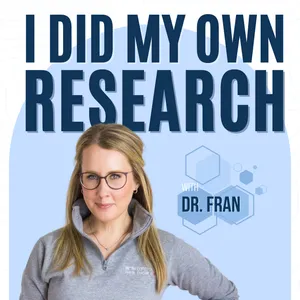
I Did My Own Research is a podcast hosted by OB-GYN and medical educator Dr. Fran, digging into what happens when medical misinformation goes viral—and what it takes to fight it. Each episode features conversations with doctors, healthcare professionals, and scientists who create content online, breaking down the myths they see every day, how they got pulled into content creation, and why having evidence-based voices on the internet has never mattered more.From trending health claims to behind-the-scenes creator stories, this podcast is about reclaiming “research,” one expert conversation at a time.
Latest Episodes
The most recent episodes — sign up to get AI-powered summaries of each one.
- 4 days ago28 min
with @DrElisabethPotter: When Doctors Have to Fight the Healthcare System
What happens when being a good doctor means pushing back against the healthcare system?Dr. Fran sits down with plastic and reconstructive breast surgeon Dr. Elisabeth Potter to talk about breast reconstruction, healthcare advocacy, and what happens when insurance companies start getting between doctors and their patients. Dr. Potter shares the story of being pulled out of the operating room by United Healthcare during a breast reconstruction case—and how that experience pushed her to become an even more vocal advocate for patients and physicians.They also dig into the bigger problems facing American healthcare: insurance, access, transparency, pricing, monopolies, physician burnout, and the fear many healthcare professionals have of speaking publicly about what they see every day. Dr. Potter explains why she believes physicians need to stop being afraid to challenge a system that isn't always acting in the best interest of patients—and why she isn't interested in simply opting out of insurance, but in helping fix the system itself.Dr. Potter's social media: @DrElisabethPotterDr. Fran's social media: @PagingDrFran
- 1 weeks ago31 min
with @DrMakkani: Medicine Has Nuance. The Internet Hates That.
In this episode of I Did My Own Research, Dr. Fran sits down with internal medicine physician and medical creator Dr. Sarwat Makkani to talk about what happens when nuanced medicine meets the internet.Dr. Makkani shares her journey from immigrant, young mother, and medical student to independent private practice owner—and why she ultimately chose to build a practice centered around metabolic health, obesity, and long-term patient relationships. She also explains how her own experience with insulin resistance and weight management shaped the way she approaches both patient care and medical education online.The conversation dives into why so much medical misinformation isn’t necessarily completely false—it’s often incomplete information presented with far too much certainty and without the context or nuance that medicine requires. They discuss insulin resistance, obesity, GLP-1 medications, PCOS, and the judgment surrounding weight-loss treatment, as well as the role physicians can play in making complex medical information more understandable.Plus, they talk private practice, aesthetic medicine, vaccines, physician creators, and why putting yourself online as a doctor can be both incredibly vulnerable and incredibly valuable.Dr. Makkani's social media: @DrMakkaniDr. Fran's social media: @PagingDrFran
- 2 weeks ago36 min
with @DrPelvicPainDO: Is the Internet Making Endometriosis Care Better—or Worse?
What happens when patients become experts in their own endometriosis—and the internet becomes their second opinion?Dr. Fran sits down with gynecologic surgeon Dr. Jill Ingenito (@DrPelvicPainDO) to unpack the complicated world of endometriosis, chronic pelvic pain, and the information patients find online. They discuss why specialized training in complex benign gynecology matters, where general OB-GYN care has limitations, and how patients can tell when it’s time to seek a surgeon with more specialized expertise.They also dig into the good—and messy—parts of online endometriosis communities: doctor bashing, patient advocacy, Facebook groups, echo chambers, and the ways patients are pushing medicine to address gaps that have existed for years.Dr. Ingenito shares practical advice for vetting an endometriosis surgeon, including questions about surgical volume, complications, what happens when no endometriosis is found, and—perhaps most importantly—what the plan is after surgery.Plus, they tackle the online villainization of birth control, emerging approaches to diagnosing endometriosis without surgery, GLP-1 medications and endometriosis, nerve-sparing surgery, and why physicians acknowledging their own limitations can ultimately lead to better patient care.Dr. Ingenito's social media: @DrPelvicPainDODr. Fran's social media: @PagingDrFran
- 3 weeks ago25 min
with @DrTerrySimpson: Willpower Isn’t a Treatment Plan for Obesity
In this episode of I Did My Own Research, Dr. Fran sits down with retired general surgeon and medical mythbuster Dr. Terry Simpson to talk about his journey from bariatric surgery and culinary medicine to becoming a prominent voice online fighting medical misinformation.Dr. Simpson shares his personal experience with obesity, GLP-1 medications, and the “food noise” he never realized he had—and why his experience changed the way he thinks about weight, willpower, and long-term treatment. Together, they tackle common myths about obesity and GLP-1s, including the idea that people simply need to “eat better” or exercise more to lose weight.They also discuss the challenges of being physicians on social media, how to push back against misinformation without becoming part of the problem, why providing the actual evidence matters, and the growing role doctors can play in a world where so many people get their health information online.Dr. Simpson's social media: @DrTerrySimpsonMDDr. Fran's social media: @PagingDrFran
- Sep 8, 202637 min
with @DrJuliaKovalenko: The Problem With Parenting Advice Online
What does a pediatric psychologist actually do—and how can psychology help children and families navigate chronic illness, sleep, parenting, and the mind-body connection?In this episode of I Did My Own Research, Dr. Fran sits down with pediatric psychologist Dr. Julia Kovalenko to break down what psychologists really do, how they work alongside medical teams, and why the brain and body can’t always be separated when it comes to health.They dive into parenting advice online, including the fear-mongering and sweeping statements that can leave parents feeling like they’re constantly getting it wrong. Dr. Kovalenko explains why individualized, evidence-based guidance matters, and they discuss practical approaches to everything from screen time and sleep to communicating with children who have very different personalities.They also talk about the challenges of being medical professionals and content creators—from sharing evidence-based information and navigating professional ethics to dealing with online criticism and misinformation.If you've ever felt overwhelmed by parenting advice online or wondered what psychologists actually do, this episode is for you.Dr. Kovalenko's social media: @Dr.JuliaKovalenkoDr. Fran's social media: @PagingDrFran
- Aug 31, 202634 min
with @DrMaryMcDaniel: But DOES Sunscreen Cause Cancer?
In this episode of I Did My Own Research, Dr. Fran sits down with board-certified dermatologist Dr. Mary McDaniel to unpack some of the biggest skincare and dermatology myths circulating online. They discuss sunscreen safety, beef tallow, Accutane, acne “root causes,” questionable gut and allergy testing, hair-loss supplements, and the risks of high-dose biotin. They also talk about medical misinformation, the responsibility physicians have on social media, and why being honest about what medicine doesn’t know is just as important as sharing what we do.Dr. McDaniel's social media: @DrMaryMcDaniel Dr. Fran's social media: @PagingDrFran
- Aug 24, 202631 min
with @DrJeremyBryner: Who Wins the Bariatric Surgery Vs GLP-1s Fight?
In this episode of I Did My Own Research, Dr. Fran sits down with Dr. Jeremy Bryner, a bariatric surgeon and board-certified obesity medicine physician, to discuss the many options available for treating obesity—and why there is no one-size-fits-all approach.Dr. Bryner explains how modern obesity care has evolved beyond simply “diet and exercise,” and discusses the role of lifestyle changes, GLP-1 medications, endoscopic procedures, and bariatric surgery. He addresses the stigma surrounding bariatric surgery, why many people still view it as an extreme option, and how today’s procedures and long-term follow-up have changed dramatically from previous decades.The conversation also explores how insurance coverage can dictate treatment decisions, the challenges patients face accessing GLP-1 medications, and the importance of true informed consent when discussing obesity treatment options.Dr. Bryner also tackles the misinformation patients encounter online, including vitamin patches, supplements, peptides, and wellness products that may not have the evidence behind them. He shares why comprehensive, lifelong obesity care matters and how healthcare professionals and patients can work together to make informed decisions.Dr. Bryner's social media: @DrJeremyBrynerDr. Fran's social media: @PagingDrFran
- Aug 17, 202641 min
with @DrSaraMargolin: How Inevitable is Dementia?
Dr. Fran sits down with Dr. Sarah Margolin — cognitive scientist, associate professor, and creator behind @DrSarahMargolin — to talk about what the science of aging actually says, and why so much of what circulates online gets it wrong.Dr. Margolin studies cognitive aging and reading comprehension, and she's built a following by taking on viral myths about getting older — from the false idea that "aging is a disease" to the assumption that memory lapses always signal dementia. In this conversation, she breaks down:The real difference between normal age-related forgetfulness and dementia, including what a basic cognitive screening (like the MMSE) actually tests forWhy the biopsychosocial model — nutrition, exercise, mental engagement, and social connection — matters more than any single supplement, peptide, or "hack"What the Mediterranean diet really means How mindset around aging and menopause can measurably affect symptoms, and why cross-cultural research shows attitude mattersWhy older adults are more tech-capable than we give them credit forWhat it's like to design and run a research study from the ground up, and why "doing your own research" is a lot more rigorous than reading a headlineThe two also get into the broader mission behind Dr. Margolin's In Plain Science series — an effort to demystify how research funding, peer review, and scientific ethics actually work, so people can better evaluate the claims they see online.Dr. Margolin's social media: @DrSaraMargolinDr. Fran's social media: @PagingDrFran
Get I Did My Own Research summaries in your inbox
Free AI-powered daily recaps. Key takeaways, quotes, and mentions — in a 5-minute read.
Get Free Summaries →Free forever for up to 3 podcasts. No credit card required.
You Might Also Like
Listeners also like.

Health vs Hype with the American Medical Association
A medical expert debunks viral health trends and misinformation with science-backed insights from physicians.
Paul Saladino MD podcast
A physician explores the root causes of chronic disease and optimal health through science and personal experimentation.

SHE MD
Obstetrician Dr. Thais Aliabadi and women’s advocate Mary Alice Haney discuss women’s health issues with experts and celebrity guests.

Red Pill Your Healthcast
Two healthcare providers discuss overlooked health issues and empower listeners to make informed decisions for their families.

Unbiased Science
Dr. Jess Steier and guests analyze viral health claims using scientific evidence and explain key findings for everyday conversations.
Treated with Dr. Sara Szal
Dr. Sara Szal explores holistic health solutions through conversations with experts and patients seeking mind, body, and soul healing.

Health Discovered
Doctors explore surprising stories to uncover insights about health and well-being.
The Dr. Hyman Show
Explores root causes of chronic disease and promotes functional medicine, nutrition, and preventive health through expert discussions.

Own Your Health
Katie Brindle discusses health, ageing, and wellness topics with expert insights and personal anecdotes to help listeners improve their well-being.

Extend Podcast with Darshan Shah, MD
Explores science-backed strategies and expert insights to extend healthspan and optimize longevity through actionable health protocols.

This Podcast Will Kill You
Two epidemiologists explore the science, history, and impact of diseases and medical mysteries, one deadly topic at a time.

Our Skin: A Personal Discovery Podcast
People share personal experiences with skin conditions like psoriasis and HS, discussing diagnosis, treatment, and living fully despite challenges.
About I Did My Own Research
I Did My Own Research is a podcast hosted by OB-GYN and medical educator Dr. Fran, digging into what happens when medical misinformation goes viral—and what it takes to fight it. Each episode features conversations with doctors, healthcare professionals, and scientists who create content online, breaking down the myths they see every day, how they got pulled into content creation, and why having evidence-based voices on the internet has never mattered more.From trending health claims to behind-the-scenes creator stories, this podcast is about reclaiming “research,” one expert conversation at a time.
Customized Recaps
AI-powered recaps with compact key takeaways, quotes, and insights.
Straight to Your Inbox
Get key takeaways from I Did My Own Research in a 5-minute read.
Save Hours Every Week
Stay current on your favorite podcasts without falling behind.
Frequently Asked Questions
What is Podzilla's I Did My Own Research daily summary?
It's a free AI-powered email that summarizes new episodes of I Did My Own Research as soon as they're published. You get the key takeaways, notable quotes, and links & mentions — all in a quick read.
How does the I Did My Own Research podcast summary work?
When a new episode drops, our AI transcribes and analyzes it, then generates a personalized summary tailored to your interests and profession. It's delivered to your inbox every morning.
Is this an official I Did My Own Research product?
No. Podzilla is an independent service that summarizes publicly available podcast content. We're not affiliated with or endorsed by Franziska Haydanek.
Can I get summaries of other podcasts too?
Absolutely! The free plan covers up to 3 podcasts. Upgrade to Pro for 15, or Premium for 50. Browse our full catalog at /podcasts.
How often does I Did My Own Research release new episodes?
I Did My Own Research publishes weekly. Our AI generates a summary within hours of each new episode.
What topics does I Did My Own Research cover?
I Did My Own Research covers topics including Science, Medicine, Fitness, Health & Fitness. Our AI identifies the specific themes in each episode and highlights what matters most to you.
Start getting I Did My Own Research summaries tomorrow morning.
Free forever for up to 3 podcasts. No credit card required.
Free forever for up to 3 podcasts. No credit card required.