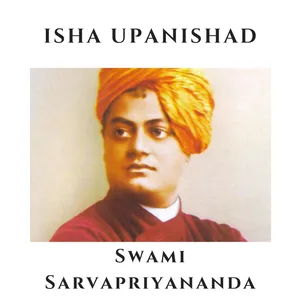
Free Daily Podcast Summary
Isha Upanishad - Swami Sarvapriyananda: Daily Summaries Delivered
by Vedanta Society of New York
The Isha Upanishad (Sanskrit: ईशोपनिषद्, IAST: Īśopaniṣad), also known as Shri Ishopanishad, Ishavasya Upanishad, or Vajasaneyi Samhita Upanishad, is one of the shortest Upanishads, embedded as the final chapter (adhyāya) of the Shukla Yajurveda. It is a Mukhya (primary, principal) Upanishad, and is known in two recensions, called Kanva (VSK) and Madhyandina (VSM). The Upanishad is a brief poem, consisting of 17 or 18 verses, depending on the recension.
Latest Episodes
The most recent episodes — sign up to get AI-powered summaries of each one.
- Jan 6, 20261h 1m
Isha Upanishad | Mantras 17 - 18 | Swami Sarvapriyananda
The Isha Upanishad (Sanskrit: ईशोपनिषद्, IAST: Īśopaniṣad), also known as Shri Ishopanishad, Ishavasya Upanishad, or Vajasaneyi Samhita Upanishad, is one of the shortest Upanishads, embedded as the final chapter (adhyāya) of the Shukla Yajurveda. It is a Mukhya (primary, principal) Upanishad, and is known in two recensions, called Kanva (VSK) and Madhyandina (VSM). The Upanishad is a brief poem, consisting of 17 or 18 verses, depending on the recension.It is a key scripture of the Vedanta sub-schools, and an influential Śruti to diverse schools of Hinduism. It is the 40th chapter of Yajurveda. The name of the text derives from its incipit, īśā vāsyam, "enveloped by the Lord", or "hidden in the Lord (Self)". The text discusses the Atman (Self) theory of Hinduism, and is referenced by both Dvaita (dualism) and Advaita (non-dualism) sub-schools of Vedanta.It is classified as a "poetic Upanishad" along with Kena, Katha, Svetasvatara and Mundaka by Paul Deussen (1908).Reference book:1. Eight Upanisads Vol. 2 translated by Swami Gambhirananda - https://www.vedanta.com/store/Eight-U...► To support the Vedanta Society of New York: http://www.vedantany.org/donateVedanta NY Archives: / vedantanewyorkarchives Web: http://vedantany.orgSoundcloud: / vedantany iTunes Podcast: http://bit.ly/vedanta-talks-itunesSpotify: https://open.spotify.com/show/5IrDmqX...Facebook: / vedantany ABOUT VEDANTAVedanta is one of the world’s most ancient religious philosophies and one of its broadest. Based on the Vedas, the sacred scriptures of India, Vedanta affirms the oneness of existence, the divinity of the soul, and the harmony of religions.ABOUT USVedanta Soc
- Dec 22, 20251h 11m
11. Isha Upanishad | Mantras 15 - 16 | Swami Sarvapriyananda
The Isha Upanishad (Sanskrit: ईशोपनिषद्, IAST: Īśopaniṣad), also known as Shri Ishopanishad, Ishavasya Upanishad, or Vajasaneyi Samhita Upanishad, is one of the shortest Upanishads, embedded as the final chapter (adhyāya) of the Shukla Yajurveda. It is a Mukhya (primary, principal) Upanishad, and is known in two recensions, called Kanva (VSK) and Madhyandina (VSM). The Upanishad is a brief poem, consisting of 17 or 18 verses, depending on the recension.It is a key scripture of the Vedanta sub-schools, and an influential Śruti to diverse schools of Hinduism. It is the 40th chapter of Yajurveda. The name of the text derives from its incipit, īśā vāsyam, "enveloped by the Lord", or "hidden in the Lord (Self)". The text discusses the Atman (Self) theory of Hinduism, and is referenced by both Dvaita (dualism) and Advaita (non-dualism) sub-schools of Vedanta.It is classified as a "poetic Upanishad" along with Kena, Katha, Svetasvatara and Mundaka by Paul Deussen (1908).Reference book:1. Eight Upanisads Vol. 2 translated by Swami Gambhirananda - https://www.vedanta.com/store/Eight-U...► To support the Vedanta Society of New York: http://www.vedantany.org/donateVedanta NY Archives: / vedantanewyorkarchives Web: http://vedantany.orgSoundcloud: / vedantany iTunes Podcast: http://bit.ly/vedanta-talks-itunesSpotify: https://open.spotify.com/show/5IrDmqX...Facebook: / vedantany ABOUT VEDANTAVedanta is one of the world’s most ancient religious philosophies and one of its broadest. Based on the Vedas, the sacred scriptures of India, Vedanta affirms the oneness of existence, the divinity of the soul, and the harmony of religions.ABOUT USVedanta Soc
- Jun 16, 20251h 15m
10. Isha Upanishad | Mantras 12 - 14 | Swami Sarvapriyananda
Jun 16, 2025The Isha Upanishad (Sanskrit: ईशोपनिषद्, IAST: Īśopaniṣad), also known as Shri Ishopanishad, Ishavasya Upanishad, or Vajasaneyi Samhita Upanishad, is one of the shortest Upanishads, embedded as the final chapter (adhyāya) of the Shukla Yajurveda. It is a Mukhya (primary, principal) Upanishad, and is known in two recensions, called Kanva (VSK) and Madhyandina (VSM). The Upanishad is a brief poem, consisting of 17 or 18 verses, depending on the recension.It is a key scripture of the Vedanta sub-schools, and an influential Śruti to diverse schools of Hinduism. It is the 40th chapter of Yajurveda. The name of the text derives from its incipit, īśā vāsyam, "enveloped by the Lord", or "hidden in the Lord (Self)". The text discusses the Atman (Self) theory of Hinduism, and is referenced by both Dvaita (dualism) and Advaita (non-dualism) sub-schools of Vedanta.It is classified as a "poetic Upanishad" along with Kena, Katha, Svetasvatara and Mundaka by Paul Deussen (1908).Reference book:1. Eight Upanisads Vol. 2 translated by Swami Gambhirananda - https://www.vedanta.com/store/Eight-U...
- Jun 16, 20251h 17m
9. Isha Upanishad | Mantras 9 - 11 | Swami Sarvapriyananda
4,935 views Jun 8, 2025The Isha Upanishad (Sanskrit: ईशोपनिषद्, IAST: Īśopaniṣad), also known as Shri Ishopanishad, Ishavasya Upanishad, or Vajasaneyi Samhita Upanishad, is one of the shortest Upanishads, embedded as the final chapter (adhyāya) of the Shukla Yajurveda. It is a Mukhya (primary, principal) Upanishad, and is known in two recensions, called Kanva (VSK) and Madhyandina (VSM). The Upanishad is a brief poem, consisting of 17 or 18 verses, depending on the recension.It is a key scripture of the Vedanta sub-schools, and an influential Śruti to diverse schools of Hinduism. It is the 40th chapter of Yajurveda. The name of the text derives from its incipit, īśā vāsyam, "enveloped by the Lord", or "hidden in the Lord (Self)". The text discusses the Atman (Self) theory of Hinduism, and is referenced by both Dvaita (dualism) and Advaita (non-dualism) sub-schools of Vedanta.It is classified as a "poetic Upanishad" along with Kena, Katha, Svetasvatara and Mundaka by Paul Deussen (1908).Reference book:1. Eight Upanisads Vol. 2 translated by Swami Gambhirananda - https://www.vedanta.com/store/Eight-U...
- May 27, 20251h 12m
8. Isha Upanishad | Mantra 8 | Swami Sarvapriyananda
2,328 views May 25, 2025The Isha Upanishad (Sanskrit: ईशोपनिषद्, IAST: Īśopaniṣad), also known as Shri Ishopanishad, Ishavasya Upanishad, or Vajasaneyi Samhita Upanishad, is one of the shortest Upanishads, embedded as the final chapter (adhyāya) of the Shukla Yajurveda. It is a Mukhya (primary, principal) Upanishad, and is known in two recensions, called Kanva (VSK) and Madhyandina (VSM). The Upanishad is a brief poem, consisting of 17 or 18 verses, depending on the recension.It is a key scripture of the Vedanta sub-schools, and an influential Śruti to diverse schools of Hinduism. It is the 40th chapter of Yajurveda. The name of the text derives from its incipit, īśā vāsyam, "enveloped by the Lord", or "hidden in the Lord (Self)". The text discusses the Atman (Self) theory of Hinduism, and is referenced by both Dvaita (dualism) and Advaita (non-dualism) sub-schools of Vedanta.It is classified as a "poetic Upanishad" along with Kena, Katha, Svetasvatara and Mundaka by Paul Deussen (1908).Reference book:1. Eight Upanisads Vol. 2 translated by Swami Gambhirananda - https://www.vedanta.com/store/Eight-U...
- May 27, 20251h 19m
7. Isha Upanishad | Mantra 7 | Swami Sarvapriyananda
6,431 views May 18, 2025The Isha Upanishad (Sanskrit: ईशोपनिषद्, IAST: Īśopaniṣad), also known as Shri Ishopanishad, Ishavasya Upanishad, or Vajasaneyi Samhita Upanishad, is one of the shortest Upanishads, embedded as the final chapter (adhyāya) of the Shukla Yajurveda. It is a Mukhya (primary, principal) Upanishad, and is known in two recensions, called Kanva (VSK) and Madhyandina (VSM). The Upanishad is a brief poem, consisting of 17 or 18 verses, depending on the recension.It is a key scripture of the Vedanta sub-schools, and an influential Śruti to diverse schools of Hinduism. It is the 40th chapter of Yajurveda. The name of the text derives from its incipit, īśā vāsyam, "enveloped by the Lord", or "hidden in the Lord (Self)". The text discusses the Atman (Self) theory of Hinduism, and is referenced by both Dvaita (dualism) and Advaita (non-dualism) sub-schools of Vedanta.It is classified as a "poetic Upanishad" along with Kena, Katha, Svetasvatara and Mundaka by Paul Deussen (1908).Reference book:1. Eight Upanisads Vol. 2 translated by Swami Gambhirananda - https://www.vedanta.com/store/Eight-U...
- Apr 21, 20251h 10m
6. Isha Upanishad | Mantra 6 | Swami Sarvapriyananda
The Isha Upanishad (Sanskrit: ईशोपनिषद्, IAST: Īśopaniṣad), also known as Shri Ishopanishad, Ishavasya Upanishad, or Vajasaneyi Samhita Upanishad, is one of the shortest Upanishads, embedded as the final chapter (adhyāya) of the Shukla Yajurveda. It is a Mukhya (primary, principal) Upanishad, and is known in two recensions, called Kanva (VSK) and Madhyandina (VSM). The Upanishad is a brief poem, consisting of 17 or 18 verses, depending on the recension.It is a key scripture of the Vedanta sub-schools, and an influential Śruti to diverse schools of Hinduism. It is the 40th chapter of Yajurveda. The name of the text derives from its incipit, īśā vāsyam, "enveloped by the Lord", or "hidden in the Lord (Self)". The text discusses the Atman (Self) theory of Hinduism, and is referenced by both Dvaita (dualism) and Advaita (non-dualism) sub-schools of Vedanta.It is classified as a "poetic Upanishad" along with Kena, Katha, Svetasvatara and Mundaka by Paul Deussen (1908).Reference book:1. Eight Upanisads Vol. 2 translated by Swami Gambhirananda - https://www.vedanta.com/store/Eight-U...
- Apr 7, 20251h 21m
5. Isha Upanishad | Mantras 4 - 5 | Swami Sarvapriyananda
The Isha Upanishad (Sanskrit: ईशोपनिषद्, IAST: Īśopaniṣad), also known as Shri Ishopanishad, Ishavasya Upanishad, or Vajasaneyi Samhita Upanishad, is one of the shortest Upanishads, embedded as the final chapter (adhyāya) of the Shukla Yajurveda. It is a Mukhya (primary, principal) Upanishad, and is known in two recensions, called Kanva (VSK) and Madhyandina (VSM). The Upanishad is a brief poem, consisting of 17 or 18 verses, depending on the recension.It is a key scripture of the Vedanta sub-schools, and an influential Śruti to diverse schools of Hinduism. It is the 40th chapter of Yajurveda. The name of the text derives from its incipit, īśā vāsyam, "enveloped by the Lord", or "hidden in the Lord (Self)". The text discusses the Atman (Self) theory of Hinduism, and is referenced by both Dvaita (dualism) and Advaita (non-dualism) sub-schools of Vedanta.It is classified as a "poetic Upanishad" along with Kena, Katha, Svetasvatara and Mundaka by Paul Deussen (1908).Reference book:1. Eight Upanisads Vol. 2 translated by Swami Gambhirananda - https://www.vedanta.com/store/Eight-U...
Get Isha Upanishad - Swami Sarvapriyananda summaries in your inbox
Free AI-powered daily recaps. Key takeaways, quotes, and mentions — in a 5-minute read.
Get Free Summaries →Free forever for up to 3 podcasts. No credit card required.
You Might Also Like
Listeners also like.

Nārāyaṇīyaṃ - Learn to Chant
A Sanskrit devotional chant from the Nārāyaṇīyaṃ scripture, broken down for learning and recitation.
The Sadhguru Podcast - Of Mystics and Mistakes
A yogi and mystic explores spiritual wisdom with practical insights for modern life.
Sri Ramana Teachings
Explores the spiritual practices of self-investigation and self-surrender according to the teachings of Bhagavan Ramana.

Geeta Unraveled: Conversations on Timeless Wisdom
Explores the Bhagavad Gita verse by verse, translating its spiritual and philosophical teachings into practical guidance for modern life.
Ekantik Vartalap
Spiritual discourses and Q&A sessions with Shri Hit Premanand Govind Sharan Ji on devotional philosophy and practice.

Wisdom Tantra Freedom
Two tantrikas discuss spiritual practice, self-inquiry, and the challenges of living authentically in the modern world.

The Arun Pandit Show
Discusses the intersection of Vedic science and modern success through interviews with spiritual and business leaders.
The Stories of Mahabharata
A narrative retelling of the Indian epic Mahabharata, detailing its myths, battles, and philosophical teachings.

Sleep Psalms with Bishop T.D. Jakes
A nightly spiritual retreat featuring Bishop T.D. Jakes guiding listeners through calming readings and reflections on the Psalms.

Being Unlimited
Explores spiritual awakening and the boundless nature of true being through conversations with Adyashanti.

Quran For Busy People: Weekly insights into the simple beauty and spiritual depth of Islam – from the inside-out
Weekly insights into Islamic spirituality and teachings, featuring discussions and expert interviews on faith and personal growth.
Talking Scripture
Two Latter-day Saints explore scripture, offering insights and practical applications for personal study and spiritual growth.
About Isha Upanishad - Swami Sarvapriyananda
The Isha Upanishad (Sanskrit: ईशोपनिषद्, IAST: Īśopaniṣad), also known as Shri Ishopanishad, Ishavasya Upanishad, or Vajasaneyi Samhita Upanishad, is one of the shortest Upanishads, embedded as the final chapter (adhyāya) of the Shukla Yajurveda. It is a Mukhya (primary, principal) Upanishad, and is known in two recensions, called Kanva (VSK) and Madhyandina (VSM). The Upanishad is a brief poem, consisting of 17 or 18 verses, depending on the recension.
Customized Recaps
AI-powered recaps with compact key takeaways, quotes, and insights.
Straight to Your Inbox
Get key takeaways from Isha Upanishad - Swami Sarvapriyananda in a 5-minute read.
Save Hours Every Week
Stay current on your favorite podcasts without falling behind.
Frequently Asked Questions
What is Podzilla's Isha Upanishad - Swami Sarvapriyananda daily summary?
It's a free AI-powered email that summarizes new episodes of Isha Upanishad - Swami Sarvapriyananda as soon as they're published. You get the key takeaways, notable quotes, and links & mentions — all in a quick read.
How does the Isha Upanishad - Swami Sarvapriyananda podcast summary work?
When a new episode drops, our AI transcribes and analyzes it, then generates a personalized summary tailored to your interests and profession. It's delivered to your inbox every morning.
Is this an official Isha Upanishad - Swami Sarvapriyananda product?
No. Podzilla is an independent service that summarizes publicly available podcast content. We're not affiliated with or endorsed by Vedanta Society of New York.
Can I get summaries of other podcasts too?
Absolutely! The free plan covers up to 3 podcasts. Upgrade to Pro for 15, or Premium for 50. Browse our full catalog at /podcasts.
How often does Isha Upanishad - Swami Sarvapriyananda release new episodes?
Isha Upanishad - Swami Sarvapriyananda publishes weekly. Our AI generates a summary within hours of each new episode.
What topics does Isha Upanishad - Swami Sarvapriyananda cover?
Isha Upanishad - Swami Sarvapriyananda covers topics including Religion & Spirituality, Spirituality, Hinduism. Our AI identifies the specific themes in each episode and highlights what matters most to you.
Start getting Isha Upanishad - Swami Sarvapriyananda summaries tomorrow morning.
Free forever for up to 3 podcasts. No credit card required.
Free forever for up to 3 podcasts. No credit card required.