Free Daily Podcast Summary
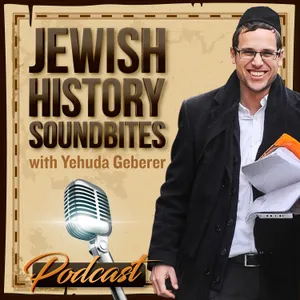
Jewish History Soundbites: Daily Summaries Delivered
by Yehuda Geberer
Listen to noted Tour Guide, Lecturer and Yad Vashem Researcher of Jewish History Yehuda Geberer bring the world of pre-war Eastern Europe alive. Join in to meet the great personages, institutions and episodes of a riveting past.
Latest Episodes
The most recent episodes — sign up to get AI-powered summaries of each one.
- 4 days ago27 min
[Rerelease] Yes, We've Got the Music! The Jewish Music Revolution Part I (replay)
Modern Jewish music developed from the chassidic music of old to the new sound of the Jewish music revolution led by Shlomo Carlebach in the 1960's. The music world of pre war Europe was brought over to the emerging post war world by Yankel Talmud, Yom Tov Ehrlich, the Chabad niggunim, David Werdyger and Bentzion Shenker of Modzhitz. They served as the bridge to bring classic chassidic music to the new generation. This was followed by Shlomo Carlebach and the revolution of Jewish music in the 1960's. Baruch Chait with the Rabbi's Sons, Yigal Calek and the London School of Jewish Song, the Pirchei-JEP albums all contributed to the early flourishing of the new style Jewish music which would continue to develop in the ensuing decade. Check out the other Jewish History Soundbites episodes on Jewish music: Shlomo Carlebach mini-series: https://jsoundbites.podbean.com/e/from-lakewood-to-lubavitch-the-early-years-of-shlomo-carlebach/ https://jsoundbites.podbean.com/e/from-all-night-learning-to-all-night-kumzitz-the-early-years-of-shlomo-carlebach-part-ii/ Chazzanus: https://jsoundbites.podbean.com/e/yossele-rosenblatt-and-the-golden-age-of-chazzanus/ Modzhitz: https://jsoundbites.podbean.com/e/chassidic-symphony-the-modzitz-dynasty/ Subscribe to Jewish History Soundbites Podcast on: PodBean: https://jsoundbites.podbean.com/ or your favorite podcast platform Follow us on LinkedIn, Twitter or Instagram at @Jsoundbites For sponsorship opportunities about your favorite topics of Jewish history or feedback contact Yehuda at: yehuda@yehudageberer.com
- 1 weeks ago50 min
[Rerelease] In the City of Death: The 1903 Kishinev Pogrom (replay)
Special Tisha Ba'av Episode with an all new introduction. The 1903 Kishinev Pogrom was a tragic massacre, with reverberations within the wider Jewish world remaining until this very day. Goaded on by antisemitic newspapers with cries of 'Death to the Jews', a blood libel was fabricated and a mob was unleashed on Easter Sunday, April 19, 1903. Leaving 49 killed, hundreds maimed and injured in its wake, Jewish property was destroyed and looted as well. Claims of complicity of the police and government were voiced in many quarters. But it was primarily the after effects of this pogrom which had a long term transformative effect on Jewish society in Russia and worldwide. The great immigration to the United States was already long underway, but it significantly intensified in the years following Kishinev and the subsequent 1905 revolution. American Jewry was galvanized to assist the victims, and this cemented the relationship US Jewry was to have with their brethren back in Eastern Europe. Within Russia, many of the Jewish youth became radicalized as a result of the massacre, joining clandestine revolutionary organizations with the goal of overthrowing the Czar. The most profound impact was felt within the nascent Zionist movement. Chaim Nachman Bialik was dispatched by the historian Shimon Dubnow to gather testimonies from survivors. Following his five week stay in Kishinev, Bialik penned 'Be'ir Hahareiga' - In the City of Death, a poem about the pogrom. Powerfully written, it also included strongly worded accusations in regards to the perceived passivity of the victims. The poem and its message was to have an immense impact, as it was published and translated and became immensely popular. Vladimir Jabotinsky's conclusion was to organize Jewish self defense, and Theodore Herzl's conclusion was the Uganda proposal at the Sixth Zionist Congress. The shadow of the Kishinev tragedy was to hover over the many subsequent, and ever greater tragedies of the bloody 20th century. Subscribe to Jewish History Soundbites Podcast on: PodBean: https://jsoundbites.podbean.com/ or your favorite podcast platform Follow us on LinkedIn, Twitter or Instagram at @Jsoundbites For sponsorship opportunities about your favorite topics of Jewish history or feedback contact Yehuda at: yehuda@yehudageberer.com
- 2 weeks ago58 min
America 250 & American Jewry
With the United States commemorating its 250th anniversary, it’s worth reflecting on the unique place that the country holds in Jewish history. The American Jewish experience is unparalleled by any other country in the diaspora. American Jews were the only Jews in history that never needed to acheive emancipation in the modern era, as their equal rights and citizenship was already enshrined in the Constitution from the outset. The religious freedoms enjoyed by American Jewry enabled religious life to flourish on a scale unseen in any other place in the history of the diaspora. The greatest story of all is obviously immigration, as millions of Jews chose to make America their home while they were welcomed to its shores. Subscribe to Jewish History Soundbites Podcast on: PodBean: https://jsoundbites.podbean.com/ or your favorite podcast platform Follow us on LinkedIn, Twitter or Instagram at @Jsoundbites For sponsorship opportunities about your favorite topics of Jewish history or feedback contact Yehuda at: yehuda@yehudageberer.com
- 3 weeks ago56 min
The Molotov Von Ribbentrop Pact
When Nazi Germany and the Soviet Union signed a non-agression pact in late August 1939, it sent shockwaves throughout the entire world, but seemed especially ominous for the Jews of Europe. Now that these sworn enemies were friends, war seemed inevitable, and what lay in store for the future of Polish Jewry? When war did indeed break out several days later, western Poland ultimately fell under Nazi occupation, while the Soviets occupied Poland’s east. Polish Jewry was in a hopeless situation, where the Soviet Union was often viewed as the lesser of two evils. Soviet persecution led to the deportation of many to Siberia, which in a cruel irony proved to be a salvation as they were spared the Nazi Final Solution. The Molotov Von Ribbentrop pact had significant ramifications not only on world history and World War II, but also on Jewish history and the Holocaust. Subscribe to Jewish History Soundbites Podcast on: PodBean: https://jsoundbites.podbean.com/ or your favorite podcast platform Follow us on LinkedIn, Twitter or Instagram at @Jsoundbites For sponsorship opportunities about your favorite topics of Jewish history or feedback contact Yehuda at: yehuda@yehudageberer.com
- 3 weeks ago56 min
The Molotov Von Ribbentrop Pact
When Nazi Germany and the Soviet Union signed a non-agression pact in late August 1939, it sent shockwaves throughout the entire world, but seemed especially ominous for the Jews of Europe. Now that these sworn enemies were friends, war seemed inevitable, and what lay in store for the future of Polish Jewry? When war did indeed break out several days later, western Poland ultimately fell under Nazi occupation, while the Soviets occupied Poland’s east. Polish Jewry was in a hopeless situation, where the Soviet Union was often viewed as the lesser of two evils. Soviet persecution led to the deportation of many to Siberia, which in a cruel irony proved to be a salvation as they were spared the Nazi Final Solution. The Molotov Von Ribbentrop pact had significant ramifications not only on world history and World War II, but also on Jewish history and the Holocaust. Subscribe to Jewish History Soundbites Podcast on: PodBean: https://jsoundbites.podbean.com/ or your favorite podcast platform Follow us on LinkedIn, Twitter or Instagram at @Jsoundbites For sponsorship opportunities about your favorite topics of Jewish history or feedback contact Yehuda at: yehuda@yehudageberer.com
- 3 weeks ago1h 1m
The Radoshytz Chassidic Dynasty
A large chassidic community across central Poland prior to its decimation during the Holocaust, Radoshytz was founded by Rav Yissachar Dov Ber Baron (1765-1843). Known as the Saba Kadisha of Radoshytz, he gained renown throughout the region as a holy miracle worker. The Radoshytz dynasty continued through his offspring, and was an influential chassidic dynasty until the war. All of the Radoshytz Rebbes and almost the entire community was wiped out during the Holocaust, but the Radoshytz legacy is a compelling historical narrative until this very day. Subscribe to Jewish History Soundbites Podcast on: PodBean: https://jsoundbites.podbean.com/ or your favorite podcast platform Follow us on LinkedIn, Twitter or Instagram at @Jsoundbites For sponsorship opportunities about your favorite topics of Jewish history or feedback contact Yehuda at: yehuda@yehudageberer.com
- 3 weeks ago57 min
Jacob Schiff & ‘The Schiff Era’
Born in Frankfurt to a prominent religious family, Jacob Schiff (1847-1920) was raised in the milieu of Rav Samson Raphael Hirsch’s Frankfurt, before migrating to the United States in 1865. Rising rapidly in the investment banking world of Wall Street during the post Civil War economic boom, Schiff emerged as both an exemplary philanthropist, distributing his vast wealth to myriad Jewish causes in America and worldwide, as well as cementing himself as the undisputed leader of American Jewry. Particularly close to his heart was the plight of Russian Jewry under the brutal Czarist regime, and he lobbied for unrestricted immigration to the United States, assisting Jewish immigrants once they arrived. He also financed Japan in the Russo-Japanese War, which led to Japan defeating the Russian Navy. Jacob Schiff’s legacy in philanthropy and leadership is largely unmatched in the annals of American Jewish history. Subscribe to Jewish History Soundbites Podcast on: PodBean: https://jsoundbites.podbean.com/ or your favorite podcast platform Follow us on LinkedIn, Twitter or Instagram at @Jsoundbites For sponsorship opportunities about your favorite topics of Jewish history or feedback contact Yehuda at: yehuda@yehudageberer.com
- Jun 27, 202656 min
Urban Rabbinate: The Kornitzers of Krakow
Four generations of the Sofer/Kornitzer family served as venerable rabbis of the historic and prestigious Krakow community during the 19th & 20th centuries. The Chasam Sofer’s son Rav Shimon Sofer was later followed by his son in law and nephew Rav Akiva Kornitzer. Decades later, in 1925, Rav Yosef Nechemiah Kornitzer (1880-1933) accepted the invitation of the Krakow Jewish community to succeed the vacant position of his father and grandfather before him. Rav Yosef Nechemiah’s illustrious career and capable leadership left a lasting imprint on Krakow and the wider Torah world. He in turn was succeeded by his son Rav Shmuel Shmelka Kornitzer who was killed in the Holocaust. Beyond the rabbinical dynasty itself, this succession provides insight into the complex workings of the rabbinate in a major urban center during the age of modernity and urbanization. Subscribe to Jewish History Soundbites Podcast on: PodBean: https://jsoundbites.podbean.com/ or your favorite podcast platform Follow us on LinkedIn, Twitter or Instagram at @Jsoundbites For sponsorship opportunities about your favorite topics of Jewish history or feedback contact Yehuda at: yehuda@yehudageberer.com
Get Jewish History Soundbites summaries in your inbox
Free AI-powered daily recaps. Key takeaways, quotes, and mentions — in a 5-minute read.
Get Free Summaries →Free forever for up to 3 podcasts. No credit card required.
You Might Also Like
Listeners also like.
The Jewish History Podcast - With Rabbi Yaakov Wolbe
A podcast featuring Rabbi Yaakov Wolbe's lectures on Jewish history.
Adventures with Dead Jews
Explores bizarre and darkly humorous stories from Jewish history to examine society's obsession with dead Jews.

Call Me Back - with Dan Senor
Discusses challenges and dilemmas facing Israelis and Jews worldwide.

Ask Haviv Anything
A history podcast shaped by listener questions, covering wars, identity, and cultural topics with a mix of serious and light discussion.

Tablet Studios
Explores Jewish identity, tradition, and culture through diverse podcasts offering insight for contemporary Jewish life.

History Unplugged Podcast
Features interviews with history authors and answers to listener questions on a wide range of historical topics.

WW2 Pod: We Have Ways of Making You Talk
A comedian and historian explore World War II through detailed analysis, personal stories, and dark humor.
Those Who Were There: Voices from the Holocaust
Holocaust survivors and witnesses share personal accounts from the Fortunoff Video Archive at Yale University.

Reading Hannah Arendt with Roger Berkowitz
Close readings of Hannah Arendt’s works paired with interviews exploring her ideas on politics, thought, and the human condition.
In Our Time: Culture
Discusses popular culture, poetry, music, and visual arts and their roles in society.
The Nightingale of Iran
Two sisters uncover their family’s hidden past, exploring why their Iranian-Jewish ancestors fled Iran at the height of fame.

Historical Records
Children learn about overlooked historical figures through hip-hop music and comedy sketches featuring a cast of playful historians.
About Jewish History Soundbites
Listen to noted Tour Guide, Lecturer and Yad Vashem Researcher of Jewish History Yehuda Geberer bring the world of pre-war Eastern Europe alive. Join in to meet the great personages, institutions and episodes of a riveting past.
Customized Recaps
AI-powered recaps with compact key takeaways, quotes, and insights.
Straight to Your Inbox
Get key takeaways from Jewish History Soundbites in a 5-minute read.
Save Hours Every Week
Stay current on your favorite podcasts without falling behind.
Frequently Asked Questions
What is Podzilla's Jewish History Soundbites daily summary?
It's a free AI-powered email that summarizes new episodes of Jewish History Soundbites as soon as they're published. You get the key takeaways, notable quotes, and links & mentions — all in a quick read.
How does the Jewish History Soundbites podcast summary work?
When a new episode drops, our AI transcribes and analyzes it, then generates a personalized summary tailored to your interests and profession. It's delivered to your inbox every morning.
Is this an official Jewish History Soundbites product?
No. Podzilla is an independent service that summarizes publicly available podcast content. We're not affiliated with or endorsed by Yehuda Geberer.
Can I get summaries of other podcasts too?
Absolutely! The free plan covers up to 3 podcasts. Upgrade to Pro for 15, or Premium for 50. Browse our full catalog at /podcasts.
How often does Jewish History Soundbites release new episodes?
Jewish History Soundbites publishes weekly. Our AI generates a summary within hours of each new episode.
What topics does Jewish History Soundbites cover?
Jewish History Soundbites covers topics including History, Religion & Spirituality, Spirituality, Judaism. Our AI identifies the specific themes in each episode and highlights what matters most to you.
Start getting Jewish History Soundbites summaries tomorrow morning.
Free forever for up to 3 podcasts. No credit card required.
Free forever for up to 3 podcasts. No credit card required.