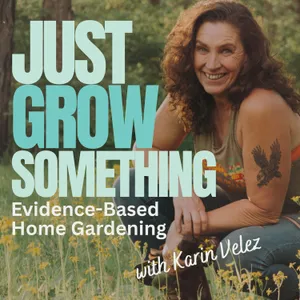
Free Daily Podcast Summary
Just Grow Something | Evidence-Based Home Gardening: Daily Summaries Delivered
by Karin Velez
Grow a better vegetable garden, whether you're a seasoned gardener or have never grown a thing in your life. Karin helps home gardeners learn to grow their own food using evidence-based techniques and research. She talks all about specific plants, pests, diseases, soil and plant health, mulch, garden planning, and more. It's not just the "how" but also the "why" that makes us better. The goal? For everyone to know how to grow their own food no matter what sized space they have or their experience level.
Latest Episodes
The most recent episodes — sign up to get AI-powered summaries of each one.
- 5 days ago34 min
Home Canning Myths Debunked - Ep. 320
A jar that seals is a jar that seals, and that's about all it tells you. In this episode, we're taking on four home canning myths that keep circulating in gardening groups, on food blogs, and in family recipe boxes: oven canning, open-kettle canning (and its cousin, flipping jars upside down), packing tomatoes and garlic in oil, and the idea that a salsa recipe can be tweaked however you like as long as it tastes right. For each one, we'll look at what the research from the National Center for Home Food Preservation and university extension services shows, why these methods fail, and what to do instead so your harvest stays on the pantry shelf and out of the danger zone. We'll also look at a study that checked 56 salsa canning recipes from food blogs, and what it found might make you rethink where your recipes come from. Let's dig in! Support the show and get your free gift at https://LarrysCoffee.com/JustGrow References and Resources: National Center for Home Food Preservation — Ensuring Safe Canned Foods: https://nchfp.uga.edu/how/can/general-information/ensuring-safe-canned-foods/ National Center for Home Food Preservation — Equipment and Methods Not Recommended: https://nchfp.uga.edu/how/can/general-information/equipment-and-methods-not-recommended/ National Center for Home Food Preservation — General Information (includes the 1943 history on oven and open-kettle canning): https://nchfp.uga.edu/how/can/general-information/ National Center for Home Food Preservation — Identifying and Handling Spoiled Canned Food: https://nchfp.uga.edu/how/can/general-information/identifying-and-handling-spoiled-canned-food/ National Center for Home Food Preservation — Tomato Acidification Directions: https://nchfp.uga.edu/how/can/how-do-i-can-tomatoes/tomato-acidification-directions/ National Center for Home Food Preservation — Freezing Garlic-in-Oil: https://nchfp.uga.edu/how/freeze/vegetable/freezing-garlic-in-oil/ National Center for Home Food Preservation — Burning Issue: Can I Can My Own Salsa Recipe? (PDF): https://boone.mgcafe.uky.edu/files/nchfp_burning_issue_can_i_can_my_own_salsa_recipe.pdf D'Sa et al. (2007), Survey of Home Canning Practices and Safety Issues in the U.S.: https://nchfp.uga.edu/papers/2007/canning_survey.html Nummer et al. (2004), Studies on Safe Acidification of Salsa for Home Boiling Water Canning: https://nchfp.uga.edu/papers/2004/04ift-tomatosalsaPoster_combined.html Nummer et al. (2011), Current Food Safety Issues of Home-Prepared Vegetables and Herbs Stored in Oil, Food Protection Trends (PDF): https://www.foodprotection.org/files/food-protection-trends/Jun-11-Nummer.pdf Savoie & Perry (2019), Adherence of Food Blog Salsa Recipes to Home Canning Guidelines, Food Protection Trends: https://www.foodprotection.org/publications/food-protection-trends/archive/2019-09-adherence-of-food-blog-salsa-recipes-to-home-canning-guidelines/ University of Maine Cooperative Extension — The Missing Ingredient: Food Blog Salsa Recipes: https://extension.umaine.edu/food-health/2023/07/20/the-missing-ingredient-adherence-of-food-blog-salsa-recipes-to-home-canning-guidelines/ Penn State Extension — Say No to Oven Canning: https://extension.psu.edu/say-no-to-oven-canning Penn State Extension — Avoid Open Kettle Canning: Always Process Canned Goods: https://extension.psu.edu/avoid-open-kettle-canning-always-process-ca
- 1 weeks ago30 min
End-of-Season Tomato Rescue: Ripening, Freezing, and Preserving - Ep. 319
Frost is on the way, and the vines are still loaded with green tomatoes. In this episode, we sort out which green tomatoes will finish ripening on your counter (the mature greens and the blushers) and which ones belong in the skillet, the freezer, or a tested relish recipe. You'll learn what cold does to a tomato, why a stretch of chilly weather can cost you ripening ability before frost ever shows up, and four ways to ripen fruit indoors, including how to stage a harvest for a steady supply into November. Then we dig into the canning rule that catches a lot of gardeners off guard. National home-canning guidance says not to can tomatoes from dead or frost-killed vines, and we look at why, what the research does and doesn't show, and what to do with those tomatoes instead. Grab a notebook and let’s dig in! Resources and References: Grab your bag of Larry's Coffee, support the show, and get a free gift! https://larryscoffee.com/justgrow Colorado State University Extension — Ripening Tomatoes Indoors: https://extension.colostate.edu/resource/ripening-tomatoes-indoors/ University of California, Davis, Postharvest Research and Extension Center (Suslow and Cantwell) — Tomato: Recommendations for Maintaining Postharvest Quality: https://postharvest.ucdavis.edu/produce-facts-sheets/tomato Iowa State University Extension and Outreach — Can I ripen green tomatoes indoors before frost?: https://yardandgarden.extension.iastate.edu/faq/can-i-ripen-green-tomatoes-indoors-frost National Center for Home Food Preservation (University of Georgia) — Canning Tomatoes: Introduction: https://nchfp.uga.edu/how/can/how-do-i-can-tomatoes/canning-tomatoes-introduction/ National Center for Home Food Preservation — Resources for Home Preserving Tomatoes: https://nchfp.uga.edu/resources/entry/resources-for-home-preserving-tomatoes USDA Complete Guide to Home Canning, Guide 3 (electronic version by Utah State University Extension, 1995) — Selecting, Preparing, and Canning Tomatoes and Tomato Products: https://digitalcommons.usu.edu/cgi/viewcontent.cgi?article=1600&context=extension_histall National Center for Home Food Preservation — Freezing Tomatoes: https://nchfp.uga.edu/how/freeze/vegetable/freezing-tomatoes/ National Center for Home Food Preservation — Freezing Green Tomatoes: https://nchfp.uga.edu/how/freeze/vegetable/freezing-green-tomatoes/ Just Grow Something: https://justgrowsomething.com Gardening Courses: https://justgrowsomething.com/courses Just Grow Something Merch and Downloads: https://justgrowsomething.com/shop Just Grow Something Gardening Friends Facebook Group: https://www.facebook.com/share/g/18YgHveF5P/ Check out how you can become a patron on Patreon: https://www.patreon.com/JustGrowSomething Feed my coffee habit: https://buymeacoffee.com/justgrowsomething Amazon storefront: https://www.amazon.com/shop/justgrowsomething Hosted by Simplecast, an AdsWizz company. See pcm.adswizz.com for information about our collection and use of personal data for advertising.
- 2 weeks ago36 min
Cover Crops in the Home Garden - Ep. 318
Every empty bed in your garden is either growing something for you or growing weeds and losing topsoil. Cover crops are how you make sure it's the first one. In this episode, we get into why cover crops work in both in-ground beds and raised planters, which ones perform best when you sow them in fall, and which ones are worth a spot in your rotation come spring. We'll look at nitrogen-fixing legumes like crimson clover and hairy vetch, soil-building grasses like winter rye and oats, and fast-growing summer options like buckwheat that can turn a bare bed around in a matter of weeks. Then we'll cover how to actually terminate a cover crop, whether that's mowing, crimping, tarping, or letting winter do the work for you, so it feeds your soil instead of becoming a weed problem of its own. Let's dig in! References and Resources: Get your sustainably grown coffee and support the show at LarrysCoffee.com/JustGrow! University of Maryland Extension — Cover Crops For Gardens: umd.edu/resource/cover-crops-gardens University of Maryland Extension — Offing Cover Crops for Weed Suppression: Featuring the Roller Crimper and Other Mechanical Contraptions: umd.edu/resource/offing-cover-crops-weed-suppression University of New Hampshire Extension — Cover Cropping for the Home Garden [fact sheet]: unh.edu/resource/cover-cropping-home-garden-fact-sheet University of Missouri Integrated Pest Management, Missouri Environment & Garden — Cover Crops Improve Garden Soil: missouri.edu/meg/2014/9/Cover-Crops-Improve-Garden-Soil Oregon State University Extension — Buckwheat Makes a Good Summer Cover Crop for Gardens: oregonstate.edu/news/buckwheat-makes-good-summer-cover-crop-gardens Cornell Cooperative Extension Vegetable Program, Cover Crop Guide for NY Growers — Buckwheat as a Summer Cover Crop for Weed Suppression: org/blog/buckwheat-as-a-summer-cover-crop-for-weed-suppression UF/IFAS Extension Duval County — Cover Crop Termination: What Do I Do When It's Over?: ifas.ufl.edu/duvalco/2025/09/15/cover-crop-termination-what-do-i-do-when-its-over Purdue University Center for New Crops and Plants Products — Hairy Vetch: purdue.edu/newcrop/afcm/vetch.html USDA Agricultural Research Service — Crimson Clover Cover Crop Fact Sheet (PDF): usda.gov/ARSUserFiles/60100500/FactSheets/FS04e.pdf Just Grow Something: https://justgrowsomething.com Gardening Courses: https://justgrowsomething.com/courses Just Grow Something Merch and Downloads: https://justgrowsomething.com/shop Just Grow Something Gardening Friends Facebook Group: https://www.facebook.com/share/g/18YgHveF5P/ Check out how you can become a patron on Patreon: https://www.patreon.com/JustGrowSomething Feed my coffee habit: https://buymeacoffee.com/justgrowsomething Amazon storefront: https://www.amazon.com/shop/justgrowsomething Hosted by Simplecast, an AdsWizz company. See pcm.adswizz.com for information about our collection and use of personal data for advertising.
- 3 weeks ago34 min
Fall-Planted vs. Spring-Planted Onions: Choosing the Right System for Your Garden - Ep. 317
Onions are having a moment in the seed catalogs right now, and a lot of that buzz is about overwintering them, tucking small transplants into the bed in September, letting them sit through the cold, and pulling bigger, earlier bulbs the following June. It sounds like a clear win. But the biology underneath it is more particular than the marketing lets on, and the trade-offs are real. In this episode, I'm breaking down the day-length science that controls when an onion decides to bulb, the separate cold-exposure trigger that can send it to flower instead, and why those two mechanisms together explain both the promise and the risk of overwintering. I'll walk through the specific varieties that university research has found reliable for this system versus the ones that bolted their way out of a harvest, and I'll lay out the honest cost side of the ledger: a bed occupied for the better part of a year, a real chance of premature flowering if timing or variety selection is off, and whether any of that beats simply direct-seeding or transplanting in spring. Whether you've got seed garlic already planned for a bed and you're eyeing the space next to it for onions, or you're just trying to figure out which system fits your garden, this episode will give you the research to make that call yourself. Let’s dig in. References and Resources: Short Day Onions • Latitude: ~25°–35° N • Daylength trigger: 10–12 hours • Climate: Mild winters (USDA Zone 7+), These are generally planted in fall, mature in late spring. Intermediate Day Onions • Latitude: ~32°–42° N • Daylength trigger: 12–14 hours • Climate: Central U.S. conditions; planted in spring (or early spring in cooler areas) Long Day Onions • Latitude: ~37°–47° N • Daylength trigger: 14–16 hours • Climate: Northern latitudes; often sweet, specialty, or long storage types. Planted in fall or spring depending on climate Get your free fair-trade gift and support the show at https://LarrysCoffee.com/JustGrow Episode 296 — Successions: Never an Empty Bed: https://justgrowsomethingpodcast.com/episode/succession-planting-101-how-to-keep-your-garden-producing-from-spring-through-frost-ep-296 Oregon State University Extension — Winter Vegetable Production on Small Farms and Gardens West of the Cascades (PNW 548): oregonstate.edu/catalog/pnw-548-winter-vegetable-production-small-farms-gardens-west-cascades University of New Hampshire Extension / NH Agricultural Experiment Station — Research Report: Overwintering Onions, 2014–15 (Becky Sideman et al.): unh.edu/resources/files/Resource005477_Rep7652.pdf Iowa State University Extension and Outreach — What Is a Long-Day Type Onion Variety?: extension.iastate.edu/faq/what-long-day-type-onion-variety University of Minnesota Extension — Growing Onions in Home Gardens: umn.edu/vegetables/growing-onions NC State Extension Publications — Bulb Onions: ces.ncsu.edu/bulb-onions University of Missouri Extension — Planting, Growing and Harvesting Onions: missouri.edu/news/planting-growing-and-harvesting-onions Clemson Cooperative Extension, Home & Garden Information Center — Onion, Leek, Shallot & Garlic: clemson.edu/factsheet/onion-leek-shallot-garlic Oregon State University Extension — Plant Onions Early for Bigger Summer Bulbs: oregonstate.edu/news/plant-onions-early-bigger-summer-bulbs Just Grow Something: https://justgrowsomething.com Gardening Courses: https://justgrowsomething.com/courses Just Grow Something Merch and Downloads: https://justgrowsomething.com/shop Just Grow Something Gardening Friends Facebook Group: https://www.
- Sep 1, 202638 min
Choosing a Garlic Variety Based on the Science - Ep. 316
It's the middle of summer, and I want you thinking about garlic. Not because it's time to plant, but because if you wait until it's time to plant, the good seed garlic may already be gone! In this episode, I'm breaking down the real difference between hardneck and softneck garlic: the cold-exposure requirement called vernalization that decides which type will bulb properly in your garden, how clove structure and storage life differ between the two, and how to match your choice to your specific climate. I'll also cover why garlic bought at the grocery store is a gamble, what certified disease-free seed garlic protects you from, how much seed to order for the bed you're planting, and exactly what to do in your garden bed this month to set yourself up for a strong harvest next summer. Whether you've grown garlic for years or you're planting your first clove this fall, this episode will get your ordering and your bed prep sorted before the window closes. Let’s dig in! Episode References: Episode 302 — Mulch Matchmaking (winter mulch materials and application for newly planted garlic beds): https://justgrowsomethingpodcast.com/episode/mulch-matchmaking-choosing-the-right-mulch-for-your-vegetable-garden-ep-302 All the garlic episodes: https://justgrowsomethingpodcast.com/search/garlic Resources: University of Georgia Cooperative Extension — Garlic Production for the Gardener (Circular 854): caes.uga.edu/publications/C854/garlic-production-for-the-gardener University of Minnesota Extension — Growing Garlic in Home Gardens: umn.edu/vegetables/growing-garlic University of Missouri Extension — Fall Is a Good Time to Plant Garlic: missouri.edu/news/fall-is-a-good-time-to-plant-garlic Lincoln University of Missouri Cooperative Extension — Garlic Production in Missouri: edu/publications/garlic-production-in-missouri.html Utah State University Extension — How to Grow Garlic in Your Garden: usu.edu/yardandgarden/research/garlic-in-the-garden Oregon State University Extension — Get Your Garlic On: A Primer on Planting, Growing and Harvesting: oregonstate.edu/news/get-your-garlic-primer-planting-growing-harvesting Cornell Cooperative Extension, Warren County — Garlic: cce.cornell.edu/gardening-landscape/warren-county-master-gardener-articles/garlic Penn State Extension — Garlic Production: psu.edu/garlic-production University of California Agriculture and Natural Resources (Contra Costa Master Gardeners) — Garlic, Love It or Leave It: edu/blog/hort-coco-uc-master-gardener-program-contra-costa/article/garlic-love-it-or-leave-it Just Grow Something: https://justgrowsomething.com Gardening Courses: https://justgrowsomething.com/courses Just Grow Something Merch and Downloads: https://justgrowsomething.com/shop Just Grow Something Gardening Friends Facebook Group: https://www.facebook.com/share/g/18YgHveF5P/ Check out how you can become a patron on Patreon: https://www.patreon.com/JustGrowSomething Feed my coffee habit: https://buymeacoffee.com/justgrowsomething Amazon storefront: https://www.amazon.com/shop/justgrowsomething Hosted by Simplecast, an AdsWizz company. See pcm.adswizz.com for information about our collection and use of personal data for advertising.
- Aug 25, 202626 min
How to Know When Winter Squash is Ready to Harvest (and How to Store Them) - Ep. 315
Winter squash gives you almost no obvious warning before it's ready, and pulling it too early is one of the most common mistakes gardeners make. And that mistake costs you flavor, sugar content, and months of storage life. In this episode, we're breaking down exactly how to read maturity on butternut, acorn, spaghetti, delicata, and storage pumpkins: the rind test, the ground spot, and the specific cues for each type. Then we'll cover what to do with a squash patch when frost is bearing down on you, why curing helps some squash and actively ruins others, and how to set up a storage space that gets you squash on your table well into the new year instead of watching half your harvest go soft by Thanksgiving. Get your fair-trade, organic, sustainably harvested coffees and support the show at https://larryscoffee.com/justgrow Got my newsletter: JustGrowSomething.com References: University of Missouri IPM — Pumpkin Picking Time: ipm.missouri.edu/meg/2022/10/pumpkins-DT/ South Dakota State University Extension — Time to Harvest Those Winter Squash: extension.sdstate.edu/time-harvest-those-winter-squash South Dakota State University Extension — Harvesting and Storing Pumpkins and Winter Squash: extension.sdstate.edu/harvesting-and-storing-pumpkins-and-winter-squash South Dakota State University Extension — Fall Frost Tolerance of Common Vegetables: extension.sdstate.edu/fall-frost-tolerance-common-vegetables Iowa State University Extension — Yard and Garden: Winter Squash: extension.iastate.edu/news/yard-and-garden-winter-squash Purdue University Vegetable Crops Hotline — Harvest and Postharvest Storage of Pumpkins and Winter Squash: vegcropshotline.org/article/harvest-and-postharvest-storage-of-pumpkins-and-winter-squash-2/ Purdue Extension FoodLink — Winter Squash: extension.purdue.edu/foodlink/includes/pubs/Print4perpaper/4VegetablesPrint/4WINTER_SQUASH2print.pdf Oregon State University Extension Service — Preserving Pumpkins and Winter Squash: extension.oregonstate.edu/catalog/sp-50-767-preserving-pumpkins-winter-squash Michigan State University Extension — Pumpkins, Squash, Gourds: canr.msu.edu/resources/pumpkins_squash_gourds_commercial_vegetable_recommendations_e1953 University of Illinois Extension — Winter Squash (Home Vegetable Gardening): extension.illinois.edu/gardening/winter-squash University of Minnesota Extension — Harvesting and Storing Melons, Squash and Pumpkins: extension.umn.edu/agriculture/specialty-crops/commercial-fruit-production/harvesting-and-storing-melons-squash-and-pumpkins Cornell Cooperative Extension Regional Vegetable Program — Winter Squash and Pumpkin Maturity, Harvesting and Storage Tips: rvpadmin.cce.cornell.edu/uploads/doc_1144.pdf UC Master Gardener Program of Contra Costa (UC ANR) — Harvesting and Storing Winter Squash and Pumpkins: ucanr.edu/blog/hort-coco-uc-master-gardener-program-contra-costa/article/harvesting-and-storing-winter-squash Maine Organic Farmers and Gardeners Association — Harvesting Winter Squash for Peak Flavor and Optimal Storage Life: mofga.org/resources/crops/harvesting-winter-squash-for-flavor-and-storage/ Resources: Just Grow Something: https://justgrowsomething.com Gardening Courses: https://justgrowsomething.com/courses Just Grow Something Merch and Downloads: https://justgrowsomething.com/shop Just Grow Something Gardening Friends Facebook Group: https://www.facebook.com/share/g/18YgHveF5P/ Check out how you can become a patron on Patreon: https://www.patreon.com/JustGrowSomething Feed my coffee habit: https://buymeacoffee.com/justgrowsomething Amazon storefront: https://www.amazon.com/shop/justgrowsomething Hosted by Simplecast, an AdsWizz company. See pcm.adswizz.com for information about our collection and use of personal data for advertising.
- Aug 18, 202630 min
Who's Eating My Garden? Identifying and Deterring Common Backyard Wildlife - Ep. 314
Something has been eating your tomatoes, mowing your green beans down to nubs overnight, or turning your flower bed into a construction site, and you want to know who's responsible and what will make them stop. In this episode, we're working through the full lineup of backyard garden critters, starting with the animals most home gardeners deal with every season: squirrels, chipmunks, rabbits, deer, and raccoons. Then we're digging into two animals that caused real trouble this year: groundhogs, which mowed down entire rows in my own garden, and armadillos, a first-time visitor here on the farm. For each one, we'll cover how to identify their particular style of damage, what university research shows works to deter them, and where fencing, repellents, and scare tactics fall short. Whether you're dealing with a woodchuck built like a small, determined bulldozer, or an armadillo rototilling your flower bed at two in the morning, you'll walk away with a real plan instead of another myth to try. Let's dig in! Get your organic, fair-trade coffee with free gift at LarrysCoffee.com/JustGrow. No code needed! Save 10% and get free shipping on my favorite raised planters at PlanterBoxDirect.com with code JUSTGROW. References and Resources Squirrels University of Missouri Extension — Tree Squirrels: Managing Habitat and Controlling Damage (G9455): extension.missouri.edu/publications/g9455 Chipmunks Penn State Extension — Chipmunks: extension.psu.edu/chipmunks University of Georgia Extension — Chipmunks Publication: extension.uga.edu/publications/detail.html?pk_id=7652 Rabbits University of Missouri Extension — Preventing and Controlling Damage Caused by Cottontail Rabbits (G9441): extension.missouri.edu/publications/g9441 Iowa State University Extension, Yard and Garden — How to Protect Gardens From Rabbits: yardandgarden.extension.iastate.edu/how-to/how-protect-gardens-rabbits Deer University of Missouri Extension — Controlling Deer Damage in Missouri (MP685): extension.missouri.edu/publications/mp685 Colorado State University Extension — Preventing Deer Damage: extension.colostate.edu/resource/preventing-deer-damage University of Minnesota Extension — Winterizing Plants: Animal Damage: extension.umn.edu/yard-and-garden-news/winterizing-plants-animal-damage Raccoons University of Missouri Extension — Managing Raccoon Problems in Missouri (G9453): extension.missouri.edu/publications/g9453 Kansas State University Extension — Protecting Sweet Corn From Raccoons: extension.k-state.edu/news-and-publications/news/stories/2025/07/horticulture-raccoons-sweet-corn.html Iowa State University Extension, Yard and Garden — How Can I Keep Raccoons Out of My Sweet Corn?: yardandgarden.extension.iastate.edu/faq/how-can-i-keep-raccoons-out-my-sweet-corn Iowa State University Extension, Natural Resources — Raccoons: Damage Management: naturalresources.extension.iastate.edu/encyclopedia/raccoons-damage-management Groundhogs University of Missouri Extension — Managing Woodchuck Problems in Missouri (G9452): extension.missouri.edu/media/wysiwyg/Extensiondata/Pub/pdf/agguides/wildlife/g09452.pdf UNH Extension — Dealing with Woodchuck Damage (fact sheet, includes capsaicin repellent trial results): extension.unh.edu/sites/default/files/migrated_unmanaged_files/resource000562_rep584.pdf Missouri Department of Conservation — Groundhog Control: mdc.mo.gov/wildlife/nuisance-problem-species/groundhog-control Armadillos University of Missouri Extension — Armadillos in Missouri: Techniques to Prevent and Control Damage (G9456): extension.missouri.edu/publications/g9456 Oklahoma State University Extension — Managing Nuisance Armadillo Damage: extension.okstate.edu/fact-sheets/managing-nuisance-armadillo-damage Oklahoma State University Extension — Tips for Managing Nuisance Armadillo: extension.okstate.edu/fact-sheets/tips-for-managing-nuisance-armadillo General / Multiple Species University of Missouri Extension — Garden Critters: 'Frenemies' in Grow Places: extension.missouri.edu/news/garden-critters-frenemies-in-grow-places University of Missouri Extension — Solving Wildlife Damage Problems in Missouri (G9425): extension.missouri.edu/publications/g9425 Just Grow Something: https://justgrowsomething.com Gardening Courses: https://justgro
- Aug 11, 202631 min
Organic, Conventional, or Homegrown: What the Research Really Shows About Nutrition - Ep. 313
You've probably heard both sides of this argument: that organic and conventional produce are nutritionally identical, and that homegrown vegetables blow store-bought out of the water. Which one is true? In this episode, I dig through the peer-reviewed research on three separate questions: whether organic farming produces more nutritious food, whether soil health itself changes the nutrient content of what we eat, and what happens to those nutrients in the days between harvest and the moment food lands on your plate. I'm treating this as a real meta-analysis, pulling together findings from major systematic reviews, long-term field trials, and postharvest storage studies, and following the data wherever it leads. The answer is more interesting, and more useful for your own garden, than either side of the argument usually admits. By the end, you'll know exactly which parts of the nutrient-density conversation hold up under scrutiny and which parts are oversimplified, plus what it means for the food coming out of your own backyard. Let's dig in! Get your bag of Larry's Coffee and a free gift from their fair-trade partners at https://LarrysCoffee.com/JustGrow Peer-Reviewed Sources Smith-Spangler et al. (2012), Annals of Internal Medicine — Are Organic Foods Safer or Healthier Than Conventional Alternatives?: https://www.acpjournals.org/doi/10.7326/0003-4819-157-5-201209040-00007 Baranski et al. (2014), British Journal of Nutrition — Higher Antioxidant and Lower Cadmium Concentrations in Organically Grown Crops (343-study meta-analysis): https://www.ncbi.nlm.nih.gov/pmc/articles/PMC4141693/ Worthington (2001), Journal of Alternative and Complementary Medicine — Nutritional Quality of Organic Versus Conventional Fruits, Vegetables, and Grains: https://pubmed.ncbi.nlm.nih.gov/11327522/ Hunter et al. (2011), Critical Reviews in Food Science and Nutrition — Evaluation of the Micronutrient Composition of Plant Foods Produced by Organic and Conventional Methods: https://pubmed.ncbi.nlm.nih.gov/21929333/ Montgomery & Biklé (2021), Frontiers in Sustainable Food Systems — Soil Health and Nutrient Density: Beyond Organic vs. Conventional Farming: https://www.frontiersin.org/journals/sustainable-food-systems/articles/10.3389/fsufs.2021.699147/full Lehmann et al. (2014), Soil Biology and Biochemistry — Arbuscular Mycorrhizal Influence on Zinc Nutrition in Crop Plants: A Meta-Analysis: https://www.sciencedirect.com/science/article/abs/pii/S0038071713004045 Reganold et al. (2010), PLOS ONE — Fruit and Soil Quality of Organic and Conventional Strawberry Agroecosystems: https://journals.plos.org/plosone/article?id=10.1371/journal.pone.0012346 Helfenstein et al. (2016), PLOS ONE — Organic Wheat Farming Improves Grain Zinc Concentration: https://journals.plos.org/plosone/article?id=10.1371/journal.pone.0160729 Hepperly, Omondi & Seidel (2018), MOJ Food Processing & Technology — Soil Regeneration Increases Crop Nutrients, Antioxidants and Adaptive Responses (Rodale Institute Farming Systems Trial): https://medcraveonline.com/MOJFPT/soil-regeneration-increases-crop-nutrients-antioxidants-and-adaptive-responses.html Davis, Epp & Riordan (2004), Journal of the American College of Nutrition — Changes in USDA Food Composition Data for 43 Garden Crops, 1950 to 1999: https://pubmed.ncbi.nlm.nih.gov/15637215/ Marles (2017), Journal of Food Composition and Analysis — Mineral Nutrient Composition of Vegetables, Fruits and Grains: The Context of Reports of Apparent Historical Declines: https://www.sciencedirect.com/science/article/pii/S0889157516302113 Favell (1998), Food Chemistry — A Comparison of the Vitamin C Content of Fresh and Frozen Vegetables: https://www.sciencedirect.com/science/article/abs/pii/S0308814697001659 Rickman,
Get Just Grow Something | Evidence-Based Home Gardening summaries in your inbox
Free AI-powered daily recaps. Key takeaways, quotes, and mentions — in a 5-minute read.
Get Free Summaries →Free forever for up to 3 podcasts. No credit card required.
You Might Also Like
Listeners also like.
The Beginner's Garden with Jill McSheehy
A practical guide for new gardeners, breaking down gardening basics and terminology to help beginners grow confidently.

The joe gardener Show - Organic Gardening - Vegetable Gardening - Expert Garden Advice From Joe Lamp'l
Joe Lamp'l shares practical, organic gardening advice focused on growing food and sustainable practices for gardeners of all skill levels.
Everyday Homesteading
Practical homesteading tips for busy families to grow, cook, and preserve food using proven methods from experienced homesteaders.
Growing For Market Podcast
Practical advice for small-scale farmers and market gardeners on growing and selling produce, flowers, and plants profitably.
Gardening with the RHS
Seasonal gardening advice from RHS experts, covering planting, design, pest control, and flower show insights for all skill levels.
The Backyard Naturalists
Explores backyard ecosystems through native plants, birdwatching, wildlife attraction, and citizen science in the Greater Charlotte region.

BBC Gardeners’ World Magazine Podcast
Expert gardening advice, seasonal tips, and global garden travels from BBC Gardeners’ World Magazine.
Learn Cut Flower Growing | Lessons From a Seasoned Flower Farmer
A seasoned flower farmer shares practical advice and insights on growing and selling cut flowers, from planting to harvest.
Pioneering Today Podcast - Homesteading in a Modern World
Homesteading skills like gardening, food preservation, livestock care, and natural remedies for a self-sufficient life in the modern world.

Growing Cut Flowers
Two flower growers share practical tips, expert interviews, and personal experiences to help you cultivate stunning cut flowers.

Gardeners' Corner
Weekly gardening advice and insights from across the province, featuring visits to diverse gardens and practical tips for enthusiasts.

High on Home Grown, The Cannabis Podcast
Cannabis growers from multiple countries discuss cultivation, news, and interviews with industry figures and medical patients.
About Just Grow Something | Evidence-Based Home Gardening
Grow a better vegetable garden, whether you're a seasoned gardener or have never grown a thing in your life. Karin helps home gardeners learn to grow their own food using evidence-based techniques and research. She talks all about specific plants, pests, diseases, soil and plant health, mulch, garden planning, and more. It's not just the "how" but also the "why" that makes us better. The goal? For everyone to know how to grow their own food no matter what sized space they have or their experience level.
Customized Recaps
AI-powered recaps with compact key takeaways, quotes, and insights.
Straight to Your Inbox
Get key takeaways from Just Grow Something | Evidence-Based Home Gardening in a 5-minute read.
Save Hours Every Week
Stay current on your favorite podcasts without falling behind.
Frequently Asked Questions
What is Podzilla's Just Grow Something | Evidence-Based Home Gardening daily summary?
It's a free AI-powered email that summarizes new episodes of Just Grow Something | Evidence-Based Home Gardening as soon as they're published. You get the key takeaways, notable quotes, and links & mentions — all in a quick read.
How does the Just Grow Something | Evidence-Based Home Gardening podcast summary work?
When a new episode drops, our AI transcribes and analyzes it, then generates a personalized summary tailored to your interests and profession. It's delivered to your inbox every morning.
Is this an official Just Grow Something | Evidence-Based Home Gardening product?
No. Podzilla is an independent service that summarizes publicly available podcast content. We're not affiliated with or endorsed by Karin Velez.
Can I get summaries of other podcasts too?
Absolutely! The free plan covers up to 3 podcasts. Upgrade to Pro for 15, or Premium for 50. Browse our full catalog at /podcasts.
How often does Just Grow Something | Evidence-Based Home Gardening release new episodes?
Just Grow Something | Evidence-Based Home Gardening publishes weekly. Our AI generates a summary within hours of each new episode.
What topics does Just Grow Something | Evidence-Based Home Gardening cover?
Just Grow Something | Evidence-Based Home Gardening covers topics including Leisure, Garden, Home & Garden. Our AI identifies the specific themes in each episode and highlights what matters most to you.
Start getting Just Grow Something | Evidence-Based Home Gardening summaries tomorrow morning.
Free forever for up to 3 podcasts. No credit card required.
Free forever for up to 3 podcasts. No credit card required.