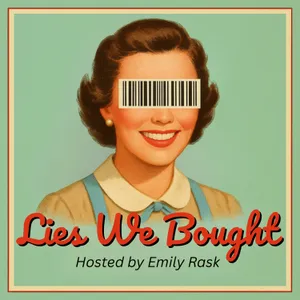
Free Daily Podcast Summary
Lies We Bought: Daily Summaries Delivered
by Emily Rask
Lies We Bought is a podcast that traces advertising lies and marketing deception back to where they started. Host Emily Rask spent over a decade building marketing and advertising campaigns, and now she's reading the fine print out loud (think everything from "got milk?" to "clean beauty") to show how the message got made and why we believed it. Part branding history, part consumer psychology, part 1950s wink. If you love smart, myth-busting shows about advertising, branding, and the hidden tricks behind the stuff you buy, you're in the right place.
Latest Episodes
The most recent episodes — sign up to get AI-powered summaries of each one.
- 5 days ago20 min
The Five Love Languages: The Dark Side of Love Advice
The Five Love Languages has sold millions of copies and shows up everywhere from first dates to therapists' offices, yet Gary Chapman built the framework from his own notes as a Baptist pastor counseling couples. This episode traces how the book became relationship gospel and what Focus on the Family has said about it. It also looks at why critics warn that treating a struggling relationship as a love problem can be dangerous for people in abusive situations, and where the framework can still help couples. 📱 Follow along on Patreon: https://www.patreon.com/LiesWeBought/ Instagram: https://www.instagram.com/lieswebought/ TikTok: https://www.tiktok.com/@lieswebought LinkedIn: https://www.linkedin.com/company/lieswebought Facebook: https://www.facebook.com/lieswebought/
- 1 weeks ago21 min
Smokey Bear: The Wartime Ad That Became a Government Icon
Smokey Bear has been telling America it's your fault since 1944. This episode traces the real story behind the mascot: a wartime scare on the California coast, an ad campaign built to control public behavior, and a real orphaned bear cub who nearly didn't survive the fire that gave him his name. We dig into the Disney licensing deal for Bambi that almost didn't happen, the FDNY captain whose nickname got repurposed for a federal PSA, and how "only you can prevent wildfires" became one of the longest-running and most quietly manipulative campaigns the U.S. government has ever run. Along the way we look at what wildfire suppression actually costs today, what wildland firefighters are paid to do the real version of Smokey's job, and why a cartoon bear ended up with more longevity than most politicians. 📩 Sign up for exclusive emails and behind-the-scenes context: https://www.lieswebought.com/ 📱 Follow along on Patreon: https://www.patreon.com/LiesWeBought/ Instagram: https://www.instagram.com/lieswebought/ TikTok: https://www.tiktok.com/@lieswebought LinkedIn: https://www.linkedin.com/company/lieswebought Facebook: https://www.facebook.com/lieswebought/
- 2 weeks ago19 min
Made in USA: Only 11% of What You Buy Actually Is
The "Made in USA" label feels like a promise. Legally, it's a lot looser than you think, and the amount of stuff that can actually earn it has been shrinking for decades. This episode traces the label from an 1887 British shame tactic to a company that invented its own percentage, to Walmart's founder writing a memoir called "Made in America" while his own company helped build the overseas supply chain the label exists to warn you about. 📩 Sign up for exclusive emails and behind-the-scenes context: https://www.lieswebought.com/ 📱 Follow along on: Patreon: https://www.patreon.com/LiesWeBought/ Instagram: https://www.instagram.com/lieswebought/ TikTok: https://www.tiktok.com/@lieswebought LinkedIn: https://www.linkedin.com/company/lieswebought Facebook: https://www.facebook.com/lieswebought/
- 3 weeks ago16 min
Extended Warranty: The Fine Print Industry Built on Fear
Extended warranties aren't insurance. Legally, they can't even use the word. They're "service contracts," a separate category with none of the payout rules that protect you when real insurance is on the line, and that one distinction explains almost the entire industry. This episode traces how a fringe product from the 1950s turned into the reason a TV or a refrigerator costs the same everywhere you shop, why the pitch always lands at the very end of checkout and never before, and why the industry keeps growing every year no matter how many times consumer advocates warn people off it. 📱 Follow along on: Patreon: https://www.patreon.com/LiesWeBought/ Instagram: https://www.instagram.com/lieswebought/ TikTok: https://www.tiktok.com/@lieswebought LinkedIn: https://www.linkedin.com/company/lieswebought Facebook: https://www.facebook.com/lieswebought/
- Sep 1, 202619 min
Guess What Day Is It?: The Line That Took Over Wednesdays
Every Wednesday, GEICO's camel asks what day it is. The original ad that made that question famous racked up more than 16 million views on YouTube and then disappeared, with no explanation ever given. This episode debunks the corporate mythology built up around hump day, including a water-cooler legend at DuPont that's been misdated for years, and traces the phrase back through a 1959 dictionary citation to a 2011 psychology study showing motivation doesn't actually peak in the middle of the week the way the phrase assumes. **Show notes on Patreon** 📱 Follow along on Patreon: https://www.patreon.com/LiesWeBought/ Instagram: https://www.instagram.com/lieswebought/ TikTok: https://www.tiktok.com/@lieswebought LinkedIn: https://www.linkedin.com/company/lieswebought Facebook: https://www.facebook.com/lieswebought/
- Aug 25, 202617 min
The Fake Wealth Marketing Trap: Kardashians & Influencer Culture
The phrase "keeping up with the Joneses" comes from a 1913 comic strip drawn by a cartoonist who nearly went broke trying to match his wealthy neighbors and the Joneses themselves never once appeared in it. This episode covers where the phrase came from, how mid-century advertisers like Chevrolet used it directly in ad copy, how the same mechanism scaled into influencer marketing and social media, and what the psychological research says about what constant comparison actually costs people. 📱 Follow along on Patreon: https://www.patreon.com/LiesWeBought/ Instagram: https://www.instagram.com/lieswebought/ TikTok: https://www.tiktok.com/@lieswebought LinkedIn: https://www.linkedin.com/company/lieswebought Facebook: https://www.facebook.com/lieswebought/
- Aug 18, 202622 min
Morton Salt: The "Clump-Free" Marketing Ploy That Changed Food History
Morton Salt's slogan started as a promise about clumping, not a warning about bad luck, and somehow it became both. This episode traces salt from ancient currency and empire-building to the umbrella girl on your kitchen shelf, then follows the same trick a hundred years forward into the pink Himalayan salt aisle. 📱 Follow along on: Patreon: https://www.patreon.com/LiesWeBought/ Instagram: https://www.instagram.com/lieswebought/ TikTok: https://www.tiktok.com/@lieswebought Facebook: https://www.facebook.com/lieswebought/
- Aug 11, 202616 min
Expiration Dates Don’t Mean What You Think
Most of the dates on your food aren't required by any law and weren't checked by anyone. This episode follows the story from a persistent Al Capone myth about spoiled milk, through the shoppers who cracked grocery stores' secret shelf codes in the 1970s, to the one government study that found the whole dating system doesn't reliably measure freshness at all. Plus the single food category where an expiration date actually is required, and the on-air moment I learned all of this the hard way. 📩 Sign up for exclusive emails and behind-the-scenes context: https://www.lieswebought.com/ 📱 Follow along on Patreon: https://www.patreon.com/LiesWeBought/ Instagram: https://www.instagram.com/lieswebought/ TikTok: https://www.tiktok.com/@lieswebought LinkedIn: https://www.linkedin.com/company/lieswebought Facebook: https://www.facebook.com/lieswebought/
Get Lies We Bought summaries in your inbox
Free AI-powered daily recaps. Key takeaways, quotes, and mentions — in a 5-minute read.
Get Free Summaries →Free forever for up to 3 podcasts. No credit card required.
You Might Also Like
Listeners also like.
Marketing Made Simple
Strategies for crafting clear marketing messages that connect with customers and grow businesses.
Everyone Hates Marketers | No-BS Marketing & Brand Strategy Podcast
A marketing podcast offering practical insights on branding, strategy, and customer research from industry professionals.
Scamfluencers
Examines real stories of online influencers who manipulate trust to run scams in social media, finance, wellness, and fashion.
Swindled
Explores white-collar crime and corporate misconduct through immersive storytelling and archival audio.

Diabolical Lies
Katie Gatti Tassin & Caro Claire Burke

How I Built This with Guy Raz
Entrepreneurs share their personal journeys of building iconic brands, revealing struggles, failures, and the lessons behind their success.
Business Wars
Examines high-stakes rivalries between major corporations and the strategic decisions behind their successes and failures.
The Best One Yet
A daily 20-minute podcast breaking down the three key business stories with sharp, accessible takes.
Hoax!
Explores famous historical hoaxes and why people believe them, from fairy sightings to modern media scams.
Right About Now - Legendary Business Advice
Raw business insights from founders and industry leaders, revealing real wins, failures, and actionable strategies without the fluff.
Business Movers
True stories of visionary business leaders and the bold risks, successes, and failures that shaped iconic companies and changed the world.

Get Obsessed : With Living Your Best Life
Two hosts explore transformative stories and taboo topics with people challenging norms and living unfiltered lives.
About Lies We Bought
Lies We Bought is a podcast that traces advertising lies and marketing deception back to where they started. Host Emily Rask spent over a decade building marketing and advertising campaigns, and now she's reading the fine print out loud (think everything from "got milk?" to "clean beauty") to show how the message got made and why we believed it. Part branding history, part consumer psychology, part 1950s wink. If you love smart, myth-busting shows about advertising, branding, and the hidden tricks behind the stuff you buy, you're in the right place.
Customized Recaps
AI-powered recaps with compact key takeaways, quotes, and insights.
Straight to Your Inbox
Get key takeaways from Lies We Bought in a 5-minute read.
Save Hours Every Week
Stay current on your favorite podcasts without falling behind.
Frequently Asked Questions
What is Podzilla's Lies We Bought daily summary?
It's a free AI-powered email that summarizes new episodes of Lies We Bought as soon as they're published. You get the key takeaways, notable quotes, and links & mentions — all in a quick read.
How does the Lies We Bought podcast summary work?
When a new episode drops, our AI transcribes and analyzes it, then generates a personalized summary tailored to your interests and profession. It's delivered to your inbox every morning.
Is this an official Lies We Bought product?
No. Podzilla is an independent service that summarizes publicly available podcast content. We're not affiliated with or endorsed by Emily Rask.
Can I get summaries of other podcasts too?
Absolutely! The free plan covers up to 3 podcasts. Upgrade to Pro for 15, or Premium for 50. Browse our full catalog at /podcasts.
How often does Lies We Bought release new episodes?
Lies We Bought publishes weekly. Our AI generates a summary within hours of each new episode.
What topics does Lies We Bought cover?
Lies We Bought covers topics including History, Business, Marketing, Culture, Society & Culture. Our AI identifies the specific themes in each episode and highlights what matters most to you.
Start getting Lies We Bought summaries tomorrow morning.
Free forever for up to 3 podcasts. No credit card required.
Free forever for up to 3 podcasts. No credit card required.