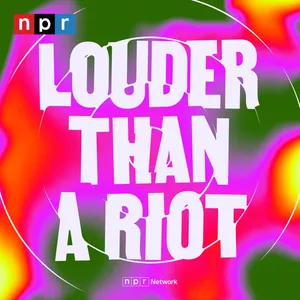
Free Daily Podcast Summary
Louder Than A Riot: Daily Summaries Delivered
by NPR
Hip-hop emerged from the voices of the unheard. But freedom doesn't ring the same for everyone. Inside all corners of the culture, Black women and queer folk have dealt with the same oppression the music was built to escape. Season 2 of Louder Than A Riot examines who hip-hop marginalizes, and how misogynoir — the specific racist misogyny against Black women — is embedded into the fabric of the culture that we love. From Rico Nasty facing harassment from toxic fans, to Saucy Santana's unapologetically femme aesthetics in a queerphobic industry, to the assault case that put Megan Thee Stallion's image on trial, each episode of Louder Than A Riot unpacks the unspoken rules of rap that discriminate against a select few and have held the entire culture back. Hosted by NPR Music's Sidney Madden and Rodney Carmichael, Louder Than A Riot confronts power from every angle – from the power the genre wields over its artists, to the power plays that shape narratives and silence voices.
Latest Episodes
The most recent episodes — sign up to get AI-powered summaries of each one.
- Jul 31, 202634 min
Featuring “We Keep Us Safe” from NPR’s Embedded Podcast
In the summer of 2020, sixteen-year-old Antonio Mays Jr. traveled a thousand miles to join the racial justice movement of his generation in the wake of George Floyd's killing. Antonio arrived in Seattle during the Capitol Hill Occupied Protest, known as CHOP. Less than a week later, he was shot and killed there. The case remains unsolved.In this eight-part series, hosts Sydney Brownstone of The Seattle Times and Will James of KUOW team up with NPR's Embedded to investigate Antonio's death. They track down key eyewitnesses and surface crucial evidence that's never been made public.Listen to the second episode of “We Keep Us Safe” from Embedded now.See pcm.adswizz.com for information about our collection and use of personal data for sponsorship and to manage your podcast sponsorship preferences.NPR Privacy Policy
- Jun 1, 202355 min
Watch the queen conquer: MC Lyte, Quay Dash, the cast of 'Rap Sh!t'
In the first nine episodes of our season, Louder has tackled the unwritten rules of rap. For the finale, we dig into the root of all those rules: the scarcity mindset. It's the belief that access and resources are so limited for those marginalized in hip-hop that you need to fight tooth and nail for them, and that only one can make it to the top at a time. And the Louder team says goodbye, as scarcity comes for our own podcast.See pcm.adswizz.com for information about our collection and use of personal data for sponsorship and to manage your podcast sponsorship preferences.NPR Privacy Policy
- May 25, 202356 min
Like poppa, like son: Rodney Carmichael
For Louder host Rodney Carmichael, interrogating misogynoir in hip-hop means confronting some hard questions — as a man, and especially as a father. As Rodney thinks about raising the next generation without replicating his mistakes, he's looking more closely at how hip-hop shaped his definition of masculinity. On this episode, something a little different: part meditation, part conversation — between Rodney and writers Kiese Laymon and Jamilah Lemieux — about beats, rhymes and life. See pcm.adswizz.com for information about our collection and use of personal data for sponsorship and to manage your podcast sponsorship preferences.NPR Privacy Policy
- May 18, 202350 min
What doesn't kill you makes you a strong Black woman: Rico Nasty
Rico Nasty's music creates a haven for heavy emotions. And in a world that paints Black girls showing any emotion as too much, having a place to release anger and anxiety is essential. But when Rico joined the 2021 Playboi Carti tour, his fans harassed her repeatedly and that safety was stripped away. On this episode, we talk with Rico about keeping a brave face, hear from a fan who was there in the crowd, and ask: When the outlet for your anger is shut down, how do you get your power back?See pcm.adswizz.com for information about our collection and use of personal data for sponsorship and to manage your podcast sponsorship preferences.NPR Privacy Policy
- May 11, 202345 min
Stay in your lane, shawty: Saucy Santana
Saucy Santana is part of a new wave of queer artists pushing back against stale standards in hip-hop. Bolstered by the reach of short sound bites on TikTok, the "Material Girl" rapper is not shy about rocking a beat face, trimmed beard, acrylic nails and booty shorts that have become his calling card. But in an industry that values marketability and reinforces masculinity to a toxic level, how can femme-presenting gay men sidestep from being considered viral jokes to become undeniable stars? See pcm.adswizz.com for information about our collection and use of personal data for sponsorship and to manage your podcast sponsorship preferences.NPR Privacy Policy
- May 4, 202355 min
Real n****s go hard (pause, no homo): iLoveMakonnen
How has hip-hop affected perceptions of Black masculinity? We unpack that question through the story of iLoveMakonnen, a rapper who has navigated different realms of masculinity his entire life, and faced backlash from the industry for being unapologetically himself.See pcm.adswizz.com for information about our collection and use of personal data for sponsorship and to manage your podcast sponsorship preferences.NPR Privacy Policy
- Apr 27, 202359 min
If you see something, say nothing: Kim Osorio v. 'The Source'
In 2006, Kim Osorio, the editor-in-chief of The Source, sued the magazine and its owners for workplace sexual harassment. Nearly two decades later, hip-hop still has not had a true reckoning around sexual misconduct. In this episode, former Source writers take us behind the scenes at the hip-hop bible and the environment that led to the suit. And activist Tarana Burke, creator of "Me Too," reflects on how this case could have put hip-hop ahead of the curve on reckoning with misogynoir. See pcm.adswizz.com for information about our collection and use of personal data for sponsorship and to manage your podcast sponsorship preferences.NPR Privacy Policy
- Apr 13, 20231 min
A Note on Episode 5
Louder was planning to drop a new episode this morning about a lawsuit alleging sexual harassment and workplace discrimination at The Source magazine in the early 2000s. But, because of circumstances beyond our control, we need to delay it. Our next episode drops on April 27. Listen for our full statement on the status of Rule No. 5. See pcm.adswizz.com for information about our collection and use of personal data for sponsorship and to manage your podcast sponsorship preferences.NPR Privacy Policy
Get Louder Than A Riot summaries in your inbox
Free AI-powered daily recaps. Key takeaways, quotes, and mentions — in a 5-minute read.
Get Free Summaries →Free forever for up to 3 podcasts. No credit card required.
You Might Also Like
Listeners also like.
Black Stories. Black Truths.
Curated NPR stories exploring the Black experience through powerful, emotional, and thought-provoking podcast episodes.
HipHop Talks Podcast
Three hosts discuss hip-hop’s history, culture, and regional styles through analysis and debate.
Higher Learning with Van Lathan and Rachel Lindsay
Van Lathan and Rachel Lindsay analyze key issues in Black culture, politics, and sports with guests and debate.

Angela Yee's Lip Service
Angela Yee hosts candid conversations about sex and relationships with hip-hop and R&B artists.

Why Are You Like This? with Megan Rapinoe
Conversations with cultural changemakers exploring personal journeys, public impact, and the choices that redefine norms.
The Latest with Loren LoRosa
A daily breakdown of trending topics, celebrity news, and pop culture conversations shaping the current cultural landscape.
Cultivating H.E.R. Space: Uplifting Conversations for the Black Woman
Black women discuss healing, empowerment, and resilience through honest weekly talks on health, relationships, and personal growth.
After the Uprising
Investigates mysterious deaths of Ferguson activists in St. Louis years after they helped spark the Black Lives Matter movement.

Pop Pantheon
Two pop music fans dissect and rank major artists through deep dives and heated debates.
DISGRACELAND
True crime stories behind legendary musicians, exploring the chaos, drama, and human cost of fame with reverence and depth.
Fearless with Jason Whitlock
Jason Whitlock discusses culture, faith, sports, and politics with guests, emphasizing independent thinking and challenging mainstream views.
The Read
Two friends critique pop culture and navigate life in New York with humor, shade, and candid conversation.
About Louder Than A Riot
Hip-hop emerged from the voices of the unheard. But freedom doesn't ring the same for everyone. Inside all corners of the culture, Black women and queer folk have dealt with the same oppression the music was built to escape. Season 2 of Louder Than A Riot examines who hip-hop marginalizes, and how misogynoir — the specific racist misogyny against Black women — is embedded into the fabric of the culture that we love. From Rico Nasty facing harassment from toxic fans, to Saucy Santana's unapologetically femme aesthetics in a queerphobic industry, to the assault case that put Megan Thee Stallion's image on trial, each episode of Louder Than A Riot unpacks the unspoken rules of rap that discriminate against a select few and have held the entire culture back. Hosted by NPR Music's Sidney Madden and Rodney Carmichael, Louder Than A Riot confronts power from every angle – from the power the genre wields over its artists, to the power plays that shape narratives and silence voices.
Customized Recaps
AI-powered recaps with compact key takeaways, quotes, and insights.
Straight to Your Inbox
Get key takeaways from Louder Than A Riot in a 5-minute read.
Save Hours Every Week
Stay current on your favorite podcasts without falling behind.
Frequently Asked Questions
What is Podzilla's Louder Than A Riot daily summary?
It's a free AI-powered email that summarizes new episodes of Louder Than A Riot as soon as they're published. You get the key takeaways, notable quotes, and links & mentions — all in a quick read.
How does the Louder Than A Riot podcast summary work?
When a new episode drops, our AI transcribes and analyzes it, then generates a personalized summary tailored to your interests and profession. It's delivered to your inbox every morning.
Is this an official Louder Than A Riot product?
No. Podzilla is an independent service that summarizes publicly available podcast content. We're not affiliated with or endorsed by NPR.
Can I get summaries of other podcasts too?
Absolutely! The free plan covers up to 3 podcasts. Upgrade to Pro for 15, or Premium for 50. Browse our full catalog at /podcasts.
How often does Louder Than A Riot release new episodes?
Louder Than A Riot publishes weekly. Our AI generates a summary within hours of each new episode.
What topics does Louder Than A Riot cover?
Louder Than A Riot covers topics including Music, Culture, Society & Culture. Our AI identifies the specific themes in each episode and highlights what matters most to you.
Start getting Louder Than A Riot summaries tomorrow morning.
Free forever for up to 3 podcasts. No credit card required.
Free forever for up to 3 podcasts. No credit card required.