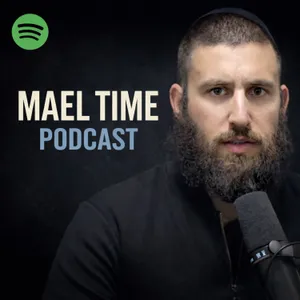
Free Daily Podcast Summary
Mael Time With Daniel Mael: Daily Summaries Delivered
by Daniel Mael
Daniel Mael dives into the most pressing issues pertaining to Israel and the IDF in a post-10/7 world.
Latest Episodes
The most recent episodes — sign up to get AI-powered summaries of each one.
- Today1h 8m
Agunot, Get Refusal, and the Truth Behind Jewish Divorce
Jewish divorce is one of the most emotional, misunderstood, and controversial issues in the Orthodox world. In this episode, Rabbi Benyamin Rahmanov joins Daniel Mael for a candid discussion about agunot, get refusal, rabbinical courts, child custody disputes, social media activism, and the growing tensions between halacha and modern society. The conversation examines who holds power in the divorce process, when public pressure helps or harms, the role of Bais Din versus secular courts, and why no two divorce cases are alike. Whether you agree or disagree with his conclusions, Rabbi Rahmanov offers a detailed look inside the halachic framework that governs Jewish divorce and addresses some of the most difficult questions facing Jewish families today.
- 4 days ago1h 6m
Flatbush Girl vs. Raphi Stein: A No-Holds-Barred Battle Over Jewish Marriage
In this episode, we explore the complex issue of get refusal within the Jewish community, featuring insights from Flatbush Girl. She shares her perspective on the challenges faced by women trapped in prolonged marriages due to halachic disputes and controversially advocates for intermarriage as a potential solution. The discussion highlights the role of community activism and the need for systemic change to protect women's rights.We examine the realities women face when navigating these disputes, including the tactics used to delay resolutions. While Flatbush Girl presents her views on the scale of the crisis, the conversation also considers various perspectives and potential solutions within the framework of Jewish law.This episode aims to foster understanding and dialogue around a sensitive topic, encouraging listeners to consider the broader implications for justice and community integrity. It's essential listening for those interested in social justice and reform within religious contexts.
- 1 weeks ago30 min
Will Chamberlain on Tucker Carlson, Conservative Media, and the Battle for the Right's Future
In this episode of The Daniel Mael Show, Daniel sits down with legal commentator and political analyst Will Chamberlain for an in-depth conversation about the forces reshaping conservative media and politics. They examine Tucker Carlson's growing influence, the role of loyalty within political movements, and whether major institutions like the Heritage Foundation can continue to shape the direction of the American right in an era increasingly dominated by online personalities and independent media.The discussion also explores the challenges of principled debate in a polarized environment, the impact of social media algorithms and bot-driven engagement, and the tension between influence-building and ideological consistency. From media strategy and think tanks to Israel, online discourse, and the future of conservative intellectual life, Chamberlain offers an insider's perspective on the personalities, incentives, and ideas driving today's political conversations.
- 2 weeks ago1h 30m
A Murdered Supplier, a Stolen Goods Ring, and One Wrongfully Accused Family Man
Imagine waking up one day to find out your perfectly normal life is actually a crime scene. That is exactly what happened to Yosh Markel. He was just a regular guy in Florida, a former special-ed teacher who started flipping clearance items on Amazon to pay the rent and keep his wife home with their newborn. Fast forward a few years, and his little side hustle was pulling in a million dollars in sales. He was living the dream, providing for his three kids, and building a solid reputation in his community. But then, without warning, the state attorney general unsealed an indictment, and Yosh was suddenly staring down a $1.35 million bond and a 12-day stint in jail. His crime? Buying inventory from a supplier who, unbeknownst to him, was running a massive organized retail theft ring. He had no idea the goods were stolen, but the government decided he "should have known." What followed was a grueling two-and-a-half-year battle that cost him his life savings, his freedom, and almost his sanity. This is the story of how quickly the American dream can become a nightmare, and the incredible resilience it takes to survive it.Help Yosh: Helpyosh.com
- 3 weeks ago5 min
When Evidence Stops Mattering
This solo discussion examines the growing collapse of consistent evidentiary standards in modern media coverage, particularly when Israel is involved. From post-MeToo reporting norms to high-profile allegations built on hearsay, anonymous claims, and emotional framing, the episode asks a difficult but necessary question: what happened to logic, corroboration, and accountability? The conversation explores how standards that once demanded forensic proof and rigorous scrutiny have increasingly given way to narrative-driven conclusions, and why abandoning rational analysis in favor of political emotion ultimately undermines justice itself. The episode challenges listeners to think critically, question assumptions, and apply the same standard of evidence to every side, regardless of ideology or public pressure.
- 3 weeks ago9 min
The Collapse of Standards: Inside Kristof’s Israel Narrative
In this solo episode, Daniel Mael examines Nicholas Kristof’s explosive article on Israel and asks a question much of the media refuses to confront: do journalistic standards still exist when Israel is the subject? From unverified allegations to inconsistent evidentiary thresholds, Mael dissects how credibility, sourcing, and emotional narratives shape public perception in modern conflict reporting. The episode explores why truth cannot depend on politics, why media integrity matters most during war, and why applying different standards to different actors ultimately destroys public trust.
- 4 weeks ago46 min
Tucker Carlson’s Transformation: What Happened to Conservatism?
“Tucker Carlson is not conservative.”That’s one of the major claims Professor Jeffrey Lax makes in this powerful interview analyzing Tucker Carlson’s recent New York Times appearance and the ideological shift reshaping modern political media.The conversation explores anti-Semitism, media influence, misinformation, Israel, online radicalization, and the growing power of influencers who build audiences through outrage, conspiracy, and political resentment.Professor Lax breaks down how media personalities shape public perception, manipulate narratives, and redefine political identity in the digital age — and why millions continue to follow them.
- May 1, 202624 min
Inside the NGO Machine: NGO Monitor vs. the Global Narrative on Israel
In this sharp, fact-driven conversation, Professor Gerald Steinberg pulls back the curtain on the NGO ecosystem that influences how Israel and the Middle East are portrayed worldwide. From opaque funding streams to coordinated messaging campaigns, he explains how major organizations drive headlines, pressure governments, and set the tone for global discourse. The interview goes beyond criticism and focuses on strategy, laying out how misinformation spreads and what can be done to challenge it with data, accountability, and transparency.
About Mael Time With Daniel Mael
Daniel Mael dives into the most pressing issues pertaining to Israel and the IDF in a post-10/7 world.
Customized Recaps
AI-powered recaps with compact key takeaways, quotes, and insights.
Straight to Your Inbox
Get key takeaways from Mael Time With Daniel Mael in a 5-minute read.
Save Hours Every Week
Stay current on your favorite podcasts without falling behind.
Frequently Asked Questions
What is Podzilla's Mael Time With Daniel Mael daily summary?
It's a free AI-powered email that summarizes new episodes of Mael Time With Daniel Mael as soon as they're published. You get the key takeaways, notable quotes, and links & mentions — all in a quick read.
How does the Mael Time With Daniel Mael podcast summary work?
When a new episode drops, our AI transcribes and analyzes it, then generates a personalized summary tailored to your interests and profession. It's delivered to your inbox every morning.
Is this an official Mael Time With Daniel Mael product?
No. Podzilla is an independent service that summarizes publicly available podcast content. We're not affiliated with or endorsed by Daniel Mael.
Can I get summaries of other podcasts too?
Absolutely! The free plan covers up to 3 podcasts. Upgrade to Pro for 15, or Premium for 50. Browse our full catalog at /podcasts.
How often does Mael Time With Daniel Mael release new episodes?
Mael Time With Daniel Mael publishes 2x weekly. Our AI generates a summary within hours of each new episode.
What topics does Mael Time With Daniel Mael cover?
Mael Time With Daniel Mael covers topics including Government. Our AI identifies the specific themes in each episode and highlights what matters most to you.
Start getting Mael Time With Daniel Mael summaries tomorrow morning.
Free forever for up to 3 podcasts. No credit card required.
Free forever for up to 3 podcasts. No credit card required.