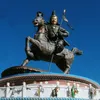
Creating conduits between the visionary realm and the actual world
TranscriptIntroduction [00:00]Most of this podcast is a recording from a retreat Charlie Awbery and I led a month ago. I’m adding a short introduction here now, to provide background context, so you can understand more of what we presented then.So first, tantra is the branch of Buddhism concerned with energy, and therefore with action. Energy is the potential for action. You can’t have either without the other. Tantra is still sometimes misunderstood as being all about sex. There’s a lot of energy and action in sex, so tantra can work with that. But there’s energy and action in everything we do, so tantra can work with everything in our lives.In all Buddhisms, one acts for the benefit of others. However, most just help you develop good intentions. Tantra calls the bluff on that. Without energy, intentions are flaccid piety. Tantra says, “Okay, that’s nice. What are you actually going to do for other people and how?” And it has answers.There are many different styles of beneficent activity. Tantra personifies them as yidams, who are mythic people, rather like gods, who represent particular kinds of energy. This retreat was sponsored by Evolving Ground, a contemporary Vajrayana Buddhist community we abbreviate as eG. eG teaches several different yidams, and therefore several different styles of benevolent energy, and beneficent activity. We wrote a post about that two weeks ago, titled “Yidam: extraordinary relational possibilities.” You might want to check it out for more background explanation.One style of beneficence is nobility: the wise, creative, and just use of power. In eG, we take the yidam Gesar as inspiration for noble activity. Gesar is the mythic warrior-king-sorcerer-god-hero of a vast Tibetan epic. We practice Gesar with a text, called a sadhana. A sadhana is the manual for a structured meditation ritual, which you can practice individually or in a group. Part of the ritual is reading the text out loud, and then doing the things it describes.The Evolving Ground sadhana is titled Good King Gesar. It’s written in flowery pseudo-poetic language, as is traditional. In the retreat recording that follows, I explained particular bits of the text; and quoted it in places.Gesar was the king of a place called Ling. Our retreat was held in a gorgeous remote mountain valley in Scotland. As you will hear, that is also Ling.One last thing: the transcript of this podcast on Substack includes numerous hyperlinks to explanations of uncommon concepts. If you are confused by missing background, or want to learn more about some point, you could follow those. Also, the transcript has numerous illustrations which can help visualize what we are talking about.And so now… let’s catch a ride to Ling on the back of the garuda of outrageousness!The actual world is the mandala of the deity [04:04]One of the things about this sadhana that is unusual is that it is emphasizing the actual world as the mandala of the deity. Mandala is the Sanskrit word for kingdom. It literally means circle, but it means kingdom.There is the visionary world, and there’s the actual world; and these are both real, in some sense. Tantra forms the connection between the visionary realm and the actual world. You become the connection between these two. You can think of the cen
Podzilla Summary coming soon
Sign up to get notified when the full AI-powered summary is ready.
Free forever for up to 3 podcasts. No credit card required.
Listen to This Episode



Get summaries like this every morning.
Free AI-powered recaps of Meaningness Podcast and your other favorite podcasts, delivered to your inbox.
Free forever for up to 3 podcasts. No credit card required.