Free Daily Podcast Summary
My Dog Is Better Than Your Dog: Daily Summaries Delivered
by Dr. Lily Chen
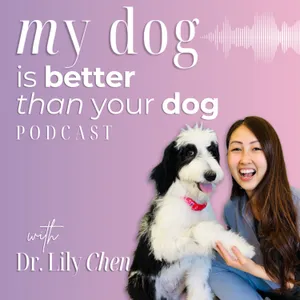
Welcome to My Dog Is Better Than Your Dog — where science meets soul as we explore what's possible when we reimagine pet care. I'm Dr. Lily Chen, integrative veterinarian and believer that our animals deserve extraordinary medicine. Each week, I talk with leading experts, pioneering vets, and devoted pet parents pushing the boundaries of animal health. Microbiome restoration, energy medicine, cancer hope, nutrition, and the mind-body-pet connection. Real science. Deep stories. A little magic. ✨
Latest Episodes
The most recent episodes — sign up to get AI-powered summaries of each one.
- Today1h 0m
The Part of Pet Parenthood Nobody Prepares You For w/ Dr. Jenn Roedig
There is a moment almost every pet parent will face and almost nobody is prepared for it. You are sitting with your dog and it hits you. We are getting closer to the end. And then comes the flood. The emotions. The questions you did not know how to ask. The guilt you did not see coming. The decisions that feel impossible because you are making them for someone who cannot tell you what they want.Dr. Jenn Roedig is a licensed veterinarian and the founder of Sage Paws, a virtual practice built entirely around supporting pet parents through their animal's aging, illness, and end of life. She has guided over 500 families through this space. And two months before we recorded this conversation, she lost her own dog Luke unexpectedly the night before Easter to a ruptured splenic mass.She shares that story in this episode. It is raw and it is real.We talk about guilt, probably the most common emotion pet parents carry, and what is actually underneath it. We talk about anticipatory grief, the kind that starts weeks or months before the loss when nobody around you understands why you are already mourning. And we talk about how to know when it is time, and why you will know is not always a good enough answer.Dr. Lily also shares something personal in this one. She lost her heart dog in 2020 and still carries pieces of that ending with her.KEY INSIGHTS:✨ Guilt is probably the most common emotion pet parents experience around end of life and it is almost never talked about openly because pet loss is grief that society does not fully recognize. Guilt loves isolation. It feeds on silence.✨ Naming it is the first step to moving through it. Dr. Jenn calls it naming it to tame it. Once you can see what is underneath the guilt, you start to take your power back.✨ Saying you will know when it is time is not always helpful. It depends on the disease, the pet, the family's values, and what too soon or too late means to each person.✨ Look at good hours, not just good days. A day can be called good but if it only had four good hours and twenty bad ones, that matters. Quality of life is nuanced and individual to every pet and every family.✨ Notice what they stop disliking, not just what they stop liking. Dr. Jenn's dog Luke used to bark at delivery drivers. She knew that if that ever stopped, something was really wrong.✨ Anticipatory grief is real and it is disenfranchised. Nobody around you may understand why you are already grieving a pet that is still alive. You are not alone in that and you do not have to carry it alone.✨ Journaling or voice noting your thoughts for ten minutes a day can help break the spiral. Getting it out of your head and onto paper gives it somewhere to live so it stops consuming you at 3am.✨ The best time to have these conversations is before you need them. Families who plan ahead, even loosely, are more prepared to make meaningful decisions under pressure.✨ Dr. Jenn's sessions are 90 minutes and completely virtual. She works with pet parents anywhere in the world.✨ Vets are not trained for these conversations in vet school. A resource like Sage Paws does not replace the veterinarian. It fills the gap the vet does not have time to fill.RESOURCES:Sage Paws: https://www.sagepaws.com/Instagram: @_sage_pawsSessions: 90 minutes, virtual, available worldwideLinktr.ee: @sagepawsFOLLOW:Integrative Pet Wellness Center: https://integrativepet.com/Instagram: @integrativepetThreads: @integrativepetSign up to our newsletter to get more holistic pet care tips 🐶🐈⬛Dr. Lily Chen:Instagram: @dr.lilychen @the.unicorn.vetThreads: <a href="https://www.threads.com/@the.unic
- 2 weeks ago1h 13m
Your Dog's Tongue Is Trying to Tell You Something w/ Carol Bramson
Your Dog's Tongue Is Trying to Tell You Something w/ Carol BramsonThe next time your dog is lying next to you totally relaxed, look at their tongue. Is it pale pink or a deep angry red? Dry or moist? Purple around the edges? To most of us that is just a tongue. But in a tradition practiced for thousands of years it is your dog communicating with you about what is happening inside their body.Carol Bramson is the founder of Side by Side Pet, a whole food pet nutrition company built on Eastern food therapy. She grew up in a household where food was health, spent years visiting over 3,000 food ingredient suppliers across the US and Europe, and then got her first dog, Wrigley, was handed a bag of kibble, and thought this does not look like food.Wrigley is 11 now and everyone who meets him thinks he is about two.We get into the energetics of food, warming cooling and neutral, why gut health has to come first before food can even do its job, why seizures and hot spots so often trace back to what is in the bowl, and why the answer to changing pet health is collaboration not competition.KEY INSIGHTS:✨ Food has energetic properties understood for thousands of years in Eastern medicine. Warming foods support a body running cold. Cooling foods calm a body running hot. Matching the food to the dog can change everything.✨ The tongue tells you what is happening inside. Side by Side built an AI balance indicator that analyzes a photo of your dog's tongue and recommends which food type their body needs right now.✨ Gut health has to come first. A dog on kibble for years may not have the microorganisms needed to absorb nutrients from whole food. Rebuilding the microbiome before or alongside the transition matters.✨ Dr. Lily tested kibble-fed dogs and found high levels of glyphosate and mycotoxins. A major pet food company told her the levels were within acceptable range for humans. Pets are not small people.✨ Seizures in dogs correlate strongly with toxic load. Dr. Lily has seen seizure frequency decrease significantly when toxins are cleared and diet changes. We reach for drugs before we ask what is driving the problem.✨ Whole food nutrients cannot be replicated by synthetic supplements. The structural combination of fiber, vitamins, and minerals in a whole food is what the body is designed to absorb. Your doctor tells you to eat broccoli, not broccoli powder.✨ Feeding the same food every single day for years is not variety. Rotating proteins and adding fresh toppers even in small amounts builds microbial diversity and signals to the body that it is safe to adapt.✨ The pet food industry changes when consumers change where they spend their money. Even the largest kibble companies are launching fresh food lines because that is where demand is going.✨ Side by Side's Giving Fund provides whole food nutrition to dogs in need with a special focus on service, therapy, and care dogs.✨ There are not enough pets eating well. Every brand, vet, and pet parent working toward that goal is on the same side.RESOURCES:Side by Side Pet: https://www.sidebysidepet.comInstagram: @sidebysidepetFacebook: @sidebysidepetTiktok: @sidebysidepet Available on: sidebysidepet.com, Amazon, Chewy and independent boutique pet storesFOLLOW:Integrative Pet Wellness Center: https://integrativepet.comInstagram: @integrativepetThreads: @integrativepetSign up to our newsletter to get more holistic pet care tips 🐶🐈⬛Dr. Lily Chen:Instagram: @dr.lilychen @the.unicorn.vetThreads: <a href="https://www.threads.com/@the.unicorn.vet" target="_blank" rel="ugc n
- 4 weeks ago43 min
The Vet Episode Nobody Taught You in Vet School w/ Dr. Judy Jasek
This one is for every veterinarian who has ever felt like an island.But it is also for every pet parent who has ever wondered what it actually takes for a vet to practice medicine on their own terms, and why so many of the best ones end up building something from scratch.Dr. Judy Jasek never wanted to own a business. She became an entrepreneur because it was the only way she could practice the medicine she believed in. She bought a conventional practice, stopped doing as many vaccines because she believed they were harming her patients, and watched her revenue plummet. Then she built a full integrative hospital, burned out under the weight of it, sold it, sat through a three year non-compete, and rebuilt from the front room of her house. No debt. No bank loan. Just a mat on the floor and a willingness to see what happened.It thrived.Dr. Lily started the same way. House calls, then 500 square feet, a mat and a desk, no X-ray machine, no surgery suite. The only piece of equipment she needs to plug in today is her ozone machine.This conversation also goes into the loss of empathy in the veterinary profession since COVID, what drove it, and why both Dr. Judy and Dr. Lily believe that healing is an art that is at risk of being lost.KEY INSIGHTS:✨ Most holistic vets become entrepreneurs by necessity, not choice. The only way to practice authentically is often to build something yourself.✨ You do not need a big loan, a big space, or all the equipment. Dr. Judy rebuilt from her front room. Dr. Lily started with house calls and 500 square feet. Both practices thrived.✨ Avoiding debt is one of the most important decisions you can make when starting a practice. When you own debt, you feel trapped. When you own nothing, you are free to practice the way you want.✨ Find the modality that is uniquely yours and go all in on that. You do not have to do everything. Every other clinic is already doing everything. Your niche eliminates your competition.✨ The curbside drop-off era during COVID did profound damage to the veterinarian-client bond. The loss of empathy in the profession since that time is something both Dr. Judy and Dr. Lily are seeing firsthand.✨ Corporate practice appointments run every 10 to 15 minutes. There is not enough time to sit on the floor, listen to the family, explore options, or practice medicine that feels like medicine.✨ Informed consent is how veterinarians are supposed to practice. Explaining the risks, the whys, the regulations, and letting the family make the choice. Not badgering, not enforcing, not checking boxes.✨ Clients follow doctors, not clinics. When you practice from the heart, people are drawn to that energy. The right clients will find you.✨ Healing is an art. Every veterinarian has unique gifts. The world needs those gifts, not another clinic that does the same things as the 10 clinics around it.✨ If you feel like an island in this profession, you are not alone. There are more of us than you think.RESOURCES:Animal Healing Arts: https://ahavet.comInstagram: @judyjasekFacebook: @Animal Healing ArtsSubstack: https://judyjasekdvm.substack.comMembership (free to join): https://ahavet.com/membershipFOLLOW:Integrative Pet Wellness Center: https://integrativepet.comInstagram: @integrativepetThreads: @integrativepetSign up to our newsletter to get more holistic pet care tips 🐶🐈⬛Dr. Lily Chen:Instagram: @dr.lilychen @the.unicorn.vetThreads: @the.unicorn.vetLinkedIn: Lily Chen, DVM,
- Aug 23, 20261h 5m
Your Pet Is Living in the Moment. Are You? w/ Dr. Judy Jasek
Your Pet Is Not Worried About Dying. You Are. What if the tumor is not the disease? What if it is the body's way of telling us something went wrong a long time ago, and the real work is figuring out what that was?Dr. Judy Jasek graduated from Colorado State University in 1988 and spent years in conventional practice before something shifted. Her own horse developed a behavioral problem that no conventional approach could touch. An energetic chiropractor turned the animal around completely, and once Dr. Judy started looking at medicine differently, she could not stop.Nearly 40 years later, she runs Animal Healing Arts, a telemedicine practice rooted in what she calls the Terrain Paradigm: the idea that health is the body's natural state, and our job is to figure out what knocked the body off balance and help it return.We talk about mistletoe therapy, ozone, Chinese herbal medicine, why she almost never recommends surgery as a first step, and why your pet is not worried about dying from cancer. They just want to live a happy life. And the energy you bring into the room, fear or gratitude, directly affects their healing.KEY INSIGHTS:✨ The tumor is the tip of the iceberg. It is a warning sign that the body's toxic load has exceeded what it can handle. Removing the tumor without addressing what caused it is incomplete.✨ Cancer rates are rising in young dogs. Lymphoma in two-year-olds, aggressive tumors in four-year-olds. This was not something seen 20 or 30 years ago and it is a wake-up call.✨ Dr. Judy's first question for every cancer patient is not about the diagnosis. It is how is the pet doing. A pet that is still eating, vigorous, and enjoying life has a lot to work with.✨ Mistletoe therapy has been used in human oncology in Europe for over 100 years. In Germany, roughly 70% of human cancer patients receive it. It is immunomodulating, has direct anti-cancer effects, and can be administered at home.✨ Fever after mistletoe treatment can be a sign the immune system is waking up, not a sign something is wrong. Warming the body activates enzymatic pathways that support healing.✨ Ozone therapy oxygenates the body at a cellular level. When pets are tired after ozone treatment, it is often because the body has been given a healing tool and needs to rest to use it.✨ Dr. Judy almost never recommends surgery as a first step. Unless there is a life-threatening blockage or bleed, she focuses on supporting the body first and correcting what led to the cancer.✨ Success does not have to mean the tumor is gone. Can the pet live with this comfortably with good quality of life? That is a more realistic and more achievable goal than elimination.✨ Your pet does not know they have cancer. They want to eat, play, and curl up next to you. The fear and grief you carry around them affects their healing. Gratitude and presence are medicine.✨ Prevention is the most powerful tool. Testing the gut microbiome, vitamin D levels, and toxic burden early, before anything shows up on bloodwork, gives the body the best chance to come back into balance before disease develops.✨ Diarrhea is not a metronidazole deficiency. Any symptom the body produces naturally has a reason. The question is not how do we stop this, it is what is the body trying to tell us.RESOURCES:Animal Healing Arts: https://ahavet.comInstagram: @animal.healing.artsFacebook: @animalhealingartsSubstack: judyjasekdvm.substack.comMembership (free to join): https://ahavet.com/membership-agreement/FOLLOW:Integrative Pet Wellness Center: https://integrativepet.comInstagram: @integrativepetThreads: @integrativepetTikTok: @integrativepetSign up to our newsletter to get more holistic pet care tips 🐶🐈⬛Dr. Lily Chen:Instagram:
- Aug 9, 202636 min
The Bonus Conversation: Genetics, Gut Health and Getting It Right w/ Heather Gibson
This one started as a continuation after the main episode wrapped up.Heather Gibson and Dr. Lily just kept talking, and what came next was more honest and more direct than anything in the main episode. They got into the coefficient of inbreeding, a term becoming a bigger deal in the breeding world that Dr. Lily had never heard before, and why Heather made the controversial decision to move from purebred to mixed breeding for the sake of dog health.Then Heather asked Dr. Lily about microbiome testing, fecal transplants, and why vets are still using metronidazole as a first line dewormer for puppies. That part got Dr. Lily fired up.Shorter, a little more raw, and very much a conversation between two people from different corners of pet care who both care deeply about getting this right.KEY INSIGHTS: ✨ The coefficient of inbreeding measures how genetically similar a puppy's parents are. Lower numbers mean more genetic diversity, which generally means better health, stronger immunity, and fewer inherited diseases. ✨ Pedigrees alone cannot tell the full story. Two dogs from completely different lines, even different continents, can still be genetically too similar. Companies like Embark now calculate this before a breeding ever happens. ✨ Many purebred dogs are already mixed breeds, just from centuries ago. Golden Retrievers were originally Irish Setters, Bloodhounds, a Tweed Spaniel, and reportedly a dog from the side of the road. ✨ Heather moved from purebred to mixed breeding because she saw health issues she did not believe could be resolved without more genetic diversity. It is not anti-purebred. It is pro-health. ✨ Asking a breeder whether they test for coefficient of inbreeding is one of the most important questions a pet parent can ask and most never think to. ✨ Metronidazole is wildly overused as a first line dewormer for puppies. Some puppies arrive at eight weeks already having had three or four rounds, leaving their gut microbiome already depleted before they ever come home. ✨ Giardia can be cleared naturally without antibiotics. Dr. Lily has done it and trained vets to do it successfully with microbiome testing before and after to prove it. It takes more work but builds a far more resilient gut. ✨ Not every dog needs a fecal transplant. Some improve with diet changes and the right supplements. But choosing supplements without microbiome data first can sometimes make things worse. ✨ Fecal microbiome restoration does not require sedation or invasive prep. At Dr. Lily's clinic it is a gentle one to two minute procedure. Animals go home exactly as they came in. ✨ Research takes an average of 20 years to move from a journal into standard clinical practice. Our pets do not have 20 years to wait. ✨ Testing the mother's microbiome before breeding could be one of the most impactful things we do for puppy health since her microbiome becomes the puppy's starting point for life.RESOURCES: Big Hearted Breeders: https://www.bigheartedbreeders.com Instagram: @bigheartedbreeders Facebook: @bigheartedbreeders YouTube:@Bigheartedbreeders AnimalBiome: https://www.animalbiome.com AHVMA Vet Directory: https://www.ahvma.orgMagic of Microbiome Course for Vets: https://theunicorn.academyFOLLOW: Integrative Pet Wellness Center: https://integrativepet.com Instagram: @integrativepet Threads: @integrativepet TikTok: @integrativepet Youtube: @integrativepetSign up to our newsletter to get more holistic pet care tips 🐶🐈⬛Dr. Li
- Aug 2, 20261h 0m
What Happens Before Your Puppy Comes Home and Why It Changes Everything w/ Heather Gibson
Before that puppy ever comes home to you, before the first walk, the first vet visit, the first time they fall asleep in your lap, there are six to eight weeks happening behind the scenes that will shape their health, their temperament, and their resilience for the rest of their life.Most pet parents have zero control over what happens during that window. And most never think to ask.Heather Gibson is the founder of Big Hearted Breeders, a certified pet nutrition coach who has spent over 12 years raising dogs and cats with a holistic wellness first approach. Before she was a breeder, she was a foster parent for over a decade, caring for children with severe trauma. It was watching her foster children heal through their bond with animals that set her on this path.We get into what early neurological stimulation actually is and why it matters, what health testing should happen before breeding ever begins, how to tell the difference between a breeder who truly cares and one who is running a business, and why the relationship between breeders and vets is so strained and what we can do about it.KEY INSIGHTS:✨ The first eight weeks of a puppy's life happen entirely without you. What a breeder does during that window shapes the immune system, nervous system, temperament, and resilience for life.✨ Early neurological stimulation, developed by the military and sometimes called the Superdog program, is done from day six to day 17. Research shows it builds a more robust immune system and a nervous system better able to handle change.✨ After those first two weeks, good breeders move into daily socialization, introducing new sounds, textures, smells, and obstacles so the puppy's brain builds the neural pathways that say new things are safe.✨ Health testing on the parents is non-negotiable. Hips, elbows, patellas, heart, eyes, and a full genetic panel to screen for recessive genes that two healthy dogs can unknowingly both carry and pass on.✨ Colostrum is a window that cannot be replicated. If a puppy misses those first hours of mother's milk, they start at an immune disadvantage that is very difficult to make up. Ask whether all puppies were latched and fed immediately after birth.✨ Weaning straight from mother's milk to kibble is a harsh transition for a developing gut. Even partial introduction of fresh food during weaning sets up a stronger microbiome for life.✨ Routine deworming with metronidazole every two weeks means some puppies have had three or four rounds of gut-clearing medication before they leave the breeder. Dr. Lily recommends testing before treating rather than automatic deworming protocols.✨ Ask any breeder whether they offer lifetime support and whether they will take the dog back at any point if something happens to the family. That answer tells you who you are working with.✨ A puppy at eight weeks can only be awake for about 30 minutes before needing a long rest. Overstimulation is one of the most common reasons new puppies seem out of control, and most families are never told this.✨ The vet and breeder relationship does not have to be adversarial. They share the same goal. Building bridges between those two worlds is better for puppies and better for families.Resources: Big Hearted Breeders: https://www.bigheartedbreeders.comInstagram: @bigheartedbreeders Facebook: @bigheartedbreedersYouTube: @bigheartedbreedersTikTok: @bigheartedbreedersPinterest: @bigheartedbreedersFOLLOW:Integrative Pet Wellness Center: https://integrativepet.comInstagram: @integrativepetThreads: @integrativepetTikTok: @integrativepetSign up to our newsletter to
- Jul 19, 20261h 32m
We Made It to 100 and I Have a Lot to Say w/ Dr. Lily Chen
Episode 100.I almost cannot believe it. When this podcast started, I did not know if anyone would listen. I only knew there were options out there, real and powerful ones, that too many pet parents never get told about. So I made a place for those conversations.Tonight was different. No guest, no script. Just a live recording with a room full of pet parents who have been on this journey with me, asking the real questions, sharing what they have lived through, and reminding me exactly why this exists.We talked about fecal transplants for IBD and when to start tapering off antibiotics like tylosin. We talked about ozone therapy and what it actually does inside the gut. We talked about the Qest4 scan, stem cell therapy for heart disease, UVBI, reference ranges that shift over time, and why a dog's liver values being high for 15 years might just be that dog's normal.And somewhere in the middle of all of it, I said something I have been wanting to say for a long time. I am a little tired of the fighting between conventional and holistic. I do both. I sit squarely in the middle. And it was never for us doctors to decide. It is for the families to decide, and they cannot decide if they do not know the options exist.Here is to the next hundred.KEY INSIGHTS:✨ Diarrhea and heart failure are not directly connected. Heart failure causes fluid in the lungs or belly, not the intestines. But pets in heart failure may be more prone to gut issues because the body is already working so hard.✨ Seasonal flares and stress are real allergy triggers. A dog can have their food sensitivities fully managed and still flare because of pollen, environmental shifts, or the anxiety of their person being away.✨ Quercetin with bromelain stabilizes mast cells, one of the biggest drivers of allergic reactions. It works best as longer term support rather than an in-the-moment rescue.✨ Metronidazole has been overused for diarrhea for decades. Research shows it can damage the microbiome and sometimes it does not recover. Fecal transplant is often a better first reach.✨ When a pet is on multiple gut medications simultaneously, FMT will be less effective but still worth doing. The goal is to build enough stability to slowly taper, starting with the antibiotic.✨ Ozone before fecal transplant is not about killing bad bacteria. It breaks up biofilm so the new transplant material has a better chance to take hold.✨ Reference ranges shift over time and are based on a sample population. Trends over time matter far more than any single value.✨ When kidney values are elevated on bloodwork, 70 to 80 percent of kidney function may already be gone. Watching trends within normal range gives you time to intervene before that point.✨ The Qest4 bioenergetic scan can test supplement compatibility, showing whether a product is addressing root cause, addressing symptoms, or is not a match for that pet.✨ Stem cell therapy using amnion has produced dramatic results in heart valve disease, including reversal in some patients. It works best when introduced early in the disease process.✨ A 20 minute sniff walk provides mental stimulation equivalent to roughly one hour of physical exercise. Letting the dog lead the sniff rather than pulling them along is one of the most effective enrichment tools available.✨ The microbiome can be imbalanced from puppyhood, often traced back through generations. Testing early, before symptoms appear, gives the most time and the most options.FOLLOW:Integrative Pet Wellness Center: https://integrativepet.comInstagram: @integrativepetThreads: @integrativepetTikTok: @integrativepetSign up to our newsletter to get more holistic pet care tips 🐶🐈⬛Dr. Lily Chen:Instagram: @dr.lilychen @the.unicorn.vetThreads: @the.unicorn.vetLinkedIn: Lily Chen, DVM, CVA & <a href="https://ww
- Jul 5, 202624 min
A New Study Could Save Parvo Puppies Faster and Cheaper w/ Dr. Lily Chen
A study landed on my desk a few weeks ago and I have not been able to stop thinking about it.If you have a puppy, a young dog, or you know someone who does, this minisode is for you. It is about parvovirus, one of the scariest and most deadly diseases in young dogs, and a new study showing exactly what can be added to the standard of care to give puppies a better shot at survival, and at a fraction of the cost.The study, a double blinded, placebo controlled trial out of Ohio State University, looked at fecal microbiota transplant, also called microbiome restoration therapy, added on top of standard hospitalization for parvo. Not instead of it. The results are hard to ignore, and so is the part of the story about cost, because for many families, cost is the difference between treating their dog and losing them.I am sharing this now, before you ever need it, in the hope that you never do. But if you do, I want you to already know this exists.KEY INSIGHTS:✨ Parvovirus destroys the gut lining and wipes out the beneficial bacteria living there. That terrain, not just the virus itself, is largely why puppies crash so fast.✨ Fecal microbiota transplant, FMT, works by reintroducing healthy, screened donor microbiome material into the sick puppy's gut to rebuild that destroyed terrain, rather than only fighting the virus directly.✨ In the study, the treatment group received one rectal FMT infusion at admission plus two weeks of oral capsules, in addition to full standard hospital care. The placebo group received saline enemas and blended kibble capsules, also alongside full standard care.✨ Puppies who received the real FMT recovered faster, had shorter hospital stays, and needed fewer medications. Shorter ICU stays alone can mean thousands of dollars in savings for a family.✨ There were zero adverse events from the FMT treatment, even in puppies who were among the most immunocompromised patients a veterinarian will ever see.✨ More than a third of the placebo group had to be pulled from the study early on ethical grounds because those puppies were deteriorating too quickly. None of the puppies receiving the real FMT were pulled from the study.✨ FMT did not act as an antiviral. It did not reduce viral shedding or change the immune response to the virus directly. What it did was support the body's own ability to heal by restoring the gut terrain.✨ The commercially available FMT material and oral capsules used in the study cost at most a few hundred dollars, a fraction of the cost of extended hospitalization, and is something any veterinarian can access today.✨ The biggest barrier to wider adoption is not the science or the difficulty of the procedure. It is hesitancy around something newer to conventional practice, even with solid published data now behind it.✨ Asking your vet whether they offer fecal transplant or microbiome medicine is one of the most powerful things a pet parent can do to help bring this option into more clinics.✨ Building a strong, diverse gut microbiome before disease happens is the next layer of this conversation. Prevention and proactive gut health remain the long term goal.FOLLOW:Integrative Pet Wellness Center: https://integrativepet.comInstagram: @integrativepetThreads: @integrativepetTikTok: @integrativepetSign up to our newsletter to get more holistic pet care tips 🐶🐈⬛Dr. Lily Chen:Instagram: @dr.lilychen @the.unicorn.vetThreads: @the.unicorn.vetLinkedIn: Lily Chen, DVM, CVA
Get My Dog Is Better Than Your Dog summaries in your inbox
Free AI-powered daily recaps. Key takeaways, quotes, and mentions — in a 5-minute read.
Get Free Summaries →Free forever for up to 3 podcasts. No credit card required.
You Might Also Like
Listeners also like.

Your Family Dog Podcast
Trainer Tina Spring offers practical advice for families solving everyday dog behavior challenges.
Get Better Faster
Doctors and researchers discuss functional medicine and root-cause approaches to chronic illness and health optimization.

Feel Better, Live More with Dr Rangan Chatterjee
A doctor-hosted podcast offering practical health advice on eating, sleeping, moving, and relaxing from medical experts and real-life stories.

Red Pill Your Healthcast
Two healthcare providers discuss overlooked health issues and empower listeners to make informed decisions for their families.
The Art of Being Well
Explores holistic wellness through functional medicine, focusing on body, mind, spirit, and relationships as acts of self-respect.

Extend Podcast with Darshan Shah, MD
Explores science-backed strategies and expert insights to extend healthspan and optimize longevity through actionable health protocols.
Paul Saladino MD podcast
A physician explores the root causes of chronic disease and optimal health through science and personal experimentation.

Live Like a Girl with Dr. Mindy Pelz
Dr. Mindy Pelz explores women's health through hormone science and wellness conversations to help women live in rhythm with their bodies.

The Exam Room by the Physicians Committee
Experts reveal how plant-based diets and nutrition science can prevent disease and extend lifespan.

Rooted in Wellness with Mona Sharma
A holistic nutritionist blends ancient wellness practices with modern science to address mind, body, and soul health.
Own Your Health
Katie Brindle discusses health, ageing, and wellness topics with expert insights and personal anecdotes to help listeners improve their well-being.

Fully Alive: Unlocking the secrets to your healthier, happier, longer life
Explores science and lifestyle strategies to enhance health, purpose, and longevity.
About My Dog Is Better Than Your Dog
Welcome to My Dog Is Better Than Your Dog — where science meets soul as we explore what's possible when we reimagine pet care. I'm Dr. Lily Chen, integrative veterinarian and believer that our animals deserve extraordinary medicine. Each week, I talk with leading experts, pioneering vets, and devoted pet parents pushing the boundaries of animal health. Microbiome restoration, energy medicine, cancer hope, nutrition, and the mind-body-pet connection. Real science. Deep stories. A little magic. ✨
Customized Recaps
AI-powered recaps with compact key takeaways, quotes, and insights.
Straight to Your Inbox
Get key takeaways from My Dog Is Better Than Your Dog in a 5-minute read.
Save Hours Every Week
Stay current on your favorite podcasts without falling behind.
Frequently Asked Questions
What is Podzilla's My Dog Is Better Than Your Dog daily summary?
It's a free AI-powered email that summarizes new episodes of My Dog Is Better Than Your Dog as soon as they're published. You get the key takeaways, notable quotes, and links & mentions — all in a quick read.
How does the My Dog Is Better Than Your Dog podcast summary work?
When a new episode drops, our AI transcribes and analyzes it, then generates a personalized summary tailored to your interests and profession. It's delivered to your inbox every morning.
Is this an official My Dog Is Better Than Your Dog product?
No. Podzilla is an independent service that summarizes publicly available podcast content. We're not affiliated with or endorsed by Dr. Lily Chen.
Can I get summaries of other podcasts too?
Absolutely! The free plan covers up to 3 podcasts. Upgrade to Pro for 15, or Premium for 50. Browse our full catalog at /podcasts.
How often does My Dog Is Better Than Your Dog release new episodes?
My Dog Is Better Than Your Dog publishes weekly. Our AI generates a summary within hours of each new episode.
What topics does My Dog Is Better Than Your Dog cover?
My Dog Is Better Than Your Dog covers topics including Kids & Family, Animals, Family, Pets & Animals. Our AI identifies the specific themes in each episode and highlights what matters most to you.
Start getting My Dog Is Better Than Your Dog summaries tomorrow morning.
Free forever for up to 3 podcasts. No credit card required.
Free forever for up to 3 podcasts. No credit card required.