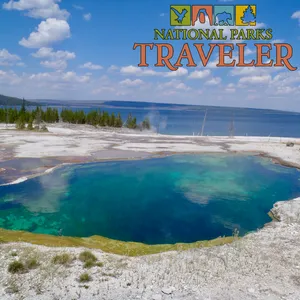
Free Daily Podcast Summary
National Parks Traveler Podcast: Daily Summaries Delivered
by Kurt Repanshek
National Parks Traveler is the world's top-rated, editorially independent, nonprofit media organization dedicated to covering national parks and protected areas on a daily basis. Traveler offers readers and listeners a unique multimedia blend of news, feature content, debate, and discussion all tied to national parks and protected areas.
Latest Episodes
The most recent episodes — sign up to get AI-powered summaries of each one.
- 5 days ago48 min
National Parks Traveler Podcast | ESA's Future
Since this past December here at the Traveler we've been bringing you a series of stories on the Endangered Species Act and the threatened and endangered species it's intended to keep from going extinct. For me, it's been an eye-opening series because of what our editors and writers have learned about threatened and endangered species — from birds to trees and even to grasses — and the work being done to help them recover. It's certainly not an easy task, and one that often takes decades before you can see progress. In today's podcast, I sit down again with Jake Li, the vice president for conservation policy at Defenders of Wildlife, to get his take on efforts in Congress to rewrite the Endangered Species Act in ways that might not be so beneficial for threatened and endangered species. I think you'll find it to be a very insightful conversation. We recorded this conversation in mid-May, right before Endangered Species Day.
- 1 weeks ago48 min
National Parks Traveler Podcast | Rethinking Public Lands Stewardship
Public lands stewardship has most definitely changed under the second presidential administration of Donald Trump. Land-management agencies such as the National Park Service, U.S. Forest Service, and Bureau of Land Management have lost thousands of employees, and Interior Secretary Doug Burgum is on a mission to turn the country's public lands into a cash cow of sorts. As the political tenure in Washington D.C., swings wildly back and forth like a massive pendulum when it comes to our public lands, there is an effort under way to provide a roadmap for public lands stewardship in the United States that stretches far into the future. Ground Shift is a new nonprofit organization working to, as they put it, "develop creative, durable, and transformative ideas to shape the next century of public land and water stewardship in the United States." To better understand this organization and its goals, our guests today are Lynn Scarlett, who was a deputy Interior secretary during the administration of President George Bush, and Tracy Stone-Manning, who directed the Bureau of Land Management under President Joe Biden.
- 2 weeks ago58 min
National Parks Traveler Podcast | Cook Inlet's Beluga Whales
A fast-track proposal to develop a gold mine near Alaska's Cook Inlet and Lake Clark National Park and Preserve is alarming scientists, environmental groups and local communities because of the devastating effects it is expected to have on the region's critically endangered beluga whales. Cook Inlet is home to a small and genetically distinct population of beluga whales that has struggled for decades from habitat loss, industrial activity, pollution, and underwater noise. Supporters of the mining project say it will bring jobs, economic growth and profit to Native Alaskans. This week Traveler's Lynn Riddick talks with Cooper Freeman, Alaska Director of the Center for Biological Diversity. His organization along with many others argue that the gold to be extracted isn't worth the cost of threatening a species already vulnerable to extinction and forever desecrating a magnificent landscape.
- 3 weeks ago45 min
National Parks Traveler Podcast | Southern Campaign of the American Revolution
America's 250th birthday is coming up this summer, festivities will be held all over the country, and history buffs will be delving into the various nooks and crannies of the National Park System to see where they can visit sites of Revolutionary War battles. Don't overlook South Carolina and its three park sites that preserve Revolutionary War battlefields – Kings Mountain National Military Park, Cowpens National Battlefield, and Ninety-Six National Historic Site. The state of South Carolina takes so much pride in these three sites that some of its license plates proclaim that the Revolutionary War was won in South Carolina. But was it? Today we're going to pose that question to James Taub, the associate curator at the Museum of the American Revolution in Philadelphia.
- May 3, 202656 min
National Parks Traveler Podcast | Print Ain't Dead
We're living in somewhat tumultuous times in the print media industry. Well-familiar titles are either disappearing, shrinking drastically, or shifting over to the internet. On top of that, the advent of Artificial Intelligence has some readers wondering how much human effort and talent went into the piece they're reading. Today we're going to be talking about a throw-back, a publication that has come and gone a bit over the past six decades, but which has a hallowed space among publications for its long-form journalism that dives into mountain culture, environmental issues, and outdoor adventure. The Mountain Gazette has published such literary notaries as Hunter S. Thomas, Ed Abbey, John Fayhee, Sadie Stine, Royal Robbins and so many others. And it's back. Our guest is Mike Rogge, the owner and publisher of Mountain Gazette. He'll help us stroll down memory lane a bit and look at the current state of outdoor journalism.
- Apr 26, 20261h 2m
National Parks Traveler Podcast | Chief Storyteller
National parks provide us with so many services, from providing us with inspiration, allowing us to leave our stress behind for a few hours or a few days, offering a recreational outlet, and enabling us to pursue hobbies from photography to other artistic endeavors, and looking for wildlife. The parks also allow us to go back into history through living history programs and interpretation, provided both by rangers and by organizations that produce interpretive materials. They also serve as a great background for storytellers. Today our guest is a former ranger who held the informal title of Chief Storyteller. Tom Medema until recently was Associate Director for the National Park Service, with a focus on interpretation in the parks. We'll discuss all things interpretation and inspiration tied to the National Park System.
- Apr 19, 202652 min
National Parks Traveler Podcast | Wildlife Crossings
Across the United States, there are many thousands of collisions between vehicles and wildlife each year, killing people and animals and causing millions of dollars in property damages. Some solutions revolve around creating bridges specifically for wildlife, from elk and mountain lions to even turtles and salamanders. It's been estimated that collisions with wildlife in the United States kill around 200 people and injure more than 26,000 per year. Building wildlife crossings can reduce those collisions by up to 97 percent. Back in 2021 the Bipartisan Infrastructure Law provided $350 million to be doled out as grants over five years on building such crossings. But the funding runs out this year, and the National Parks Conservation Association has been urging Congress to not just renew the program, but see that it provides $200 million a year going forward. To explain the problem and associated costs with the lack of wildlife crossings today's guests are Bart Melton, senior director of NPCA's wildlife program, and Renee Callahan from ARC Solutions, a nonprofit that works to facilitate new thinking, new methods, new materials and new solutions for wildlife crossing structures.
- Apr 12, 202641 min
National Parks Traveler Podcast | Polluting Parks With Light
You might not entirely appreciate the wonders and majesty of national parks unless you venture out after dark and gaze up at what often is referred to as the other half of the national park system. The view can be quite dazzling, with planets, stars, the Milky Way, and for the lucky, a comet or shooting star. Sadly, not every park offers such dazzling views. Light pollution reaches more than a few national parks, and can really infringe on your nighttime enjoyment of the parks. Gavin Heffernan is among those park travelers who are troubled by light pollution. He's a California-based photographer with a unique long-form time lapse style. And he's hoping this approach brings a fresh awareness to the wonders of night skies in the national parks and creates advocacy to fight light pollution and the damage it wreaks on natural habitats.
Get National Parks Traveler Podcast summaries in your inbox
Free AI-powered daily recaps. Key takeaways, quotes, and mentions — in a 5-minute read.
Get Free Summaries →Free forever for up to 3 podcasts. No credit card required.
You Might Also Like
Listeners also like.
National Park After Dark
Two friends explore the eerie and inspiring stories of America’s National Parks, blending mystery with a passion for conservation.
Nature Podcast
Weekly science stories from Nature journal, covering research across all fields with insights from scientists and editors.

Adventure Sports Podcast
In-depth interviews with adventure sports athletes, explorers, and outdoor enthusiasts exploring lives dedicated to adventure.
PNWild Podcast
Four Pacific Northwest hunters share their backcountry adventures and deep connection to wild places and the food they harvest.

Park Predators
A true crime podcast investigating murders, disappearances, and other crimes in national parks and forests around the world.

Armchair Explorer
Travel documentaries and cultural deep dives recorded on location, blending immersive storytelling with global adventure.

The American Birding Podcast
Discusses birds, birding, conservation, and birding-related travel with experts and enthusiasts across North America and beyond.

Wildlife Photography
Photographers discuss wildlife and nature photography techniques, experiences, and creative inspiration in casual conversation.

Smart Travel: Upgrade Your Getaways
Experts break down travel budgeting, rewards, and strategies to maximize vacation value.

Travel with Rick Steves
Explores global travel, cultures, and human connections with expert insights and listener stories.

American Shoreline Podcast Network
Experts discuss coastal business, policy, science, engineering, and advocacy to inform and prepare listeners on American shoreline issues.

Terrestrials
A nature podcast exploring surprising animal and plant behaviors through immersive storytelling and original songs.
About National Parks Traveler Podcast
National Parks Traveler is the world's top-rated, editorially independent, nonprofit media organization dedicated to covering national parks and protected areas on a daily basis. Traveler offers readers and listeners a unique multimedia blend of news, feature content, debate, and discussion all tied to national parks and protected areas.
Customized Recaps
AI-powered recaps with compact key takeaways, quotes, and insights.
Straight to Your Inbox
Get key takeaways from National Parks Traveler Podcast in a 5-minute read.
Save Hours Every Week
Stay current on your favorite podcasts without falling behind.
Frequently Asked Questions
What is Podzilla's National Parks Traveler Podcast daily summary?
It's a free AI-powered email that summarizes new episodes of National Parks Traveler Podcast as soon as they're published. You get the key takeaways, notable quotes, and links & mentions — all in a quick read.
How does the National Parks Traveler Podcast podcast summary work?
When a new episode drops, our AI transcribes and analyzes it, then generates a personalized summary tailored to your interests and profession. It's delivered to your inbox every morning.
Is this an official National Parks Traveler Podcast product?
No. Podzilla is an independent service that summarizes publicly available podcast content. We're not affiliated with or endorsed by Kurt Repanshek.
Can I get summaries of other podcasts too?
Absolutely! The free plan covers up to 3 podcasts. Upgrade to Pro for 15, or Premium for 50. Browse our full catalog at /podcasts.
How often does National Parks Traveler Podcast release new episodes?
National Parks Traveler Podcast publishes weekly. Our AI generates a summary within hours of each new episode.
What topics does National Parks Traveler Podcast cover?
National Parks Traveler Podcast covers topics including Science, Nature, Culture, Society & Culture, Travel, Places & Travel. Our AI identifies the specific themes in each episode and highlights what matters most to you.
Start getting National Parks Traveler Podcast summaries tomorrow morning.
Free forever for up to 3 podcasts. No credit card required.
Free forever for up to 3 podcasts. No credit card required.