Free Daily Podcast Summary
One Decision: Daily Summaries Delivered
by Listen Now Media
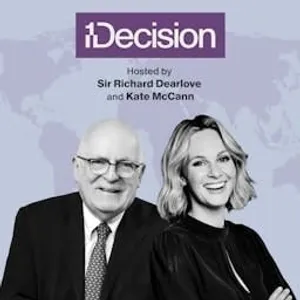
Tough decisions rattle us all to the core. But for our guests on One Decision— the choices they are up against can also shape history. No pressure! They take us through all of their doubts, emotions and—sometimes unexpected--consequences. A fresh take on foreign policy. Hear the former head of Mi6, Sir Richard Dearlove alongside international journalists as they analyse, interview, and discuss.
Latest Episodes
The most recent episodes — sign up to get AI-powered summaries of each one.
- 2 days ago54 min
Mohamed El-Erian: America Is Exporting Its Debt Crisis
War with Iran, record diesel prices, and a global bond sell-off: how much more can the world economy take? Mohamed El-Erian (Wharton, Allianz, former CEO of PIMCO) joins Sir Richard Dearlove (former head of MI6) and John Raine to explain what's driving the bond market sell-off, why the US is exporting instability to the UK, France, and Japan, and why AI is "80% asset, 20% liability." Plus: how PIMCO really navigated Lehman's collapse, and the one decision he's watching. In this episode: Intro Why this crisis is different Permacrisis and "minilateralism" What's driving the global bond sell-off The hit to US households: mortgages, car loans, the K-shaped economy "Our yields, your problem": UK, France and Japan France, Mélenchon and Europe's leadership vacuum AI: 80% asset, 20% liability US-China AI Race Did PIMCO predict Lehman Brothers collapse? Who wins in today’s economy? Can finance ministers fix what politicians can't? How important are AI companies to the economy? Hosted by Sir Richard Dearlove (former MI6 Chief) and John Raine (International Institute for Strategic Studies). Learn more about your ad choices. Visit megaphone.fm/adchoices
- 1 weeks ago1h 3m
Iran Is Draining America’s Missile Defenses (w/ Paul Scharre, Former US Army Ranger)
Between cheap-to-produce drones and artificial intelligence, the future of warfare may already be here. Paul Scharre, former US Army Ranger and executive vice president of the Center for a New American Strategy, joins former head of MI6 Sir Richard Dearlove and co-host John Raine to discuss how drones and AI are reshaping military conflict and militaries themselves. Scharre explains why cheap drones are beating expensive armies, how the cost asymmetry between offense and defense is reshaping the battlefield, and why the US may be losing its technological edge faster than it realizes. He also assesses Ukraine's drone revolution, the race between the US and China to adopt military AI, and why keeping humans in the loop may matter more than any weapon system. In this episode: Cost Equation of Modern Warfare Defining the Present State of Warfare How Militaries Are Dealing with AI Technology Reshaping US Military Education Evolution of Drone Technology Cost of Countermeasures Likelihood of Protracted Warfare Redefining Victory in Modern Warfare Adversarial Distillation Strategic Balance Between US and China Culture of Superior Firepower AI and the Ukraine War How Drones Change Ground Combat Outlook For Expensive Tech Keeping Humans in the Loop Drone Swarms AI and Naval Warfare Drones and Non-State Actors One Decision: Xi-Trump Summit and AI Takeaways and Wrap Up Hosted by Sir Richard Dearlove (former MI6 Chief) and co-host John Raine (International Institute for Strategic Studies) Learn more about your ad choices. Visit megaphone.fm/adchoices
- 2 weeks ago1h 1m
Is Iran Secretly Building a Bomb at Pickaxe Mountain? A Nuclear Physicist Answers (w/ Ali Vaez)
Israel and the US may have extraordinary intelligence on Iran. But intelligence isn't the same as comprehension, according to nuclear physicist and 2015 Iran deal negotiator Ali Vaez. Vaez joins John Raine and Sir Richard Dearlove to break down what Iran's nuclear capabilities really look like after the 12-day war. Plus, how Iran's Supreme National Security Council stays united under duress, how the Iran Revolutionary Guard Corps maintains primacy over the regular army, and why sanctions now at "nine out of ten" still won't force collapse. Iran doesn't need to win this standoff. It just needs not to lose. In this episode: Ali Vaez on wartime Iran Is Iran's leadership a monolith or divided? Power centers: the SNSC, the Basij, and the IRGC The mystery of Mojtaba Khamenei Economic and military pressure on Iran A forever war? Gulf States, Saudi Arabia, and the Houthis What does the Iranian public actually think? Iran's nuclear program: what do we really know? Israeli intelligence, diplomacy, and the Ahmadinejad theory The decision only Donald Trump can make Hosted by Sir Richard Dearlove (former MI6 Chief) and co-host John Raine (International Institute for Strategic Studies). Learn more about your ad choices. Visit megaphone.fm/adchoices
- 2 weeks ago43 min
How Real Is Netflix's The Diplomat? Ex-MI6 Chief Fact-Checks It (w/ Creator Debora Cahn)
Debora Cahn, the writer behind The Diplomat, Homeland, The West Wing, and Grey's Anatomy, joins Kate McCann and Sir Richard Dearlove to talk about writing political drama in an era when reality keeps outpacing fiction. Debora explains how "spy camp" research trips with real diplomats, spies, and generals shape her scripts, why she resists making her stories too close to current events, and what she learned about the strange double life of foreign service officers: the loneliness of constant relocation, the jockeying for a seat in the room, and the quiet patriotism that keeps them showing up. Sir Richard, a former head of MI6, adds his own view from the other side of the table, including a story about deliberately keeping a British ambassador out of the room in Washington. In this episode: 00:00 Cold Open 02:58 Russia Story Rewritten 04:11 Borgen Inspiration 06:15 Spy Camp Research 08:22 Diplomacy In The Dirt 09:35 Ambassadors Real And Fake 18:39 CIA And Embassy Dynamics 21:24 From West Wing To Diplomat 23:14 No Evil Characters 24:29 MI6 Reality Check 29:59 Demystifying Government Work 31:12 Female President Choice 33:51 Future Of Ambassadors Hosted by Sir Richard Dearlove (former MI6 Chief) and Kate McCann (Political Editor at Times Radio). Learn more about your ad choices. Visit megaphone.fm/adchoices
- 3 weeks ago1h 9m
Inside the CIA and MI6 on 9/11 (w/ John McLaughlin, CIA Deputy Director on September 11th)
Part Two of our two-part series marking the 25th anniversary of 9/11 reunites former leaders of the US and UK intelligence services, both of whom were in high office on September 11, 2001. Former deputy director of the CIA John McLaughlin joins former MI6 chief Sir Richard Dearlove and co-host Kate McCann to give the insider’s perspective on the intelligence world’s response to the attacks. McLaughlin details what the CIA knew beforehand, the immediate aftermath inside CIA headquarters, and the rapid attribution to al-Qaeda. He also discusses the power of the US-UK "special relationship," the surge in CIA resources after 9/11, the Bush administration's push toward the Iraq War, the effects of the global war on terror on American civil liberties, and why the war in Ukraine is the single most important geopolitical issue today. In this episode: Emotion is a Luxury in Intelligence John McLaughlin Introduction Pre-9/11 Threats Why Was 9/11 A Surprise? Considering the "What Ifs" M16 Rushes to DC CIA on 9/11 Post-9/11 Intelligence Overhaul Origins of the Iraq Focus Legacy of 9/11 in America One Decision: Importance of the Ukraine Conflict Takeaways and Wrap Up Hosted by Sir Richard Dearlove (former MI6 Chief) and co-host Kate McCann (Political Editor at Times Radio). Learn more about your ad choices. Visit megaphone.fm/adchoices
- 3 weeks ago1h 7m
The Lessons of 9/11 & the Global War on Terror (w/ Peter Bergen, who Interviewed Bin Laden)
In 1997, Peter Bergen found himself in the mountains of Afghanistan, face-to-face with al-Qaeda founder Osama bin Laden. During the ensuing landmark interview, bin Laden foreshadowed the terrorist attacks of September 11. In Part One of our two-part series commemorating the 25th anniversary of 9/11, journalist and author Peter Bergen sits down with former head of MI6 Sir Richard Dearlove and co-host John Raine to discuss the legacy of the 9/11 attacks, including the wars in Afghanistan and Iraq. Bergen talks about why negotiating with Osama bin Laden would have been a nonstarter and why the attacks bin Laden orchestrated generated shock, not surprise, within government intelligence agencies. Bergen and the hosts also discuss decisions after the attacks that Dearlove witnessesed firsthand, the proper relationship between intelligence and policy, how the war on terror reshaped the US view of coalitions and allies, and how the conflict in Ukraine points to the future of warfare. In this episode: Lessons of Afghanistan and Iraq Wars Would Negotiating with Osama bin Laden Have Worked? Feeling in US Immediately Post-9/11 Origins of Iraq War Policy and Intelligence Imperial Power of the Presidency Why Were There No Major Attacks After 9/11? Role of Coalitions and Allies Legacy of Fighting Global War on Terror Importance of Tribalism Scale of Troop Presence and Outcome Ukraine as Laboratory for Modern Warfare One Decision: Why Trump Should Declare Victory in Iran Takeaways and Wrap Up Hosted by Sir Richard Dearlove (former MI6 Chief) and guest co-host John Raine (International Institute for Strategic Studies) Learn more about your ad choices. Visit megaphone.fm/adchoices
- Sep 3, 20261h 4m
Why the US Lost in Afghanistan (w/Jon Lee Anderson, the Journalist Who Saw the Taliban Rise Twice)
It has been five years since the US withdrew its forces from Afghanistan in August 2021, accepting defeat after a 20-year presence in the country. Was this ever a winnable war? War correspondent Jon Lee Anderson of The New Yorker walks former head of MI6 Sir Richard Dearlove and co-host John Raine through the Taliban resurgence. Anderson discusses why it was a strategic error to not allow Hamid Karzai to actually govern, and how that blunder facilitated both the return of opium production and the Taliban comeback. He also talks about what happened to the Northern Alliance, the complexities of Afghan allegiances and loyalties, lessons in counterinsurgency, the importance of winning the hearts and minds of a people, and what diplomatic relations with a Taliban-led Afghanistan could look like. In this episode: Ceding an Aura of Invincibility Was Afghanistan Ever a Winnable War? Karzai and State Building Opium Production and Taliban Shadow Taliban Government What Happened to the Northern Alliance? Navigating US-Afghani Cultural Differences Afghanistan’s Geography Lessons in Counterinsurgency Legacy of Afghanistan War Persistence of Taliban Government Diplomatic Relations with Taliban One Decision: The West Must Engage Afghanistan Takeaways and Wrap Up Hosted by Sir Richard Dearlove (former MI6 Chief) and guest co-host John Raine (International Institute for Strategic Studies) Learn more about your ad choices. Visit megaphone.fm/adchoices
- Aug 27, 20261h 1m
MI6 Spymaster: Was Israel Serious About Regime Change in Iran? (Ft. Ronen Bergman & Mark Mazzetti)
How did a Holocaust-denying, hardline former president of Iran become the centerpiece of an Israeli plan to topple the regime in Tehran? Former head of MI6 Sir Richard Dearlove and co-host John Raine sit down with New York Times investigative journalists Mark Mazzetti and Ronen Bergman to detail the high-stakes intelligence mission that preceded Operation Epic Fury. They explain how Israel’s Mossad groomed former Iranian President Mahmoud Ahmadinejad into an intelligence asset, and how Mossad director David Barnea Ahmadinejad to the White House in February 2026 as part of a plan for rapid regime change in Iran. They also discuss the plan’s collapse within days of the decapitation strikes, why the plan to use Kurdish forces as a ground proxy was a non-starter, how the political fallout from the war may forever change US-Israel relations, and the electoral implications for both US President Donald Trump and Israeli Prime Minister Benjamin Netanyahu this fall. Legacy of the Iran War Origins of Ahmadinejad Plot Planning Iranian Regime Change Was Ahmadinejad a Double Agent? Why Recruit Ahmadinejad? Selling Trump on Regime Change Credibility of Kurdish Option War Planning vs. Reality Legacy of Ahmadinejad Plot Did Israel Manipulate the US? Mood of Iranian People Deal Prospects Maximum Pressure on Iran Impact of Israel’s Coming Elections Takeaways, Audience Comments, and Wrap Up Hosted by Sir Richard Dearlove (former MI6 Chief) and guest co-host John Raine (International Institute for Strategic Studies) Learn more about your ad choices. Visit megaphone.fm/adchoices
Get One Decision summaries in your inbox
Free AI-powered daily recaps. Key takeaways, quotes, and mentions — in a 5-minute read.
Get Free Summaries →Free forever for up to 3 podcasts. No credit card required.
You Might Also Like
Listeners also like.

The Real Story
Experts and decision makers analyze and debate major news stories.

The Rest Is Classified
Former CIA analyst David McCloskey and journalist Gordon Corera examine real espionage cases and intelligence operations from the Cold War to present.

NatSec Matters
Former national security officials interview top leaders on critical security challenges and U.S. policy responses.

The Truth of the Matter
Breaks down complex global policy issues through informed, balanced discussions without spin or sensationalism.

Intelligence Squared
Live debates and in-depth discussions on pressing global issues featuring leading experts and thinkers.

In the Room with Peter Bergen
Peter Bergen examines global news stories through interviews with experts and firsthand reporting on national security, technology, and conflict.

The Team House
Deep-dive conversations on national security with special operations veterans, intelligence professionals, and frontline reporters.

The Interview
In-depth 20-minute conversations with global leaders, cultural figures, and decision-makers on the issues shaping our world.

Intelligence Matters
Conversations with U.S. intelligence leaders about their careers and the national security challenges they've faced.

The Global Story
A daily look at global politics, business, and foreign policy through the lens of US decisions and their worldwide impact.
Sources & Methods
A weekly deep dive into national security news with NPR correspondents and interviews with military, intelligence, and diplomatic leaders.

The Jordan Harbinger Show
Conversations with top performers across fields, distilling actionable insights on success, relationships, and personal growth.
About One Decision
Tough decisions rattle us all to the core. But for our guests on One Decision— the choices they are up against can also shape history. No pressure! They take us through all of their doubts, emotions and—sometimes unexpected--consequences. A fresh take on foreign policy. Hear the former head of Mi6, Sir Richard Dearlove alongside international journalists as they analyse, interview, and discuss.
Customized Recaps
AI-powered recaps with compact key takeaways, quotes, and insights.
Straight to Your Inbox
Get key takeaways from One Decision in a 5-minute read.
Save Hours Every Week
Stay current on your favorite podcasts without falling behind.
Frequently Asked Questions
What is Podzilla's One Decision daily summary?
It's a free AI-powered email that summarizes new episodes of One Decision as soon as they're published. You get the key takeaways, notable quotes, and links & mentions — all in a quick read.
How does the One Decision podcast summary work?
When a new episode drops, our AI transcribes and analyzes it, then generates a personalized summary tailored to your interests and profession. It's delivered to your inbox every morning.
Is this an official One Decision product?
No. Podzilla is an independent service that summarizes publicly available podcast content. We're not affiliated with or endorsed by Listen Now Media.
Can I get summaries of other podcasts too?
Absolutely! The free plan covers up to 3 podcasts. Upgrade to Pro for 15, or Premium for 50. Browse our full catalog at /podcasts.
How often does One Decision release new episodes?
One Decision publishes every few days. Our AI generates a summary within hours of each new episode.
What topics does One Decision cover?
One Decision covers topics including News, History, Politics. Our AI identifies the specific themes in each episode and highlights what matters most to you.
Start getting One Decision summaries tomorrow morning.
Free forever for up to 3 podcasts. No credit card required.
Free forever for up to 3 podcasts. No credit card required.