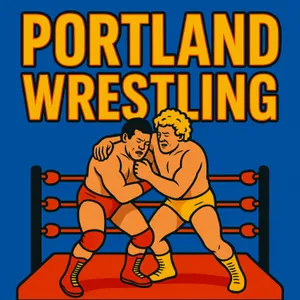
Free Daily Podcast Summary
Portland Wrestling: Daily Summaries Delivered
by Frank
Step inside the Portland Sports Arena and relive the golden age of Pacific Northwest wrestling. From legendary feuds to hidden gems, our podcasts bring you the stories, matches, and larger-than-life personalities that defined one of wrestling’s most unique territories. Each episode dives into the history, characters, and unforgettable moments of Portland Wrestling—from household names who passed through on their way to national stardom, to the one-match wonders and obscurities that only true fans remember. If you love wrestling history, colorful characters, and the untold stories behind the
Latest Episodes
The most recent episodes — sign up to get AI-powered summaries of each one.
- 2 days ago24 min
The Cream of the Crop #8 — Rip Kirby & Beauregard: The Men Who Lit the Fuse
In 1969, Portland Wrestling had a problem.The promotion had moved from the old Portland Armory into the Portland Sports Arena, but the crowds weren't what they had been. The money wasn't what it had been.Don Owen needed a spark.He found two.Roger “Rip” Kirby and Beauregard.Kirby arrived in Portland that spring alongside Pat Patterson. Patterson soon left. Kirby stayed—and within months became one of the most hated men in Northwest wrestling.Athletic, arrogant and dangerous, Kirby terrorized opponents with the wooden post holding one of Portland Wrestling's television lights. Then one night, Lonnie Mayne had seen enough.He came to the ring with a saw.Host Frank Culbertson was there that night as a young fan and remembers watching Mayne literally saw down the post as the Portland Sports Arena erupted.The rivalry became a bloody war. Kirby took Mayne's Northwest Heavyweight Championship, and something remarkable happened along the way:Portland fans started cheering for Lonnie Mayne.Then came the final ingredient.“The Sensation of the Nation” Beauregard.Flashy, outrageous and one of the finest talkers of his era, Beauregard understood that television wasn't simply there to show wrestling—it was there to sell personalities and sell tickets. He dressed as historical characters, bragged about imaginary famous relatives and even used Portland Wrestling television to promote his own record, Testify.When Beauregard returned to Portland and joined Rip Kirby, the pieces finally came together.On one side stood Kirby and Beauregard.Across from them stood Tony Borne and Lonnie Mayne—two men who had spent years as two of Portland Wrestling's greatest villains.And the fans made their choice.They chose Borne and Mayne.This episode of The Cream of the Crop explores how two tremendous heels helped transform two other heels into heroes—and, in the process, helped change the fortunes of Portland Wrestling.It's also a personal episode for Frank, with memories of seeing the Kirby-Mayne angle unfold firsthand and of the day Beauregard's leather jacket somehow ended up in his grandfather's Portland leather shop.For a 10-year-old wrestling fan, that was pretty close to meeting royalty.Rip Kirby was in Portland for only seven months. Beauregard stayed longer. Neither achieved the national fame of some of the wrestlers still to come in this series.But The Cream of the Crop isn't about who became the most famous.It's about who mattered in Portland.Who sold tickets.Who created emotion.Who made people cheer—and who gave them somebody to hate.In 1969, Rip Kirby and Beauregard lit the fuse.And stay to the end for a preview of next week's episode, when Portland Wrestling enters the rock-and-roll era with Steve Doll, Scott Peterson, Rex King and the Southern Rockers.And Jody Day, if you're listening... that one is for you.The Cream of the Crop is based on Mike Rodgers' Encyclopedia of Portland Wrestlers, along with additional historical interviews and research.New episodes drop every Friday.The legends. The money draws. The main eventers.The Cream of the Crop.
- 3 days ago56 min
Ringside in Rose City #54 — Gorgeous Joey Jackson: Inside the Final Years of Portland Wrestling
This week, the Ringside Wheel gets the night off.No mystery envelopes. No Card Shark. No Kayfabe Curveballs.Because tonight, we don't have to talk about Portland Wrestling history.We get to talk to someone who lived it.Frank Culbertson and Portland wrestling historian Mike Rodgers welcome “Gorgeous” Joey Jackson to Ringside in Rose City for a trip inside the final years of Don Owen's legendary territory.Joey takes us from growing up as a wrestling fan in Louisiana to training in Houston under Len Denton—the Grappler. Then came the phone call that changed everything: Portland needed a heel, and Denton recommended a kid who had never wrestled a professional match.Joey arrived on a two-week trial.He stayed for nearly five years.We hear how Don Owen reacted to Joey's very first match, how Don unexpectedly turned him into “Gorgeous Joey Jackson,” and why the comb, mirror and long curly hair proved far more effective at making Portland fans angry than simply trying to be another tough guy.Joey shares stories about Don Owen, Rip Oliver, the Grappler, Art Barr, Ricky Santana, Chris Colt, Ed Moretti, Brian Adams, Roddy Piper, Billy Jack Haynes, Scotty the Body, the Southern Rockers and many more.He remembers wrestling Art Barr in Art's first professional match, teaming with the Super Ninja, becoming part of Chris Colt's Mafia, working the competing OWF promotion, traveling to Japan for WING, and eventually appearing for WCW.And yes, we finally get Joey to tell us a Chris Colt story that Mike couldn't get into Excitement in the Air, Volume Three.It involves Ed Moretti.It involves Chris Colt.And it involves spit.We'll leave it there.There's even a special moment for longtime listener and Portland Wrestling scrapbook keeper Jody Day, a devoted Steve Doll fan, when Joey explains what it was really like trying to keep Steve down in the ring:Apparently, Steve Doll was a bit of a “bandy rooster.”But this isn't only a trip into the past.Joey is still in professional wrestling today—promoting shows, running a wrestling school, developing young talent and applying lessons learned from Mid-South and Portland Wrestling to a new generation.Because match results can tell us who wrestled.They can tell us who won.They can tell us where the show took place.But they can't tell us what happened in the car on the way to the next town, what Don Owen was really like, what was said in the dressing room, or how wrestlers learned their craft from the people around them.For that, you need someone who was there.This week, Gorgeous Joey Jackson takes us there.Ringside in Rose City is hosted by Frank Culbertson and Portland wrestling historian Mike Rodgers, author of The Encyclopedia of Portland Wrestlers and the Excitement in the Air series, available on Amazon.New episodes drop every Thursday.One ring. One city. A thousand stories.Wrestling... wrestling the way it should be.
- 1 weeks ago17 min
The Cream of the Crop #7 — Stan Stasiak & The Iron Sheik: Two Roads to the World Championship
The Cream of the Crop #7 — Stan Stasiak & The Iron Sheik: Two Roads to the World ChampionshipTwo wrestlers. Two generations. Two very different journeys through Portland.And both eventually reached the same summit.In Episode 7 of The Cream of the Crop, host Frank Culbertson tells the stories of Stan “The Crusher” Stasiak and The Iron Sheik—two men whose paths through the Pacific Northwest could hardly have been more different, yet both would eventually become World Heavyweight Champion.For Stasiak, Portland became a second home.Arriving in 1965, he developed from the imposing heel known as “The Crusher” into one of the territory’s most enduring stars. Seven Northwest Heavyweight Championships. Eight Northwest Tag Team Championships. Battles with Tony Borne, Lonnie Mayne, Bull Ramos and Rip Oliver. Partnerships with everyone from Dutch Savage and Buddy Rose to a young Billy Jack Haynes.And, of course, there was the Heart Punch.But in 1973, Stasiak accomplished something very few wrestlers ever do: he defeated Pedro Morales to become WWWF World Heavyweight Champion, holding the championship for ten days before losing it to Bruno Sammartino.Ten years later, another wrestler who had passed through Portland found himself in a remarkably similar position.Before the flag, the famous interviews and the larger-than-life personality, Portland fans saw The Iron Sheik while the future legend was still taking shape. His Northwest stay lasted only about nine months, but it included victories over Jimmy Snuka, Jerry Oates and Skip Young, a partnership with Bull Ramos, and a Northwest Tag Team Championship.Portland also saw something that could later be overshadowed by the character: The Iron Sheik could really wrestle.Then, in 1983, Sheik defeated Bob Backlund for the WWF Championship before dropping it to Hulk Hogan.Pedro Morales → Stan Stasiak → Bruno Sammartino.Bob Backlund → The Iron Sheik → Hulk Hogan.Two short championship reigns separating four enormous chapters in wrestling history.Were Stasiak and Sheik transitional champions? Absolutely.But maybe it’s time to stop treating “transitional champion” like an insult.Someone has to be trusted to beat the champion. Someone has to be credible enough to hold the championship. And someone has to be trusted to hand it to the man who will lead the next era.Stan Stasiak and The Iron Sheik were trusted to be those men.And for Frank, the Stasiak story is also personal—going all the way back to being seven years old at the Portland Armory and saying two words to the man who instantly became his favorite wrestler:“Hi, Stan.”Next Friday, The Cream of the Crop returns to 1968 and the early days of the Portland Sports Arena, when two villains helped provide the heat a new building desperately needed:Rip Kirby and Beauregard.The Cream of the Crop is hosted by Frank Culbertson and based on Mike Rodgers’ Encyclopedia of Portland Wrestlers, available on Amazon.New episodes drop every Friday on Spotify, Apple Podcasts, YouTube, and wherever you get your wrestling fix.The main eventers. The money draws. The territory legends.The Cream of the Crop.
- 1 weeks ago1h 34m
Ringside in Rose City #53 — The Best, the Cringiest…and the Ugliest?
Ringside in Rose City #53 — The Best, the Cringiest…and the Ugliest?Year Two of Ringside in Rose City is officially underway—and apparently one year of credibility was enough.Frank Culbertson and Portland wrestling historian Mike Rodgers begin Episode 53 seriously enough, as Lisa Hughes spins the Ringside Wheel and sends them into the greatest moments in Portland Wrestling history.There’s Buddy Rose’s unforgettable babyface turn, with fans flooding the ring and lifting him onto their shoulders. The legendary wheelbarrow overflowing with championship belts. The eight-man tag that helped launch Roddy Piper versus Buddy Rose. Bull Ramos breaking Lonnie Mayne’s arm. Mad Dog Vachon bringing a coffin to the Crow’s Nest. Mayne taking a saw to the television light post. Ripper Collins destroying Dutch Savage with repeated Opu Drops. Dutch coming to Beauregard’s rescue. Roddy Piper transforming Art Barr into Beetlejuice—and the emotional final days of Don Owen’s Portland Wrestling.Then things begin to deteriorate.Frank and Mike turn to some of the cringiest moments in Portland Wrestling history—from interviews that went horribly wrong and Rip Oliver’s unfortunate dental incident to Ginger versus Veronica and the unforgettable Grappler–Scotty the Body sing-off.And then Lisa takes complete control.Who were the most handsome wrestlers in Portland Wrestling history?And, because apparently we're actually doing this...Who were the ugliest?Somewhere between Rick Martel and Mad Dog Vachon, whatever remained of the show's credibility disappears.CARD SHARK also returns with three programs designed to test just how deep Mike’s wrestling knowledge really goes. We visit San Antonio in 1959 during a Texas wrestling war, encounter one of the strangest promotions we’ve ever discussed in 1974 Arizona, and finally come home for the last night of wrestling at the Portland Armory in September 1968, when more than 3,000 fans packed the building for the end of an 18-year era.And this week's Card Shark gives us the perfect opportunity to recommend a terrific new wrestling history book:The Texas Rasslin’ Wars of the 1950s by Greg Klein, edited by Greg Oliver.If you think wrestling politics are complicated today, wait until you read about Texas in the 1950s—promoters changing alliances, fighting over cities and wrestlers, jumping from one side to another, and then sometimes jumping right back again.It's a fascinating look at one of professional wrestling's wildest territorial battles, and a book we highly recommend.Need one more reason to pick it up?Two words: Jack Pfeffer.Episode 53 starts with some of the greatest moments Portland Wrestling ever produced.By the end, we're discussing 10-cent beer, Mike singing Popeye the Sailor Man, and whether Mad Dog Vachon belongs on Lisa's list.Welcome to Year Two.Ringside in Rose City is hosted by Frank Culbertson and Portland wrestling historian Mike Rodgers, author of The Encyclopedia of Portland Wrestlers and the Excitement in the Air series, available on Amazon.New episodes drop every Thursday.One ring. One city. A thousand stories.Wrestling... wrestling the way it should be.
- 2 weeks ago24 min
The Cream of the Crop #6 — The Grappler: The Man Behind the Mask
The Cream of the Crop #6 — The Grappler: The Man Behind the MaskSeven-time Northwest Heavyweight Champion. Eleven-time Northwest Tag Team Champion. Main-event wrestler. Masked villain. Booker. Teacher. Troublemaker.The Grappler.For the first time on The Cream of the Crop, one man gets the entire spotlight as host Frank Culbertson tells the story of Len Denton—the wrestler who was repeatedly told he was too small to make it, only to become one of the most important figures in the final era of Portland Wrestling.And this time, The Grappler helps tell the story himself, through archival interview audio recorded with Len Denton.We go back to the beginning: spending nearly everything he had to learn the wrestling business, being given his notice on his very first day in Amarillo, getting advice from Abdullah the Butcher, and eventually finding the identity that changed his career forever—a mask, an orthopedic boot, and the name The Grappler.From there, Denton learned from some of wrestling’s greatest minds, including Bill Watts, Harley Race, Ric Flair and Buck Robley, eventually becoming a booker himself before arriving in Portland in 1987.And Portland Wrestling needed him.The territory was struggling. The old formula was growing stale. The Grappler brought new talent, new ideas and a willingness to push Don Owen in directions Portland Wrestling hadn't traditionally gone.Along the way, he helped develop wrestlers including Art Barr, Brian Adams, Joey Jackson, The Bruise Brothers and Scotty the Body. He helped modernize Portland television alongside Roddy Piper. He helped create angles designed around one fundamental question:What makes people care enough to buy a ticket?Then there are the stories that could only happen in Portland Wrestling.The Grappler bets Don Owen that he can sell out the Portland Sports Arena—and does it, with 600 more fans turned away at the door. Don responds by complaining about the people who couldn't get in.Grappler wants more money. Don refuses. So while Don is paying his telephone bill, Grappler goes to Japan and runs up $1,200 in international collect calls.Don fires him.And replaces him with Roddy Piper.Who promptly asks The Grappler to help him book the territory.And then there’s The Breakfast Club—John Nord, milk, Cheerios, a wrestling ring and an idea Don Owen absolutely did not want happening on his canvas.This is the story of a wrestler who understood the old-school wrestling business while recognizing that Portland had to change. A man who could wrestle, book, teach, create stars, develop angles, sell tickets—and occasionally drive Don Owen completely insane.Because Len Denton's Portland legacy isn't simply about the championships he won.He learned how to become a main-event wrestler.Then he learned something even harder:How to make other people main-event wrestlers.Len Denton — The Grappler.Beat me if you can.The Cream of the Crop is hosted by Frank Culbertson and based on The Encyclopedia of Portland Wrestlers and Excitement in the Air, Volume Three by Portland wrestling historian Mike Rodgers, available on Amazon.New episodes drop every Friday on Spotify, Apple Podcasts and YouTube.Next week: Two Portland Wrestling stars who eventually climbed all the way to the WWF World Heavyweight Championship—Stan “The Crusher” Stasiak and The Iron Sheik.
- 2 weeks ago1h 38m
Ringside in Rose City #52 — ONE YEAR ANNIVERSARY SHOW! | October 1969
Ringside in Rose City #52 — ONE YEAR ANNIVERSARY SHOW! | October 196952 episodes. 52 trips through Portland wrestling history. One full year of Ringside in Rose City.This week, Frank Culbertson and Portland wrestling historian Mike Rodgers celebrate the ONE-YEAR ANNIVERSARY of Ringside in Rose City—and there may be no better month to mark the occasion than October 1969.The mystery envelopes are back. Lisa is back in control of the Ringside Wheel. And Portland Wrestling is about to enter a month that helps shape the territory for years to come.Rip Kirby and Lonnie Mayne take their already-brutal rivalry to another level, with Kirby finally dethroning Mayne for the Northwest Heavyweight Championship after a bloody battle that leaves Mayne carried from ringside.Then “The Sensation of the Nation” Beauregard returns to Portland after nearly a year away—and immediately becomes the missing piece on the heel side of the territory. His return reignites unfinished business with Mayne and helps launch Kirby & Beauregard against Mayne & Tony Borne, a rivalry that will carry Portland Wrestling forward.And at Memorial Coliseum, NWA World Heavyweight Champion Dory Funk Jr. comes to Portland to defend the championship against Rip Kirby. Frank and Mike also remember Funk following his passing and discuss his legacy as one of professional wrestling’s great scientific wrestlers.Along the way, there’s plenty more from October ’69: Billy White Wolf, Buddy Marino, Johnny Kostas, Stan Stasiak, Earl Maynard, Fred Baron—and somehow Lonnie Mayne racing motorcycles, because apparently professional wrestling wasn’t dangerous enough.Kayfabe Curveballs returns for the anniversary celebration, where Mike faces questions involving Hidden Valley Ranch, rhubarb and a 200-foot buffet—and we even get another Buddy Rose and Ed Moretti story.And when those ukuleles start playing, it’s time for another Island Interlude and a trip back to Hawaii.But Episode 52 is about more than one month in 1969.For an entire year, Ringside in Rose City has explored the champions, main eventers, forgotten names, interviews, feuds, buildings, newspaper advertisements, strange finishes and unforgettable stories that made Portland Wrestling such an important part of the Pacific Northwest.One year down—and we’re nowhere near a thousand stories yet.One ring. One city. A thousand stories.Hosted by Frank Culbertson with Portland wrestling historian Mike Rodgers, author of The Encyclopedia of Portland Wrestlers, available on Amazon.New episodes of Ringside in Rose City drop every Friday on Spotify, Apple Podcasts and YouTube.
- 3 weeks ago18 min
The Cream of the Crop #5 — Two Ways to Draw a Crowd: Jimmy “Superfly” Snuka & Ripper Collins
The Cream of the Crop #5 — Two Ways to Draw a Crowd: Jimmy “Superfly” Snuka & Ripper CollinsBefore Madison Square Garden. Before the steel cage. Before millions of wrestling fans knew the name Superfly, there was Portland.And standing across the ring from the young Jimmy Snuka was one of professional wrestling’s great old-school heels: Ripper Collins.In Episode 5 of The Cream of the Crop, Frank Culbertson looks back at two wrestlers who represented completely different ways to become a wrestling attraction.Snuka looked like the future—explosive, athletic and charismatic. Portland recognized his potential early and gave him a place to develop into the star the rest of the wrestling world would eventually know.Collins had already mastered a very different art: making people hate him. From filing his teeth during interviews to the brutal Opu Drop, Collins knew exactly how to make an audience desperate to see somebody shut him up.Their paths first crossed in Hawaii in 1973. Months later, both arrived in Portland, where those early encounters developed into a heated rivalry involving the Northwest Heavyweight Championship, disqualifications, title changes, a hair-versus-hair match—and Ripper Collins putting on a mask after losing his hair.One man made people buy a ticket because they wanted to see him win.The other made people buy a ticket because they wanted to see him lose.Different methods. Same result. People in the building.Two ways to draw a crowd.One made you cheer. One made you angry. Both made you care.That’s what legends do.The Cream of the Crop: The Main Eventers, the Money Draws, and the Territory Legends.New episodes drop every Friday.Based on The Encyclopedia of Portland Wrestlers by Mike Rodgers, with additional material from Oh Yeah! The History of Hawaiian Wrestling, also by Mike Rodgers. Both are available on Amazon.Next week: The Grappler gets the spotlight all to himself.
- 3 weeks ago1h 47m
Ringside in Rose City #51 — Guest Shots: Portland Wrestling Memories
Ringside in Rose City #51 — Guest Shots: Portland Wrestling MemoriesThis week, we put away the results sheets and step inside the memories of the Portland Sports Arena.Frank Culbertson and Mike Rodgers welcome three special guests, each with a different connection to Portland Wrestling and a different generation of stories to tell.Rich Patterson takes us back to his first night inside the Sports Arena in 1971, unforgettable moments involving Roddy Piper, Buddy Rose, Rip Oliver and Billy Jack Haynes, and the remarkable story of how he helped save the Buddy Rose tape collection—hundreds of tapes that might otherwise have disappeared forever.Jody Day remembers discovering Portland Wrestling as a young fan in the 1980s, walking into the Sports Arena for the first time, the Andre the Giant mural, Steve Doll and the Southern Rockers, The Breakfast Club, and what it was like getting to know some of the wrestlers while still trying to understand the mysteries of kayfabe.Then longtime wrestling broadcaster and historian Jim Valley joins us for another perspective on Portland Wrestling, including memories from both sides of the microphone.Along the way, there are stories about bloody matches, the Crow's Nest, Santa Rip, moldy videotapes, milk and Cheerios, favorite wrestlers, saved programs and scrapbooks—and the little moments that made the Portland Sports Arena unlike any other wrestling building.We also take time to remember Jerry Oates, who passed away September 4 at the age of 78. Mike shares memories from his interview with Oates and looks back at Jerry's important Portland run, including his Northwest Heavyweight Championship and tag-team partnership with Jesse Ventura. We remember a wrestler who described his career simply: he always gave 100 percent—and a man Ole Anderson once told was probably “too nice” for the wrestling business.Because you can look up who won a match.You can find the attendance.You can read the results.But that doesn't tell you what it felt like to be there.History tells us what happened. Memories tell us why it mattered.Three guests. Three perspectives. A tribute to Jerry Oates. And a whole lot of Portland Wrestling memories.Ringside in Rose CityOne ring. One city. A thousand stories.New episodes every Thursday.Wrestling... wrestling the way it should be.
Get Portland Wrestling summaries in your inbox
Free AI-powered daily recaps. Key takeaways, quotes, and mentions — in a 5-minute read.
Get Free Summaries →Free forever for up to 3 podcasts. No credit card required.
You Might Also Like
Listeners also like.
The Ringer Wrestling Show
Analysis and reactions to professional wrestling’s biggest matches, feuds, and gossip from a team of passionate insiders.
Cultaholic Wrestling
Daily coverage of professional wrestling including WWE, AEW, NJPW, and ROH with news, reviews, and analysis.
POST Wrestling
John Pollock and Wai Ting analyze WWE, AEW, and major pro wrestling news with a team of contributors.
Getting Over: Wrestling Podcast
Breaks down pro wrestling storylines, pay-per-views, and industry news across WWE, AEW, and NXT with weekly analysis.
The WWE Podcast
Weekly breakdowns of WWE storylines, surprises, and rivalries with unfiltered analysis for wrestling fans.
Going In Raw: A Pro Wrestling Podcast
Two fans break down the latest pro wrestling events with humor and analysis, often joined by guests who share their enthusiasm.
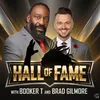
Hall of Fame with Booker T & Brad Gilmore
Two-time WWE Hall of Famer Booker T and Brad Gilmore break down wrestling with insider analysis, interviews, and lively debate.
Jim Cornette’s Drive-Thru
Jim Cornette answers listener-submitted questions on wrestling and pop culture, with event reviews and fan content.

The Othership
Pop culture discussions with a focus on pro wrestling, featuring rotating hosts and guests in roundtable formats.
The Kurt Angle Show
A professional wrestling champion and Olympic gold medalist reflects on his career, matches, and the wrestling industry with a co-host.

TMZ's Inside The Ring
Covers WWE matches, backstage drama, and breaking wrestling news with exclusive interviews and insider perspectives.
Insight with Chris Van Vliet
Long-form interviews with top figures in pro wrestling, sports, and film exploring their careers and personal motivations.
About Portland Wrestling
Step inside the Portland Sports Arena and relive the golden age of Pacific Northwest wrestling. From legendary feuds to hidden gems, our podcasts bring you the stories, matches, and larger-than-life personalities that defined one of wrestling’s most unique territories. Each episode dives into the history, characters, and unforgettable moments of Portland Wrestling—from household names who passed through on their way to national stardom, to the one-match wonders and obscurities that only true fans remember. If you love wrestling history, colorful characters, and the untold stories behind the
Customized Recaps
AI-powered recaps with compact key takeaways, quotes, and insights.
Straight to Your Inbox
Get key takeaways from Portland Wrestling in a 5-minute read.
Save Hours Every Week
Stay current on your favorite podcasts without falling behind.
Frequently Asked Questions
What is Podzilla's Portland Wrestling daily summary?
It's a free AI-powered email that summarizes new episodes of Portland Wrestling as soon as they're published. You get the key takeaways, notable quotes, and links & mentions — all in a quick read.
How does the Portland Wrestling podcast summary work?
When a new episode drops, our AI transcribes and analyzes it, then generates a personalized summary tailored to your interests and profession. It's delivered to your inbox every morning.
Is this an official Portland Wrestling product?
No. Podzilla is an independent service that summarizes publicly available podcast content. We're not affiliated with or endorsed by Frank.
Can I get summaries of other podcasts too?
Absolutely! The free plan covers up to 3 podcasts. Upgrade to Pro for 15, or Premium for 50. Browse our full catalog at /podcasts.
How often does Portland Wrestling release new episodes?
Portland Wrestling publishes daily. Our AI generates a summary within hours of each new episode.
What topics does Portland Wrestling cover?
Portland Wrestling covers topics including Sports, Wrestling. Our AI identifies the specific themes in each episode and highlights what matters most to you.
Start getting Portland Wrestling summaries tomorrow morning.
Free forever for up to 3 podcasts. No credit card required.
Free forever for up to 3 podcasts. No credit card required.