Free Daily Podcast Summary
Power: Limits and Prospects for Human Survival: Daily Summaries Delivered
by Post Carbon Institute: Energy
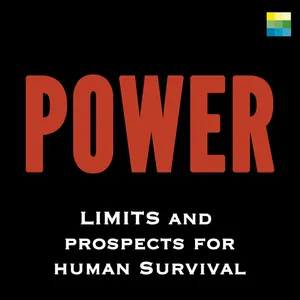
How have humans become powerful enough to disrupt the world's climate, trigger the sixth mass extinction, and cause serious harm to the biosphere? And with all the abilities and technologies we've accrued, why do we so often oppress instead of uplift one another? Join us as we explore the hidden driver behind the converging crises of the 21st century. It all comes down to power - our pursuit of it, overuse of it, and abuse of it. Learn how different forms of power arose, what they mean for us today, and why giving up power just might save us. This podcast is based on the groundbreaking book, Power: Limits and Prospects for Human Survival by Richard Heinberg, one of the world's foremost experts on energy and sustainability.
Latest Episodes
The most recent episodes — sign up to get AI-powered summaries of each one.
- Jan 24, 202321 min
How to Navigate Power with Wisdom
First wisdom, then action. Richard Heinberg shares insights from his deep dive into the nature of power and power relationships. He addresses the three main "power tools": money, weapons, and communication technologies with humble and thoughtful advice on how to approach them. You’ll have the chance to contemplate how you might live your most authentic life with moderation, rationality, responsibility, and sometimes sacrifice. And you’ll learn how to evaluate potential solutions to global environmental and social problems by answering a simple question about how power is shared (or how it is not). For more information, please visit our website.Support the showLearn more at power.postcarbon.org
- Nov 9, 20221h 1m
Powered Down and Better Off
Learn how humanity can exercise collective self-restraint to navigate the social and environmental crises of the 21st century. The world is in overshoot. There are too many people consuming too much stuff, and we're facing climate change, biodiversity loss, and immense social inequality. We're currently on a pathway to collapse, but the future doesn't have to be bleak. We can develop communities where we take care of one another and the ecosystems we inhabit. By understanding power relationships, overhauling economic institutions, and nurturing our most honorable cultural and spiritual traditions, we can forge a happy and healthy future. Follow along with sustainability expert Richard Heinberg as he explores these topics and offers sound advice for young people who will be living through turbulent times. And don't miss Melody’s song at the end of this episode. For more information, please visit our website.Support the showLearn more at power.postcarbon.org
- Nov 2, 202254 min
Optimal Power
Overpopulation, overconsumption, and overexploitation of Earth's resources go way beyond the realm of simple problems with straightforward solutions. Instead, they are dilemmas that require tradeoffs and difficult decisions. To guide such decisions, energy and sustainability expert Richard Heinberg explores big ideas such as the adaptive cycle, resilience theory, and prudent predator theory. Heavy topics abound, from death to extinction to societal collapse, but Richard proposes the "optimum power principle" to help humanity step back from the edge. And the good news is that we have a long history of deploying self-limiting tools (even ordinary policies like taxation and rationing) to curtail our overzealous quest for power. For more information, please visit our website.Support the showLearn more at power.postcarbon.org
- Oct 26, 202255 min
Overpowered: The Days of Climate Chaos
As exploitation of fossil fuels powered exponential growth in population and consumption, humanity began running into problems. Serious problems. The existential kind, like the potential for runaway global warming and the onset of the sixth mass extinction. For many problems, a solution exists, but what happens when a selected solution actually generates more problems? Energy and sustainability expert Richard Heinberg explains the difference between problems and dilemmas, and discusses how to escape our current climate dilemma. Sources of renewable energy have a major role to play, but we can’t rely on technofixes and business as usual. Real change will require shared sacrifice and wise decisions in the face of tradeoffs. For more information, please visit our website.Support the showLearn more at power.postcarbon.org
- Oct 19, 20221h 1m
Fossil Fuels Changed Everything
Over the 19th and 20th centuries physical power, social power, and economies grew explosively. The main cause was humanity’s exploitation of fossil fuels. Sources of oil, coal, and natural gas – a vast underground storehouse of ancient sunlight – provided an almost magical and seemingly unlimited supply of energy to grow more food, provision more people, build more cities, and create more technologies. But this age of "more" also brought global warfare, consumerism, and overproduction. Improve your energy literacy with stories about pushing motor vehicles, enduring blackouts, and growing $10 tomatoes, and take a tour of history that visits ancient China, industrializing Britain, the Great Depression, the Cold War, and the Green Revolution. Resources mentioned in this episode include a juxtaposition of old and new city photographs, and Jason Bradford’s report The Future Is Rural. The song, "Brother, Can You Spare a Dime?" was written by lyricist Yip Harburg and composer Jay Gorney. For more information, please visit our website.Support the showLearn more at power.postcarbon.org
- Oct 12, 202251 min
The Rise of Social Inequality
Richard Heinberg, renowned energy and sustainability expert, explores the development of social power – simply defined as the ability to get other people to do something. Whether through money, violence, writing, or other means, humans have devised interesting ways of exerting influence over one another. One major downside, with implications for the collapse of societies, is widespread inequality. Concentration of social power tends to create social instability. You'll hear how power acts as a drug, damages people’s brains, and leads to the tragedies of slavery and colonization. Along the way, you might adopt new verbs like "Tom Sawyering" and "Robin Hooding." Note: Choral music in this episode was licensed from Allen Grey Music, "Lost Voices Soundscape." For more information, please visit our website.Support the showLearn more at power.postcarbon.org
- Oct 5, 202244 min
Fire, Tools, and Language
Join renowned energy and sustainability expert, Richard Heinberg, as he describes the flow of power in hunter-gatherer communities of the Pleistocene. As people learned to wield fire, deploy an array of tools, and coordinate actions through increasingly descriptive language, they became more capable of concentrating power. This development produced mind-blowing impacts on brain capacity and other aspects of human evolution. As you go back in time to the dawn of civilization, you'll become familiar with self-reinforcing feedback loops and how they shaped humanity's rise to dominance. And finally, you'll get to hear about (and appreciate) the surprising power of beauty in all its varied forms, but especially in the form of music. For more information, please visit our website.Support the showLearn more at power.postcarbon.org
- Sep 28, 202251 min
Power in Nature
To understand humanity's relationship with energy and power, and to get a handle on why we're experiencing a polycrisis of climate change, social inequality, and loss of biodiversity, you have to go back to the beginning – all the way back to the origins of life on Earth. Explore how power functions in nature, including predator/prey relationships, self-balancing mechanisms in organisms and ecosystems, and the maximum power principle. Along the way, you'll tour exotic locations like the Grand Canyon and volcanic vents at the bottom of the sea, as well as more humble destinations like a neighborhood pond and a root cellar – places that will help you appreciate how power in nature drives evolution and determines biological success. For more information, please visit our website.Support the showLearn more at power.postcarbon.org
Get Power: Limits and Prospects for Human Survival summaries in your inbox
Free AI-powered daily recaps. Key takeaways, quotes, and mentions — in a 5-minute read.
Get Free Summaries →Free forever for up to 3 podcasts. No credit card required.
You Might Also Like
Listeners also like.

The Great Simplification with Nate Hagens
Discussions with experts on energy, ecology, economics, and human behavior to understand the systemic challenges facing civilization.

American Power
A geopolitical podcast examining the hidden systems—military, energy, and politics—driving global conflicts and decisions.

The End Of The World with Josh Clark
A 10-episode exploration of humanity's future, examining existential threats and the challenges of surviving the next 200 years.

Energy Gang
A podcast that breaks down clean energy technology, policy, and market trends shaping the global energy transition.

Brave New Planet
Explores the societal and ethical impacts of emerging technologies like AI and genetic engineering through expert conversations.
Unf*cking the Future
A scientist explores environmental crises and practical solutions to secure a sustainable future.

Inquiring Minds
Explores the intersection of science and society through critical thinking and in-depth analysis.
Are We Doomed?
Explores real and exaggerated existential threats like climate change, AI, and pandemics through expert interviews and narrative storytelling.

Peak Prosperity
Explores economic, energy, environmental, and geopolitical systems to offer clarity beyond mainstream narratives.

The Ezra Klein Show
Conversations on pressing political, social, and cultural issues with experts and thinkers.

CSPI Podcast
Conversations with CSPI scholars and experts on topics in science, technology, and politics.

Intelligence Squared: Business
Discusses the future of capitalism and major economic trends with business leaders, authors, and economists.
About Power: Limits and Prospects for Human Survival
How have humans become powerful enough to disrupt the world's climate, trigger the sixth mass extinction, and cause serious harm to the biosphere? And with all the abilities and technologies we've accrued, why do we so often oppress instead of uplift one another? Join us as we explore the hidden driver behind the converging crises of the 21st century. It all comes down to power - our pursuit of it, overuse of it, and abuse of it. Learn how different forms of power arose, what they mean for us today, and why giving up power just might save us. This podcast is based on the groundbreaking book, Power: Limits and Prospects for Human Survival by Richard Heinberg, one of the world's foremost experts on energy and sustainability.
Customized Recaps
AI-powered recaps with compact key takeaways, quotes, and insights.
Straight to Your Inbox
Get key takeaways from Power: Limits and Prospects for Human Survival in a 5-minute read.
Save Hours Every Week
Stay current on your favorite podcasts without falling behind.
Frequently Asked Questions
What is Podzilla's Power: Limits and Prospects for Human Survival daily summary?
It's a free AI-powered email that summarizes new episodes of Power: Limits and Prospects for Human Survival as soon as they're published. You get the key takeaways, notable quotes, and links & mentions — all in a quick read.
How does the Power: Limits and Prospects for Human Survival podcast summary work?
When a new episode drops, our AI transcribes and analyzes it, then generates a personalized summary tailored to your interests and profession. It's delivered to your inbox every morning.
Is this an official Power: Limits and Prospects for Human Survival product?
No. Podzilla is an independent service that summarizes publicly available podcast content. We're not affiliated with or endorsed by Post Carbon Institute: Energy.
Can I get summaries of other podcasts too?
Absolutely! The free plan covers up to 3 podcasts. Upgrade to Pro for 15, or Premium for 50. Browse our full catalog at /podcasts.
How often does Power: Limits and Prospects for Human Survival release new episodes?
Power: Limits and Prospects for Human Survival publishes weekly. Our AI generates a summary within hours of each new episode.
What topics does Power: Limits and Prospects for Human Survival cover?
Power: Limits and Prospects for Human Survival covers topics including Science, Philosophy, Culture, Society & Culture, Earth Sciences. Our AI identifies the specific themes in each episode and highlights what matters most to you.
Start getting Power: Limits and Prospects for Human Survival summaries tomorrow morning.
Free forever for up to 3 podcasts. No credit card required.
Free forever for up to 3 podcasts. No credit card required.