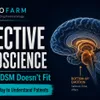
Affective Neuroscience: Understanding Patients Beyond DSM Diagnoses
Affective neuroscience in psychiatry may offer a better way to understand patients who do not fit neatly into DSM categories. Dr. White joins us to explain Jaak Panksepp’s seven primary emotional systems, the difference between affect and emotion, and how subcortical emotional arousal interacts with cortical regulation. We discuss anger, borderline personality disorder, cognitive decline, mindfulness, ACT, emotional blunting with SSRIs, and why some cases labeled treatment-resistant depression may need a better formulation rather than another medication. We also get into the neuroscience behind the model… from decortication and brain-stimulation studies to TMS… and ask what psychiatry loses when diagnosis comes before understanding affect.Dr. White’s Substack: This is a public episode. If you would like to discuss this with other subscribers or get access to bonus episodes, visit psychofarm.substack.com
Podzilla Summary coming soon
Sign up to get notified when the full AI-powered summary is ready.
Free forever for up to 3 podcasts. No credit card required.
Listen to This Episode
More from Psychofarm Podcast
Trauma and PTSD: How the DSM Criteria Actually Help Us Understand What’s Going On
What Patients Should Know When Diagnosed With Depression
Autism Diagnosis Explained: DSM-5 Criteria, Autistic Traits & the Difficult Differential
How to Diagnose Bipolar Disorder with Dr. Phelps: Hypomania, Mixed States & the Clues DSM Misses
Get summaries like this every morning.
Free AI-powered recaps of Psychofarm Podcast and your other favorite podcasts, delivered to your inbox.
Free forever for up to 3 podcasts. No credit card required.