Free Daily Podcast Summary
Quarks to Cosmos: Daily Summaries Delivered
by TheTuringApp
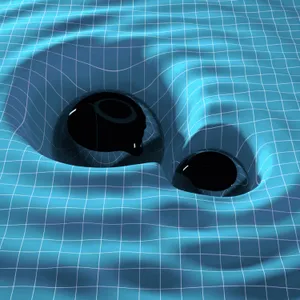
Quarks to Cosmos unpacks some of the most complex ideas in modern physics, from Relativity to Quantum Mechanics, String Theory, Timescape Model, and beyond, and explains them in ways that are both intellectually rigorous and refreshingly clear. Designed for curious minds with no formal background in physics, each weekly episode takes a single theory or concept and breaks it down using real-world analogies, stories, and simple language, without dumbing it down.
Latest Episodes
The most recent episodes — sign up to get AI-powered summaries of each one.
- Aug 19, 202637 min
How the World’s First Nuclear Bomb Was Made - Part 2
In the summer of 1945, the forbidding landscape of the New Mexico desert, known as the Jornada del Muerto, became the stage for the birth of the atomic age.At the center of this "Journey of Death," a 100-foot steel tower held "the gadget"—a five-foot sphere of explosives and metal containing a heart of man-made plutonium. J. Robert Oppenheimer, the wasted and sleep-deprived director of the Los Alamos laboratory, bore the immense responsibility for this object, which felt warm to the touch like a living thing.The successful test of this device marked a terrifying transition from theoretical physics to a reality of elemental forces, forever altering the course of human history.The aftermath of the atomic bombings of Hiroshima and Nagasaki left the world—and the scientists who created the weapon—profoundly altered.While President Truman was sobered by the "horrible" thought of wiping out another 100,000 people, the scientific community was deeply divided.Leo Szilard, the man who first conceived of the chain reaction, condemned the use of the bomb as one of the greatest blunders in history, while Otto Hahn, the discoverer of fission, was driven to deep depression.Oppenheimer himself expressed doubts to General Groves, reflecting a complex mixture of professional triumph and moral haunting that would define the legacy of the pioneers who brought the power of a star to Earth.
- Aug 12, 202648 min
How the World’s First Nuclear Bomb Was Made - Part 1
In September 1933, Hungarian physicist and Jewish refugee Leo Szilard was struck by a world-altering idea while crossing a London street.Irritated by Lord Rutherford’s dismissal of atomic power as "moonshine," Szilard envisioned a nuclear chain reaction: if an element could be found that emits two neutrons after absorbing one, it could sustain a liberated flow of energy.This "fantastic explanation" remained a theoretical puzzle for years, a "bottled genie" of physics that Szilard feared could lead to devastating weapons if realized by Nazi Germany.The critical breakthrough arrived in 1938, when Otto Hahn and Fritz Strassmann in Berlin unexpectedly split a uranium nucleus into barium—a process Lise Meitner and Otto Frisch later identified as "fission".Meitner realized that the "lost mass" from the split was converted into a colossal amount of energy, roughly 200 million electron volts per atom, according to Einstein's 𝐸=𝑚𝑐2.When news of the discovery reached the global scientific community, physicists like Niels Bohr immediately grasped its significance.For Szilard, the circle was complete: the mechanism for his chain reaction was real, and the race to control the terrible power of the unseen world had officially begun.
- Aug 5, 202633 min
Can AI Save Particle Physics
The particle physics community reached a historic peak in 2012 with the discovery of the Higgs boson, a triumphant vindication of decades of theoretical and experimental work.However, in the years since, the initial excitement has faded into a period of prolonged silence, as no new successor particles have emerged despite trillions of high-energy collisions at the Large Hadron Collider.Recent assessments suggest that we may be approaching a "barren plateau," where even a leviathan 100 TeV proton collider—ten times more powerful than today’s most advanced detectors—might only confirm the existing Standard Model rather than unveiling the elusive "new physics" that scientists have long anticipated.Without a seismic shift in methodology, the field risks a future of diminishing returns, where the sheer cost and scale of next-generation experiments outpace their likelihood of discovery.Yet, a glimmer of hope remains in the digital realm: artificial intelligence is poised to become the most significant revolution in physics since the invention of the accelerator.By replacing laborious manual simulations with neural networks and using AI-driven triggers to sift through forty million collisions per second, researchers are finding new ways to spotlight the faintest whispers of new laws of nature.This transition from massive hardware to hyper-efficient code may be the key to tearing down analysis bottlenecks and sketching the next frontier of the cosmos.
- Jul 29, 202613 min
Future Circular Collider: The Most Expensive Machine in History
The Future Circular Collider (FCC) represents the most ambitious scientific instrument ever proposed—a subterranean ring 91 kilometers long that would dwarf the current Large Hadron Collider (LHC). At an estimated cost of 20 to 30 billion Euros, this colossus aims to smash protons together at energies up to 100 teraelectronvolts (TeV), nearly nine times the power of today's most advanced accelerators. While the LHC achieved a historic milestone by uncovering the Higgs boson, physicists are now at a crossroads: they must decide whether to build a larger machine to hunt for elusive signals of dark matter and hidden forces, or risk a multi-billion euro investment that might only confirm our existing models of the cosmos.The debate over the FCC highlights a fundamental tension between the pursuit of high-energy breakthroughs and the risk of a "null result". Proponents argue that exploring these new energy domains is essential to understanding the deeper layers of reality, such as the self-interaction of the Higgs boson, which could expand our theoretical framework. Conversely, critics question the immense price tag, suggesting that the billions required could be more effectively allocated to smaller, specialized facilities like underground dark matter labs or neutrino observatories. Ultimately, the FCC is a high-stakes gamble on the future of physics, designed to either revolutionize our understanding of the universe or define the limits of what our current technology can reveal.
- Jul 23, 202622 min
What is the Smallest Particle in the Universe
The experience of mass is one of the most primal and intuitive aspects of our lives, yet its origin is one of the deepest mysteries in science. For centuries, mass was viewed as an innate quality of "stuff," but subatomic research has revealed that it is actually an acquired characteristic bestowed by the universe through complex mechanisms. Most of the mass in the visible universe—from our own bodies to the stars—arises from a strange duality: a ubiquitous invisible energy field and the intense binding energy of the strong force.The first source is the Higgs field, a cosmic "molasses" that permeates all space, ensnaring fundamental particles and giving them their heft. However, this field only accounts for about 1% of the mass of protons and neutrons; the remaining 99% comes from the kinetic energy of quarks moving at near-light speeds and the gluons that bind them together. While 2023 supercomputer simulations have finally confirmed our theoretical understanding of the proton's radius, mysteries remain regarding the "ghostly" neutrino, which was once thought to be completely massless. Even with these insights, we only account for about 5% of the total mass of the universe, with the rest hidden in the elusive realms of dark matter and dark energy.
- Jul 16, 202625 min
How Feynman Diagrams Saved Physics
Our everyday intuition suggests that empty space should be weightless, as there is seemingly "nothing" there; however, gravity measurements reveal that the vacuum actually holds a significant amount of energy or mass. In the early 1980s, Richard Feynman grappled with this "weight of nothing," seeking to understand why the vacuum—the region with the lowest possible energy—seems to weigh practically nothing. To understand this, one must distinguish between a "vacuum," where particles and fluctuations are removed, and the theoretical "void," which lacks any physical properties whatsoever—a concept that has evolved from Newton's "empty stage" to the modern understanding of quantum fields.Feynman diagrams revolutionized this field by providing a visual and mathematical shorthand for the complex interactions within quantum fields, where particles like electrons and photons emerge as localized disturbances. While these diagrams streamlined theories like Quantum Electrodynamics (QED) and are now generated by the thousands using AI and graph neural networks to handle complex calculations, they did not fully solve the mystery of the vacuum’s weight. Quantum fields introduce troublesome infinities, especially when calculating gravity, and although Feynman hoped his diagrams would bypass these issues by describing interactions directly, the challenge of reconciling the weight of empty space remains a fundamental frontier in physics.
- Jul 9, 202633 min
Where Does Mass Come From
The experience of "mass" is so primal and intuitive that we rarely question its origins, yet it is one of the deepest and most complex stories in all of science. For centuries, mass was viewed as an innate quality of "stuff," but subatomic research has revealed that it is actually an acquired characteristic bestowed by the universe through bizarre mechanisms. Most of the mass in the visible universe—including our bodies, our planet, and the stars—arises from two starkly different sources: a ubiquitous, invisible energy field and the intense binding energy of the strong force.The first source of mass is the Higgs field, a cosmic "molasses" that permeates all of space and ensnares fundamental particles like quarks and electrons, giving them their heft. However, the Higgs field only accounts for about 1% of the mass of a proton or neutron; the remaining 99% comes from the kinetic energy of quarks moving at near-light speeds and the energy of the gluons that bind them together. While 2023 supercomputer simulations have confirmed our theoretical understanding of the proton's radius, mysteries remain regarding the "ghostly" neutrino, which the original Standard Model predicted should be massless. Even with these insights, we only account for 5% of the total mass of the universe, with the remaining 95% hidden in the elusive realms of dark matter and dark energy.
- Jul 2, 202621 min
A Star Is About To Go Supernova in Our Backyard
In this episode, we look at the terrifyingly unpredictable behavior of one of the largest stars visible to the naked eye. While our Sun is a stable middle-aged star, Betelgeuse is a celestial sprinter nearing the final, volatile stage of its life. If placed at the center of our solar system, this gargantuan sphere of churning gas would swallow up every planet out to Mars and potentially engulf Jupiter. We unpack the mystery of the 2019 "Great Dimming," when the star violently coughed up a massive plume of surface mass, and explore why its rhythmic 400-day pulse has suddenly been cut in half. We walk through the brutal physics of a core-collapse supernova to map out exactly what will happen when its internal engine shuts down. Located just 640 light-years away, its death will trigger a global alert system, flooding underground neutrino tanks with millions of ghostly particles hours before a titanic shockwave shatters the star’s surface. We paint a vivid picture of the ultimate light show: a dazzling point of light that will rival the full Moon, cast shadows at night, and remain clearly visible in broad daylight for weeks. It’s a high-stakes look at an impending cosmic cataclysm and the fundamental question: Are we safe?
Get Quarks to Cosmos summaries in your inbox
Free AI-powered daily recaps. Key takeaways, quotes, and mentions — in a 5-minute read.
Get Free Summaries →Free forever for up to 3 podcasts. No credit card required.
You Might Also Like
Listeners also like.

The Quanta Podcast
A weekly discussion on groundbreaking science and math stories with Quanta's editorial team.

The Joy of x
A mathematician explores the lives and ideas of leading scientists through in-depth conversations.

Cosmos in a Pod
Explores space, science, philosophy, and technology to reveal the wonders of the universe and humanity's place within it.
Crash Course Pods: The Universe
A theoretical astrophysicist and a bestselling author explore the history and future of the universe.
From First Principles
Breaks down major science stories weekly, explaining the mechanics behind physics, space, AI, and biotech developments.
Physics to God
Explores the intersection of modern physics and theology, examining fine tuning, the multiverse, and the concept of God.
Physics for Future
Experts discuss quantum mechanics, atomic clocks, and AI to make physics accessible for students and the public.
The Field Guide to Particle Physics
A guided exploration of subatomic particles, their properties, interactions, and roles in the fundamental structure of the universe.

PBS Space Time
An astrophysicist explains cosmic phenomena like black holes and galaxy evolution through accessible, science-driven discussions.
The World, the Universe and Us
Explores big scientific questions about life, consciousness, climate, and the cosmos with expert scientists and New Scientist journalists.
The Science of Everything Podcast
Explores diverse topics in natural and social sciences through the lens of the scientific method.

The Joy of Why
Mathematicians and astrophysicists explore fundamental scientific and mathematical questions with leading researchers.
About Quarks to Cosmos
Quarks to Cosmos unpacks some of the most complex ideas in modern physics, from Relativity to Quantum Mechanics, String Theory, Timescape Model, and beyond, and explains them in ways that are both intellectually rigorous and refreshingly clear. Designed for curious minds with no formal background in physics, each weekly episode takes a single theory or concept and breaks it down using real-world analogies, stories, and simple language, without dumbing it down.
Customized Recaps
AI-powered recaps with compact key takeaways, quotes, and insights.
Straight to Your Inbox
Get key takeaways from Quarks to Cosmos in a 5-minute read.
Save Hours Every Week
Stay current on your favorite podcasts without falling behind.
Frequently Asked Questions
What is Podzilla's Quarks to Cosmos daily summary?
It's a free AI-powered email that summarizes new episodes of Quarks to Cosmos as soon as they're published. You get the key takeaways, notable quotes, and links & mentions — all in a quick read.
How does the Quarks to Cosmos podcast summary work?
When a new episode drops, our AI transcribes and analyzes it, then generates a personalized summary tailored to your interests and profession. It's delivered to your inbox every morning.
Is this an official Quarks to Cosmos product?
No. Podzilla is an independent service that summarizes publicly available podcast content. We're not affiliated with or endorsed by TheTuringApp.
Can I get summaries of other podcasts too?
Absolutely! The free plan covers up to 3 podcasts. Upgrade to Pro for 15, or Premium for 50. Browse our full catalog at /podcasts.
How often does Quarks to Cosmos release new episodes?
Quarks to Cosmos publishes weekly. Our AI generates a summary within hours of each new episode.
What topics does Quarks to Cosmos cover?
Quarks to Cosmos covers topics including Science, Physics. Our AI identifies the specific themes in each episode and highlights what matters most to you.
Start getting Quarks to Cosmos summaries tomorrow morning.
Free forever for up to 3 podcasts. No credit card required.
Free forever for up to 3 podcasts. No credit card required.