Free Daily Podcast Summary
Sacred Decisions: Human Stories at the Heart of Medicine & Halacha: Daily Summaries Delivered
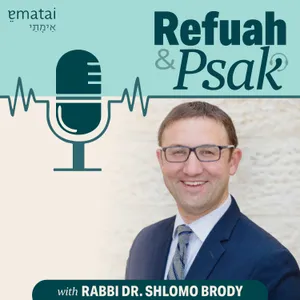
by Ematai - Rabbi Dr. Shlomo Brody
How do you care for a parent with dementia? What do you tell someone facing a serious diagnosis? How do families navigate medical decisions when there are no easy answers? Sacred Decisions is Ematai's podcast exploring the human stories behind difficult medical and family decisions. Hosted by Rabbi Dr. Shlomo Brody, each episode features conversations with patients, families, caregivers, clinicians, and rabbis about aging, illness, family relationships, and the intersection of medicine and halacha.
Latest Episodes
The most recent episodes — sign up to get AI-powered summaries of each one.
- 2 days ago50 min
End-of-Life Decisions & Halacha
End-of-Life Decisions & HalachaGuest: Rabbi Hershel SchachterIn this special episode of Sacred Decisions, Rabbi Dr. Shlomo Brody sits down with Rabbi Hershel Schachter shlit”a for an in-depth conversation about some of the most challenging questions in end-of-life care. Rabbi Schachter is one of the leading poskim of our generation and a member of Ematai’s senior rabbinic council on medical halacha. Drawing on decades of halachic scholarship and practical experience, Rabbi Schachter explores the balance between the obligation to preserve life and the recognition that patients may sometimes choose not to undergo treatments that prolong a painful dying process.Their conversation addresses hospice and palliative care, artificial nutrition and hydration, ventilators and life-sustaining treatment, the role of patients' wishes and advance directives, and the halachic challenges of healthcare providers being asked to help patients with medical assistance in dying.This conversation was inspired by a recently published teshuva by Rabbi Schachter in Hakirah 38, prepared for publication by Rabbi Dr. Shlomo Brody and Rabbi Dr. Jason Weiner.Please note: This episode is intended to articulate important halachic principles according to Rabbi Schachter’s perspective, not to provide practical rulings or Ematai policy. Every medical situation requires individualized halachic and medical guidance. Please reach out to Ematai’s Robert M. Beren Medical Halacha Helpline with specific questions. Learn more about Ematai’s principles of end-of-life care here. Download your own copy of Ematai’s Robert M. Beren Healthcare Directive & Conversation Guide here. Questions or feedback about Sacred Decisions? Contact us at office@ematai.org.
- 1 weeks ago40 min
One Conversation Saved Five Lives
One Conversation Saved Five LivesGuest: Rabbi Leo DeeIn April 2023, Rabbi Leo Dee lost his wife, Lucy, and daughters Maia and Rina in a terror attack. In the midst of unimaginable loss, a conversation Leo and Lucy had months earlier helped their family make the decision to donate Lucy’s organs.Rabbi Dee joins Rabbi Dr. Shlomo Brody to reflect on that decision, the halachic guidance that made it possible, and what it meant to later meet the people whose lives Lucy saved. He shares the unexpected comfort his family found through organ donation and why he believes families should talk about these questions before a crisis.About the guest:Rabbi Leo Dee is an educator, author, and rabbi who lives in Efrat, Israel. Following the murder of his wife, Lucy, and daughters Maia and Rina in a terror attack in April 2023, he has spoken widely about faith and resilience. Mentioned in this episode:Organ donation and respiratory brain death in halachaThe Dee family meets the recipients of Lucy’s organsLearn more about organ donation and halacha at ematai.org/option18. Questions or feedback about Sacred Decisions? Contact us at office@ematai.org.
- 2 weeks ago39 min
I Wish We Had Spoken About Us
I Wish We Had Spoken About UsGuest: Shera DubitskyWhen serious illness enters a family, everyone is affected, but not everyone responds in the same way.In this episode of Sacred Decisions, Rabbi Dr. Shlomo Brody speaks with therapeutic coach Shera Dubitsky about navigating family dynamics during illness. Drawing on her experience as Director of Support Services at Sharsheret as well as more than 30 years of experience working with children and families living with trauma, as well as her own experience losing her mother to metastatic breast cancer, Shera explores how families can make room for different coping styles, share the responsibilities of caregiving, communicate more openly, and keep the patient at the center of decision-making.Their conversation also explores the importance of talking about wishes before a crisis, avoiding the pressure to “make memories,” and remembering that beneath a diagnosis, the person you love is still the same person.About the guest:Shera Dubitsky, M.A., M.Ed., C.P.C., is a therapeutic coach with more than 30 years of experience working with children and families living with trauma. She previously served as Director of Support Services at Sharsheret, where much of her work focused on women living with advanced cancer. She now maintains a private practice and lectures on topics including illness, parenting, life skills, spirituality, and navigating difficult life experiences.Resources MentionedSharsheret — A nonprofit supporting Jewish women and families facing breast and ovarian cancer and those at increased hereditary risk.Learn more and access Ematai’s resources at https://www.ematai.org.Questions or feedback about Sacred Decisions? Contact us at office@ematai.org.
- 3 weeks ago36 min
Choosing Joy in Uncertainty
Choosing Joy in UncertaintyGuest: Shana AlayevShana Alayev is a wife, mother of four, friend, daughter, speech therapist, and someone living with metastatic breast cancer. In this episode, she joins Rabbi Dr. Shlomo Brody for an honest conversation about continuing to live fully when illness and uncertainty are always present.Shana shares how she moved from waiting for cancer to be “over” to recognizing that this is something she is living with, but it does not have to define her. She reflects on parenting, the strength she draws from her family and friends, and how her understanding of hope and emunah has evolved. She also talks about humor and her conscious decision to look for joy, even while making space for fear, sadness, and difficult days.Together, they explore what it means to live with uncertainty, how serious illness changes our relationship with time, and the internal decisions we make about how we want to live when so much remains outside our control.About the Guest:Shana Alayev is a wife, mother, speech therapist and friend who living with metastatic breast cancer. She shares her experiences navigating illness, family life, and finding emunah and joy on Instagram at @shana.alayev. Resources mentioned:Shaar HaBitachon (the fourth gate from Chovot HaLevavot) - Rabbi Bachya ibn Pekuda Learn more and access Ematai’s resources at ematai.org.Questions or feedback about Sacred Decisions? Contact us at office@ematai.org.
- Oct 20, 202651 min
What Do We Owe Our Parents?
What Do We Owe Our Parents?Guest: Rabbi Dr. Jason WeinerWhat do we owe our parents as they age? How do we honor them when their needs increase, their independence changes, or their wishes conflict with what we think is best?Rabbi Dr. Shlomo Brody speaks with Rabbi Dr. Jason Weiner about the complicated transition from being cared for by our parents to becoming their caregivers.Drawing on his experience working with patients and families in the hospital, Rabbi Weiner explores the halachic and emotional challenges of caring for aging parents, balancing family responsibilities, making difficult medical decisions, and navigating the guilt that can accompany caregiving.Key Topics:How Kibbud Av V'em changes as parents age and children become caregiversBalancing honoring parents with responsibilities to one's own familyWhen to say no to a parent's requests and recognizing the limits of caregivingMaking medical decisions for parents who can no longer speak for themselvesNavigating caregiver guilt and difficult end-of-life decisionsHaving meaningful conversations with parents before it's too lateAbout the guest:Rabbi Dr. Jason Weiner is the Senior Chaplain and Director of the Spiritual Care Department at Cedars-Sinai Medical Center, Senior Consultant at Ematai, and Rabbi at Knesset Israel Congregation in Beverlywood. He is the author of Bedside Halacha: Practical Guide for Healthcare Professionals, CARE and COVENANT: A Jewish Bioethic of Responsibility, Jewish Guide to Practical Medical Decision-Making, andGuide to Observance of Jewish Law in a Hospital. Resources and sources mentioned in the conversation:Nishmat Avraham — Rabbi Dr. Avraham S. AbrahamSefer Chasidim — Rabbi Yehuda HaChasidRobert M. Beren Healthcare Directive & Conversation Guide — EmataiKuntrus HaRofe L’Shvurei Lev - Rabbi Yitzchok Schechter (based on the teachings of Rabbi Dovid Cohen)Story of Rav Asi - Kiddushin 31b Learn more and access Ematai’s resources at ematai.org.Questions or feedback about Sacred Decisions? Contact us at office@ematai.org.
- Feb 23, 202642 min
Episode 10: Understanding Hospice Care
In this episode of Refuah & Psak, Rabbi Brody speaks with Chaya Lasson, Director of Jewish Hospice and Palliative Care for Bridging Life in Baltimore, about clarifying misconceptions around hospice and integrating it with Jewish values. Chaya distinguishes hospice from palliative care, outlines the collaborative hospice team model, and dispels myths about hospice. They discuss aligning care with halachic guidance, involving rabbis and clinicians in real-time decision-making, and recognizing patient preferences within Jewish law. Chaya stresses the importance of early education for families, rabbis, and communities to avoid crisis-driven decisions, and shares moving stories of patients who lived longer and more meaningfully under hospice. The conversation urges building relationships with culturally sensitive providers and viewing hospice not as giving up, but as “doing everything” to maximize dignity, comfort, and meaningful living until the final breath.
- Feb 9, 202650 min
Episode 9: Understanding Artificial Nutrition &Hydration
In this episode of Refuah & Psak, Rabbi Brody speaks with Dr. Beth Popp, a palliative-care physician, about the medical, emotional, and halachic complexities of artificial nutrition and hydration (ANH). They review why ANH may be needed, the methods used, and the risks that may be involved. The conversation highlights how decisions differ at various stages of illness, especially near the end of life. Together they stress the importance of case-by-case evaluation, patient comfort, sensitive guidance for families, and review some of the key information needed for providing halachic guidance about ANH.
- Jan 26, 202642 min
Episode 8: Supporting Your Congregants
In this episode of Refuah & Psak, Ematai’s associate director and physician assistant Rachel Secunda speaks with Ematai’s director of community outreach, Bassie Taubes, an oncology nurse, health coach, and rebbetzin, about how rabbis and communities can better support those who often feel unseen. They highlight the elderly who quietly withdraw due to physical challenges, caregivers who sacrifice silently and need recognition and respite, mourners who grieve long after shiva or outside traditional halachic categories and the ill themselves. The discussion also covers the importance of sensitive bikur cholim, remembering caregivers after a loved one’s passing, and empowering rabbis to ask questions of the healthcare team when answering shailot. Ultimately, they stress that rabbis cannot and should not do everything alone; rather, they should do what they can to make congregants feel acknowledged and educate the broader community to notice, listen, and care so that no one feels forgotten.
About Sacred Decisions: Human Stories at the Heart of Medicine & Halacha
How do you care for a parent with dementia? What do you tell someone facing a serious diagnosis? How do families navigate medical decisions when there are no easy answers? Sacred Decisions is Ematai's podcast exploring the human stories behind difficult medical and family decisions. Hosted by Rabbi Dr. Shlomo Brody, each episode features conversations with patients, families, caregivers, clinicians, and rabbis about aging, illness, family relationships, and the intersection of medicine and halacha.
Customized Recaps
AI-powered recaps with compact key takeaways, quotes, and insights.
Straight to Your Inbox
Get key takeaways from Sacred Decisions: Human Stories at the Heart of Medicine & Halacha in a 5-minute read.
Save Hours Every Week
Stay current on your favorite podcasts without falling behind.
Frequently Asked Questions
What is Podzilla's Sacred Decisions: Human Stories at the Heart of Medicine & Halacha daily summary?
It's a free AI-powered email that summarizes new episodes of Sacred Decisions: Human Stories at the Heart of Medicine & Halacha as soon as they're published. You get the key takeaways, notable quotes, and links & mentions — all in a quick read.
How does the Sacred Decisions: Human Stories at the Heart of Medicine & Halacha podcast summary work?
When a new episode drops, our AI transcribes and analyzes it, then generates a personalized summary tailored to your interests and profession. It's delivered to your inbox every morning.
Is this an official Sacred Decisions: Human Stories at the Heart of Medicine & Halacha product?
No. Podzilla is an independent service that summarizes publicly available podcast content. We're not affiliated with or endorsed by Ematai - Rabbi Dr. Shlomo Brody.
Can I get summaries of other podcasts too?
Absolutely! The free plan covers up to 3 podcasts, any in the catalog. Basic raises that to 15, Pro to 40 and Max to 100. Browse our full catalog at /podcasts.
How often does Sacred Decisions: Human Stories at the Heart of Medicine & Halacha release new episodes?
Sacred Decisions: Human Stories at the Heart of Medicine & Halacha publishes biweekly. Our AI generates a summary within hours of each new episode.
What topics does Sacred Decisions: Human Stories at the Heart of Medicine & Halacha cover?
Sacred Decisions: Human Stories at the Heart of Medicine & Halacha covers topics including Religion & Spirituality, Spirituality, Judaism. Our AI identifies the specific themes in each episode and highlights what matters most to you.
Start getting Sacred Decisions: Human Stories at the Heart of Medicine & Halacha summaries tomorrow morning.
Free forever for up to 3 podcasts. No credit card required.
Free forever for up to 3 podcasts. No credit card required.