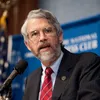
On July 9, 1955, mathematician and philosopher Bertrand Russell announced the Russell-Einstein manifesto, which warned the world of the dangers posed by nuclear weapons. The 11 signatories included Albert Einstein, who signed it just before his death. Physicist Joseph Rotblat stated that the manifesto was "the last message from the man who was the symbol of the great heights the human intellect can reach, imploring us not to let all this be destroyed by human folly." Russell and Rotblat then initiated the Pugwash Conferences on Science and World Affairs, with the first one occurring in 1957 in Pugwash, Nova Scotia. Rotblat led the Pugwash Conferences until 1973, and he and the Pugwash Conferences jointly won the Nobel Peace Prize in 1995 "for their efforts to diminish the part played by nuclear arms in international politics and, in the longer run, to eliminate such arms". With us to discuss the history of Pugwash, nuclear disarmament, and public policy related to science is John Holdren. John served as science advisor to President Barack Obama from 2009 to 2017, making him the longest serving presidential science advisor since World War II. He served in many other scientific leadership roles, including as chair of the executive committee of the Pugwash Conferences from 1987-1997. When the group was awarded the Nobel Peace Prize in 1995, John delivered the acceptance lecture, so he is the perfect person to reflect on the history of Pugwash and nuclear disarmament.
Podzilla Summary coming soon
Sign up to get notified when the full AI-powered summary is ready.
Free forever for up to 3 podcasts. No credit card required.
Listen to This Episode
More from Science History Podcast

Episode 106. The Space Race: Leroy Chiao

Episode 105. Curie's Elements: Dava Sobel

Episode 103. Astronomy: Sarah Alam Malik

Episode 102. Chemicals & Children's Health: Tracey Woodruff
Get summaries like this every morning.
Free AI-powered recaps of Science History Podcast and your other favorite podcasts, delivered to your inbox.
Free forever for up to 3 podcasts. No credit card required.