Free Daily Podcast Summary
Social Workers, Rise!: Daily Summaries Delivered
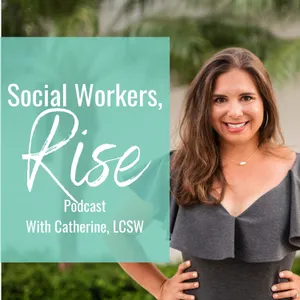
by Catherine Moore, LCSW
We will talk everything social work, on every level from micro to macro. We will hear the stories of social workers who are doing big things, learn new skills, and most importantly, give you actionable steps to change more lives than you ever thought possible.
Latest Episodes
The most recent episodes — sign up to get AI-powered summaries of each one.
- 5 days ago13 min
Social Work Is No Longer a "Professional Degree": How This Impacts You
Social Work is no longer considered a "professional degree" by the Department of Education. In this episode, Catherine Moore, LCSW will break down what these changes mean for current and future social workers, including the potential impact on affordability, workforce shortages, and access to social work education.We discuss:The new federal student loan limits for social work studentsWhy BSW and MSW education are not equivalent when it comes to licensure and independent practiceHow these changes may disproportionately affect low-income, first-generation, and underrepresented studentsThe potential effects on workforce shortages, caseloads, and access to servicesWhether these changes could increase demand and pay for social workers—or lead to the hiring of less-qualified professionalsNASW's response and current advocacy effortsAs the demand for mental health and social services continues to grow, these policy changes could have long-term consequences for the profession and the communities we serve.If you're a social work student, associate, licensed social worker, educator, or supervisor, this is an important conversation you won't want to miss.Review and sign the petition here.____________________________________Tap Here to Subscribe to the Social Workers, Rise! Email Resource ListTap Here to shop career courses for Social Workers.____________________________________Thank you to our SPONSORSHPSO Professional liability insurance designed for healthcare providersRISE Directory for Clinical Supervision
- 1 weeks ago17 min
Advice for New Social Work Graduates Starting a Career in 2026
Graduating with your social work degree is a huge accomplishment but it can also feel overwhelming. Between job applications, uncertainty about the future, and the emotional highs and lows of launching your career, many new graduates feel excited, exhausted, hopeful, and discouraged all at the same time.In this episode, we discuss why your first social work job doesn't have to be your forever job, how each role helps build your skills and experience, and why it's important to focus on one goal at a time rather than trying to do everything at once.You'll also learn how to clarify your career goals, leverage your professional network, and create a sustainable career by prioritizing self-care and building a strong support system. In This Episode:Why your first social work job is just the beginningHow to identify the right job opportunities for your goalsThe power of networking and sharing your career aspirationsStrategies for preventing burnout early in your careerWhy supportive colleagues are essential for long-term successEncouragement for navigating the uncertainty of post-graduation lifeWhether you're preparing to graduate, recently earned your degree, or are searching for your first social work position, this episode will help you move forward with confidence and clarity.____________________________________Tap Here to Subscribe to the Social Workers, Rise! Email Resource ListTap Here to shop career courses for Social Workers____________________________________Thank you to our SPONSORSHPSO Professional liability insurance designed for healthcare providersRISE Directory for Clinical Supervision
- 2 weeks ago33 min
A Day in the Life of a Social Worker in Assisted Living
What does a typical day look like for a Social Worker working in assisted living? This episode walks you through the daily duties, responsibilities, challenges, and perks of the role.Whether you’re a social work student, associate therapist, LCSW, or simply exploring different career paths outside of private practice, this episode offers an honest, practical look at life in assisted living mental health care.In This Episode, You’ll Learn:What a typical workday looks like for a therapist in assisted livingThe types of clients commonly served in assisted living communitiesHow therapy sessions differ from outpatient or private practice settingsCommon mental health concerns in assisted living (depression, anxiety, grief, adjustment, cognitive decline)How therapists collaborate with medical staff, caregivers, and administratorsDocumentation expectations and time management tipsEmotional challenges of the work—and how clinicians prevent burnout.You’ll walk away with:Clarity on what makes your degree unique (so you stop comparing yourself to other clinicians)Confidence in how to talk about your skills in interviews and supervisionA deeper understanding of your full scope beyond therapyThe language to advocate for yourself, your clients, and your profession____________________________________Tap Here to Subscribe to the Social Workers, Rise! Email Resource ListTap Here to shop career courses for Social Workers.____________________________________Thank you to our SPONSORSHPSO Professional liability insurance designed for healthcare providersRISE Directory for Clinical Supervision resources
- Apr 26, 202643 min
Post-COVID Mental Health: Impact on Youth
In this episode, we explore what clinicians are seeing across age groups in the aftermath of COVID-19 and how prolonged disruption has reshaped mental health, especially for youth. From developmental delays to increased anxiety and social challenges, we unpack the real-world clinical patterns emerging in practice. We also dive into practical, actionable strategies social workers can use to support reintegration, strengthen resilience, and meet clients where they are today. Finally, we highlight key themes from an upcoming professional conference, From Disruption to Integration and why these conversations are critical for the future of the field.Conference Information Click Here. (Use discount code SWR10 at checkout)____________________________________Tap Here to Subscribe to the Social Workers, Rise! Email Resource ListTap Here to shop career courses for Social Workers.____________________________________Thank you to our SPONSORSHPSO Professional liability insurance designed for healthcare providersRISE Directory for Clinical Supervision
- Mar 23, 202625 min
Social Work vs. Therapy-Focused Degrees: The Identity Crisis No One Is Talking About
If you’ve ever wondered, “What actually makes social work different from other therapy degrees?”—this episode is for you.Somewhere along the way, social work started getting reduced to “just therapy.” And while social workers can provide therapy, that’s only a fraction of what we’re trained to do.In this episode, we’re breaking down the real differences between a Social Work degree (MSW) and therapy-focused degrees, and why this confusion is contributing to a growing professional identity crisis within the field.More importantly, we’re talking about what’s at stake if social workers don’t start clearly defining—and owning—their unique role.NASW Code of ethics- 5.1 Social Workers' Ethical Responsibilities to the Social Work Profession- Integrity to the profession Here.Advocacy Letter Against Social Work Here.Tap Here to Subscribe to the Social Workers, Rise! Email Resource ListTap Here to shop career courses for Social Workers.____________________________________Thank you to our SPONSORSHPSO Professional liability insurance designed for healthcare providersRISE Directory for Clinical Supervision
- Mar 15, 202634 min
What I Wish I Knew as a New Social Worker About Finding the Right Job
Starting your career in social work can feel overwhelming. With so many paths available—medical social work, schools, nonprofits, private practice, community mental health—it’s easy to wonder if you’re choosing the right job. In this episode, Earvin and Catherine talk about what they wish they knew as new social workers navigating new career settings and finding a role that truly fits personal strengths and values.Whether you’re a new MSW graduate, an associate social worker, or early in your social work career, this conversation will help you think more strategically about your job search, professional growth, and long-term career goals.You’ll hear real advice on exploring different areas of social work, building professional relationships, and giving yourself permission to grow into the profession rather than expecting to have everything figured out right away.Earvin Casciano, MSW, LSW is a licensed social worker in New Jersey who works as a full-time group facilitator at a Substance Use and Mental Health treatment center. Additionally, he works as a part-time therapist at a private practice near the Jersey shore. Earvin is a recent graduate from the College of Social Work at Florida State University. ____________________________________Tap Here to Subscribe to the Social Workers, Rise! Email Resource ListTap Here to shop career courses for Social Workers.____________________________________Thank you to our SPONSORSHPSO Professional liability insurance designed for healthcare providersRISE Directory for Clinical Supervision
- Mar 1, 202631 min
Top 3 Social Work Problems of 2026
We are talking with Marya Wright, DSW MSW BSW, about the challenges plaguing the Social Work industry, demanding more from NASW, her Future Vision, and talking about why she is so passionate about being elected as the next NASW-CA President Elect.Contact Dr. Wright here: Support@MaryaWrightConsultinglinktr.ee/maryawrightconsulting____________________________________Tap Here to Subscribe to the Social Workers, Rise! Email Resource ListTap Here to shop career courses for Social Workers.____________________________________Thank you to our SPONSORSHPSO Professional liability insurance designed for healthcare providersRISE Directory for Clinical Supervision
- Feb 23, 202622 min
You Don’t Have to Advocate for Everything: Focused Impact Without Burnout
There’s a growing pressure in our field to speak on every issue, respond to every crisis, and carry the weight of the world. And if we’re not careful, that pressure turns into overwhelm, exhaustion, and burnout.In this episode, I’m giving you permission to step back.We’re talking about the emotional cost of constant advocacy, how chronic outrage impacts your nervous system, and why trying to care about everything can actually dilute your impact. You don’t have to be the loudest voice in every room to be effective. You don’t have to respond to every headline to be committed to social justice.We’ll break down how to understand your capacity, clarify your focus, and engage strategically — so your advocacy is sustainable, aligned, and powerful.This is about protecting your energy.This is about choosing focus over noise.This is about staying called — not overwhelmed.Social workers, you can care deeply without carrying everything._____________________________________Tap Here to Subscribe to the Social Workers, Rise! Email Resource ListTap Here to shop the Rising Clinical Supervisor Log____________________________________Thank you to our SPONSORSHPSO Professional liability insurance designed for healthcare providersRISE Directory for Clinical Supervision
About Social Workers, Rise!
We will talk everything social work, on every level from micro to macro. We will hear the stories of social workers who are doing big things, learn new skills, and most importantly, give you actionable steps to change more lives than you ever thought possible.
Customized Recaps
AI-powered recaps with compact key takeaways, quotes, and insights.
Straight to Your Inbox
Get key takeaways from Social Workers, Rise! in a 5-minute read.
Save Hours Every Week
Stay current on your favorite podcasts without falling behind.
Frequently Asked Questions
What is Podzilla's Social Workers, Rise! daily summary?
It's a free AI-powered email that summarizes new episodes of Social Workers, Rise! as soon as they're published. You get the key takeaways, notable quotes, and links & mentions — all in a quick read.
How does the Social Workers, Rise! podcast summary work?
When a new episode drops, our AI transcribes and analyzes it, then generates a personalized summary tailored to your interests and profession. It's delivered to your inbox every morning.
Is this an official Social Workers, Rise! product?
No. Podzilla is an independent service that summarizes publicly available podcast content. We're not affiliated with or endorsed by Catherine Moore, LCSW.
Can I get summaries of other podcasts too?
Absolutely! The free plan covers up to 3 podcasts. Upgrade to Pro for 15, or Premium for 50. Browse our full catalog at /podcasts.
How often does Social Workers, Rise! release new episodes?
Social Workers, Rise! publishes biweekly. Our AI generates a summary within hours of each new episode.
What topics does Social Workers, Rise! cover?
Social Workers, Rise! covers topics including Business, Careers. Our AI identifies the specific themes in each episode and highlights what matters most to you.
Start getting Social Workers, Rise! summaries tomorrow morning.
Free forever for up to 3 podcasts. No credit card required.
Free forever for up to 3 podcasts. No credit card required.