Free Daily Podcast Summary
Stellar Teacher Podcast: A Podcast for Upper Elementary Teachers: Daily Summaries Delivered
by Sara Marye, Literacy Teacher, Elementary Teacher
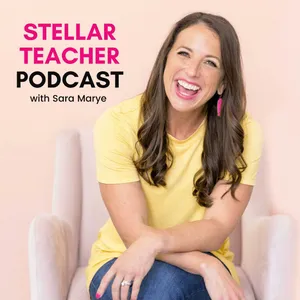
Welcome to The Stellar Teacher Podcast! We believe teaching literacy is a skill. It takes time, practice, and support to become the literacy teacher you want to be. This podcast will help you level up your literacy instruction, build your confidence, and make a meaningful impact with your students—all while having a little fun along the way! Hosted by Sara Marye and The Stellar Teacher team, this podcast brings together literacy specialists and educators who are passionate about helping upper elementary teachers feel more confident and effective in their literacy instruction. Together, we’re committed to sharing high-quality, no-fluff strategies, resources, and ideas that are practical, research-informed, and easy to bring into your classroom. Each week, Sara, the Stellar Teacher team, and special guests share their knowledge, tips, and practical strategies to help you strengthen your literacy instruction and support your students in becoming confident, capable readers and writers.
Latest Episodes
The most recent episodes — sign up to get AI-powered summaries of each one.
- Today18 min
327: What Should the Rest of Your Class Do During Small Groups?
Episode 327: What Should the Rest of Your Class Do During Small Groups?You’ve planned an intentional lesson for the students at your small group table—but then comes the other question: What should the rest of your class be doing while you teach?For years, Emily assumed small group instruction automatically meant centers and rotations. One group was doing word work, another was reading, another was on the computer—and every 15 minutes, everyone rotated. But small groups don’t have to be that complicated. Your students can all work on the same meaningful literacy activity, or you can rely on a few predictable routines that students already know how to complete independently.In this episode, Emily shares practical ways to simplify what the rest of your class is doing during small group instruction—without constantly searching for, creating, and prepping new activities. You’ll learn four literacy routines you can use again and again: partner fluency practice, sentence writing, writing about reading, and purposeful independent reading. The goal isn’t to create an entirely separate literacy block for your independent students. It’s to build on the instruction and routines you’re already using.Emily also shares why independent work needs a clear connection back to your instruction, how a quick whole-class check-in can create accountability, and one mistake she made when assigning graded work during small group time.In this episode, you’ll learn:Why small groups don’t have to mean complicated centers and rotationsHow predictable routines can make independent work easier for students—and require less planning from youFour meaningful activities students can do while you teach a small groupHow to use partner fluency practice as a repeatable routine where the structure stays the same and the text changesHow sentence writing and writing about reading can extend instruction you’re already doingHow to make independent reading more purposeful by connecting it to the knowledge students are buildingWhy bringing students back together after independent practice creates accountability and helps you catch misconceptionsWhy you should be thoughtful about assigning graded work when some students will have less independent work time because they’re meeting with youNext week, we’re continuing our Small Group Success series with a conversation all about behavior management during small groups—including setting expectations, reducing interruptions, and helping students work independently while you focus on the students at your table. Pasted text(20260925-153458)Resources Mentioned:FREE Sentence Writing Activities: stellarteacher.com/sentencesYou’ve planned an intentional lesson for the students at your small group table...but then comes the other question: What should the rest of your class be doing while you teach?For years, Emily assumed small group instruction automatically meant centers and rotations. One group was doing word work, another was reading, another was on the computer—and every 15 minutes, everyone rotated. But small groups don’t have to be that complicated. Your students can all work on the same meaningful literacy activity, or you can rely on a few predictable routines that students already know how to complete independently.In this episode, Emily shares practical ways to simplify what the rest of your class is doing during small group instruction—without constantly searching for, creating, and prepping new activities. You’ll learn four literacy routines you can use again and again: partner fluency practice, sentence writing, writing about reading, and purposeful independent reading. The goal isn’t to create an entirely separate literacy block for your independent students. It’s to build on the instruction and routines you’re already using.Emily also shares why independent work needs a clear connection back to your instruction, how a quick whole-class check-in can create accountability, and one mistake she made when assigning graded work during small group time.In this episode, you’ll learn:Why small groups don’t have to mean complicated centers and rotationsHow predictable routines can make independent work easier for students—and require less planning from youFour meaningful activities students can do while you teach a small groupHow to use partner fluency practice as a repeatable routine where the structure stays the same and the text changesHow sentence writing and writing about reading can extend instruction you’re already doingHow to make independent readi
- 1 weeks ago51 min
326: Making Small Group Instruction More Effective with Dr. Julia Lindsey
Small group instruction is a regular part of many literacy blocks—but what actually makes a small group effective? And do you really need to meet with every student every day?In this episode, Emily is joined by Dr. Julia Lindsey to rethink some of the traditional ways teachers approach small group reading instruction. Instead of starting with rotations, reading levels, or the pressure to get every student to the teacher table, Julia encourages teachers to start with something much more important: the specific needs of their students.Julia shares why small group instruction is most powerful when it gives teachers an opportunity to differentiate instruction, provide immediate feedback, and target the skills students need additional support with. She also explains why small groups don't have to look the way they've always looked—and why it's okay if every student doesn't meet with you every day.You'll also hear practical advice for using assessment data and informal observations to make instructional decisions, managing the rest of your class while you're meeting with a group, and designing a small group schedule around your students rather than trying to fit your students into a predetermined schedule.In this episode, you'll learn:Why effective small group instruction starts with student needs, not a predetermined schedule or rotationHow small groups give teachers an opportunity to differentiate instruction and provide immediate, precise feedbackWhy you don't have to meet with every student every day for small group instruction to be effectiveHow to use assessment data and informal observations to identify targeted skills for small group practiceWhy reading comprehension is complex—and what that means when you're deciding what to teach in a small groupHow a triage approach can help you prioritize which students need additional teacher supportWhy knowing your readers is one of the most important parts of making small group instruction more effectiveHow to rethink traditional small group structures and create an approach that works for the students in front of youIf small groups have ever left you feeling like you need to do more, meet with more students, or somehow fit more rotations into an already packed literacy block, this conversation is your reminder that small group instruction is a tool you can use—not a structure you have to serve. Focus on knowing your students, identifying what they need, and designing your instruction from there.Resources Mentioned:Small Group Success Checklist: stellarteacher.com/smallgroupCheck out the Stellar Literacy Collective: stellarteacher.com/join
- 2 weeks ago13 min
Episode 325: The Real Purpose of Small Group Instruction
Small group instruction is probably built into your literacy block—but have you ever stopped to ask: What is the actual purpose of small groups?For years, Emily knew she was supposed to teach small groups, but she wasn't always sure what students should actually be doing once they got to the teacher table. Like many teachers, she focused on creating groups, planning rotations, finding leveled texts, and managing the rest of the class. But the most important question often got overlooked: What do these students need to practice with my support?In this episode, Emily breaks down the real purpose of small group instruction and shares a simple mindset shift that can completely change the way you plan. Small group isn't a curriculum or a specific type of lesson. It's an instructional structure that gives students more opportunities to practice a targeted skill while you observe, provide immediate feedback, and adjust your instruction based on what you notice.You'll also learn why strong small group instruction starts with specific student needs (not reading levels) and how using multiple layers of data can help you pinpoint exactly what students need to practice.In this episode, you'll learn:The real purpose of small group instruction—and why it's not simply getting every student to the teacher tableWhy small group is an instructional structure, not a curriculumHow small groups increase opportunities for meaningful student practiceWhy immediate, precise feedback is one of the biggest benefits of teaching students in a smaller settingThe planning shift from “What am I going to teach?” to “What do my students need to practice with my support?”Why effective small groups should be flexible and responsive to what you notice about your studentsNext week, we're wrapping up our Small Group Success series with a special guest! You're not going to want to miss that! Resources Mentioned:Small Group Success Checklist: stellarteacher.com/smallgroup
- 3 weeks ago21 min
Episode 324: 6 Small Group Mistakes We Made as Classroom Teachers
Small group instruction can be one of the most powerful parts of your literacy block—but it can also be one of the hardest to figure out. In this episode, Sara and Emily are bringing back our Dear Stellar Teacher style episodes and sharing six small group mistakes they made in their own classrooms (and what they would do differently now!).In this episode, we talk about:Why too much teacher talk can take away from the practice and feedback students really need.Why you don’t need to meet with every student in a small group every day (or even every week).How relying on one data point or fixed reading levels can keep you from identifying what students actually need.Why small group instruction should focus on the specific skills students need to become stronger readers, rather than simply reteaching your whole group lesson.If small groups have ever left you wondering, Am I even doing this right?—this episode is for you. We’ve made the mistakes, learned a lot since then, and we’re sharing it all so you can feel more confident with your small group instruction.Resources mentioned:Small Group Success Checklist: stellarteacher.com/smallgroupsReading Intervention Kit: stellarteacher.com/intervention
- 4 weeks ago13 min
Episode 323: Putting MTSS into Practice in Your Literacy Classroom
What does MTSS actually look like in your upper elementary literacy classroom? Understanding the tiers is one thing, but knowing what instruction should look like at Tier 1, Tier 2, and Tier 3 can feel much more complicated.In this episode, Emily breaks down how to put MTSS into practice with practical examples you can use in your literacy block. You’ll learn what strong Tier 1 literacy instruction should include, how to identify the specific skills students need during Tier 2, and how Tier 3 increases the intensity of support without necessarily requiring an entirely different program.We’ll also walk through a simple Tier 2 fluency routine and a five-day phonics and decoding intervention routine to help you see what targeted support can actually look like.Resources Mentioned:Free Fluency Resource: stellarteacher.com/fluencyStellar Intervention Toolkit: stellarteacher.com/interventionStellar Literacy Collective: stellarteacher.com/join
- Aug 31, 202628 min
[Listen Again]: The 3 Steps to Take This School Year If You’re Always Saying “I Wish I Had More Time”
[Listen Again] The one thing teachers wish they could have more of is time. Time to plan, time to teach, time to make copies, and time to have fun with their students. The day goes by so quickly that it’s hard to fit everything in, but one thing that helps with that is time management. In order to help you gain some time back in your classroom, I’m sharing 3 tips that are effective and help free up brain space.Download my Free Mini-Lesson Plan and Sample Slides here!Check out my Free Literacy Workshop. For more information click here.Sign up for my FREE private podcast, the Confident Writer Systems Series here!Join us in the Stellar Literacy Collective Membership: stellarteacher.com/joinTo check out all of the resources from this episode, head to the show notes: https://www.stellarteacher.com/episode152
- Aug 27, 202623 min
Episode 322: How to Support Struggling Readers Without Neglecting the Rest of Your Class
If you have a handful of students who need intensive phonics intervention, a few who are reading well above grade level, and everyone else somewhere in the middle, you might be wondering: How am I supposed to meet all of these needs without burning myself out?The good news is that meeting every student's needs doesn't mean giving every student the exact same support.In this episode, Sara is breaking down how to support your struggling readers while still making sure the rest of your class is getting meaningful, appropriately challenging literacy instruction. She shares a helpful doctor analogy that reminds us that different students need different types of support—and that different doesn't mean unfair.You'll also hear practical ways to strengthen your Tier 1 instruction, use partner work to support all learners, make the most of your intervention time, and plan meaningful work for the rest of your class while you're meeting with small groups.In this episode, you'll learn:Why meeting every student's needs doesn't mean giving every student the exact same supportWhy not every student needs to meet with you in a small groupHow explicit Tier 1 instruction can better support struggling readers before intervention even beginsHow partner routines like RallyCoach can provide struggling readers with support while deepening learning for stronger readersA simple five-day intervention framework for making the most of your small group timeHow to plan meaningful literacy work for the rest of your class while you're providing interventionWhy it's okay for your intervention students and the rest of your class to be working on completely different assignmentsIf you're feeling overwhelmed trying to fit every student into a small group or make sure everyone completes the same work, this episode will help you rethink what effective support can look like. Your job isn't to give every student the exact same thing—it's to figure out what each student needs and provide the instruction that will help them grow.Resources Mentioned:⭐ The Stellar Reading Intervention Kit: Stellarteacher.com/intervention
- Aug 24, 202621 min
[Listen Again] Dear Stellar Teacher: Our Phonics and Intervention Confessions (and What We Would Do Differently!)
[Listen Again] We’re bringing back this episode because it’s just too good not to share again! As we continue talking about supporting struggling readers, this conversation feels just as relevant today. If you missed it the first time—or could use a refresher—we’re revisiting some of the biggest lessons we learned about phonics, intervention, and foundational reading skills in upper elementary.Many upper elementary teachers know their struggling readers need support with foundational reading skills, but knowing exactly what to teach—and how to fit it into an already-packed school day—can feel overwhelming. In this Dear Stellar Teacher episode, we're sharing our biggest phonics confessions, including the mistakes we made in our own classrooms and what we wish we had known about supporting struggling readers.In this episode, we're talking all things phonics, phonemic awareness, and reading intervention in upper elementary. We'll share why we didn't always prioritize systematic phonics instruction, why intervention can't simply become someone else's responsibility, and what we've learned about helping older students strengthen the foundational skills they need to become more confident readers.In this episode, we'll discuss:The biggest mistakes we made when supporting struggling readers in our own classroomsWhy systematic phonics instruction still matters in upper elementaryWhy we wish we had incorporated more phonemic awareness into our literacy instructionHow a lack of knowledge and confidence can make foundational skills instruction feel overwhelmingWhy classroom teachers still play an important role in supporting students who need interventionWhat we've learned about providing more effective decoding and foundational skills supportResources Mentioned:⭐ The Stellar Literacy Collective: stellarteacher.com/intervention
Get Stellar Teacher Podcast: A Podcast for Upper Elementary Teachers summaries in your inbox
Free AI-powered daily recaps. Key takeaways, quotes, and mentions — in a 5-minute read.
Get Free Summaries →Free forever for up to 3 podcasts. No credit card required.
You Might Also Like
Listeners also like.

The Middle School Mary Poppins Podcast
Practical parenting strategies and brain science to help caregivers understand and support tweens through middle school challenges.

Studio 5
Conversations with experts and friends aimed at improving home life, relationships, and personal well-being.
The Homeschool Sisters Podcast
Two sisters share practical advice and encouragement for homeschooling parents raising children with unique learning needs.

De Facto Leaders
Pediatric therapist Dr. Karen Dudek-Brannan shares evidence-based strategies for educators and clinicians to support student growth and leadership.

Habit Stacking Mom | Routines, Consistency, Planning, Overwhelm, Organization, Declutter, Healthy Habits, Balance, Goals, SAHM
A stay-at-home mom shares strategies for building consistent habits and routines to reduce overwhelm and manage responsibilities more effectively.
Read-Aloud Revival
Sarah Mackenzie helps families fall in love with books and supports parents in homeschooling.

Read-Aloud Revival
Sarah Mackenzie supports families in building a love for books and homeschooling.

What the Fundraising
Nonprofit leaders explore fundraising, leadership, and mindset with experts from inside and outside the sector.

Unstoppable Athlete - Mental Resilience for Teen Athletes
Volleyball coaches guide teen athletes in building mental resilience, growth mindset, and sports psychology skills for competition and life.

The Literary Life Podcast
Three readers discuss classic literature, reading practices, and the role of stories in intellectual and spiritual life.

The Christy-Faith Show
A podcast offering educational and homeschooling insights for intentional parents.

The Jamie Kern Lima Show
Entrepreneur Jamie Kern Lima interviews experts and celebrities about overcoming self-doubt and building self-belief.
About Stellar Teacher Podcast: A Podcast for Upper Elementary Teachers
Welcome to The Stellar Teacher Podcast! We believe teaching literacy is a skill. It takes time, practice, and support to become the literacy teacher you want to be. This podcast will help you level up your literacy instruction, build your confidence, and make a meaningful impact with your students—all while having a little fun along the way! Hosted by Sara Marye and The Stellar Teacher team, this podcast brings together literacy specialists and educators who are passionate about helping upper elementary teachers feel more confident and effective in their literacy instruction. Together, we’re committed to sharing high-quality, no-fluff strategies, resources, and ideas that are practical, research-informed, and easy to bring into your classroom. Each week, Sara, the Stellar Teacher team, and special guests share their knowledge, tips, and practical strategies to help you strengthen your literacy instruction and support your students in becoming confident, capable readers and writers.
Customized Recaps
AI-powered recaps with compact key takeaways, quotes, and insights.
Straight to Your Inbox
Get key takeaways from Stellar Teacher Podcast: A Podcast for Upper Elementary Teachers in a 5-minute read.
Save Hours Every Week
Stay current on your favorite podcasts without falling behind.
Frequently Asked Questions
What is Podzilla's Stellar Teacher Podcast: A Podcast for Upper Elementary Teachers daily summary?
It's a free AI-powered email that summarizes new episodes of Stellar Teacher Podcast: A Podcast for Upper Elementary Teachers as soon as they're published. You get the key takeaways, notable quotes, and links & mentions — all in a quick read.
How does the Stellar Teacher Podcast: A Podcast for Upper Elementary Teachers podcast summary work?
When a new episode drops, our AI transcribes and analyzes it, then generates a personalized summary tailored to your interests and profession. It's delivered to your inbox every morning.
Is this an official Stellar Teacher Podcast: A Podcast for Upper Elementary Teachers product?
No. Podzilla is an independent service that summarizes publicly available podcast content. We're not affiliated with or endorsed by Sara Marye, Literacy Teacher, Elementary Teacher.
Can I get summaries of other podcasts too?
Absolutely! The free plan covers up to 3 podcasts. Upgrade to Pro for 15, or Premium for 50. Browse our full catalog at /podcasts.
How often does Stellar Teacher Podcast: A Podcast for Upper Elementary Teachers release new episodes?
Stellar Teacher Podcast: A Podcast for Upper Elementary Teachers publishes 2x weekly. Our AI generates a summary within hours of each new episode.
What topics does Stellar Teacher Podcast: A Podcast for Upper Elementary Teachers cover?
Stellar Teacher Podcast: A Podcast for Upper Elementary Teachers covers topics including Education, How To, Self-Improvement. Our AI identifies the specific themes in each episode and highlights what matters most to you.
Start getting Stellar Teacher Podcast: A Podcast for Upper Elementary Teachers summaries tomorrow morning.
Free forever for up to 3 podcasts. No credit card required.
Free forever for up to 3 podcasts. No credit card required.