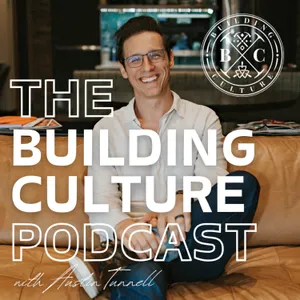
Free Daily Podcast Summary
The Building Culture Podcast: Daily Summaries Delivered
by Austin Tunnell
Fusing the liberal arts with architecture, construction and real estate to build a more beautiful, resilient, and thriving world for PEOPLE. I believe a more thriving world is possible through restoring our built environment. But today's hyper-segregated, financialized building industry is not conducive to solving complex problems or creating dynamic places for human flourishing. I interview a wide range of guests involved with crafting the built world: developers, architects, urban designers, builders, investors, inventors & officials, exploring holistic solutions to a better human habitat.
Latest Episodes
The most recent episodes — sign up to get AI-powered summaries of each one.
- Jul 23, 20261h 11m
#50: Alexandra Vondeling: The Neighborhood IS the amenity
Alex Vondeling has spent her career digging into the part of the problem most people skip past. Not whether we need more housing, we clearly do, but what kind, at what scale, and arranged in what way. She is a principal at Opticos Design, the Berkeley firm that coined the term missing middle housing more than a decade ago, and she has become one of the clearest voices in the country on how to actually build it.What I appreciate about Alex, and about Opticos, is that they are not content to only name a problem. They work tirelessly on the solution. In this conversation we get into the important difference between a fourplex that looks like a house and a fourplex surrounded by parking, why the streetscape decides whether urbanism works at all, and the struggle between how a city can adopt a beautiful comprehensive plan while its own engineers have rules in place that make it impossible to build.We also get into my own work and projects and why the neighborhood, not just the gym within it, is the amenity. If you build places for a living, or you just want to understand why the good ones feel good, this one is worth your time.0:00 Intro1:27 How Alex Found the Missing Middle4:11 What Opticos Actually Does6:14 Build-to-Rent, Reclaimed7:50 Missing Middle Housing, Defined10:11 Making It Work in the Real World13:16 One Ingredient in a Whole Neighborhood15:38 Engaging a City19:19 The Recommendations That Repeat23:14 How Developers Find Opticos28:15 The Real Constraints41:35 The Neighborhood Is the Amenity46:33 Entitlements and the Advocate You Need55:03 Live/Work, Boutique Office, and What's NextCONNECT WITH THE ALEXANDRAAlexandra Vondeling on LinkedIn: www.linkedin.com/in/alexandra-vondeling-6a36571aOpticos Design: opticosdesign.comOpticos on Instagram: www.instagram.com/opticosdesignIn the episode, Alex said an email to Opticos's info inbox always reaches the right person in the firm. The contact form and email live on their site. She also noted Opticos is active on LinkedIn, YouTube, and Substack, and the best time to reach out is early, while the site plan is still flexible.CONNECT WITH AUSTIN TUNNELLNewsletter: https://playbook.buildingculture.com/ / austintunnell / austin-tunnell-2a41894a / austintunnell CONNECT WITH BUILDING CULTUREhttps://www.buildingculture.com/ / buildingculture / build_culture / buildculture
- May 26, 20261h 1m
#49 Alicia Pederson: How We Designed Families Out of the City
Alicia Pederson spent her twenties living in a 16th-century palazzo in Florence, and it changed everything about how she sees cities, density, and what American urbanism has quietly abandoned. She's the founder of Courtyard Urbanist and holds a PhD in English from Northwestern with a specialty in Renaissance pastoral literature, which turns out to be less of a detour and more of a throughline to everything she now advocates for.In this conversation we cover the history of the courtyard block, why American apartments have failed families for decades, the relationship between lot geometry and livability, why wood-frame construction is a systemic problem, and what it would actually take to build the kind of urban housing that allows families to put down real roots. We also talk about what's happening in my own neighborhood at Wheeler — and why watching my sister, my parents, and my business partners all move within two blocks of each other has made the mission feel more personal than ever.Alicia is working with architects and developers right now to bring this typology back to American cities. We are excited to see the movement on these projects.I think you're going to love this one.0:00 Introduction1:06 Pastoral Literature and the City — from Shakespeare to Santo Spirito6:35 Two Years in a Florentine Palazzo — the experience that changed everything10:41 Wheeler District — what it actually feels like to live near family13:35 What the Courtyard Block Is and Why It Works16:44 How American Cities Became Hostile to Families20:34 The Outdoor Space Problem — what parents of young kids actually need22:56 Why Missing Middle Housing Hasn't Taken Off31:36 Lot Geometry — why European apartments are better to live in38:05 Interblock Urbanism — how Building Culture is solving the same problem39:42 The Case for Masonry — stone, brick, and why it matters47:30 Complex and Vulnerable vs. Dumb and Durable50:15 Energy Efficiency as Greenwashing53:06 Where the Work Is Now — investors, architects, real projects57:03 How to Follow Alicia's WorkLINKS & RESOURCESCourtyard Urbanist Substack: courtyardurbanist.comAlicia on X/Twitter: @UrbanCourtyardCONNECT WITH AUSTIN TUNNELLNewsletter: https://playbook.buildingculture.com/ / austintunnell / austin-tunnell-2a41894a / austintunnell CONNECT WITH BUILDING CULTUREhttps://www.buildingculture.com/ / buildingculture / build_culture / buildculture
- May 5, 20261h 5m
#48 Mike Hathorne: The Great Housing Reversal - It's not a housing shortage, but a mismatch.
Mike Hathorne spent 30 years in real estate and development trying to understand why the industry keeps building the wrong thing. His answer is in his book, The Great Housing Reversal.It's not a housing shortage. It's a housing mismatch. 64% of American households are one or two people. Over half the housing stock has three or more bedrooms. Mike walks through the three simultaneous trends reshaping who needs a home in America, why the development industry hasn't caught up, and what the neighborhoods people actually want look like.We also talk about the LDS ward study that revealed what happens to communities built on monolithic housing over time, the Harvard research showing that access across socioeconomic lines raises lifetime earnings by 20%, and what it looks like when a developer finally builds the kind of place the data has been pointing toward for decades.Mike recently relocated to Northwest Arkansas to join High Street, a traditional neighborhood development firm. He's also one of the clearest thinkers I've met on the relationship between how we build neighborhoods and how we live in them.Chapters00:00 Introduction00:44 Mike's background: 30 years in development and the path that led to the book03:10 Housing mismatch, not shortage05:00 The numbers: 64% of households are 1-2 people vs. 54% of homes with 3+ bedrooms07:33 Three simultaneous disruptors: fertility rates, marriage rates, and an aging population14:43 Zoning: 75% of residential land locked into single-family20:07 The comps problem: why real estate financing runs backwards from innovation27:29 Placemaking takes longer: lessons from Wheeler District32:28 What supply that matches the market actually looks like36:35 Connectedness is the new luxury42:45 The LDS ward study: why diverse housing makes resilient neighborhoods49:00 When communities can't support themselves, government fills the gap53:47 Personal stories: when mixed neighborhoods change lives57:18 Finding your tribe: Mike's move to Northwest Arkansas and CNU 34CONNECT WITH MIKE HATHORNEhttps://www.amazon.com/Great-Housing-Reversal-American-Dream/dp/B0G1FG4PXN greathousingreversal.substack.com linkedin.com/in/hathorneCNU 34, Northwest Arkansas (May 12-16): cnu.org/cnu-34CONNECT WITH AUSTIN TUNNELLNewsletter: https://playbook.buildingculture.com/ / austintunnell / austin-tunnell-2a41894a / austintunnell CONNECT WITH BUILDING CULTUREhttps://www.buildingculture.com/ / buildingculture / build_culture / buildculture
- Apr 10, 202646 min
#47 Apollo Workspace: There's a Better Way to Work
This episode is a personal one. I sat down with Sarah — my wife, my partner in all of this — to talk about Apollo Workspace: what it is, why we’re building it, and what it means within our larger project, Townsend, in downtown Edmond.We met in the Peace Corps in Uganda, got married after a five-week engagement, and moved to the middle of Oklahoma so I could learn structural masonry from a master mason. Building Culture started around the same time as our marriage, and a decade later, we’re building something that I think pulls together everything we’ve learned — about craft, about community, about what it actually means to make a place where people can do their best work.Apollo is a professional workspace for small teams and solo entrepreneurs — not coworking in the way most people think of it. We’re talking about private offices with real windows, structural brick masonry walls that are 16 inches thick, timber ceilings, and outdoor courtyards with a sauna and cold plunges. The whole thing is embedded in a walkable downtown district with 35+ restaurants and a park across the street.I talk about why we named it Apollo — the Greek god of light, creativity, and knowledge. Why the building materials matter and what people feel when they walk into structural masonry. Why we chose downtown Edmond and how we see it becoming one of the most walkable places in the OKC metro over the next decade.We get into the business case: if you come to Apollo and you don’t make more money than your rent, we’ve failed. This space should pay for itself through better focus, better client impressions, a built-in referral network of 30–40 other small business owners, and the kind of problem-solving community that’s hard to find when you’re running a business alone.We also talk about the Founding Member program — the first people to commit get their name carved in stone on the building. Not a plaque. In the masonry. Because the story of how something begins matters, and the people who take a chance early deserve to be part of that story permanently.If any of this resonates, go to apolloworkspace.com or email hello@apolloworkspace.com. We’re signing LOIs with refundable deposits now — no risk to lock in your space but a great time to get in early. 0:00 Open0:28 Intro & Welcome2:52 The Origin Story — Peace Corps to Oklahoma5:12 Why Build a Workspace?7:37 The Name: Why Apollo?10:00 Workspace, Humanized — What That Means12:15 The Power of Small Business Community14:34 AI, Rapid Change & Learning Together16:51 Structural Masonry: Why the Building Matters19:15 Design with Soul20:14 Mid-Episode Break20:34 Sauna & Cold Plunge at the Office24:06 Why Downtown Edmond?26:33 Apollo at Townsend: The Full Picture28:57 Who Is Apollo For?31:25 Home Office vs. Apollo33:27 Not Networking — Problem Solving37:55 Founding Members Program39:38 How to Get Involved42:13 The Vision: A Thursday Morning at Apollo45:06 Closing & Masonry Event PreviewCONNECT WITH APOLLO WORKSPACEhttps://apolloworkspace.com/https://www.instagram.com/https://www.linkedin.com/company/apolloworkspace/hello@apolloworkspace.com CONNECT WITH AUSTIN TUNNELLNewsletter: https://playbook.buildingculture.com/https://www.instagram.com/austintunnell/https://www.linkedin.com/in/austin-tunnell-2a41894a/https://twitter.com/AustinTunnellCONNECT WITH BUILDING CULTUREhttps://www.buildingculture.com/https://www.instagram.com/buildingculture/https://twitter.com/build_culturehttps://www.facebook.com/BuildCulture/
- Jan 13, 20261h 11m
#46 Jan Sramek: California Forever - Building the Next Great American City
In this episode, I sit down with Jan Sramek, Founder and CEO of California Forever, to talk about one of the most ambitious development efforts in the country: they're building the next great American city. Chapters0:00 — Why This Conversation Matters02:05 — Meeting Jan and the Origins of California Forever06:45 — Growing Up in the Czech Republic and Coming to America12:10 — What California Forever Is Actually Trying to Build17:55 — The Housing Crisis and Why Incremental Fixes Aren’t Enough23:40 — Walkability, Safety, and Designing for Families30:15 — Why Cities Should Work for Kids and the Elderly Alike35:50 — The Reality of Building a New City in California41:30 — Regulation, Risk, and the Cost of Not Building47:20 — Reviving American Manufacturing and Shipbuilding53:10 — Master Planning, Density, and Mixed-Use Neighborhoods59:00 — Learning from Traditional Urban Design1:04:45 — Community, Belonging, and Social Trust1:10:30 — What Success Would Actually Look Like1:15:40 — Long-Term Vision and Final ReflectionsCONNECT WITH JAN SRAMEKCalifornia Forever - Building the next great American cityJan Sramek | LinkedInhttps://x.com/jansramek?s=11CONNECT WITH AUSTIN TUNNELLNewsletter: https://playbook.buildingculture.com/https://www.instagram.com/austintunnell/https://www.linkedin.com/in/austin-tunnell-2a41894a/https://twitter.com/AustinTunnellCONNECT WITH BUILDING CULTUREhttps://www.buildingculture.com/https://www.instagram.com/buildingculture/https://twitter.com/build_culturehttps://www.facebook.com/BuildCulture/
- Sep 11, 202555 min
#45 Aleksandr Gampel: Reinventing Homebuilding with Mobile Micro-Factories and Cuby Technologies
What if the future of affordable housing doesn’t come from prefab or 3D printing, but from building vertically integrated factories that travel to where homes are needed most?In this episode, I sit down with Aleksandr Gampel, co-founder and COO of Cuby Technologies, to talk about their radical approach: Mobile Micro-Factories. Instead of shipping oversized boxes across the country, they bring a full factory on-site – producing windows, panels, framing, and even helical piers locally, then assembling homes with unskilled labor.We get into why housing costs have exploded (up 40–50% since pre-COVID), how Cuby’s system cuts hard costs by reducing skilled labor, and why most prefab and modular ventures have failed. Aleks explains how their vertically integrated model works, why they’re targeting small-to-mid-sized builders instead of one-off homeowners, and what it will mean when dozens, or even hundreds, of mobile microfactories are running across the U.S.We also dive into design: steel tube framing, magnetic facades, and the surprisingly elegant logic behind Toyota’s production system applied to housing. If you’ve ever wondered how we might actually build cost-effective, durable homes at scale – without sacrificing beauty or quality – this episode is worth your time.CHAPTERS:00:00 Introduction to Housing Challenges02:53 The Concept of Mobile Micro Factories05:35 Manufacturing Process and Product Offerings08:24 Building Systems and Structural Integrity11:17 Cost Management and Market Strategy14:05 Design Flexibility and Market Demand17:07 Community Development and Housing Affordability19:53 Operational Dynamics of Mobile Micro Factories24:43 Building Efficient Factories with Unskilled Labor27:30 The Role of Automation in Construction28:54 Phased Business Plan for Housing Production30:34 Funding and Capital Efficiency in Startups32:33 Design Versatility and Limitations in Home Building34:10 Long-Term Vision and Growth Strategy35:15 Innovative Problem Solving in Construction39:13 Challenges of Prefabrication in the Housing Market41:33 Material Science Innovations for Housing43:11 The Journey of Co-Founding a Startup44:33 Connecting with Cuby TechnologiesCONNECT WITH ALEKSANDR GAMPELLinkedIn: https://www.linkedin.com/in/iamaleksandrgampel/ Twitter/X: https://x.com/agampel1 Cuby Technologies: https://www.cubytechnologies.com/ CONNECT WITH AUSTIN TUNNELLNewsletter: https://playbook.buildingculture.com/ https://www.instagram.com/austintunnell/ https://www.linkedin.com/in/austin-tunnell-2a41894a/ https://twitter.com/AustinTunnellCONNECT WITH BUILDING CULTUREhttps://www.buildingculture.com/ https://www.instagram.com/buildingculture/ https://twitter.com/build_culture https://www.facebook.com/BuildCulture/ SPONSORSThank you so much to the sponsors of The Building Culture Podcast!Sierra Pacific Windows: https://www.sierrapacificwindows.com/ One Source Windows: https://onesourcewindows.com/
- Jun 26, 20251h 4m
#44 Ann Sussman and Kelsey Bradley: Cognitive Architecture – Stone Age Brains In A Modern World: What Neuroscience Can Teach Us About Making Places People Love
What if the key to designing better cities wasn’t just in concrete, code, or cost, but in understanding how our brains actually work?In this episode, I talk with Ann Sussman and Kelsey Bradley of the Human Architecture and Planning Institute (HAPI) about a subject that’s as profound as it is underdiscussed: how our unconscious biology reacts to the built environment – and how that should change everything about how we design.Ann, architect and author of Cognitive Architecture and Kelsey, founder of Design Cause Inc., now Executive Director at HAPI, walk us through the neuroscience of placemaking. We talk eye tracking. Skin conductivity. Heart rate variability. And how our “Stone Age brains” are still calibrated for the Savannah, even when we’re stuck in a strip mall.This episode will validate what many of us feel but can’t quite explain why some places energize us, and others quietly drain us. The answers aren’t just aesthetic. They’re evolutionary.CHAPTERS:00:00 The Car-Free City: Oslo's Urban Transformation03:43 Human Architecture: Merging Biology and Design08:03 Understanding Human Experience: The Emotional Brain11:24 The Impact of Environment on Human Behavior18:37 The Influence of Modernism on Architecture23:28 The Threatening Nature of Suburban Design26:47 Measuring Human Responses: Biometrics in Architecture31:25 The Science of Emotions in Design33:52 The Power of Empathy in Leadership36:57 Designing for Human Flourishing40:07 The Impact of Built Environments on Mental Health45:35 Understanding Human Perception in Urban Design49:13 The Need for Beautiful and Functional Spaces53:00 The Future of Urban Planning and Community Well-beingMENTIONED RESOURCESBook: Cognitive Architecture: Designing for how we respond to the built environmentBook: Urban Experience & Designhttps://thehapi.org/Free course on "The Genetics of Design" – HAPI.org Courses Design Cause Inc. – Kelsey’s nonprofit building schools in AfricaCONNECT WITH ANN SUSSMANLinkedIn: https://www.linkedin.com/in/ann-sussman-a1a34a14/X: https://www.linkedin.com/in/ann-sussman-a1a34a14/ Ann’s Blog: https://annsussman.com/ The Genetics of Design: https://geneticsofdesign.com/about CONNECT WITH KELSEY BRADLEYLinkedIn: https://www.linkedin.com/in/kelseybradley/Instagram: https://www.instagram.com/kelseydeebradley/ CONNECT WITH AUSTIN TUNNELLNewsletter: https://playbook.buildingculture.com/ https://www.instagram.com/austintunnell/ https://www.linkedin.com/in/austin-tunnell-2a41894a/ https://twitter.com/AustinTunnellCONNECT WITH BUILDING CULTUREhttps://www.buildingculture.com/ https://www.instagram.com/buildingculture/ https://twitter.com/build_culture https://www.facebook.com/BuildCulture/ SPONSORSThank you so much to the sponsors of The Building Culture Podcast!Sierra Pacific Windows: https://www.sierrapacificwindows.com/ One Source Windows: https://onesourcewindows.com/
- Jun 12, 20251h 10m
#43 Isaac French: You Can Just Do Things – How a First-Time Developer Built One Of The Most Beloved Retreat Brands In The Country
In this episode, I talk with Isaac French, founder of Live Oak Lake and one of the most thoughtful voices I’ve come across in the world of experiential real estate. Isaac’s story reads like an adventure novel: raised with eight siblings on a Texas farm, homeschooled, steeped in grit. Well before turning 30, he walked five acres of tangled brush – no money, just a vision – and figured out how to design and build a seven-cabin, Nordic-inspired retreat that went viral, grossed over $1M in bookings, and sold for $7M. All in under two years. And plenty went wrong along the way.He’s basically a case study in the idea: you can just do things.We talk about how Isaac blends hardware – design, layout, light – with software – hospitality, scent, story – to create spaces that are both deeply personal and universally resonant. He shares how a glitch in the Airbnb matrix led him to build a direct-to-consumer brand from scratch, and how beauty often begins by submitting to constraint, whether it’s the land, the budget, or your own limits.If you’ve ever wondered what it would mean to build with your soul, not just your spreadsheet, this one’s for you.CHAPTERS:00:00 Creating Community Through Built Environments03:48 The Journey of Live Oak Lake17:54 The Art of Hospitality and Experience27:40 Exploring New Urbanism and Placemaking36:54 The Power of Saying No39:02 Exploring Sacred Geometry and Beauty44:16 Biophilic Design and Human Connection49:45 The Role of Humans in Environmental Stewardship54:43 Navigating Success and Humility01:00:19 Future Visions and Community BuildingMENTIONED RESOURCES:Live Oak Lake | Modern Cabins in Waco, TexasCONNECT WITH ISAAC FRENCHEmail: i@isaacjfrench.comWebsite: https://www.isaacjfrench.com/ Twitter: https://x.com/isaacfrench_Instagram: https://www.instagram.com/isaacfrench_LinkedIn:https://www.linkedin.com/in/isaacjfrench/Youtube:https://www.youtube.com/c/IsaacFrench CONNECT WITH AUSTIN TUNNELLNewsletter: https://playbook.buildingculture.com/ https://www.instagram.com/austintunnell/ https://www.linkedin.com/in/austin-tunnell-2a41894a/ https://twitter.com/AustinTunnellCONNECT WITH BUILDING CULTUREhttps://www.buildingculture.com/ https://www.instagram.com/buildingculture/ https://twitter.com/build_culture https://www.facebook.com/BuildCulture/ SPONSORSThank you so much to the sponsors of The Building Culture Podcast!Sierra Pacific Windows: https://www.sierrapacificwindows.com/ One Source Windows: https://onesourcewindows.com/
Get The Building Culture Podcast summaries in your inbox
Free AI-powered daily recaps. Key takeaways, quotes, and mentions — in a 5-minute read.
Get Free Summaries →Free forever for up to 3 podcasts. No credit card required.
You Might Also Like
Listeners also like.
A is for Architecture Podcast
Discussions with architects and theorists explore how buildings and society influence each other.

The iDesign Lab Podcast | Where Design, Business, and Culture Shape How We Live and Build
Explores how intentional design in business, culture, and creativity shapes human behavior, industries, and the way we live.
Building a Furniture Brand with Ethan Abramson
Furniture makers share their business experiences, pricing, and lessons learned while building woodworking companies.

Culture Apothecary with Alex Clark
Experts share holistic remedies to heal cultural wounds through candid conversations on wellness, identity, and systemic change.
Creative Entrepreneur: A Podcast For Business Growth and Trending News
Examines how entrepreneurship, creativity, and media trends shape modern business and personal branding.

Building Champions for Life
Examines how elite performers in sports, business, and education develop character and mindset for lasting success.
The BetterLife Podcast
Real estate investing, wealth building, and lifestyle design through conversations with investors and entrepreneurs.

This Old House Radio Hour
Experts offer practical home improvement advice on renovations, repairs, and maintenance for homeowners and DIYers.
Construction Genius
Construction company owners and experts share practical insights on leadership, profitability, talent management, and business growth in the building industry.
A Podcast About Leadership
Examines modern leadership through interviews with experts in business, psychology, and human performance.
The Messy City Podcast
Exploring urban development through change, uncertainty, and community-driven initiatives.

Building AI Boston
Discusses artificial intelligence through real-world applications and ethical considerations in Boston’s tech community.
About The Building Culture Podcast
Fusing the liberal arts with architecture, construction and real estate to build a more beautiful, resilient, and thriving world for PEOPLE. I believe a more thriving world is possible through restoring our built environment. But today's hyper-segregated, financialized building industry is not conducive to solving complex problems or creating dynamic places for human flourishing. I interview a wide range of guests involved with crafting the built world: developers, architects, urban designers, builders, investors, inventors & officials, exploring holistic solutions to a better human habitat.
Customized Recaps
AI-powered recaps with compact key takeaways, quotes, and insights.
Straight to Your Inbox
Get key takeaways from The Building Culture Podcast in a 5-minute read.
Save Hours Every Week
Stay current on your favorite podcasts without falling behind.
Frequently Asked Questions
What is Podzilla's The Building Culture Podcast daily summary?
It's a free AI-powered email that summarizes new episodes of The Building Culture Podcast as soon as they're published. You get the key takeaways, notable quotes, and links & mentions — all in a quick read.
How does the The Building Culture Podcast podcast summary work?
When a new episode drops, our AI transcribes and analyzes it, then generates a personalized summary tailored to your interests and profession. It's delivered to your inbox every morning.
Is this an official The Building Culture Podcast product?
No. Podzilla is an independent service that summarizes publicly available podcast content. We're not affiliated with or endorsed by Austin Tunnell.
Can I get summaries of other podcasts too?
Absolutely! The free plan covers up to 3 podcasts. Upgrade to Pro for 15, or Premium for 50. Browse our full catalog at /podcasts.
How often does The Building Culture Podcast release new episodes?
The Building Culture Podcast publishes biweekly. Our AI generates a summary within hours of each new episode.
What topics does The Building Culture Podcast cover?
The Building Culture Podcast covers topics including Arts, Design. Our AI identifies the specific themes in each episode and highlights what matters most to you.
Start getting The Building Culture Podcast summaries tomorrow morning.
Free forever for up to 3 podcasts. No credit card required.
Free forever for up to 3 podcasts. No credit card required.