Free Daily Podcast Summary
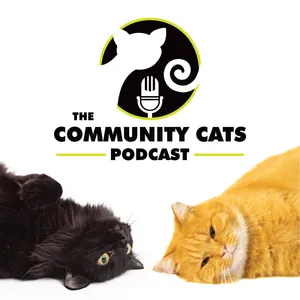
The Community Cats Podcast: Daily Summaries Delivered
by The Community Cats Podcast
Our mission is to provide education, information and dialogue that will create a supportive environment empowering people to help cats in their community.
Latest Episodes
The most recent episodes — sign up to get AI-powered summaries of each one.
- Yesterday29 min
Ep 685: Feeding Plans, Not Feeding Plans, with Danielle Bays, Senior Program Manager for Cat Protection and Policy at Humane World for Animals
"We're not hiding in back alleys in the dark at night. We're out there on the streets, on the front lines, and we're in city hall." This episode is sponsored-in-part by Maddie's Fund, OcuTrap, and Jessica Dolce, Compassion Fatigue + Grief Educator. Danielle Bays planned to be a veterinarian until a cat with his leg caught in a leghold trap was left in the parking lot of the clinic where she worked. He recovered, but the question stayed with her: how does this happen in the first place? That question led her into animal policy, and years later a family of feral cats in her new backyard brought her back to cats and to building a citywide community cat program for Washington, D.C. In this conversation with Stacy, Danielle explains where the laws that affect cats are really made: at your city council and county commission, not in Congress. The people in those seats are your neighbors. They have a lot on their plates, and you should assume they know nothing about TNR. Her advice is to introduce yourself before there's a problem, because the first thing an official usually hears about cats is a complaint. That's often how feeding bans happen. Danielle describes how cats get folded into wildlife feeding restrictions without anyone noticing until the ordinance has passed. She also lays out the alternative: timed meals instead of food left out, clean sites, permission from property owners, and caretakers who feel safe feeding in the open. As she points out, once you prohibit something, you can no longer monitor whether it's being done well. Danielle and Stacy also get into return-to-field, including what sets it apart from TNR and why the updated Return-to-Field Handbook moves away from yes-or-no rules toward decisions about each individual cat. They close with the veterinary shortage and a reminder for tense times: whatever someone's politics, you can almost always find common ground by talking about cats.[/one_second] [one_second]Press Play Now For: Why the laws that matter most for cats are made locally What to say to elected officials before the first complaint reaches them How cats end up included in wildlife feeding bans What a community feeding plan looks like in place of a ban What to do when new, un-ear-tipped cats show up in your yard How return-to-field differs from TNR, and who makes the decision Why the veterinary shortage and feeding bans are both access-to-care issues Stacy's holiday card idea for getting on your representatives' radar Resources & Links HumanePro Fighting Community Cat Feeding Bans Return-to-Field Handbook Humane Policy Toolkit Email Danielle Bays
- 1 weeks ago36 min
Ep 684: Building TNR That Lasts: A Data-Driven Model From Penang, with Daniel Leung, Co-Founder and CEO of Catsoterra
"In truth, we prove statistically how little funding is needed to create a real impact." This episode is sponsored-in-part by Maddie's Fund, TNR Training Workshop Presented by Neighborhood Cats, and Jessica Dolce, Compassion Fatigue + Grief Educator. Daniel Leung got into TNR the way many of us do. He worked on a farm in college, ignored his manager's warning never to feed the stray cats, and soon had dozens of them. A local TNR group came in to help, Daniel started volunteering with them, and he kept doing the work, first in Maryland and later with a large colony at a New Jersey hotel while he was traveling as a respiratory therapist during COVID. Then a trip to Penang, Malaysia, changed everything. On an island that may be home to 70,000 to 100,000 stray cats, he saw cats at every market stall and on every street. After several years volunteering with local groups, Daniel felt the system was stuck, so he started something new. Cats of Penang began as a small grassroots effort and has grown into Catsoterra, which is built around the problems local caretakers kept running into: no government support, high costs and prices nobody would disclose. Daniel negotiated fixed rates with partner clinics and pre-funded the surgeries. He also built an online dashboard where volunteers book appointments, track outcomes and map where the cats come from. Volunteers pay an annual membership of 60 ringgit and can bring in as many cats as they need all year. So far, nearly 900 cats have been sterilized for about US$14,000. Stacy and Daniel talk about what scale really requires. That includes the veterinary shortage in Malaysia, the cultural habit of letting owned cats roam, and why a 10-year plan matters when you're trying to move a whole island's numbers. They also get into apathy, business partnerships and Stacy's vision of a "cat church" in every town where neighbors help one another care for community cats. Daniel's message to the field is to get out of the old models and let the data make the case. Press Play Now For: How a college job on a farm led Daniel to TNR Why returning cats is a service to the neighbors who care about them How Catsoterra brought costs down by negotiating fixed clinic rates and pre-funding surgeries The booking dashboard and geo-mapping that turn TNR into data governments can use An annual membership model where every ringgit goes straight to the clinic Malaysia's veterinary shortage and why TNR at scale is "a numbers game" Owned cats, indoor/outdoor culture and the vacuum effect Stacy's "cat church" idea: neighbors pooling resources for community cats Working with businesses, from a cat food sponsor to Stacy's early days with the Chamber of Commerce Resources & Links Catsoterra Cats of Penang on Instagram Windsor Animal Hospital Penang (Catsoterra's clinic partner)
- 2 weeks ago28 min
Ep 683: They're Not Spicy, They're Scared - Handling Fearful and Aggressive Shelter Cats, with Berlin Waters, Founder of The Spicy Cat Project
"Cats aren't spicy. They're not mean. They're just scared." This episode is sponsored-in-part by Maddie's Fund, OcuTrap, and Jessica Dolce, Compassion Fatigue + Grief Educator. Berlin Waters grew up in a house full of cats, with a mom who handled TNR for the neighborhood, and she's been a cat lover ever since. That lifelong interest led her to a master's in shelter medicine, where her research focused on handling and socializing fearful and aggressive cats. The result is The Spicy Cat Project, a resource for shelters and caregivers who want a more humane, effective approach to cats with challenging behavior. Berlin is now a third-year vet student with her sights set on shelter medicine and access to care. In this conversation with host Stacy LeBaron, Berlin explains why the cats she works with in shelters are usually owner-surrendered, not feral. They came from homes and they're simply terrified. Rather than leaving hissing cats alone to "decompress" for days or weeks, she argues for early, guided intervention that shows them things are going to be okay. She walks through her slow, step-by-step approach to a cat in a kennel, why she gave up on tools like the fake hand on a stick, and how she uses feral boxes, carriers, and thick folded towels to keep both herself and the cat safe. Stacy and Berlin also dig into some bigger questions in cat welfare. Berlin shares why she thinks we've become over-reliant on gabapentin, which she sees as a useful adjunct but not a substitute for real socialization. Both question the value of behavioral evaluations at intake, comparing them to judging a cat's personality during a vet visit. They also touch on the possible role of pain and stress in aggressive behavior. Berlin's message to adopters and shelters is a cultural shift: a cat that hisses and growls is a scared cat, with a sweet one hiding underneath.[/one_second] [one_second]Press Play Now For: Why most "aggressive" shelter cats are scared house cats, not ferals The case for early intervention instead of leaving fearful cats alone Berlin's step-by-step method for approaching a cat in a kennel Why she stopped using handling tools and relies on towels, carriers, and feral boxes How fearful cats tend to do once they're in foster or adoptive homes Where gabapentin helps, and where over-reliance can fail cats Why behavioral evaluations at intake may not tell you much How pain and stress may factor into challenging behavior Resources & Links The Spicy Cat Project Handling Techniques Feral Cats Adoption Basics The Spicy Cat Project on YouTube
- 3 weeks ago22 min
Ep 682: Too Small Is Not a Diagnosis, with Jordyn Purpura Feline Director, Yolo County SPCA; Strategic Advisor, Orphan Kitten Club; Clinical Researcher, Vernau Laboratory at UC Davis
"When we say age is not a disease, we also mean it for the youngest." This episode is sponsored-in-part by Maddie's Fund, OcuTrap, and Jessica Dolce, Compassion Fatigue + Grief Educator. Jordyn Purpura started out smuggling orphaned raccoons into his childhood bedroom. Twelve years of neonatal fostering later, he's in his final year of veterinary school, chasing a gap he kept running into from both sides of the exam table: almost nothing in veterinary education begins before eight weeks of age. As a foster parent, that gap sounded like a doctor saying there wasn't much anyone could do. As a shelter worker placing bottle babies, and sometimes being the one present for their euthanasia when no foster could be found, it looked like an entirely preventable loss. For a long time there was a defensible reason not to push harder on kitten medicine: it doesn't matter what a veterinarian is willing to diagnose or prescribe if there's nobody to take that kitten home and feed it every two hours. Jordyn's argument is that this excuse has quietly expired. Foster networks have grown, nurseries have opened, funding has followed. What hasn't caught up is the reflex — too small for blood work, too small for imaging, too small for a medication that was never labeled for a body this size. That reflex has a body count. Kittens remain the animals least likely to leave a shelter alive, not because their medicine is impossible but because almost no one was taught it. Jordyn is teaching it now, to veterinary technicians, to emergency teams, to his own cohort. And he'd like the rest of us to start asking for it out loud.[/one_second] [one_second]Press Play Now For: Why veterinary education effectively starts at eight weeks, and what that costs kittens The emotional weight shelter staff carry when there's no foster available Bringing tube feeding and neonatal husbandry onto hospital nursing teams What the UC Davis famciclovir research showed about recovery times Congenital hypothyroidism as an overlooked cause of "failure to thrive" Getting creative with diagnostics instead of calling a kitten too small for them How fosters and rescues can push their veterinary partners toward more Why generational openness matters more than age when shifting practice Resources & Links Vernau Laboratory at UC Davis UC Davis Feline Pediatrics on Instagram Jordyn Purpura on Instagram — The Vet Med Couple UC Davis Fracture Program for Rescue Animals Orphan Kitten Project at UC Davis Orphan Kitten Club
- 4 weeks ago28 min
Ep 681: Making the Case for TNR Without County Buy-In, with Eve Salimbene, President of Street Cat Project of Polk County
"Today's inside cat is tomorrow's outside cat." This episode is sponsored-in-part by Maddie's Fund, OcuTrap, and The Community Cat Clinic. Eve Salimbene spent her career in the legal field before moving into animal welfare 26 years ago — and by her own admission, she was a dog person until she landed in Polk County, Florida. There she found a county with groups working on dogs and essentially nothing for cats: a high shelter kill rate, no low-cost spay/neuter anywhere in the county, and a year-round breeding season with none of the winter respite she'd known up north. She posted a question online asking what was being done. The response pulled her in, and in 2020 a brand-new group of volunteers TNR'd 133 cats. Six years later the count is roughly 6,700 — and the 133 looks like the tip of the iceberg. The complication is that TNR isn't condoned in Polk County. The Board of County Commissioners and the sheriff who runs animal control don't believe it works, which puts Eve's team in a strange middle space: vocal enough that caregivers know they aren't alone, careful enough not to get shut down. Some of the people they've helped won't give testimonials for fear of retribution. Eve and Stacy dig into where the cats actually come from, why Eve believes proactive municipal investment beats two more decades of trap and kill, and what a real pilot project would need to look like. Three smaller municipalities have now approached her about running one — and she's pushing for a five-year window with honest baseline numbers. Press Play Now For: Why running a law firm turns out to be decent preparation for animal advocacy What it's like to lead a TNR organization in a county that officially opposes TNR The 2020 cohort of colonies now reporting zero kittens, years later Where Polk County's community cats actually originate — and why "transient population" is the honest answer The tagline that reframes owned-cat spay/neuter as a community cat issue Municipal spay/neuter funding on the move: New York City, DeKalb County, and a statewide Texas program Eve's proposed funding mechanisms, including a one-cent sales tax and corporate donors in the Tampa–Orlando corridor Stacy's pilot-project challenge: designate the worst zip code, hit the volume, and watch intake drop Why three small municipalities may end up leading where the county won't Resources & Links Street Cat Project of Polk County Coalition for Animal Rights and Education in Polk County (CARE) on Facebook Contact Eve directly: contact@streetcatproject.org Community Cat Program Management Certificate — University of the Pacific, Benerd College (next session begins September 14) Sustainable Solutions Grant Program — United Spay Alliance Making the Case for TNR Certification Workshop - presented by Neighborhood Cats
- Sep 1, 202635 min
Ep 680: Small and Mighty: Inside Jersey City's Feral Fixers TNR Club, with Robyn Alcock & Jen Scott, Co-Founders of Feral Fixers TNR Club (Jersey City, NJ)
"It's okay to be small and grassroots." This episode is sponsored-in-part by Maddie's Fund, OcuTrap, and The Community Cat Clinic. Robyn Alcock and Jen Scott joined host Stacy LeBaron to talk about Feral Fixers TNR Club, the Jersey City nonprofit they co-founded in 2024 alongside Kathryn Parker after years of trapping independently. In just two years, the all-volunteer group — who all keep full-time jobs — has helped more than 375 cats through TNR, rescue, and medical care. Much of the conversation centered on the realities of running a small "operational board" nonprofit: the governance lessons that shaped their early structure, why they held off on setting formal growth metrics in year one, and how nearly half of the cats they trap turn out to be friendly, adoptable animals rather than TNR candidates — a shift driven largely by the lack of low-cost spay/neuter access in Jersey City. Stacy, Robyn, and Jen also dug into practical solutions: MASH-style pop-up clinic models from groups like Animal Balance and Slomba Shelter Solutions as ways to bring high-volume spay/neuter directly into underserved neighborhoods, and the fundraising path that took Feral Fixers from small individual donors to their first Mission Meow grant and a matching grant from United Spay Alliance's Community Cats Grants program at their two-year mark. It's a useful blueprint for any small, grassroots group trying to prove — as Robyn puts it — that it's okay to be small. Press Play Now For: How a pandemic-era trapping experience and a childhood spent bottle-feeding strays led Robyn and Jen to co-found a Jersey City nonprofit Practical governance lessons for small, "operational board" nonprofits — board size, conflicts of interest, and keeping personal and organizational finances separate Why nearly half of Feral Fixers' TNR trapping efforts turn into friendly-cat rescues, and how that's reshaping their workload The transportation and appointment-access barriers keeping Jersey City residents from affordable spay/neuter MASH-style clinic models, including Animal Balance, as an option for bringing spay/neuter directly into underserved communities How Feral Fixers built its funding base through small donors, a Mission Meow grant, and a United Spay Alliance matching grant Stacy's framework for identifying and cultivating leadership-level donors as an organization grows Why "altered at intake" numbers matter for understanding a community's real spay/neuter gap Resources & Links Feral Fixers TNR Club: https://feralfixersclub.org/ Feral Fixers TNR Club on Instagram: https://www.instagram.com/feralfixersclub/ United Spay Alliance Community Cats Grants: https://www.unitedspayalliance.org/community-cats-grants/ Animal Balance: https://www.animalbalance.org/ Slomba Shelter Solutions: https://slombasheltersolutions.com/
- Aug 25, 202632 min
Ep 679: Running on Empty: Compassion Fatigue and Grief in TNR, with Jen Blough, LPC Licensed Professional Counselor & Author
"It's about knowing your limits, knowing where you are energy-wise, time-wise, resource-wise, and just doing what you can — and knowing that is enough, and that is making a difference." This episode is sponsored-in-part by Maddie's Fund, OcuTrap, and Neighborhood Cats TNR Certification Workshop. Jen Blough returns to the podcast after nearly a decade away — she was featured in the show's first fifty episodes — to talk about the work she's built in the years since: helping animal welfare professionals name and navigate the emotional toll of the field. A licensed professional counselor, former shelter worker and animal control officer, and lifelong animal advocate, Jen didn't set out to specialize in compassion fatigue. She backed into it in grad school, when a professor described the symptoms of secondary traumatic stress and she realized he was describing her own life. Much of the conversation is spent untangling terms that get used interchangeably but aren't the same thing. Jen breaks down compassion fatigue as the combination of burnout (which comes from your environment — under-resourced organizations, systemic failures, day-to-day friction) and secondary traumatic stress (which comes from absorbing someone else's trauma, human or animal). She walks through how moral distress and moral injury fit in — the no-good-options decisions that TNR caregivers and shelter workers face constantly — and why none of these, despite how real they feel, show up in the DSM. The back half of the conversation turns to grief, and this is where the discussion gets specific to community cat work. Jen introduces two concepts: disenfranchised grief (loss that society doesn't validate, which often includes animal loss) and ambiguous loss (grief without closure — not knowing what happened to a cat who stops showing up at a colony). Stacy and Jen talk through the real tension caregivers face around outdoor cats aging out of a colony, and how organizations can handle transparency with volunteers about euthanasia and loss without either traumatizing them or leaving them in the dark. Jen closes with practical advice on knowing your limits and recognizing that showing up in smaller ways — a donation, a shared post, a bag of food — still counts as meaningful advocacy. Press Play Now For: The real difference between burnout, compassion fatigue, secondary traumatic stress, moral distress, and moral injury Why compassion fatigue isn't a diagnosable condition, and how it can fluctuate day to day Disenfranchised grief and why animal loss so often gets dismissed by people outside the field Ambiguous loss — the particular grief of not knowing what happened to a cat who never returns to the feeding station How organizations can navigate telling (or not telling) volunteers about euthanasia and cat loss Jen's advice for recognizing your capacity and letting "not right now" be an acceptable answer A first look at Jen's forthcoming book and new certification program for animal welfare professionals Resources & Links Jen Blough's website Beyond Compassion Fatigue: Trauma, Resilience, and Recovery in Animal Care and Advocacy — pre-order To Save a Starfish: A Compassion Fatigue Workbook for the Animal Welfare Warrior Beyond Compassion Fatigue podcast
- Aug 18, 202619 min
Ep 678: Ctrl+Alt+Meow: How an IT Guy Built a Home for Cat Lovers, with Darein Gray, Founder of Paw-Events.com
"There's not a lot of that — you don't really hear about cat parks or cat meetups. So I wanted to try and change that." This episode is sponsored-in-part by Maddie's Fund, OcuTrap, and The Community Cat Clinic. Darein Gray never set out to build a pet-industry platform — he's an IT guy by trade, working in data and business analytics. But when he noticed there was no real gathering space for cat people the way there is for dog people, he taught himself the tools to build one. What started as a solo passion project has grown into Paw-Events.com, a free directory now covering 60-plus U.S. cities, connecting cat and dog lovers with adoption days, spay/neuter clinics, rescue fundraisers, cat cafés, and community meetups in one searchable place. Host Stacy LeBaron and Darein dig into how the platform actually works for TNR and community cat programs specifically — not just the bake-sale-and-fun-run events people usually picture. Organizations running mobile spay/neuter clinics, trapping events, or vaccination and microchipping days can list by city and neighborhood, filtered so people can find exactly what's happening near them. Darein talks through how smaller grassroots groups, which often don't have the advertising muscle of a PAWS or a Humane Society, can get the same visibility as the big names — and how individuals, not just organizations, are welcome to list events too, after a basic vetting process. The conversation also covers the platform's education side (ESA and service animal resources, vaccination info, cat training events), its city-hub structure and how organic communities form within bigger metro areas, and Darein's openness to expanding into new states and regions when local advocates reach out. For anyone doing outreach for a workshop, clinic, or trapping event, this episode is a look at a free tool built specifically to solve the "how do we get the word out" problem. Press Play Now For: How Paw-Events.com works as a free, searchable directory for cat and dog events across 60+ U.S. cities Why the platform is built for TNR events, spay/neuter clinics, and microchipping days — not just adoption fairs How smaller rescues and individual organizers can list events alongside big-name organizations The vetting process for individuals who want to post their own events How city "hubs" and grassroots communities naturally form on the platform What to do if you want your city or state added to the platform The educational resources available, including ESA/service animal info and cat training events Resources & Links Paw-Events.com Website Paw-Event.com's Facebook Paw-Event.com's Instagram Paw-Event.com's TikTok
Get The Community Cats Podcast summaries in your inbox
Free AI-powered daily recaps. Key takeaways, quotes, and mentions — in a 5-minute read.
Get Free Summaries →Free forever for up to 3 podcasts. No credit card required.
You Might Also Like
Listeners also like.

Cattitude - The #1 Cat Podcast
Each week, explore cat breeds, health tips, and new products for cat lovers.

The PM Podcast
Personal conversations with changemakers driving social impact, exploring their journeys of struggle, resilience, and purpose.

Hunt-Find-Alert: K9 Search and Rescue Community
Examines K-9 search and rescue operations, working dogs, and their roles in emergency response and detection missions.

The Biz of Nonprofit Consultants
Nonprofit consultants learn business strategies for pricing, client work, and leadership while balancing purpose and profitability.

Enrichment for the Real World
Emily Strong and Allie Bender discuss animal enrichment, care strategies, and caregiver well-being for pet guardians.

Your Family Dog Podcast
Trainer Tina Spring offers practical advice for families solving everyday dog behavior challenges.

RacketCast
Local news, culture, and debates from a reader-funded, worker-owned Twin Cities media outlet.

What the Fundraising
Nonprofit leaders explore fundraising, leadership, and mindset with experts from inside and outside the sector.

Amazing Wildlife: A San Diego Zoo Podcast
Explores wildlife conservation through behind-the-scenes stories from the San Diego Zoo and global efforts to protect endangered species.

SHeCOMMERCE
Women in CPG share real talk on business strategies, industry challenges, and personal growth in a supportive community.
Change Cycle
Examines how businesses can implement circular economy practices to reduce waste and drive sustainable change.

Walk-In Talk Podcast
Raw conversations with food industry professionals about restaurant operations, culinary leadership, and the business of hospitality.
About The Community Cats Podcast
Our mission is to provide education, information and dialogue that will create a supportive environment empowering people to help cats in their community.
Customized Recaps
AI-powered recaps with compact key takeaways, quotes, and insights.
Straight to Your Inbox
Get key takeaways from The Community Cats Podcast in a 5-minute read.
Save Hours Every Week
Stay current on your favorite podcasts without falling behind.
Frequently Asked Questions
What is Podzilla's The Community Cats Podcast daily summary?
It's a free AI-powered email that summarizes new episodes of The Community Cats Podcast as soon as they're published. You get the key takeaways, notable quotes, and links & mentions — all in a quick read.
How does the The Community Cats Podcast podcast summary work?
When a new episode drops, our AI transcribes and analyzes it, then generates a personalized summary tailored to your interests and profession. It's delivered to your inbox every morning.
Is this an official The Community Cats Podcast product?
No. Podzilla is an independent service that summarizes publicly available podcast content. We're not affiliated with or endorsed by The Community Cats Podcast.
Can I get summaries of other podcasts too?
Absolutely! The free plan covers up to 3 podcasts. Upgrade to Pro for 15, or Premium for 50. Browse our full catalog at /podcasts.
How often does The Community Cats Podcast release new episodes?
The Community Cats Podcast publishes weekly. Our AI generates a summary within hours of each new episode.
What topics does The Community Cats Podcast cover?
The Community Cats Podcast covers topics including Business, Kids & Family, Animals, Family, Non-Profit, Pets & Animals. Our AI identifies the specific themes in each episode and highlights what matters most to you.
Start getting The Community Cats Podcast summaries tomorrow morning.
Free forever for up to 3 podcasts. No credit card required.
Free forever for up to 3 podcasts. No credit card required.