How the US Should Be Preparing for AI-Driven Job Replacement | Mei Fong and Brittany Brown | Windfall Trust
Brittany Brown and Mei Fong from Windfall Trust talk with Paul Fain about how the U.S. should be preparing for AI-driven job displacement. Windfall Trust is a policy research organization that runs scenario planning exercises to help governments and institutions prepare for AI—comparing the potential economic disruption to a natural disaster. Brown worked at the White House and the Pentagon during four presidential administrations. Fong is a former reporter who won a Pulitzer Prize for her work at The Wall Street Journal. Chapters 00:00 What Windfall Trust does: preparing for AI's economic disruption and making sure the benefits are broadly shared. 01:15 How prepared is the U.S.? The hurricane analogy: disasters hit hardest where systems are already broken. 03:40 How close is the tsunami? A "low hire, low fire" job market, hiring drops in exposed fields, and why current data misses it. 06:10 "The dam broke": The existential-risk debate, the either/or framing, and Mei's comparison to China's one-child policy. 09:10 Scenario planning, not prediction: Brittany on tabletop exercises at the Pentagon and White House, and the Russia–Ukraine example. 14:55 Inside a Windfall scenario exercise: 2028–2030 forecasts, a K-shaped economy, South Korea's chip windfall, and the U.S. tying health insurance and benefits to jobs. 16:55 Beyond unemployment numbers: Job quality, gig work, and who holds power and benefits from AI. 19:10 Getting everyone in the room: Technologists, economists, policymakers, and labor leaders, an 11-year-old's view of an AI documentary, and how similar D.C. and Silicon Valley turn out to be. 27:00 Has the Overton window shifted? Going beyond retraining: portable benefits, apprenticeships, incentives, and whether job training belongs in the solution. 32:55 Acting now: College costs and debt, states as policy testbeds, and whether support is framed as welfare or as something people are owed. 35:55 Trust in government: Findings from a 60+ country survey, including that most people would choose a job over a basic income. 37:55 Reasons for hope: The Great Society, the CDC's fight against malaria, and a window that's still open. 41:40 The data center backlash: Can grassroots opposition turn into a positive push on economic impacts? The "tip of the iceberg" idea. 45:05 How fast this needs to happen: Speed compared with past technology shifts, "no regrets" moves, and AI already affecting low-wage workers. 48:35 How to get involved: The midterms, AI in your own workplace, Flock cameras, and holding elected officials accountable. 51:05 Wrap-up: Meeting Brittany’s puppy, Beats. Mentioned in this episode Windfall Trust: Brittany Brown and Mei Fong from Windfall Trust talk with Paul Fain about how the U.S. should be preparing for AI-driven job displacement. Windfall Trust is a policy research organization that runs scenario planning exercises to help governments and institutions prepare for AI—comparing the potential economic disruption to a natural disaster. Brown worked at the White House and the Pentagon during four presidential administrations. Fong is a former reporter who won a Pulitzer Prize for her work at The Wall Street Journal. Chapters 00:00 What Windfall Trust does: preparing for AI's economic disruption and making sure the benefits are broadly shared. 01:15 How prepared is the U.S.? The hurricane analogy: disasters hit hardest where systems are already broken. 03:40 How close is the tsunami? A "low hire, low fire" job market, hiring drops in exposed fields, and why current data misses it. 06:10 "The dam broke": The existential-risk debate, the either/or framing, and Mei's comparison to China's one-child policy. 09:10 Scenario planning, not prediction: Brittany on tabletop exercises at the Pentagon and White House, and the Russia–Ukraine example. 14:55 Inside a Windfall scenario exercise: 2028–2030 forecasts, a K-shaped economy, South Korea's chip windfall, and the U.S. tying health insurance and benefits to jobs. 16:55 Beyond unemployment numbers: Job quality, gig work, and who holds power and benefits from AI. 19:10 Getting everyone in the room: Technologists, economists, policymakers, and labor leaders, an 11-year-old's view of an AI documentary, and how similar D.C. and Silicon Valley turn out to be. 27:00 Has the Overton window shifted? Going beyond retraining: portable benefits, apprenticeships, incentives, and whether job training belongs in the solution. 32:55 Acting now: College costs and debt, states as policy testbeds, and whether support is framed as welfare or as something people are owed. 35:55 Trust in government: Findings from a 60+ country survey, including that most people would choose a job over a basic income. 37:55 Reasons for hope: The Great Society, the CDC's fight against malaria, and a window that's still open. 41:40 The data center backlash: Can grassroots opposition turn into a positive push on economic impacts? The "tip of the iceberg"
Podzilla Summary coming soon
Sign up to get notified when the full AI-powered summary is ready.
Free forever for up to 3 podcasts. No credit card required.
Listen to This Episode
More from The Cusp with Paul Fain
How to Build a Workforce Agenda for the AI Economy | Brooke DeRenzis | National Skills Coalition
The Cusp Season 2 Trailer

Embracing AI: Tal Goldhamer on the Future of Work and Education
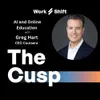
AI and Online Education, with Greg Hart, Coursera's CEO
Get summaries like this every morning.
Free AI-powered recaps of The Cusp with Paul Fain and your other favorite podcasts, delivered to your inbox.
Free forever for up to 3 podcasts. No credit card required.