Free Daily Podcast Summary
The DORK Side: Daily Summaries Delivered
by Spreely Media
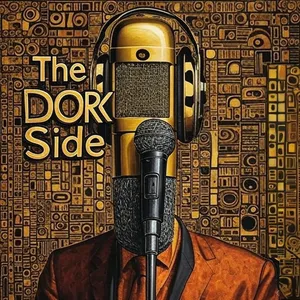
The DORK Side is a brutally funny comedy podcast where hosts Kevin Jackson and Noel Roberts take a gloriously irreverent swing at the world around us. Each week, they roast pop culture, toast new tech, and drag the future into the present just to be made fun of. This isn't your average tech podcast or dry pop culture show. It's where curiosity meets comedy—and neither comes out alive. Tune in for hot takes on everything from the latest gadgets and streaming obsessions to society's oddities and tomorrow's worst ideas.
Latest Episodes
The most recent episodes — sign up to get AI-powered summaries of each one.
- Apr 10, 202638 min
History's Unsolved Mysteries - Ep 65
History loves to pretend it’s tidy. Dates, footnotes, plaques on walls. But every so often, history shrugs, drops a masterpiece, and says, “Eh… we’ll circle back.” This is one of those moments.In 1969, someone walked into a small oratory in Palermo, Sicily, and casually removed a Caravaggio painting valued today at north of $20 million. No alarms. No witnesses worth trusting. Just a Renaissance mic drop followed by five decades of collective amnesia and espresso-fueled speculation.And what makes this mystery delicious isn’t just that the painting vanished. It’s that everyone knows who probably did it, yet nobody seems able or willing to finish the sentence. The Mafia looms over this story like a ghost in a tailored suit, politely refusing to confirm whether it sold the painting, destroyed it, or fed it to pigs during a misunderstanding about humidity.This is not a story about art theft. It’s a story about power, silence, and how culture becomes collateral damage when criminal organizations outlast governments. Also, it’s about the fact that one of the greatest painters in Western history might now be compost.See Privacy Policy at https://art19.com/privacy and California Privacy Notice at https://art19.com/privacy#do-not-sell-my-info.
- Apr 8, 202638 min
Changing the Past - Ep 65
There is no piece of technology more powerful than hindsight. It runs on zero electricity, costs nothing, and yet it convinces people every day that they would have been a genius if only the universe had followed their updated instructions.Everyone believes they would change something about their past. Different spouse. Different career. Different haircut in 2003 when we all collectively lost our minds and trusted frosted tips. The human brain is convinced that the past was a rough draft, and if given a red pen, we would turn our lives into a Pulitzer winner.But notice how selective regret is. Nobody says, “I wish I had bought less Bitcoin in 2012.” Nobody regrets that one time they took the risk and it worked. Regret is almost always retrofitted around outcomes we now understand, not decisions we made with the information we had.We rewrite history like a streaming service edits controversial episodes. We remove context. We forget uncertainty. We delete fear. And then we judge our former selves as if they were reckless interns instead of people making decisions under pressure, with incomplete data, surrounded by idiots, including themselves.This obsession with changing the past has exploded in the modern era because social media weaponized comparison. We don’t just imagine better versions of our own lives, we now binge-watch other people’s highlight reels and conclude we were robbed by fate. The algorithm quietly whispers, “You could have been this… if only.”See Privacy Policy at https://art19.com/privacy and California Privacy Notice at https://art19.com/privacy#do-not-sell-my-info.
- Apr 6, 202638 min
Biggest Influence on You? - Ep 64
The question “Who made the biggest impact on your life?” sounds like a Hallmark commercial until you actually sit with it. Then it gets complicated fast. People assume the answer must be parents, preferably two, preferably married, preferably photographed in soft lighting. Reality has other plans. Sometimes the biggest impact comes from the adult who showed up consistently. Sometimes it’s the one who left. Sometimes it’s the person who interrupted your trajectory, not the one who applauded it.Historically, we have romanticized lineage and bloodlines as destiny. Aristocracies were built on it. Psychology quietly dismantled it. Attachment theory, pioneered by John Bowlby in the mid-20th century, made a radical claim for its time. Stability matters more than structure. Presence matters more than pedigree. A child does not need perfection. A child needs reliability.That idea scrambles old assumptions about family, especially when discussing same-sex parents. The cultural panic always sounds the same, just with updated fonts. Yet decades of data show outcomes are driven by warmth, boundaries, and engagement, not by whether the adults match a Norman Rockwell template. What changes a life is not who parents are to the world, but who they are at 2 a.m. when the fever spikes.See Privacy Policy at https://art19.com/privacy and California Privacy Notice at https://art19.com/privacy#do-not-sell-my-info.
- Apr 3, 202638 min
Got Pet Peeves?
Pet peeves are fascinating because they don’t announce themselves as rules. They arrive disguised as preferences, but behave like moral law. Somewhere between “I don’t like that” and “You are a bad person for doing that,” a pet peeve is born.They are small, specific irritations that punch above their weight. Nobody storms out of a room because of global warming, but chew with your mouth open and suddenly we’re reenacting the French Revolution. Pet peeves are rarely about harm. They’re about control. Or order. Or that quiet, simmering rage that says, “I didn’t choose to be like this, but you absolutely chose to tap that pen.”Historically, pet peeves didn’t flourish until society had leisure. When survival is the priority, nobody’s bothered by loud breathing. Once humans moved past “Don’t die today,” we graduated to “Why are you standing so close to me?” The Industrial Revolution gave us machines. Modernity gave us other people. And that’s when things went sideways.See Privacy Policy at https://art19.com/privacy and California Privacy Notice at https://art19.com/privacy#do-not-sell-my-info.
- Apr 1, 202638 min
Find Out About your Bucket List
Bucket lists used to be private thoughts. Quiet promises whispered between a person and the ceiling at 2 a.m. Now they’re laminated, hashtagged, and monetized. Somewhere along the way, “live before you die” turned into “prove you’re interesting online before the algorithm forgets you exist.”The phrase itself didn’t crawl out of ancient philosophy. It didn’t come from Aristotle or some monk staring at a candle. It came from a 2007 Jack Nicholson and Morgan Freeman movie, which is ironic, because nothing makes people confront mortality faster than watching two elderly men race death in a sports car. Since then, the bucket list became a cultural permission slip. Suddenly it was acceptable to admit you were scared of dying with nothing but a Costco membership and a really strong opinion about lawn fertilizer.What’s fascinating isn’t the list. It’s why we make them. A bucket list is optimism wearing anxiety’s jacket. It’s hope with a deadline. It’s the adult version of realizing recess is almost over. You don’t want to waste it. You don’t want to look back and realize your boldest adventure was switching toothpaste brands.And here’s the tension. Some people live beautifully small lives. Same town. Same roads. Same diner booth. There’s dignity in roots. But there’s also danger in confusing familiarity with fulfillment. Comfort is sneaky. It convinces you that curiosity is reckless and that ambition is something younger people should do.See Privacy Policy at https://art19.com/privacy and California Privacy Notice at https://art19.com/privacy#do-not-sell-my-info.
- Mar 30, 202638 min
Fictional BFF - If you could choose anybody
Ever fantasized about ditching your boring pals for someone who can punch through walls or web-sling across town? We're launching this "What fictional character would you want to be best friends with?" arc with superheroes – those over-the-top do-gooders (and a couple of villains) who've been crashing into pop culture since the late 1930s, when the world was reeling from the Great Depression and needed larger-than-life escapes. Who wouldn't want Superman as your wingman? Talk about the ultimate bodyguard – he'd fly you out of awkward dates faster than a speeding bullet, though good luck explaining to your landlord why your roof has a new skylight from his "heroic entrances." Or Batman, the brooding billionaire who'd fund your wildest gadgets but probably ghost you during his endless vengeance quests – hypocrisy much? We cheer their lone-wolf style, yet secretly crave their loyalty without the therapy bills. Spider-Man? Your go-to for quippy advice on bad luck, swinging by with pizza after a rough day, but watch out for those villain magnets turning your barbecue into a brawl. Wonder Woman brings fierce girl-power vibes, schooling you on justice while lassoing the truth out of your lying ex. Iron Man, aka Tony Stark, would upgrade your life with tech toys and sarcasm, but his ego might turn every hangout into a TED Talk on himself. See Privacy Policy at https://art19.com/privacy and California Privacy Notice at https://art19.com/privacy#do-not-sell-my-info.
- Mar 23, 202638 min
Influencers Who Changed Branding Forever
Somewhere inside every one of us is a spark we never lit. Not because it wasn’t there, but because nobody handed us the match. History loves to crown geniuses after the fact, once the idea has already detonated and rearranged the furniture of civilization. But before the statues and documentaries, these people were just… people. Awkward. Curious. Annoying to authority. The kind of folks who didn’t fit neatly into the lanes they were given, so they built new roads and accidentally changed the map.See Privacy Policy at https://art19.com/privacy and California Privacy Notice at https://art19.com/privacy#do-not-sell-my-info.
- Mar 17, 202638 min
Icon Makers of the 90s
Every revolution has its strategists. Every rebel has a co-conspirator. This is about the essential few who didn't just ride the wave of change—they were the engine behind it. The true creators who forged the raw sound, the groundbreaking script, the authentic style that defined an era. In the defiant, DIY 1990s, they were the critical voice in the ear of the icon, the partner who said, "Go further," and handed them the map. They are the proof that behind every culture-shifting star is a circle of believers who made the revolution possible.The 1990s arrived like a sledgehammer to the 1980s’ neon mullets. Shoulder pads were gone, but pop culture wasn’t just evolving—it was being engineered. The artists of this decade didn’t just need talent; they needed visionaries, therapists, psychologists, and people who could negotiate world domination over a cup of coffee. The era invented the “multi-hyphenate,” a person who acts, sings, dances, produces, and sometimes even writes their own press releases.See Privacy Policy at https://art19.com/privacy and California Privacy Notice at https://art19.com/privacy#do-not-sell-my-info.
Get The DORK Side summaries in your inbox
Free AI-powered daily recaps. Key takeaways, quotes, and mentions — in a 5-minute read.
Get Free Summaries →Free forever for up to 3 podcasts. No credit card required.
You Might Also Like
Listeners also like.

#DORK
Rich Keefe and Ryan Davey discuss movies, TV, video games, and comic books.
Dumb-Dumbs & Dragons: A D&D Podcast
A group of improvisers new to roleplaying adventures through Dungeons & Dragons with comedic results.

Jordan, Jesse, GO!
Two comedians and a guest engage in absurd, free-form conversations blending humor, pop culture, and heartfelt moments.
Digital Social Hour
Unfiltered conversations with controversial and influential figures exploring their lives, challenges, and ideas.
Robert Kelly's You Know What Dude!
Comedians gather for unfiltered, free-flowing conversations with no agenda, just raw humor and camaraderie.

Soder
Dan Soder
Like a Virgin
Two queer hosts explore pop culture through personal stories, comedy, and critical discussions about identity and representation.

Reply All
A podcast that explores the internet and its impact on modern life through investigative stories and personal narratives.
Julian Dorey Podcast
Discusses wild stories, true crime, geopolitics, history, and technology with diverse guests from New York City.
Better Offline
Ed Zitron and guests explore how the tech industry’s power players shape society, for better or worse.
The Daily Zeitgeist
A daily comedy-news podcast where hosts break down the week’s biggest stories with sharp analysis and humor to help make sense of the chaos.
Jesters of Ravenloft: A D&D Podcast
A group of comedians play D&D 5e, trapped in the world of Ravenloft and trying to escape.
About The DORK Side
The DORK Side is a brutally funny comedy podcast where hosts Kevin Jackson and Noel Roberts take a gloriously irreverent swing at the world around us. Each week, they roast pop culture, toast new tech, and drag the future into the present just to be made fun of. This isn't your average tech podcast or dry pop culture show. It's where curiosity meets comedy—and neither comes out alive. Tune in for hot takes on everything from the latest gadgets and streaming obsessions to society's oddities and tomorrow's worst ideas.
Customized Recaps
AI-powered recaps with compact key takeaways, quotes, and insights.
Straight to Your Inbox
Get key takeaways from The DORK Side in a 5-minute read.
Save Hours Every Week
Stay current on your favorite podcasts without falling behind.
Frequently Asked Questions
What is Podzilla's The DORK Side daily summary?
It's a free AI-powered email that summarizes new episodes of The DORK Side as soon as they're published. You get the key takeaways, notable quotes, and links & mentions — all in a quick read.
How does the The DORK Side podcast summary work?
When a new episode drops, our AI transcribes and analyzes it, then generates a personalized summary tailored to your interests and profession. It's delivered to your inbox every morning.
Is this an official The DORK Side product?
No. Podzilla is an independent service that summarizes publicly available podcast content. We're not affiliated with or endorsed by Spreely Media.
Can I get summaries of other podcasts too?
Absolutely! The free plan covers up to 3 podcasts. Upgrade to Pro for 15, or Premium for 50. Browse our full catalog at /podcasts.
How often does The DORK Side release new episodes?
The DORK Side publishes weekly. Our AI generates a summary within hours of each new episode.
What topics does The DORK Side cover?
The DORK Side covers topics including Comedy, Philosophy, Culture, Society & Culture, Comedy Interviews. Our AI identifies the specific themes in each episode and highlights what matters most to you.
Start getting The DORK Side summaries tomorrow morning.
Free forever for up to 3 podcasts. No credit card required.
Free forever for up to 3 podcasts. No credit card required.